






kostel svatého Václava (Černochov) Church
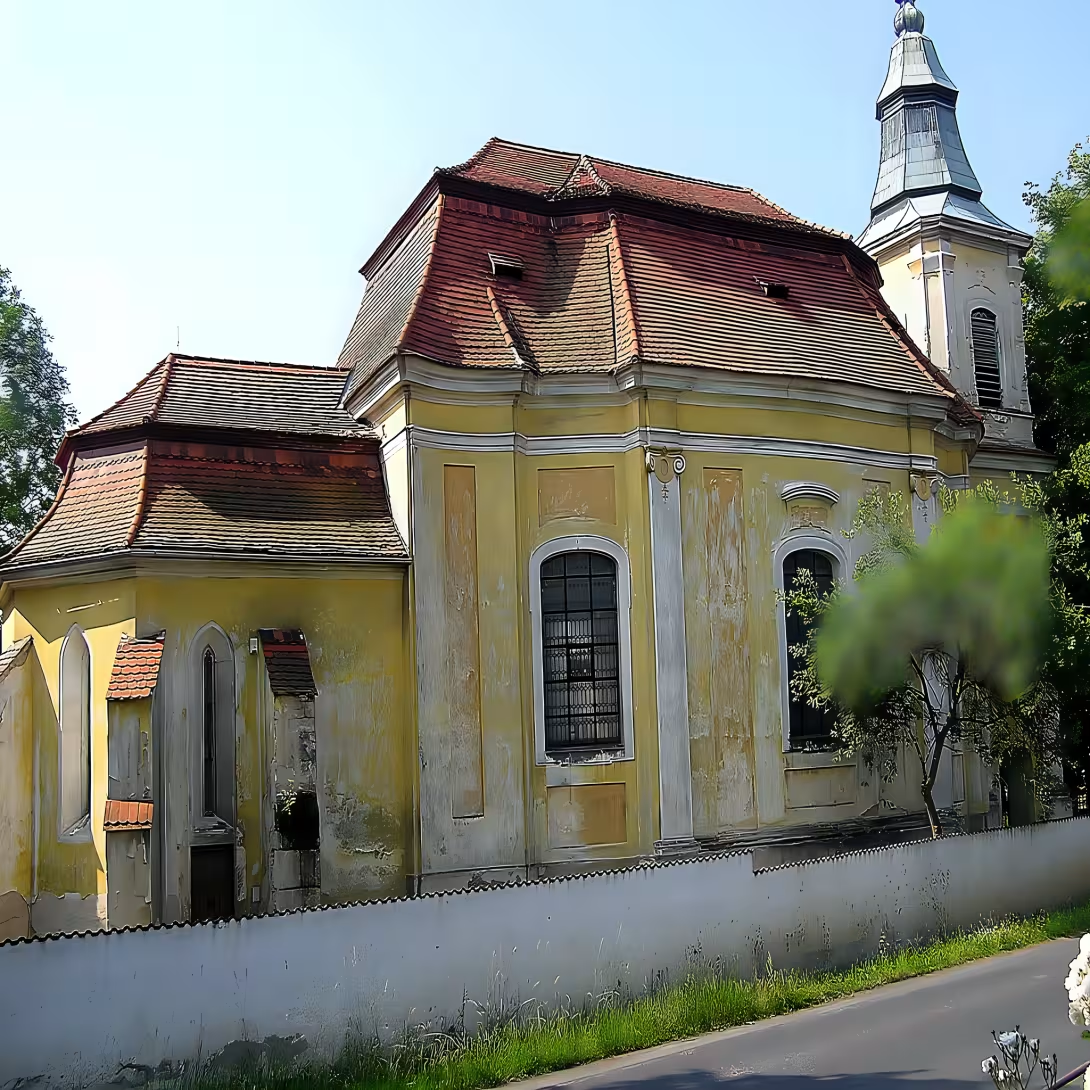
The Church of St. Wenceslas in Černochov is a historical monument showing both Gothic and Baroque architectural styles. Located in the village of Prechaply in Louny District, it dates back to the 14th century. Originally built in Gothic style, it underwent extensive Baroque renovation at the end of the 18th century. The church has an excellent Baroque architecture and remains of wall paintings depicting the legend of St. Wenceslas, which makes it a cultural monument under the Roman Catholic parish of Vronice.
First documented in 1340 as property of the monastery Osek, which obtained Černochov through purchase rights, this period marked its early history in Bohemia, then part of the Holy Roman Empire. The Gothic origin of the church was traced shortly before this first recorded mention, which placed its construction in the middle of the 14th century. During this time the Osek monastery played a key role in the local religious landscape.
Architecturally, the church initially represented Gothic elements typical of the era before undergoing significant transformations. Baroque renovation between 1774 and 1779 was led by architect Josef Jäger, who introduced a new church structure along with bell tower, morgue chapel, cemetery and roadblocks. Despite these changes, the original presbytery was preserved as a sacristy, which preserved its Gothic features, including fragments of wall paintings depicting scenes from the legend of St. Wenceslas.
The ownership changed over time, Kaspar Benedict Ledebur held it in the early 18th century. The church has since been under the Roman Catholic parish of Vronice, which reflects its continued religious significance. During her history she witnessed dramatic changes, including interruptions during the Hussite wars, which led to temporary stops of recorded priests until 1425.
The main events include the original documentation in 1340 and the Baroque reconstruction from 1774 to 1779. These renovations transformed his architectural style while preserving important historical elements such as wall paintings into presbytery. It is thought that preserved works of art, especially those which depict St. Wenceslas, represent a character representing the abbot of the monastery Osek.
Today the Church of St. Wenceslas stands as a cultural monument open to visitors, offering knowledge of its rich history and architectural evolution. Its Baroque interior has a main altar with the painting of St. Wenceslas, surrounded by medals of other saints, next to the Baroque pulpit and a great representation of the evangelist St. John. The church also hides the remains of its Gothic past, including the Dodecagonal Stone Baptist font and altar that moved during the renovation.
Visitors Černochov appreciate the church not only for its architectural beauty, but also for its historical importance in the Czech cultural heritage. His journey from the Gothic structure to the Baroque masterpiece, together with preserved works of art and historical history, makes him a convincing target for interested people in history and architecture. Its quiet environment in the midst of typical Czech landscape further increases its charm and invites visitors to explore this remarkable monument.
Then and now
Drag the slider to compare how the landmark may have looked when it was built with the view today.
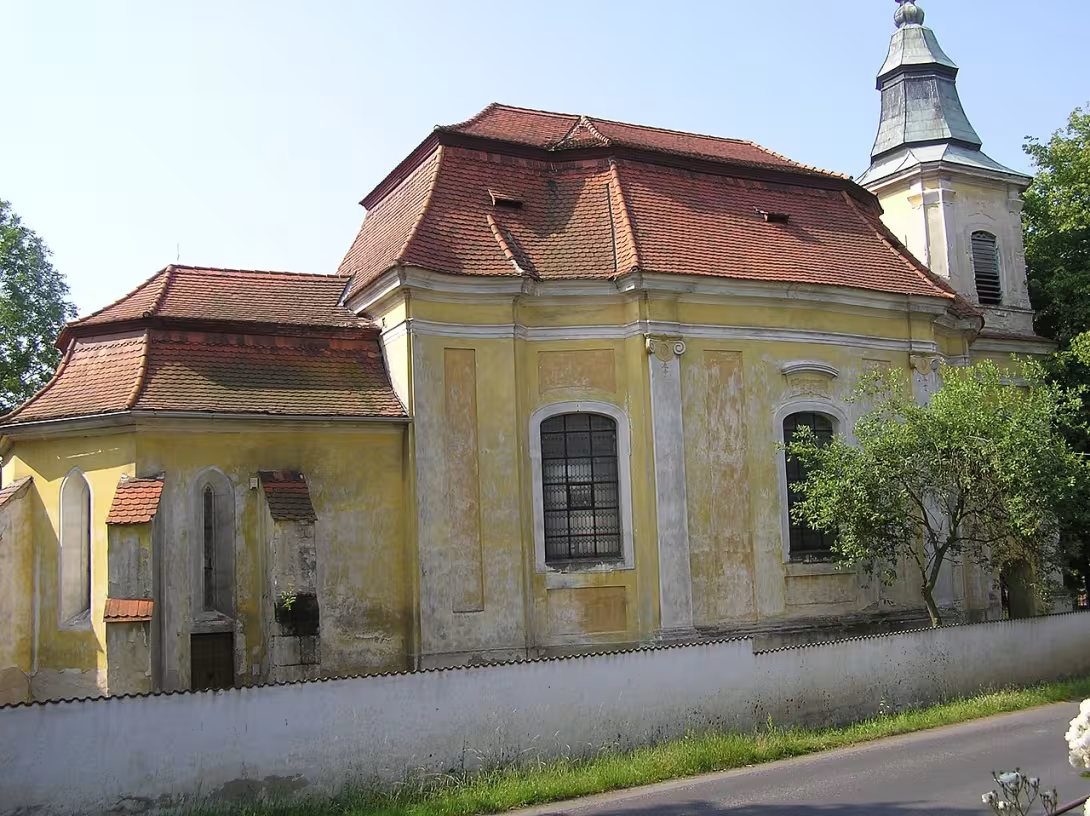
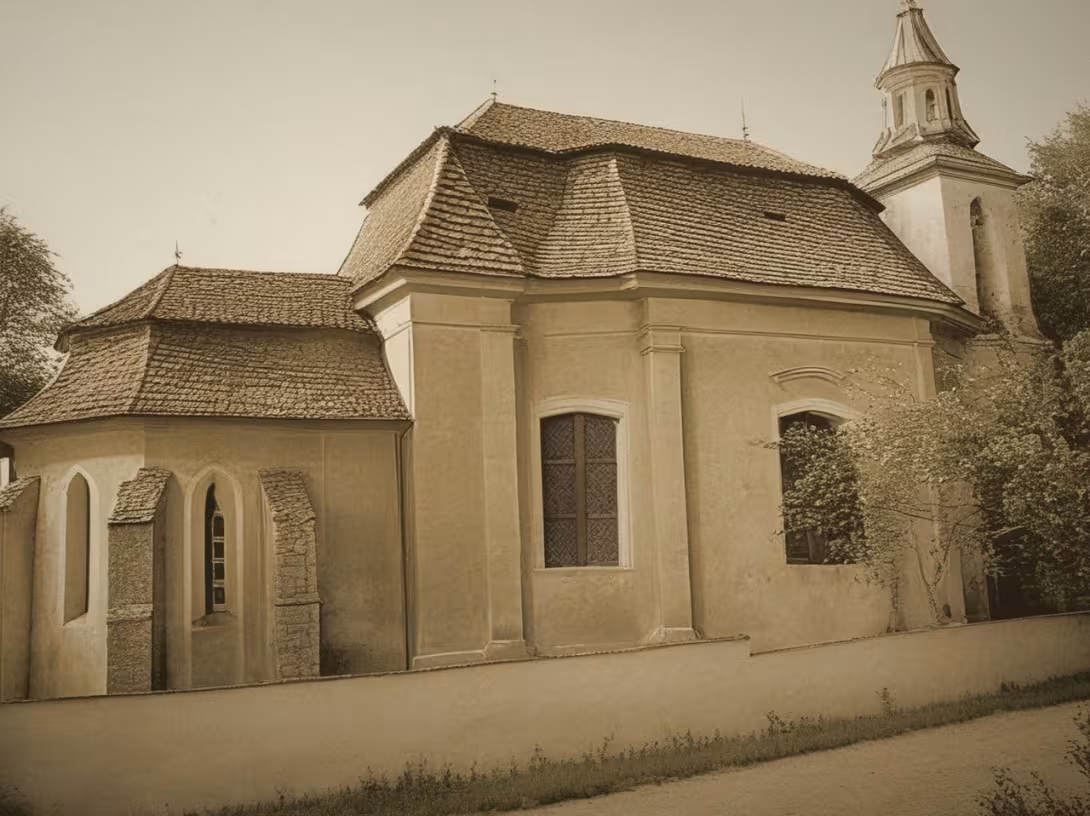
The historical appearance on the left is an AI-generated visualisation and serves as inspiration only.
Historical milestones
- 1340
- The first documented mention of St. Wenceslas Church.
- 1425
- The last recorded priest before the Hussite War.
- 1774-1779
- Baroque reconstruction complete.
Architectural development
The church of St. Wenceslas was originally built in Gothic style before the middle of the 14th century. Under the guidance of architect Josef Jäger, she had a significant Baroque renovation between 1774 and 1779, which led to a new church structure, bell tower, funeral chapel, cemetery and storm walls. The original presbytery with walls was preserved as a sacristy.
Historical events
1340: The first documented mention of the church as property of the monastery Osek.
1425: The last recorded priest before the Hussite War disturbed the parish structure.
1774- 1779: Baroque reconstruction led by architect Josef Jäger, including new church building and surrounding buildings.
Owners
In 1340, Černochov owned the monastery Osek, which acquired it through shopping rights. In the early 18th century, Kaspar Benedict Ledebur owned. The church has since been under the Roman Catholic parish of Vronice.
Points of interest
- The Church of St. Wenceslas is equipped with wall paintings, which include a painting which is supposed to represent the abbot of the Osek monastery, highlighting his connection to this influential religious institution.
- During Hussite wars in the early 15th century, the church was disrupted, which led to a temporary stop of recorded priests until 1425, reflecting the broader impact of these conflicts on local religious practices.
- Baroque renovation of the church between 1774 and 1779 were conducted by architect Josef Jäger, who not only transformed its structure but also integrated new elements such as bell tower and funeral chapel, and demonstrated innovative architectural modifications for this era.
- Despite extensive Baroque modifications, the church preserved its original Gothic presbytery as a sacristy and preserved fragments of wall paintings depicting the scenes from the legend of St. Wenceslas, which serve as rare artistic remains from the 14th century.
- In the early 18th century Kaspar owned the church of Benedict Ledebur, which illustrates the personal and historical stories associated with his transfer of ownership for centuries.
Guide
This guide is narrated by a synthetic voice generated by artificial intelligence.
Show guide text
This text was created by artificial intelligence and has not been editorially reviewed. It may contain inaccuracies.
Welcome to the Church of St. Wenceslas in Černochov - a remarkable proof of history and spirituality, which has been standing here since the 14th century. As you stand before this architectural jewel, take a moment to absorb its presence: the embodiment of centuries-old stories carved into every stone.
The origin of this church dates back to 1340, when it was first documented as a place of worship dedicated to St. Wenceslas. Over time, the church witnessed important historical events, including the stormy Hussite wars in the early 15th century, which brought about distortions and changes. At the end of the 18th century, namely between 1774 and 1779, she underwent extensive Baroque reconstruction under the guidance of architect Josef Jäger, which transformed its Gothic roots into a stunning example of baroque architecture.
As you now look at the church, notice the excellent details that define its Baroque style. The intricate design on the facade tells stories about transformation and resistance. Inside, remnants of wall paintings await your attention, depicting legends associated with St. Wenceslas - visual narrative, calling for contemplation.
This church is not just a building; It's a cultural monument intertwined with stories from the past. One such story involves the abbot, which is believed to be depicted in his wall paintings, suggesting a connection to the influential Osek monastery. This link adds another layer of historical scheming that collides with the wider religious and cultural networks that once prospered here.
As you continue your research, let yourself be drawn into these stories that go beyond time. Every horn, every stone has witnessed history to develop - a silent witness both chaos and peace.
We invite you to dive deeper into this fascinating place, reveal more of its secrets and perhaps find a personal connection within its sacred walls. Thank you for visiting the Church of St. Wenceslas in Černochov - your trip here can inspire reflection and discovery.
Frequently asked questions
Can the monument be visited?
Religious buildings are usually open mainly during services; at other times a visit is normally arranged with the parish or the operator. We have not verified specific times.
Where is the monument?
Location: Černochov, Ústecký kraj. The map on this page shows the exact spot.
Why is the monument protected?
It is listed in the Central List of Cultural Monuments of the Czech Republic as a cultural monument (register no. 43344/5-1113).
Businesses nearby
Do you run a restaurant, accommodation, shop, museum, rental, wellness or other visitor service near this monument? Show yourself directly to the people heading to it — this is how they will see you in the app and on the web:
Events nearby

Zdroj akcí: otevřená data měst a obcí ČR (Národní katalog otevřených dat) a kalendář akcí Národního památkového ústavu.
Nearby
the church is located in the Černochov, part of the village of Prechaply in the Louny District. The surrounding landscape has a typical Czech landscape with rolling hills and agricultural soil.
Accommodation nearby
Themed route
Thematic cruise route: St. Wenceslas Church (Černochov)
1. Church of St. Wenceslas, Černochov - * Type: * Historical landmark - * Why is it worth visiting: * This church is an architectural house rich in history and culture area. Its simple, but legendary structure represents the essentials that can be excluded from the mandatory mandatory in a quiet rural environment.
2. Roller fields around Černochova - * Type: * Cultural and natural station - * Why is it worth visiting: * Walk on the field offers typical Czech landscape with hilly terrain. It is an ideal contribution for relaxation and use with respect to the rural product that are the subject of the church.
3. Overrides - * Type: * Local village - * Why is it worth a visit: * Overjump is part of Černochova and offers traditional life in small Czech municipalities. The Progoum Topic Mustard allows you to understand the local life, culture and history that intermingles with everyday life as an actor.
4.Louny District - * Type: * Regional context - * Why is it worth a visit: * Journey through the Loune district provides wider support for regional characteristics and cultural sciences that are intended for Černochov. The prognosis of the toolóres will help to improve the historical and social aspect of the area around St. Wenceslas.
This route offers combined cultures, natural and regional experiences, which are listed in Černochov.
Seasonal recommendations
Spring: The St. Wenceslas Church in Černochov during spring offers one experience where nature passes through and covers the surrounding landscape of the new list. Sunshine days and small temperatures produced ideal support for a walk around the church, while light through the windows emphasizes architectural beauty. The proposals to be made are set out in the Annex to this Regulation. The additional name is not listed in Annex II to Regulation (EC) No 1224 / 2009.
Summer: Summer is the main place for hiking in the church of St. Wenceslas, located near and near the city to choose. The translated commitment around the monument is in full extent, offering a beautiful addition to photography and relaxation on the outdoor platforms. The sunny city peels the church in this difficult case, while hot temperatures can be new. It is recommended to visit the relevant afternoon or evening to avoid the given sun and crowd, and access to the area against UV radiation.
Wenceslas to have a melancholy and colorful view when the leaves are colored in golden and red shades. The atmosphere is calm and quiet, which allows for intimate foresight bones without disturbing crowds. Sunshine days may still be warm, but the evening cold is quickly smelling. Transfer with a new change and cow for the edge against falling temperatures while enjoying a quiet view of the church in its autumn dress.
Winter: St. Wenceslas's church during winter offers a very different sphere, where the monument is surrounded by quiet snow dishes and is illuminated by cold light. This season recalculates quantities without large crowds, which means that they are own goods and are part of them. Wearing a warm round, including a shirt and hat, and wearing firm shoes for a dreamy or frosty path is tricky to arrange later events.
Visualizations and artistic views


The visualisations are generated by artificial intelligence and serve as inspiration.
Tips from visitors
No tips yet. Be the first!
Log in and add your tip.
Sources and literature
Photos: Gortyna / CC BY-SA 3.0, rozlišení zvýšeno umělou inteligencí — Wikimedia Commons. The author and licence also appear when you hover over the image.
Faktickým podkladem tohoto textu byl článek na Wikipedii, jehož autory jsou přispěvatelé Wikipedie. Článek je dostupný pod licencí CC BY-SA 4.0.
Location on the map
More monuments – Černochov
Show all in the municipality
Příběhy a pověsti
Legendy, pověsti a příběhy spjaté s touto památkou
Fotografie návštěvníků
Zatím žádné fotografie. Buďte první, kdo přidá fotografii z návštěvy!
Log in a přidejte svou fotografii nebo hodnoťte.
Za ověřenou návštěvu v aplikaci získáte víc bodů — poznáme podle GPS, že jste na místě.
Reviews and comments