






Kostel svatého Václava (Chvojínek) Church
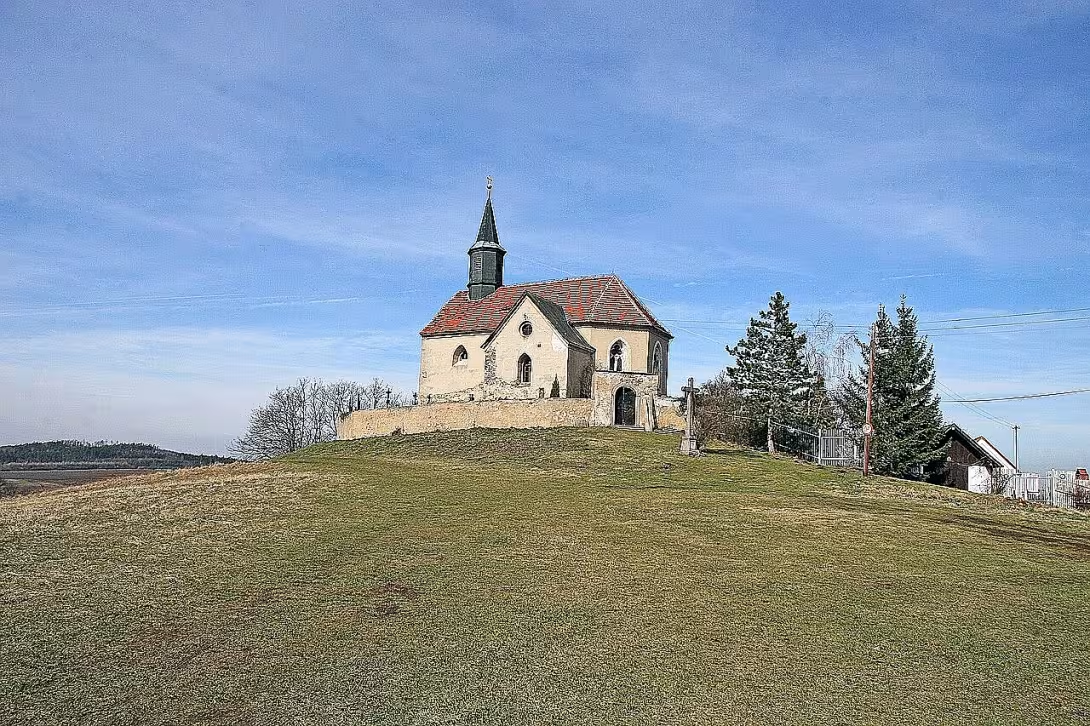
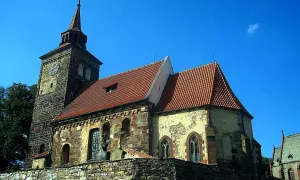
The Church of Saint Wenceslas in Chvojínek is a small early Gothic church located on a hill above the village, part of the Neveklov municipality. Built in 1262, it stands as a cultural monument of the Czech Republic and reflects the architectural style prevalent during its construction period. Notable features include its southeast orientation and northern entrance porch.
Constructed in 1262, the Church of Saint Wenceslas exemplifies early Gothic architecture typical of Bohemia at that time. This era saw significant cultural and architectural development across Europe, with Gothic design characterized by pointed arches, ribbed vaults, and flying buttresses. The church's construction likely involved royal works from Písek and Zvíkov, indicating broader regional influences.
Architecturally, the Church of Saint Wenceslas features a sacristy on its southern side and an entrance porch on the north. Inside, it houses a baroque-style altar with faux marble work that replaced the original late 17th-century main altar, depicting Saint Wenceslas in armor between two angels. This altar was removed during World War II for use as a training space by the Waffen-SS and was not restored afterward.
Throughout its history, the church has experienced several notable events. In 1911, documentation recorded two bells: one from the second half of the 15th century and another crafted in 1850 by Karl Bellmann. During World War II, the main altar was removed for use as a training space by the Waffen-SS. The church also houses four-manual pipe organs built by Karl Vocelka in 1868, repaired by Čeněk Skop in 1910 and again in the mid-1990s.
Today, the Church of Saint Wenceslas remains open to visitors interested in its historical and architectural significance. Its early Gothic architecture, combined with baroque elements and historic pipe organs, makes it an intriguing site for those exploring Czech history. Visitors can appreciate not only the church's aesthetic but also its role within Bohemian cultural development. The Church of Saint Wenceslas in Chvojínek offers a unique glimpse into the past, inviting exploration and reflection on its enduring legacy.
Then and now
Drag the slider to compare how the landmark may have looked when it was built with the view today.
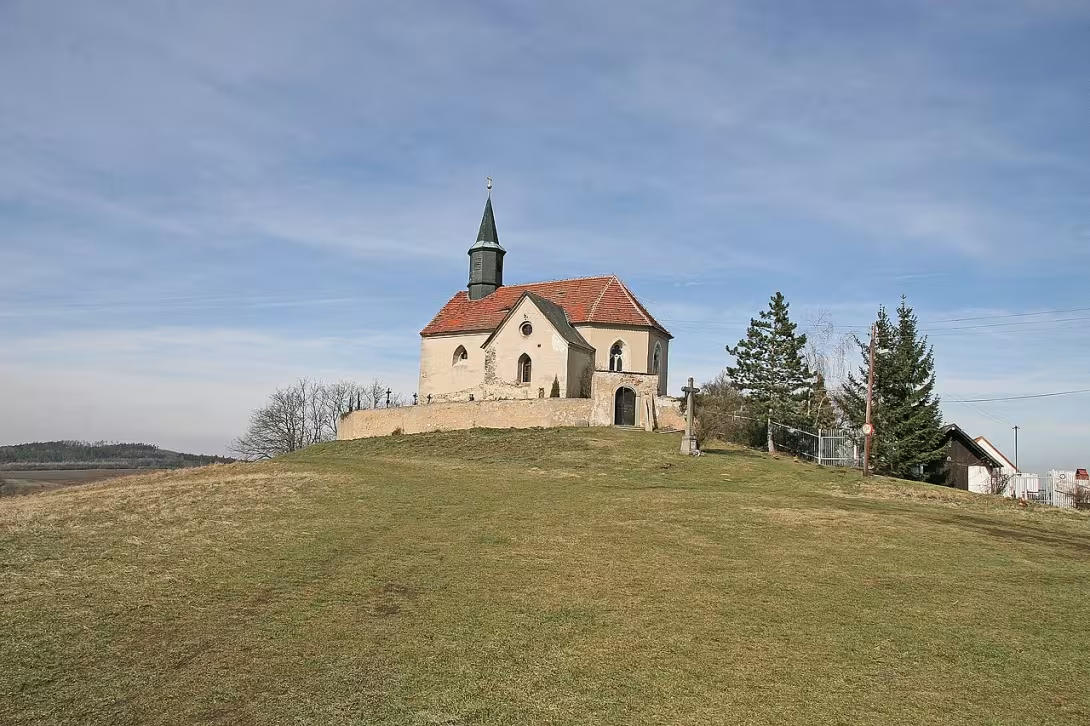
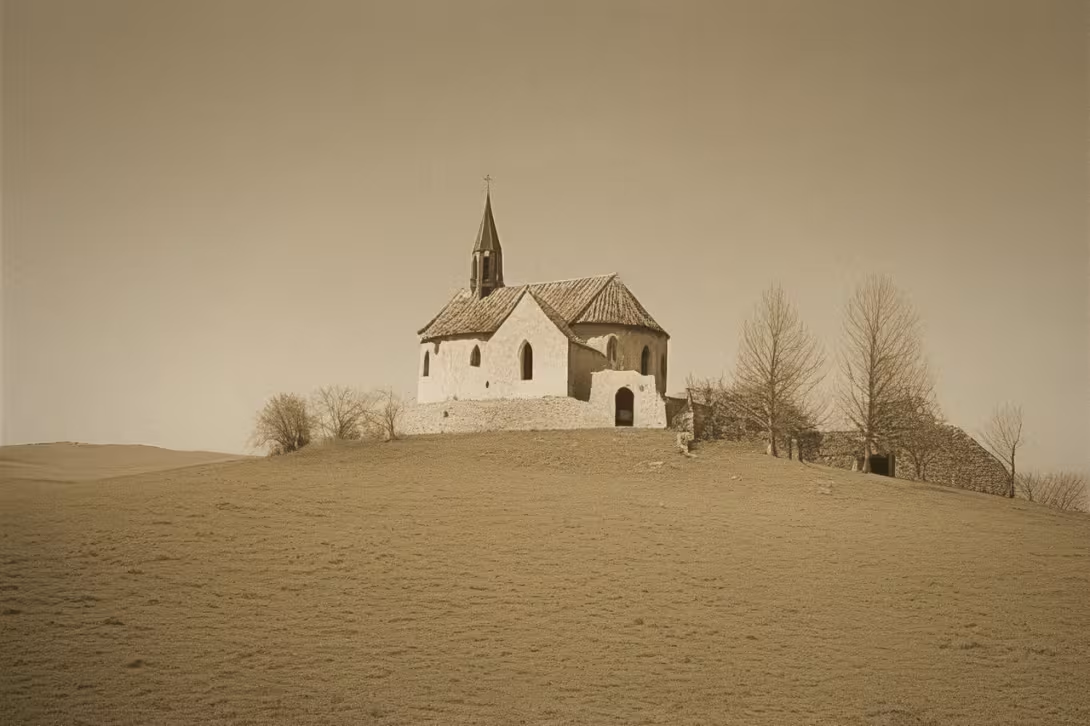
The historical appearance on the left is an AI-generated visualisation and serves as inspiration only.
Historical milestones
- 1262
- The church was built in early Gothic style.
- 1911
- Two bells were documented within the church.
Architectural development
Constructed in 1262, the church exhibits early Gothic architectural elements. It features a sacristy on its southern side and an entrance porch on the north. The interior includes a baroque-style altar with faux marble work that replaced the original late 17th-century main altar.
Historical events
In 1911, two bells were documented within the church: one from the second half of the 15th century and another from 1850 by Karl Bellmann.
During World War II, the main altar was removed for use as a training space by the Waffen-SS.
Guide
This guide is narrated by a synthetic voice generated by artificial intelligence.
Show guide text
This text was created by artificial intelligence and has not been editorially reviewed. It may contain inaccuracies.
The Church of Saint Wenceslas stands in the village of Chvojínek, which belongs to the town of Neveklov in the Benešov district. It is an early Gothic chapel and is registered as a cultural monument of the Czech Republic.
It was built in the year twelve sixty-two on a hilltop above the village. The construction was probably assisted by the royal foundry that was operating in Písek and at Zvíkov at that time. The church is oriented towards the southeast. It is entered through a vestibule on the northern side, and the sacristy stands by the southern wall.
The original main altar came from the end of the seventeenth century. It depicted Saint Wenceslas in armour and with a long cloak, with two angels on either side. When Neveklovsko was evacuated because of the Waffen-SS training grounds, the altar was taken away and was never rebuilt. It was replaced by a smaller Baroque altarpiece with illusory marble painting.
On the brick gallery are four-rank pipes and bellows organ from eighteen sixty-eight, which was built by Karel Vocelka. In nineteen ten, Čeněk Skopek repaired them, and another repair took place in the middle of the nineteen nineties.
In the year nineteen eleven, two bells hung in the church. The older one, from the second half of the fifteenth century, measured half a metre in height and had a diameter of sixty-one centimetres. The younger bell was cast by Karel Bellmann in eighteen fifty.
A small chandelier and a small painting of Saint Wenceslas came here from the church of the Borromean Sisters on Prague's Malá Strana.
Tips for visitors
The best time to visit the Church of Saint Wenceslas in Chvojínek is during late spring or early autumn. During these seasons, the weather is typically mild, making it pleasant for walking up the hill where the church is located. Additionally, visiting outside of peak tourist season can provide a more serene experience, allowing you to appreciate the architectural details without large crowds.
For those using public transport, it's advisable to check current routes and schedules in advance as they can change seasonally. The church is accessible via local roads from Neveklov.
When planning your visit, consider bringing comfortable walking shoes, especially if you plan to explore the surrounding area or walk up to the church on foot. A hat and sunscreen are recommended during sunny days, while a light jacket might be necessary in cooler weather. Also, bring water to stay hydrated throughout your visit.
For photography enthusiasts, early morning or late afternoon is ideal for capturing the best light at the Church of Saint Wenceslas. The soft lighting can enhance the Gothic architectural features and create dramatic shadows. Try taking photos from different angles around the hill to capture both the church and its scenic surroundings. Be mindful of any restrictions on photography inside the church.
Nearby attractions within a 30-minute drive include several historical sites in the Středočeský kraj region. Visitors can explore other cultural monuments or enjoy nature trails in the area. For families with children, consider visiting local parks or engaging in outdoor activities that are suitable for all ages.
Frequently asked questions
Can the monument be visited?
Religious buildings are usually open mainly during services; at other times a visit is normally arranged with the parish or the operator. We have not verified specific times.
Where is the monument?
Location: Chvojínek, Středočeský kraj. The map on this page shows the exact spot.
Why is the monument protected?
It is listed in the Central List of Cultural Monuments of the Czech Republic as a cultural monument (register no. 25800/2-139).
Businesses nearby
Do you run a restaurant, accommodation, shop, museum, rental, wellness or other visitor service near this monument? Show yourself directly to the people heading to it — this is how they will see you in the app and on the web:
Events nearby

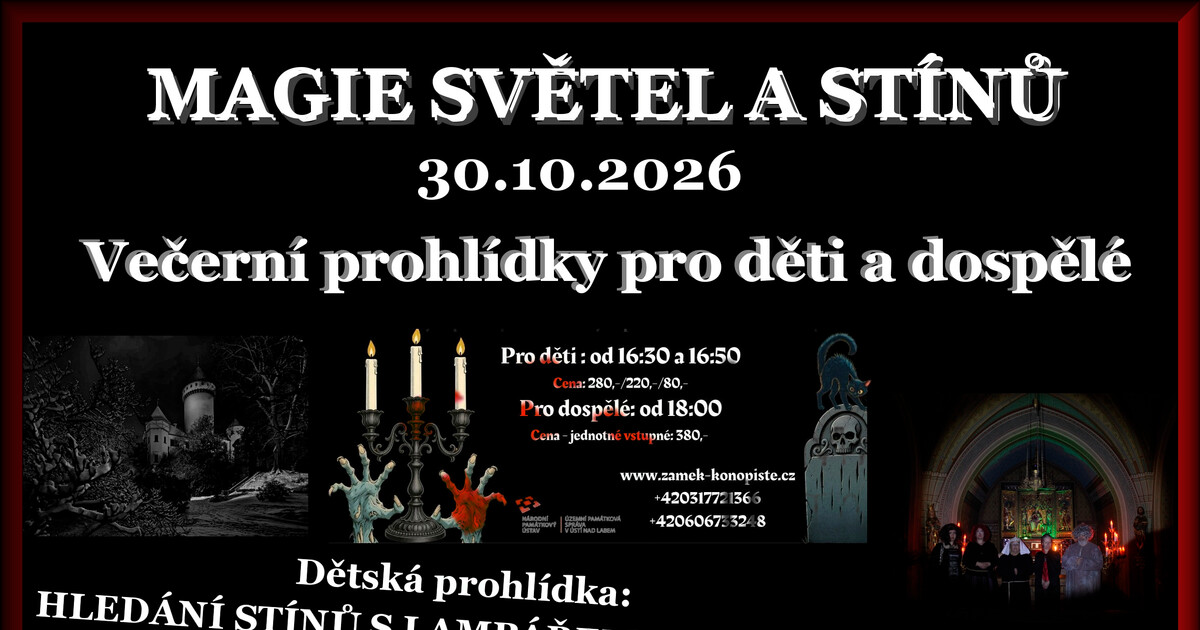


Zdroj akcí: otevřená data měst a obcí ČR (Národní katalog otevřených dat) a kalendář akcí Národního památkového ústavu.
Accommodation nearby
Themed route
Tematická výletní trasa: Kostel svatého Václava (Chvojínek)
1. Kostel svatého Václava (Chvojínek) - Kostel Začněte svůj výlet u kostela svatého Václava, který je hlavním cílem vaší trasy. Tento barokní chrám, postavený na počátku 18. století, je známý svou architektonickou krásou a historickou hodnotou. Je to ideální místo pro ty, kteří mají zájem o dějiny českého baroka a chtějí si užít klidnou atmosféru venkovské obce.
2. Nádvoří kostela svatého Václava - Kostel Po prozkoumání interiéru kostela se podívejte na nádvoří, kde můžete užít si klidné chvíle a ocenit venkovní prostor kolem kostela. Nádvoří je často místo pro různé kulturní akce a slouží jako výchozí bod pro další objevování okolního areálu.
3. Věž kostela svatého Václava - Kostel Následujícím krokem je návštěva věže kostela, z níž se otevírá pohled na okolní krajinu. Je to ideální místo pro ty, kdo chtějí si užít panoramatický pohled a pochopit historickou architekturu věže jako součást celého kostela.
4. Prostor kolem kostela - Kostel Prohlédněte se po okolních prostranstvích, která jsou často osídlena zelenými plochami a tradičními venkovskými domy. Tyto místa nabízejí klidné chvíle na relaxaci a příležitost si všimnout místního venkovského života.
5. Interiér kostela svatého Václava - Kostel Zavřete svou návštěvu opětovným prozkoumáním interiéru kostela, kde můžete si všimnout detailů a uměleckých děl, která byste předtím mohli přehlédnout. Je to skvělý způsob, jak se ještě více ponořit do historie a architektury tohoto významného místa.
Tato trasa nabízí kompaktní a hluboké poznání kostela svatého Václava a jeho okolí, ideálně pro ty, kteří chtějí strávit čas v klidném venkovském prostředí.
Seasonal recommendations
Spring: Visiting the Church of Saint Wenceslas (Chvojínek) during spring offers a unique experience as nature awakens around this historic site. The surrounding landscapes burst into vibrant colors with blooming wildflowers and fresh greenery, creating a picturesque backdrop that enhances the church's architectural beauty. The gentle warmth of the sun provides pleasant lighting for photography, capturing the intricate details of the structure against the lively spring palette. Visitors should be prepared for occasional showers typical of this season by wearing layers and carrying an umbrella or raincoat. Although crowds are generally lighter than in summer, it is advisable to arrive early to enjoy a peaceful exploration before any potential increase in visitors.
Summer: Summer at the Church of Saint Wenceslas (Chvojínek) brings long days filled with warm sunshine, making it ideal for exploring both the church and its natural surroundings. The lush greenery surrounding the site offers numerous opportunities for leisurely walks or picnics nearby, allowing visitors to fully immerse themselves in the serene environment. However, this is also the peak tourist season, so arriving early in the morning can help avoid larger crowds and ensure a more tranquil visit. Comfortable walking shoes and light clothing are recommended due to the warm weather, along with plenty of water to stay hydrated during your exploration.
Autumn: Autumn at Chvojínek presents a stunning display of fall foliage, turning the landscape into a tapestry of reds, oranges, and yellows that beautifully complement the historic church. The cooler temperatures make for comfortable walking conditions as visitors can take their time admiring both the natural beauty and architectural details without the summer heat. This season often sees fewer tourists compared to summer, providing a quieter atmosphere ideal for reflection and photography. Visitors should dress in layers to accommodate fluctuating temperatures throughout the day and consider bringing a light jacket or sweater for cooler evenings.
Winter: Winter transforms the Church of Saint Wenceslas (Chvojínek) into a serene, almost mystical experience as snow blankets the landscape, casting a peaceful hush over the area. The church's architecture stands out starkly against the white backdrop, offering unique photographic opportunities with its details highlighted by the soft winter light. It is essential to dress warmly in layers and wear sturdy boots for navigating potentially icy paths. Bringing gloves and a hat will also help keep you comfortable during your exploration of this historic landmark amidst winter's quiet beauty.
Visualizations and artistic views


The visualisations are generated by artificial intelligence and serve as inspiration.
Photos from the area
Real photos taken near the monument


Zdroj a licence jsou uvedeny u každého snímku.
Tips from visitors
No tips yet. Be the first!
Log in and add your tip.
Sources and literature
Photos: Petr1888 / CC BY-SA 3.0 — Wikimedia Commons. The author and licence also appear when you hover over the image.
Faktickým podkladem tohoto textu byl článek na Wikipedii, jehož autory jsou přispěvatelé Wikipedie. Článek je dostupný pod licencí CC BY-SA 4.0.
Location on the map
Příběhy a pověsti
Legendy, pověsti a příběhy spjaté s touto památkou
Fotografie návštěvníků
Zatím žádné fotografie. Buďte první, kdo přidá fotografii z návštěvy!
Log in a přidejte svou fotografii nebo hodnoťte.
Za ověřenou návštěvu v aplikaci získáte víc bodů — poznáme podle GPS, že jste na místě.
Reviews and comments