






Kostel svatého Václava (Horní Mokropsy) Church
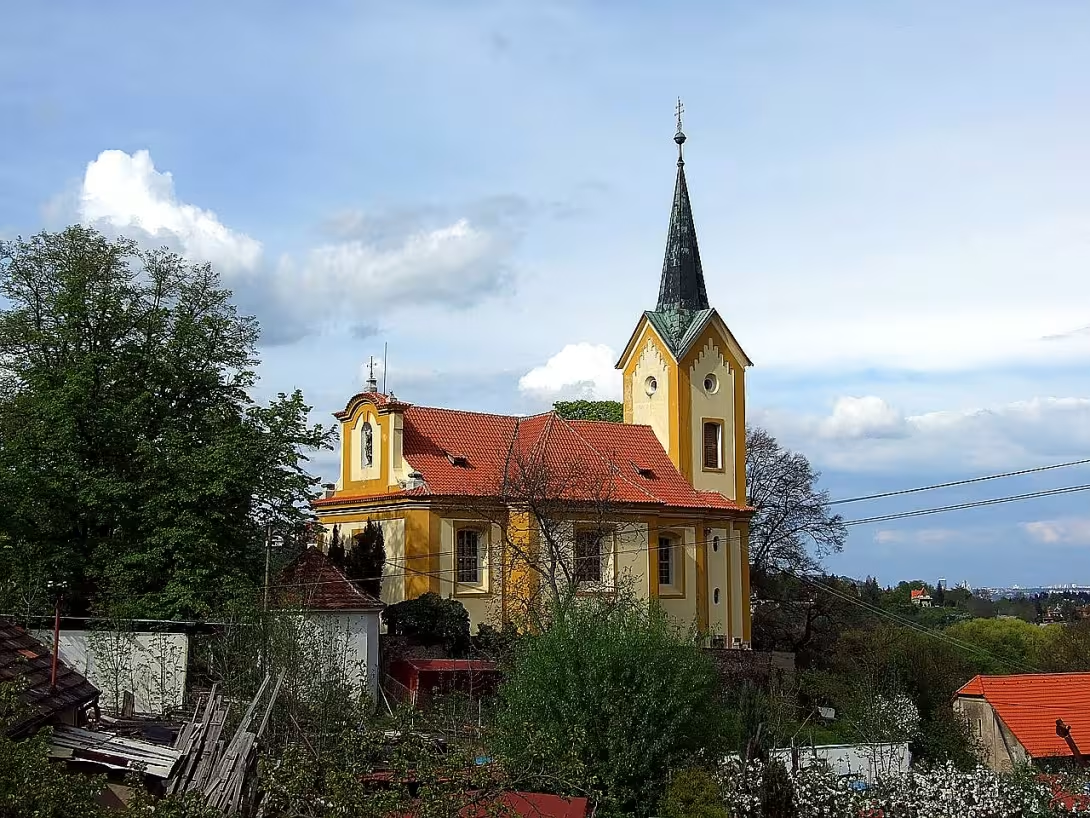
The Church of Saint Wenceslas in Horní Mokropsy, now part of Všenory, is a remarkable parish church with origins dating back to the first half of the 14th century. Initially constructed in Romanesque style, it was later transformed into its current Baroque form by Zbraslav Abbey's Abbot Tomáš Budecius in 1732. This site exemplifies the integration of older medieval foundations with later historical modifications and is notable for its heritage protection since 1987.
The church's origins are rooted in the early 14th century when it was built on the estate of the Svatojiřské nuns, although precise details about its initial construction remain undocumented. The first recorded significant transformation occurred in 1732 when Abbot Tomáš Budecius rebuilt the church in Baroque style. This period marked a shift from its Romanesque beginnings to a more elaborate architectural form, reflecting broader trends in religious architecture under the Habsburg Monarchy's influence.
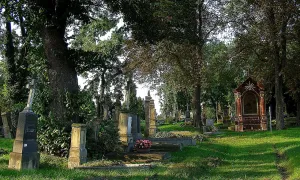
Architecturally, the Church of Saint Wenceslas showcases a blend of styles due to its historical evolution. The original Romanesque structure was replaced by a Baroque design, characterized by an enclosed area that includes a bell tower, an enclosing wall with gate and small cemetery. In the late 19th century, specifically around 1870 or 1879, the bell tower underwent another transformation from Baroque to Neo-Romanesque style, adding further layers of historical significance.
Throughout its history, the church has served as a religious center for both Horní and Dolní Mokropsy communities. In 1850, renovations revealed plans of a Gothic Zbraslav church in the bell tower's attic, highlighting the site's connection to broader ecclesiastical developments. Additionally, during the 1970s, the interior was modified following the Second Vatican Council, reflecting changes in liturgical practices.
Key events include the placement of "Zpráva budoucím generacím" by P. Vendelín Šimeček in the belfry in 1962, a message intended for future generations. This act underscores the church's role as a custodian of cultural and historical narratives. The site also features an empírová hrobka from 1837, adding to its architectural diversity.
Today, the Church of Saint Wenceslas stands as a protected heritage site, offering visitors a glimpse into the region's rich history. Its blend of Romanesque, Baroque, and Neo-Romanesque elements makes it an intriguing destination for those interested in architectural evolution and historical continuity. The church remains accessible to the public, inviting exploration of its storied past and appreciation of its cultural significance.
Then and now
Drag the slider to compare how the landmark may have looked when it was built with the view today.
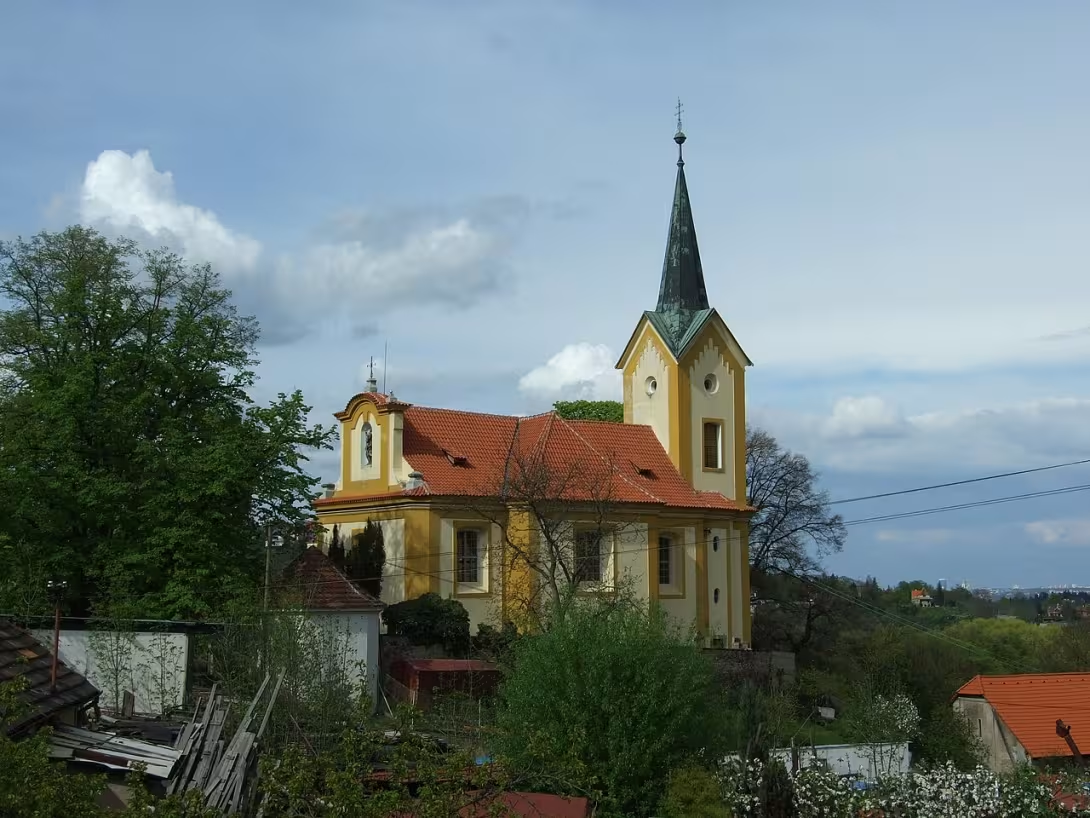

The historical appearance on the left is an AI-generated visualisation and serves as inspiration only.
Historical milestones
- 1732
- The church was rebuilt in its current Baroque form by Abbot Tomáš Budecius.
- 1870/1879
- The bell tower was transformed from Baroque to Neo-Romanesque style.
- 1962
- 'Zpráva budoucím generacím' by P. Vendelín Šimeček was placed in the belfry.
Architectural development
The church's architectural evolution began with its Romanesque origins, later transitioning to Baroque under Abbot Tomáš Budecius in 1732. The interior underwent significant modifications during the 1970s following the Second Vatican Council. In the late 19th century, the bell tower was altered from a Baroque to Neo-Romanesque style.
Historical events
1732: The church was rebuilt in Baroque style by Abbot Tomáš Budecius.
1870/1879: The bell tower underwent a transformation from Baroque to Neo-Romanesque style.
1962: A message titled 'Zpráva budoucím generacím' by P. Vendelín Šimeček was placed in the belfry.
Points of interest
- The Church of Saint Wenceslas was initially constructed on the estate of the Svatojiřské nuns in the early 14th century, yet detailed records of its initial construction are lost to history.
- In a surprising blend of architectural styles, the church's bell tower underwent a transformation from Baroque to Neo-Romanesque around 1870 or 1879, showcasing an unusual layering of historical influences.
- A hidden gem within the church is the discovery of plans for a Gothic Zbraslav church found in the attic of the bell tower during renovations in 1850, revealing unexpected connections to broader ecclesiastical architecture.
- The belfry houses "Zpráva budoucím generacím," a message placed by P. Vendelín Šimeček in 1962, intended as a cultural time capsule for future generations, highlighting the church's role in preserving historical narratives.
- An empírová hrobka from 1837 adds to the architectural diversity of the site, blending Romantic-era funerary styles with its predominantly Romanesque and Baroque elements.
Guide
This guide is narrated by a synthetic voice generated by artificial intelligence.
Show guide text
This text was created by artificial intelligence and has not been editorially reviewed. It may contain inaccuracies.
Welcome to the Church of Saint Wenceslas in Horní Mokropsy—a gem nestled within the serene landscape of Středočeský kraj. As you stand before this historical edifice, take a moment to absorb its majestic presence. The church's silhouette, with its enclosed area and distinctive bell tower, evokes a sense of timelessness that invites exploration.
The origins of this parish church trace back to the first half of the 14th century when it was initially constructed on the estate of the Svatojiřské nuns. Although detailed records from those early days are lost to history, its enduring presence speaks volumes about its significance through the ages. Fast forward to 1732, a pivotal year in which Abbot Tomáš Budecius of Zbraslav Abbey transformed the church into its current Baroque form—a style characterized by grandeur and dramatic expression.
As you stand here now, take note of the architectural details that define this transformation: the sweeping lines and ornate elements typical of the Baroque period. The church's bell tower is particularly noteworthy. Originally built in Baroque style, it underwent a fascinating metamorphosis between 1870 and 1879 when it was transformed into Neo-Romanesque—a style marked by its revival of Romanesque elements such as rounded arches and robust forms.
The belfry holds more than just bells; it houses 'Zpráva budoucím generacím' by P. Vendelín Šimeček, placed in 1962. This piece adds a layer of historical intrigue to the structure, connecting past generations with those yet to come.
While exploring this site, you might wonder about the lives and stories intertwined with its history—though many remain unnamed, their influence is palpable. The church's evolution from Romanesque beginnings through Baroque transformation reflects broader cultural shifts and local histories that have shaped Horní Mokropsy over centuries.
One intriguing aspect of this church is its architectural blend—a testament to the evolving tastes and influences over time. This fusion not only highlights the adaptability of structures but also serves as a physical narrative of change, resilience, and continuity.
As you conclude your visit here at the Church of Saint Wenceslas, allow yourself one last moment to reflect on its storied past and architectural beauty. Each stone and spire tells a tale waiting to be discovered. We invite you to continue exploring the rich history and cultural tapestry that Horní Mokropsy has to offer, ensuring that this remarkable site continues to inspire future generations.
Thank you for joining us on this journey through time and architecture. Safe travels as you continue your exploration of Středočeský kraj's historical treasures.
Frequently asked questions
Can the monument be visited?
Religious buildings are usually open mainly during services; at other times a visit is normally arranged with the parish or the operator. We have not verified specific times.
Where is the monument?
Location: Všenory, Středočeský kraj. The map on this page shows the exact spot.
Why is the monument protected?
It is listed in the Central List of Cultural Monuments of the Czech Republic as a cultural monument (register no. 17674/2-3413).
Businesses nearby
Do you run a restaurant, accommodation, shop, museum, rental, wellness or other visitor service near this monument? Show yourself directly to the people heading to it — this is how they will see you in the app and on the web:
Events nearby
Zdroj akcí: otevřená data měst a obcí ČR (Národní katalog otevřených dat) a kalendář akcí Národního památkového ústavu.
Accommodation nearby
Trips and activities nearby
Guided tours, tickets and activities nearby from GetYourGuide
Affiliate link: if you buy from the partner, we may receive a commission. The price for you does not change.
Search tours and activities →Themed route
Tematická výletní trasa: Kostel svatého Václava (Horní Mokropsy) a okolí
1. Kostel svatého Václava (Horní Mokropsy)
Typ: Náboženský památník
Proč stojí za návštěvu: Tento barokní kostel je centrem duchovního života v Horním Mokropsech. Jeho architektura a historické interiéry nabízejí pohled na bohatou kulturní minulost obce. Navštěvující mohou prozkoumat kostelní interiér, který je vynikajícím příkladem barokního umění.
2. Obecní úřad Horní Mokropsy
Typ: Historická budova
Proč stojí za návštěvu: Tato historická budova se nachází v centru obce a sloužila jako administrativní sídlo. Je zajímavým příkladem místní architektury, která odráží dřívější životní styl obyvatel Horních Mokropsů.
3. Mikroregion Všenory
Typ: Kulturní a historický region
Proč stojí za návštěvu: I když konkrétní místa nejsou specifikována, celý mikroregion nabízí pohled na kulturní dědictví oblasti. Prozkoumáním okolních vesnic a jejich historických památek můžete objevit více o životě v této části Středočeského kraje.
4. Nádvoří kostela svatého Václava
Typ: Historický areál
Proč stojí za návštěvu: Nádvoří nabízí klidné místo pro odpočinek a reflexi. Zde můžete užít si pohled na kostel zvenku, což je ideální příležitost pro pochopení celkového architektonického kontextu památky.
Tato trasa vám umožní hluboce se ponořit do historie a kultury Horních Mokropsů, zaměřením na klíčové místní památky a jejich okolí.
Seasonal recommendations
Jaro: In the spring season, St. Wenceslas Church in Horní Mokropsy transforms into a scene full of life and color as new greenery sprouts in the surrounding fields and forests, adding freshness to the church. Sunny days provide ideal lighting for photography, allowing the capture of architectural details in their best light. Visitors can expect moderate crowds as attendance begins to rise with warmer weather. It is recommended to wear suitable footwear for walking on endless lawns and perhaps a bit of an umbrella, as spring weather can be unpredictable at times. The best time to visit is usually during holidays or midweek when there are fewer crowds and a more tranquil atmosphere.
Léto: In the summer, St. Wenceslas Church becomes a popular destination for visitors seeking respite from city heat. Evening lighting creates a romantic atmosphere ideal for short walks or picnics in nearby gardens. However, during peak summer season, attendance can increase significantly, especially around midday when temperatures are at their highest. Visitors are advised to come early in the morning or later in the afternoon to enjoy milder weather and fewer crowds. Warm clothing is important, as well as sun protection like hats and sunscreen, especially for longer visits.
Podzim: In autumn, St. Wenceslas Church offers a unique view with colorful leaves from surrounding trees providing a backdrop full of texture and color. Sunny days during this period are ideal for photography, while milder weather can bring a more peaceful atmosphere. Attendance often decreases compared to the summer season, allowing for a quieter experience. Visitors should be prepared for mild temperatures and possible rain, so appropriate clothing should include layers and an umbrella. The best time to visit is usually during holidays or at the end of the week.
Zima: In winter, St. Wenceslas Church offers a calm and mildly magical atmosphere, especially when snow covers the surroundings in snowy periods. Sunny days provide beautiful opportunities for photography, and visitors can enjoy views of the church illuminated by sunlight in the afternoon hours. Visitors are advised to wear warm clothing such as hats and umbrellas for snow or rain, and plan their visit during morning hours to enjoy the dazzling sunshine.
Visualizations and artistic views


The visualisations are generated by artificial intelligence and serve as inspiration.
Photos from the area
Real photos taken near the monument


Zdroj a licence jsou uvedeny u každého snímku.
Tips from visitors
No tips yet. Be the first!
Log in and add your tip.
Sources and literature
Photos: I would appreciate being notified if you use my work outside Wikimedia. More of my work can be found in my personal gall / CC BY-SA 3.0 — Wikimedia Commons. The author and licence also appear when you hover over the image.
Faktickým podkladem tohoto textu byl článek na Wikipedii, jehož autory jsou přispěvatelé Wikipedie. Článek je dostupný pod licencí CC BY-SA 4.0.
Location on the map

Příběhy a pověsti
Legendy, pověsti a příběhy spjaté s touto památkou
Fotografie návštěvníků
Zatím žádné fotografie. Buďte první, kdo přidá fotografii z návštěvy!
Log in a přidejte svou fotografii nebo hodnoťte.
Za ověřenou návštěvu v aplikaci získáte víc bodů — poznáme podle GPS, že jste na místě.
Reviews and comments