






kostel svatého Václava (Pardubice) Church
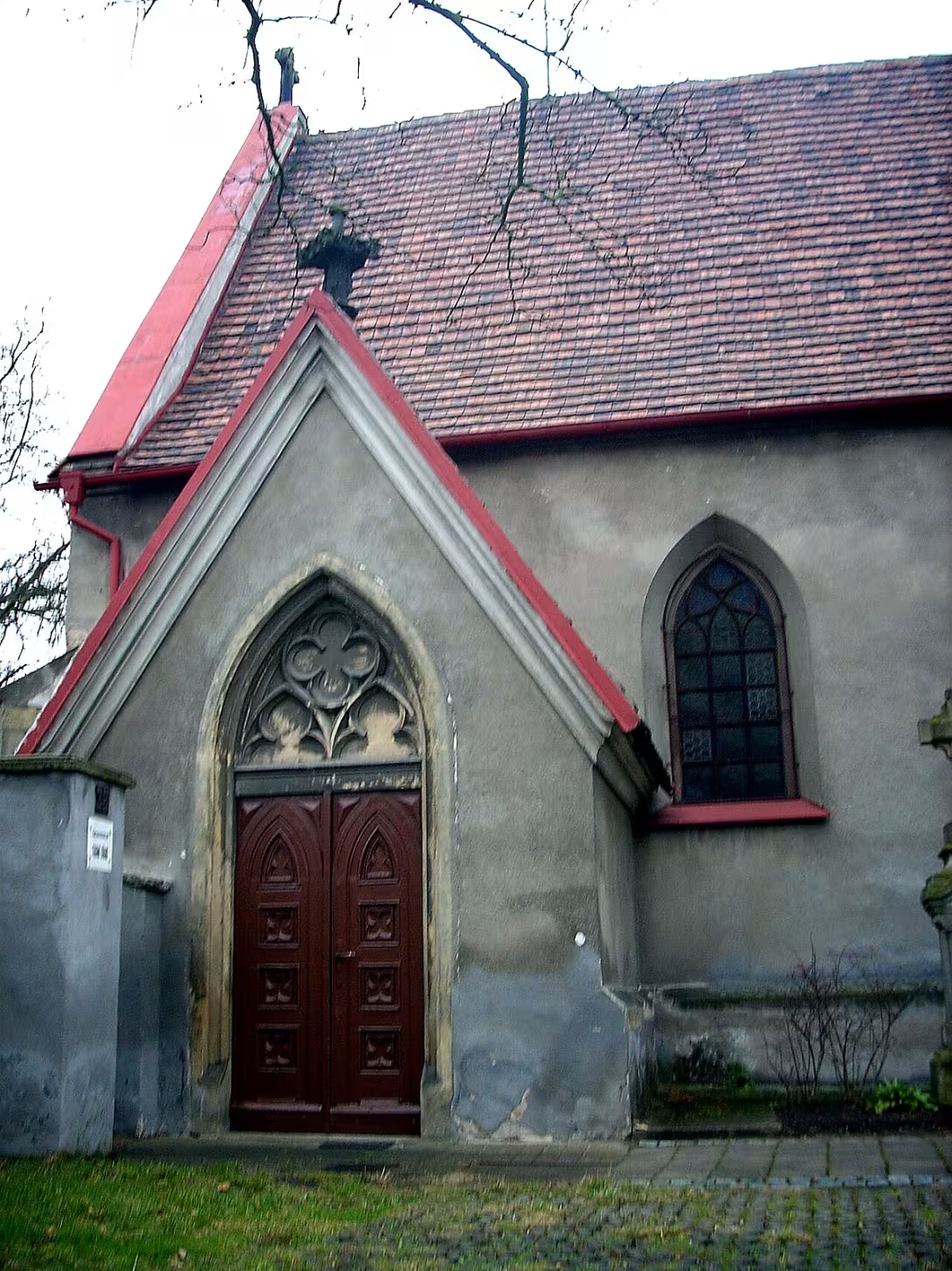
St. Wenceslas Church in Pardubice, located in Rosice in the School Square, is a stone Gothic building with later Renaissance and Baroque elements. This cultural monument is significant thanks to its long history dating back to the 14th century and preserved building elements from different periods.
The first written mention of the church in Rosie dates back to 1325. From this time come the circumferential walls of the ship, presbytery and sacristy, as well as the triumphal arch and portal of the sacristy. After the fire in 1583, the building was immediately restored in Renaissance style. The reconstruction was carried out by the then Pardubice Chief of Staff Georg Adlspach z Damsdorfu and the local manager Valentin Žalud. In the 1920s, the building was subsequently rebuilt into a Baroque style.
Architecturally, it is a stone building with a tripod closed by a presbytery. Sacristy is located on the north side of the presbytery, while on the south side of the ship is the hall. A ship of 10.0 x 8.0 meters is encapsulated with three arches of cross-crest vaults. The facades provide support pillars and sharp windows without circles. The interior of the ship was later repaired in a copy. Next to the church there is an 18th century bell tower with a brick floor and a formatted floor.
The interior equipment includes the Rococo main altar with the painting of St. Wenceslas by an unknown author, who was repaired in 1853 by the Chrudim painter Josef Papáček. In the church there are wooden rococo benches with ornamental cuts and in the first half of the 19th century a new wooden circle was inserted into the interior.
Among the attractions are the fragment of the Renaissance portal from 1583, which was transferred from the church at the end of the 19th century and walled into the cemetery wall. The church is protected as a cultural monument under the register number SAR 13829 / 6-2134 and is located several meters from the blind shoulder of the Elbe River.
The building represents an important historical element of the city of Rosice. It is advisable to visit it so that you can see the alternating architectural styles in one building.
Then and now
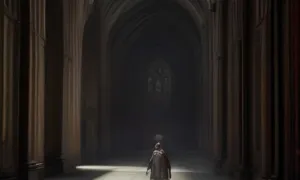
Drag the slider to compare how the landmark may have looked when it was built with the view today.
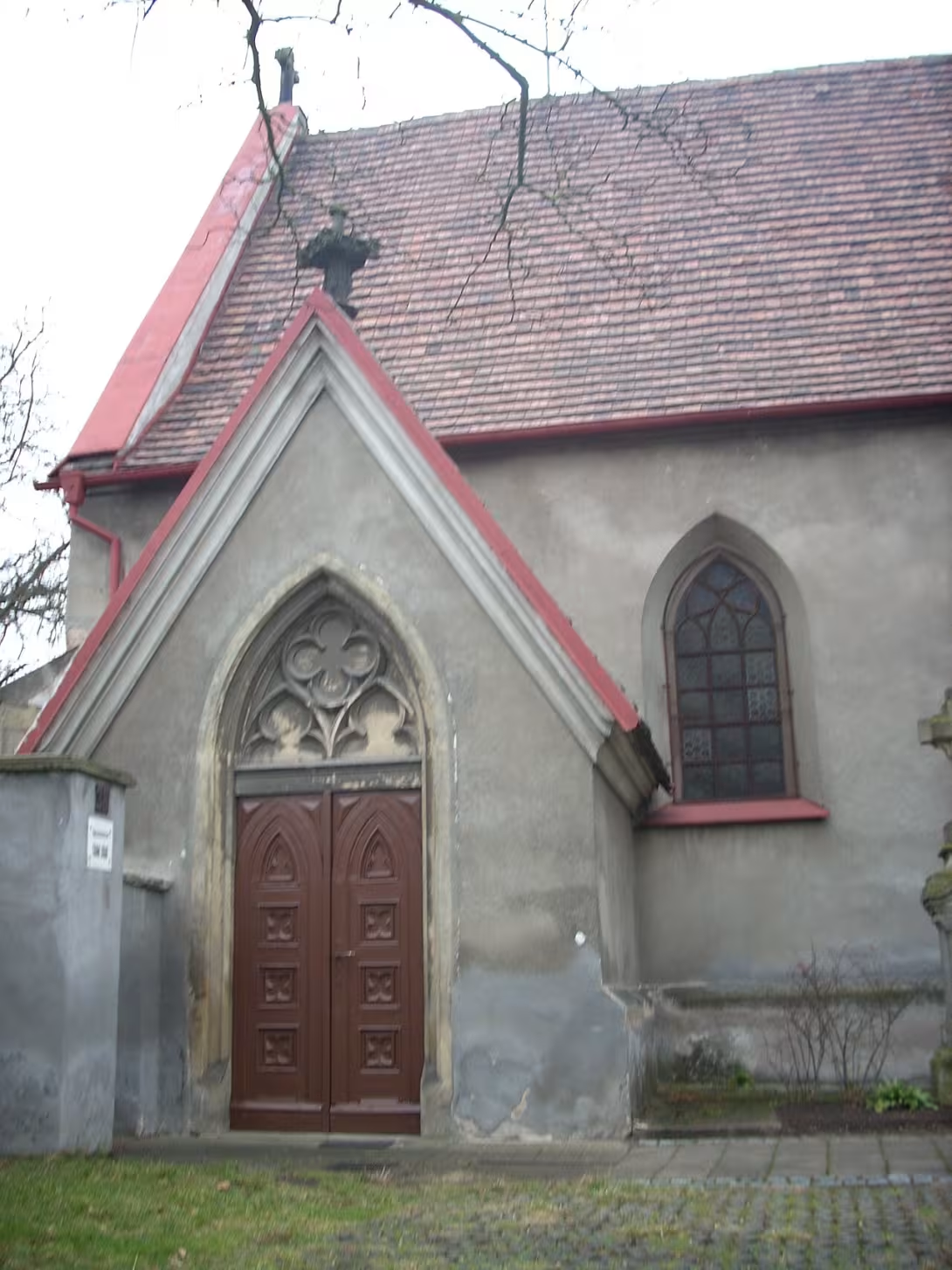
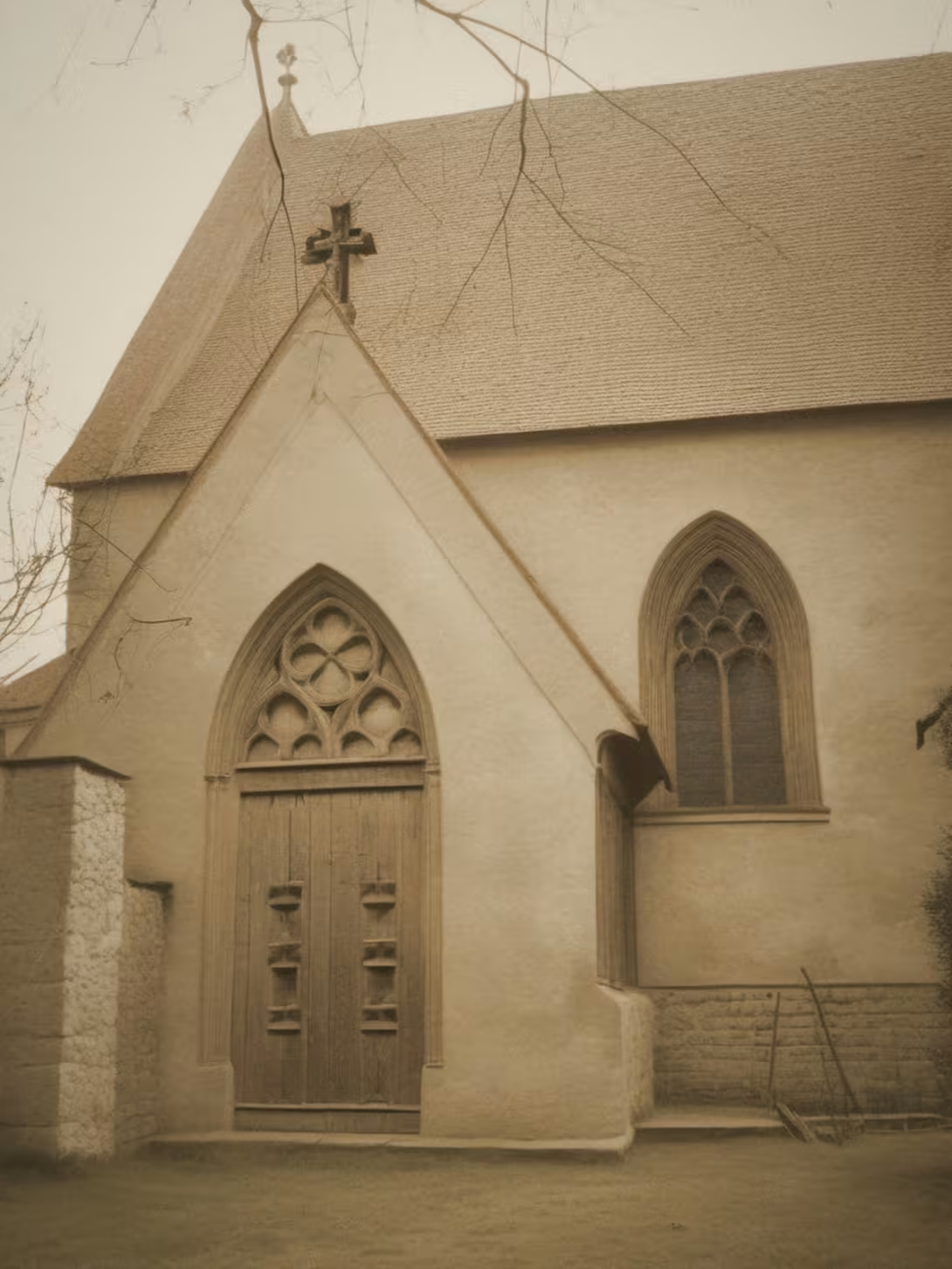
The historical appearance on the left is an AI-generated visualisation and serves as inspiration only.
Historical milestones
- 1325
- First written mention of the church in Rosie.
- 1583
- The burning of the church and its subsequent Renaissance restoration.
- 18th Century
- The position of the bell tower with the ground floor.
Architectural development
The original Gothic building was restored in Renaissance style after the fire in 1583. In the 1920s, the Baroque reconstruction took place and the interior was subsequently modified in a copal style.
Historical events
In 1325, the first written mention of the church appeared. In 1583 the church burned down and was subsequently restored in Renaissance style. In the 1920s, the Baroque reconstruction was carried out.
Points of interest
- The first written mention of the church in Rosie dates back to 1325. - After the fire in 1583, the construction was immediately restored in Renaissance style. - Next to the church there is an 18th century bell tower with a brick floor and a plaid floor. - Rococo main altar with the painting of St. Wenceslas in 1853 was repaired by painter Josef Papáček. - The fragment of the Renaissance portal from 1583 was transferred to the cemetery wall at the end of the 19th century.
Guide
Show guide text
This text was created by artificial intelligence and has not been editorially reviewed. It may contain inaccuracies.
Welcome to St. Wenceslas Church. You're standing in a place that's much more than just an ordinary building made of stone and mortar. Before your eyes is a monument that carries deep traces of human effort, faith and relentless forces of nature. Feel this atmosphere of peace and seriousness that radiates around this place in Pardubice. Now, if you look at the construction itself, you will see a solid, stone entity whose presence is unwavering. This building is not just a set of walls, but a living chronicler who quietly watches the changing face of the city and its surroundings. Feel the weight of history that settles in these stones and prepare to travel through time.
Let us now return together deep into the past to understand how this church was created and why it is so important here. To understand its roots, we need to look at the first written clues that have left us ancient times. As early as 1325, a reference to Rosice appears in the documents, which is the first historical proof of the existence of this church. Imagine that time when this area was different from what we know today, and when these first Gothic parts of the ship and the presbytery began to crystallize in a way that maybe even back then people perceived as something extraordinary. These original Gothic elements form the basic skeleton of the entire building and give it its original character.
But history has not always been about building and growth. Sometimes there are moments that change things. In 1583 something happened that could mean the end of this place - the church burned down. Imagine the moment the fire attacked this stone structure and compromised its existence. But that's where the power of the local community and their connection to this place manifested itself. Instead of being broken, they decided to recover immediately. This response to the disaster brought a new dimension to the church, as the construction was restored in the modern Renaissance style. This is how Gothic history began to intersect with the Renaissance spirit, creating a unique layer that we can perceive today. Later, the construction was further remodeled in Baroque style, creating the fascinating mix of different epoch you see here.
Now pay close attention to the architecture itself and to what you can see right now. Notice how the church is built with emphasis on stability. Its presbytery is closed by a tributary, which is a distinctive architectural element which gives the construction its specific shape and inner space. If you move around the building, pay attention to its immediate surroundings. Next to the church stands the bell tower, which in itself is a fascinating example of the then craft. It comes from the eighteenth century and its construction is very interesting. Notice the difference between its walled ground floor, which is hard and firm, and its rugged floor, which is much lighter. This contrast between stone and wood is a visible proof of how materials and methods of construction changed over time.
If you choose to enter the interior, prepare to meet with the space that surrounds you with its monumental nature. Note the vault that gives the roof a sense of height and harmony. In the interior you can also meet the Rococo elements, which were delivered later and which provide space softness and decorative richness. This whole space is the result of a long series of reconstructions, where every new era has tried to bring its own signature into the existing whole without completely wiping out what was before it.
Every such place is connected to people who have left their mark, even if their names may not be carved into stone at first sight. There are figures in the history of this place that are closely related to this space. We can mention names like Georg Adlspach z Damsdorfu, Valentin Žalud or Josef Papáček. Although their exact roles at any point in history may not be immediately clear to the ordinary visitor, their names are part of this historical fabric. They are people who were part of the life of this church, and their presence in the records reminds us that this monument was never just an empty building, but a living center that shaped the fate of the people around it for centuries.
I want to tell you now one interesting thing that might interest you, which underlines the constant movement of history in this place. We often think the monuments are static, but this church is an example of constant renewal. As I mentioned earlier, the rapid recovery after the fire in 1583 points to the enormous will of the people to regain their spiritual center. And if you look inside, don't release the main altar from the lip. It's a beautiful rococo element that was repaired in 1853. On this altar is a painting of St. Wenceslas, the patron saint whose name he gives the church. This altar is one of those details that links the older structure of the church to the newer period of the nineteenth century and remind us that care for this place has never been voted out.
Now you have a basic idea of what is in front of you and what a complex process this building has formed. But the best of this place is yet to come. I suggest you continue your search, see the details that you missed at first glance, and let the atmosphere of this historic place consume you. Look at the structure of the walls, see the light that passes through the spaces, and try to imagine the thousands of people who stood before you. Thank you for spending time with this monument and for choosing to recognize its history. We wish you a pleasant further discovery and a beautiful rest of the day.
Tips for visitors
The best time to visit St. Wenceslas church in Pardubice is during spring or autumn, when the weather is pleasant and usually without hot temperatures. This historic temple offers a quiet atmosphere that allows you to enjoy architectural details without excessive crowds of tourists.
Parking in Pardubice can be found in several places near the centre where the church is located. For those who prefer public transport, buses and trains are available to bring you to the centre of Pardubice. We recommend checking current connections with a search engine or mobile application for public transport.
When visiting the church, bring your protective sunglasses and plenty of drinking water, especially if you visit in warmer months. It is also important to carry a handbag or camera to capture beautiful interiors and architectural details of the temple.
Photography at St. Wenceslas Church offers several interesting perspectives. The best light for photos is usually found before or after the service, when the interior is lit less intensively. The interior of the temple and its Gothic elements are ideal for detailed images.
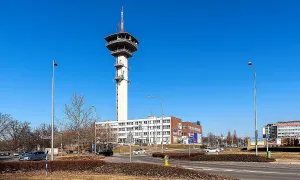
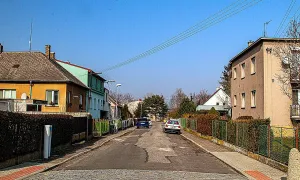
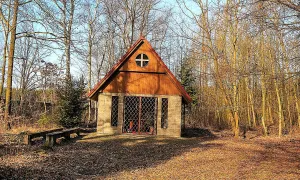
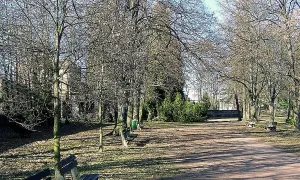
In the vicinity of St. Wenceslas church in Pardubice it is possible to visit the Blind Shoulder of the River Elbe, which offers a beautiful view and quiet space for relaxation. For families with children it is also advisable to visit the School Square in Rosie, where there are parks and playgrounds.
Businesses nearby
Do you run a restaurant, accommodation, shop, museum, rental, wellness or other visitor service near this monument? Show yourself directly to the people heading to it — this is how they will see you in the app and on the web:
Events nearby
Zdroj akcí: otevřená data měst a obcí ČR (Národní katalog otevřených dat) a kalendář akcí Národního památkového ústavu.
Nearby
The blind shoulder of the Elbe River and the Rosie School Square.
Accommodation nearby
Themed route
Church of St. Wenceslas Type: Sacral monument This dominance of the Pardubice landscape represents the main objective of your journey. Its architecture and history offer a deep insight into the spiritual heritage of the region and it is worth looking closely at.
School Square in Rosie Type: Public space After visiting the church, move to this quiet place, which serves as the central point of the location. It offers ideal space for relaxation and orientation in the surroundings before continuing the route.
Blind shoulder of the river Labe Type: Natural body This watercourse forms a picturesque background for your walk. The calm atmosphere at the water provides a pleasant contrast to historical architecture and allows relaxation in nature.
Church of St. Wenceslas Type: Sacral monument The final stop returns to the main destination so that you can enjoy the view of the church from a different angle or complete the details you missed on the first pass. Re-viewing the interior or courtyard will seal the impression of the whole trip.
This route is designed to be clear and logical. You start with the main target, which is the heart of the location. Subsequently, you are moving to the Rosie School Square, which acts as a point of transition. Then you will visit the Blind shoulder of the Elbe River where you will enjoy the natural beauty. Finally you return to the church of St. Wenceslas for a final look. The distances between the points are short and suitable for walking. The entire circuit is compact and allows you to combine a cultural experience with relaxation in nature without the need for long journeys.
Seasonal recommendations
Spring: In the spring period, the church of St. Wenceslas in Pardubice is strangely attractive thanks to sunny lighting, which emphasizes the architectural beauty of an antique building. Flowers and young leaves on the surrounding trees provide an environment of freshness and life. It is advisable to come to visit in the early afternoon when we often avoid crowds. Clothes should be mild: enjoy warm days with short gloves or uppers, as they may still be cold in the morning and evening.
Summer: Summer brings long sunny days that are ideal for exploring St. Wenceslas's church in Pardubice. The sun illuminates the interior and from the outside it is possible to enjoy pleasant moments on the outside platforms. This time of the annual period may be difficult due to a high number of tourists, especially in the main summer period. We recommend arriving early or late in the afternoon to avoid the biggest crowds. Don't forget sun protection and unfamiliar water for long walks.
Autumn: In autumn, the surrounding area of St. Wenceslas's Church in Pardubice is oddly colored thanks to the colourful leaves of the trees, which adds a mild melancholy to the atmosphere. The sun illuminates the church with long rays in the evening and creates breathtaking light effects. It is a good time to visit this afternoon when we avoid crowds and you can enjoy a quiet tour. Clothes should be mild: enjoy warm tops or coats, as autumn weather can quickly go to cool.
Winter: Winter visit to St. Wenceslas's Church in Pardubice offers a unique atmosphere, especially when the surrounding area is covered with snow. The sun rays illuminate the snowy terrain and the interior of the church becomes slightly darker, which strengthens its mystical atmosphere. In this period the opening hours are often shorter, so we recommend coming early in the afternoon. Clothes should be warm: remember all layers, wind protection and shoes suitable for snow.
Visualizations and artistic views


The visualisations are generated by artificial intelligence and serve as inspiration.
Photos from the area
Real photos taken near the monument


Zdroj a licence jsou uvedeny u každého snímku.
Tips from visitors
No tips yet. Be the first!
Log in and add your tip.
Sources and literature
Fotografie: Xhakl04 / CC BY-SA 3.0 — Wikimedia Commons. The author and licence also appear when you hover over the image.
Faktickým podkladem tohoto textu byl článek na Wikipedii, jehož autory jsou přispěvatelé Wikipedie. Článek je dostupný pod licencí CC BY-SA 4.0.
Location on the map

Příběhy a pověsti
Legendy, pověsti a příběhy spjaté s touto památkou
Fotografie návštěvníků
Zatím žádné fotografie. Buďte první, kdo přidá fotografii z návštěvy!
Přihlaste se a přidejte svou fotografii nebo hodnoťte.
Za ověřenou návštěvu v aplikaci získáte víc bodů — poznáme podle GPS, že jste na místě.
Reviews and comments