






Kostel svatého Václava (Skorotice) Church
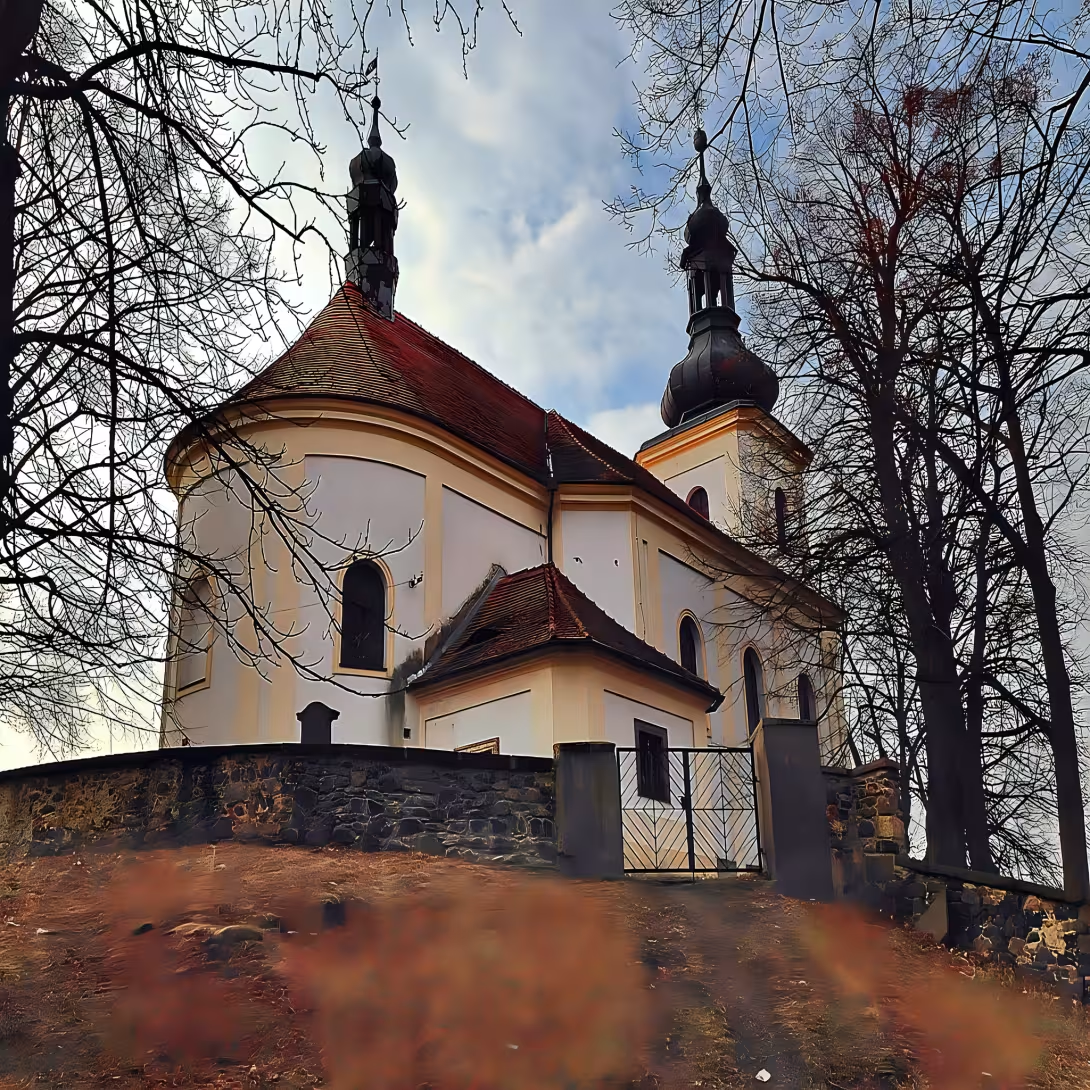
The Church of Saint Wenceslas in Skorotice is a Baroque church built between 1748 and 1755, replacing an earlier structure documented as early as 1352. Located in the village of Skorotice within Ústí nad Labem District, this single-nave building stands on the site of an ancient cemetery and serves as the parish church for the local Roman Catholic community. Regular services are held here, making it a focal point for both spiritual life and historical interest.
The origins of the Church of Saint Wenceslas trace back to 1352 when an earlier church was documented at this location. By the mid-18th century, during the cultural flourishing of the Habsburg Monarchy under Empress Maria Theresa's reign, the current Baroque structure replaced its predecessor. This period saw significant architectural developments across Europe, and Skorotice was no exception.
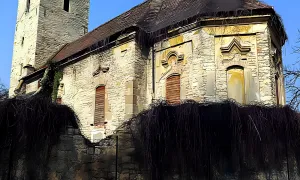
Architecturally, the church features a rectangular floor plan with chamfered corners and a semi-circular presbytery flanked by two sacristies. The smooth facades are framed by pilasters and lesenes, characteristic of Baroque style. Inside, notable elements include a pulpit from the mid-18th century adorned with a relief depicting the Assumption of Mary, as well as a Baroque baptismal font. A large bell from 1612, cast by Gabriel and Zachariáš Hilliger, hangs in the church tower alongside an iron bell from 1914.
Throughout its history, the church has faced structural challenges. Since 1914, there have been concerns about the building's stability, leading to stabilization works carried out in 1996. Despite these issues, the church remains a protected cultural monument of the Czech Republic. The surrounding area includes an ancient cemetery where notable individuals such as Ritter Furtenberg are buried. Four large-leaved linden trees and a Baroque crucifix add historical ambiance to the site.
Today, the Church of Saint Wenceslas stands as both a place of worship and a testament to the region's rich architectural heritage. Its preservation efforts ensure that visitors can appreciate its historical significance and artistic details. The church is accessible for regular services and offers a glimpse into the Baroque period's influence on local architecture. Visitors are invited to explore this site, where history and spirituality converge in a serene setting.
Then and now
Drag the slider to compare how the landmark may have looked when it was built with the view today.
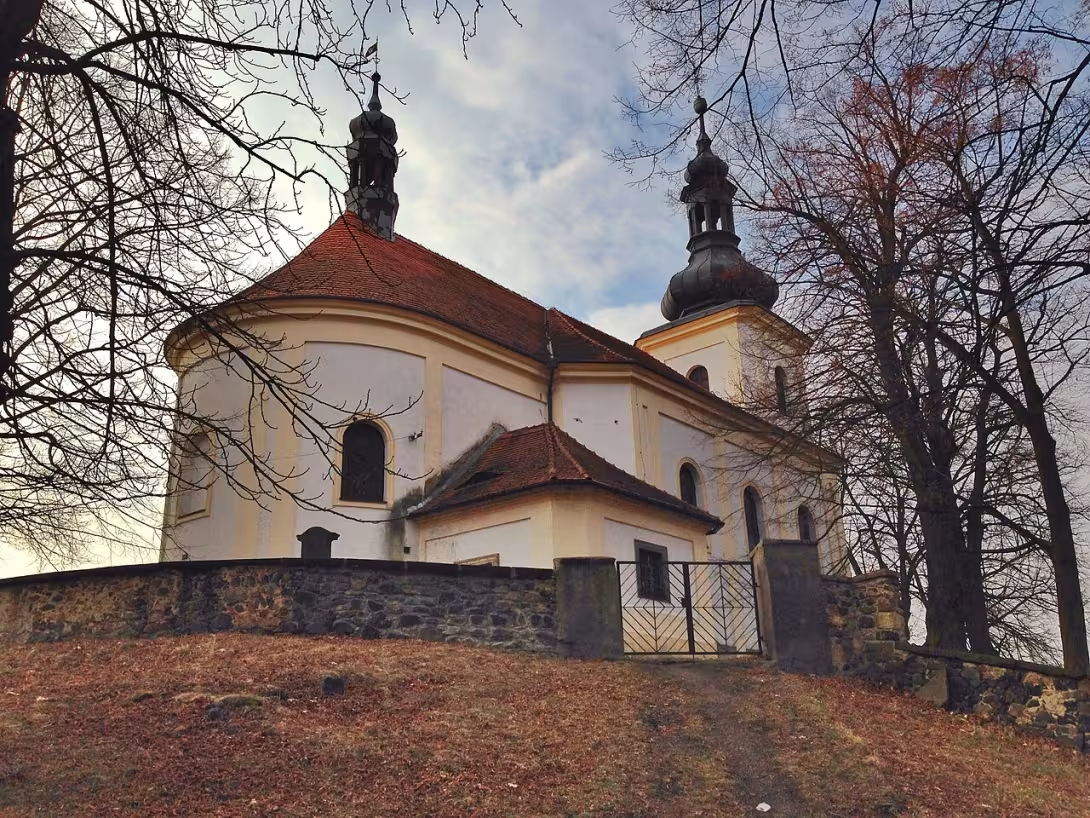
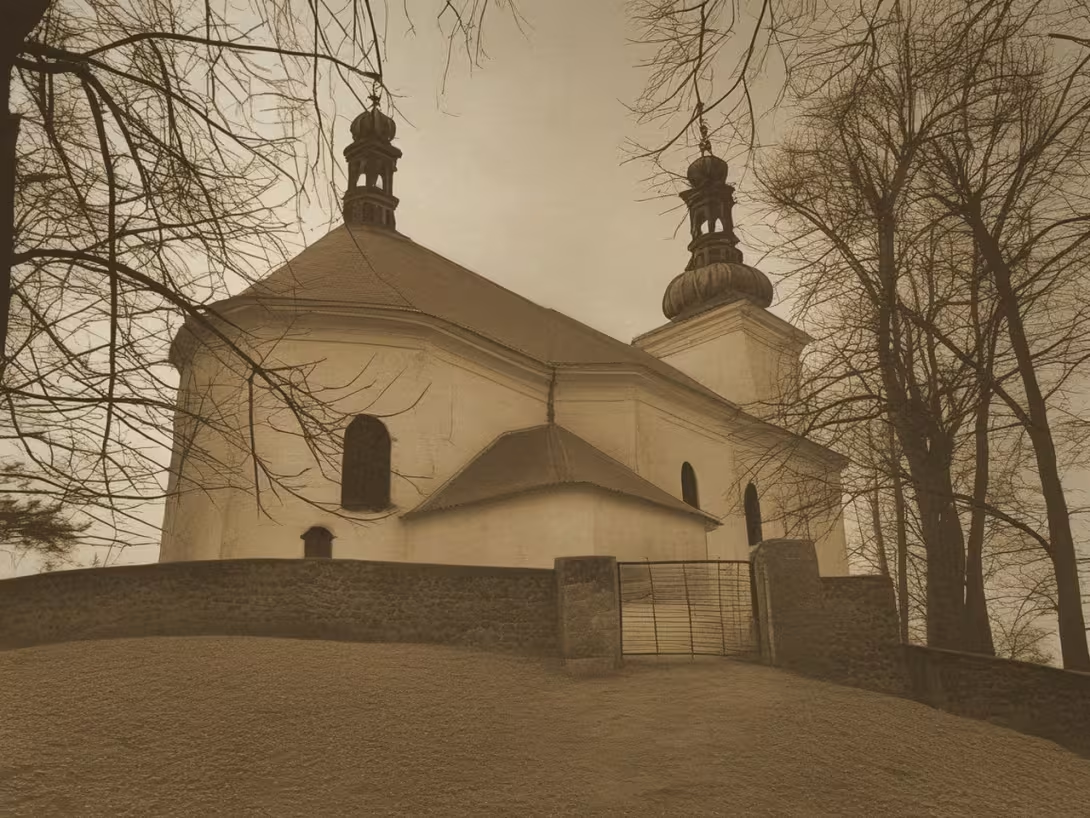
The historical appearance on the left is an AI-generated visualisation and serves as inspiration only.
Historical milestones
- 1352
- Dokumentace původního kostela na místě.
- 1748
- Začátek výstavby barokního kostela.
- 1755
- Dokončení barokního kostela svatého Václava.
- 1612
- Výroba velké zvonu Gabriel a Zachariáš Hilliger.
- 1914
- Zavedení železného zvonečku a začátek obav o stabilitu budovy.
- 1996
- Provádění prací na stabilizaci kostela.
Architectural development
Constructed between 1748 and 1755, the Church of Saint Wenceslas replaced an earlier church. The building features a baroque style with smooth facades framed by pilasters and lisenes. Notable interior elements include a pulpit from the mid-18th century adorned with a relief depicting the Assumption of Mary, as well as a baroque baptismal font.
Historical events
The original church on this site was documented in 1352.
In 1996, stabilization works were carried out due to structural risks identified since 1914.
Points of interest
- The Church of Saint Wenceslas replaced an earlier structure documented as early as 1352, indicating that the site has been a spiritual center for over six centuries. - A large bell from 1612, cast by Gabriel and Zachariáš Hilliger, is one of the church's oldest artifacts, hinting at connections to notable historical figures in Czech bell-making. - The church features a Baroque baptismal font and a pulpit adorned with a relief depicting the Assumption of Mary, showcasing intricate artistry typical of the mid-18th century. - Despite facing structural challenges since 1914, stabilization efforts in 1996 have preserved its integrity as a protected cultural monument, reflecting ongoing dedication to maintaining historical sites. - The ancient cemetery surrounding the church is notable for being the resting place of individuals like Ritter Furtenberg, adding layers of local history and intrigue to the site.
Guide
This guide is narrated by a synthetic voice generated by artificial intelligence.
Show guide text
This text was created by artificial intelligence and has not been editorially reviewed. It may contain inaccuracies.
Welcome to the historic Church of Saint Wenceslas in Skorotice, a captivating baroque masterpiece nestled within this serene locale. As you stand before it, take a moment to absorb its grandeur and the stories etched into its walls over centuries.
Constructed between 1748 and 1755, this church replaced an earlier structure documented as far back as 1352. The site itself has been a spiritual haven for over six hundred years, bearing witness to countless prayers and community gatherings. This single-nave building boasts a rectangular floor plan with chamfered corners, offering a simple yet elegant architectural form. As you look around, notice the semi-circular presbytery at its heart, flanked by two sacristies—a testament to thoughtful design that has served generations.
The church stands proudly on what was once an ancient cemetery, continuing its legacy as the parish church for the local Roma community. Its history is rich with events and artifacts that tell a story of resilience and faith. Among these treasures is a large bell from 1612, cast by Gabriel and Zachariáš Hilliger. This bell, one of the oldest artifacts within the church, hints at connections to broader historical narratives, resonating through time.
In 1914, concerns arose over the stability of this cherished structure when a new iron zvonček was introduced. By 1996, efforts were underway to stabilize and preserve the church for future generations to admire and cherish. While specific architects or key historical figures remain unnamed, their contributions are immortalized in every stone and beam.
As you explore further, let your imagination wander through time, envisioning the countless lives that have passed through this sacred space. The Church of Saint Wenceslas is more than just a building; it's a living tapestry woven with history, culture, and community spirit.
We invite you to continue exploring its surroundings, perhaps discovering hidden corners or simply enjoying the tranquility of Skorotice. Thank you for joining us on this journey through time, and may your visit leave you inspired and enriched.
Tips for visitors
The best time to visit the Church of Saint Wenceslas in Skorotice is during late spring or early autumn when the weather is mild, and the surrounding cemetery and linden trees are in full bloom. Visiting during these times not only provides pleasant temperatures but also enhances the historical ambiance with vibrant natural surroundings. Additionally, weekdays tend to be less crowded than weekends, offering a more serene experience.
Parking near Skorotice can be limited, so it is advisable to plan your visit by using public transportation if possible. The church and its surrounding area are accessible via local bus routes; however, specific line numbers should be checked in advance through a travel planner or the official website of the region. If driving, look for nearby parking spots along main roads leading into Skorotice.
When visiting the Church of Saint Wenceslas, it is recommended to bring comfortable walking shoes as you will likely explore the ancient cemetery and surrounding areas. A camera with a zoom lens can be useful for capturing detailed photographs of the church's architecture and the nearby baroque crucifix. Additionally, consider bringing a light jacket or sweater, as temperatures can vary throughout the day.
For photography enthusiasts, the best spots to capture the essence of the Church of Saint Wenceslas are from the entrance where you can frame the building with the large-leaved linden trees in the background. Early morning or late afternoon provides soft lighting that accentuates the baroque features and textures of the church. The ancient cemetery also offers unique opportunities for capturing historical gravestones and serene landscapes.
Families visiting the Church of Saint Wenceslas can enjoy a peaceful walk through the nearby protected cemetery, which is both educational and intriguing for children interested in history. Exploring the area around the four large-leaved linden trees and the baroque crucifix can be an engaging experience, offering stories about notable individuals buried there like Ritter Furtenberg. Ensure to have some snacks or a packed lunch as there are no immediate dining options within close proximity.
Businesses nearby
Do you run a restaurant, accommodation, shop, museum, rental, wellness or other visitor service near this monument? Show yourself directly to the people heading to it — this is how they will see you in the app and on the web:
Events nearby


Zdroj akcí: otevřená data měst a obcí ČR (Národní katalog otevřených dat) a kalendář akcí Národního památkového ústavu.
Nearby
The church is surrounded by an ancient cemetery where notable individuals such as Ritter Furtenberg are buried. Four protected large-leaved linden trees and a baroque crucifix stand nearby, adding to the site's historical ambiance.
Accommodation nearby
Trips and activities nearby
Guided tours, tickets and activities nearby from GetYourGuide
Affiliate link: if you buy from the partner, we may receive a commission. The price for you does not change.
Search tours and activities →Themed route
Tematická výletní trasa: Kostel svatého Václava (Skorotice)
1. Kostel svatého Václava (Skorotice) - *Typ:* Kostel - *Proč stojí za návštěvu:* Tento historický kostel je centrem trasy, nabízející pohled na architektonickou krásu a duchovní atmosféru. Je to výchozí bod pro prozkoumání bohaté historie obce.
2. Starobylá hřbitovní zahrada - *Typ:* Hřbitov - *Proč stojí za návštěvu:* Okolo kostela se rozprostírá starobylý hřbitov, kde leží významné osobnosti jako Ritter Furtenberg. Tato místa nabízejí poutavé historické připomínky a klidnou atmosféru pro zamyšlení.
3. Velkolisté lípy - *Typ:* Záchranné stromy - *Proč stojí za návštěvu:* Čtyři chráněné velkolisté lípy přidávají krajinný a historický význam oblasti. Jsou to živé památce minulosti, které dodávají míru a krásu okolí kostela.
4. Barokní kříž - *Typ:* Kříž - *Proč stojí za návštěvu:* Barokní kříž v hřbitovní zahradě představuje důležitou kulturní památku. Jeho umístění a design jsou svědectvím historického bohatství oblasti, které je třeba ocenit.
Tato trasa nabízí pohled na klidný a historicky bohatý kout Ústeckého kraje, zaměřujíc se na hlavní památku a její okolní zajímavosti.
Seasonal recommendations
Jaro: In the spring season, St. Wenceslas Church in Skorotice is enlivened by the return of life as the flowering garden around the church offers a green and pink carpet. This time of year is known for its mild days and occasional rains that enhance the natural beauty of the surrounding fields and forests. The atmosphere is calm with low tourist intensity, allowing detailed exploration of the church without unnecessary disturbance. For this season, we recommend wearing clothing suitable for mild weather and perhaps an umbrella, as spring clouds can bring unexpected showers. The best time to visit is in the early afternoon when sunlight illuminates the church and surrounding landscape.
Summer: In summer, St. Wenceslas Church in Skorotice comes alive with long days and warm sunny weather, attracting visitors seeking refuge from the heat. The green woods around the church offer shade and a peaceful place to rest, while the sunshine highlights the architectural beauty of the monument. This season is usually the most visited, so it's advisable to come early in the morning or later in the evening to avoid peak tourist times. Wearing light clothing and sunscreen is key for comfort during a visit this season.
Autumn: In autumn, St. Wenceslas Church in Skorotice takes on a colorful and changing atmosphere as the foliage of the forest vegetation shifts into golden, yellow, and red hues. This time of year is calm with fewer tourist crowds, allowing for more intimate exploration of the church and surrounding nature. Mild temperatures are ideal for long walks around the monument, while occasional rains can add a romantic touch to the atmosphere. It's recommended to wear an outer layer and possibly boots suitable for wet conditions, as the weather can be unpredictable with warm and cooler days.
Winter: A winter visit to St. Wenceslas Church in Skorotice offers unique views when snow covers the church and surrounding landscape in a white blanket. The atmosphere is calm with minimal visitors, allowing peaceful exploration of the monument in a quiet and often frosty environment. The church's opening hours are usually shorter, so it's important to plan accordingly. Wearing warm clothing, including leather boots and moisture-protective gear, is essential for comfort during a visit this season. The best time to visit may be at noon when sunlight provides mild temperatures and beautiful lighting effects on the snow-covered setting.
Visualizations and artistic views


The visualisations are generated by artificial intelligence and serve as inspiration.
Photos from the area
Real photos taken near the monument

Zdroj a licence jsou uvedeny u každého snímku.
Tips from visitors
No tips yet. Be the first!
Log in and add your tip.
Sources and literature
Fotografie: Ladislav Faigl / CC BY-SA 3.0, rozlišení zvýšeno umělou inteligencí — Wikimedia Commons. The author and licence also appear when you hover over the image.
Faktickým podkladem tohoto textu byl článek na Wikipedii, jehož autory jsou přispěvatelé Wikipedie. Článek je dostupný pod licencí CC BY-SA 4.0.
Location on the map

Příběhy a pověsti
Legendy, pověsti a příběhy spjaté s touto památkou
Fotografie návštěvníků
Zatím žádné fotografie. Buďte první, kdo přidá fotografii z návštěvy!
Přihlaste se a přidejte svou fotografii nebo hodnoťte.
Za ověřenou návštěvu v aplikaci získáte víc bodů — poznáme podle GPS, že jste na místě.
Reviews and comments