



kostel svatého Václava (Střemeníčko) Church
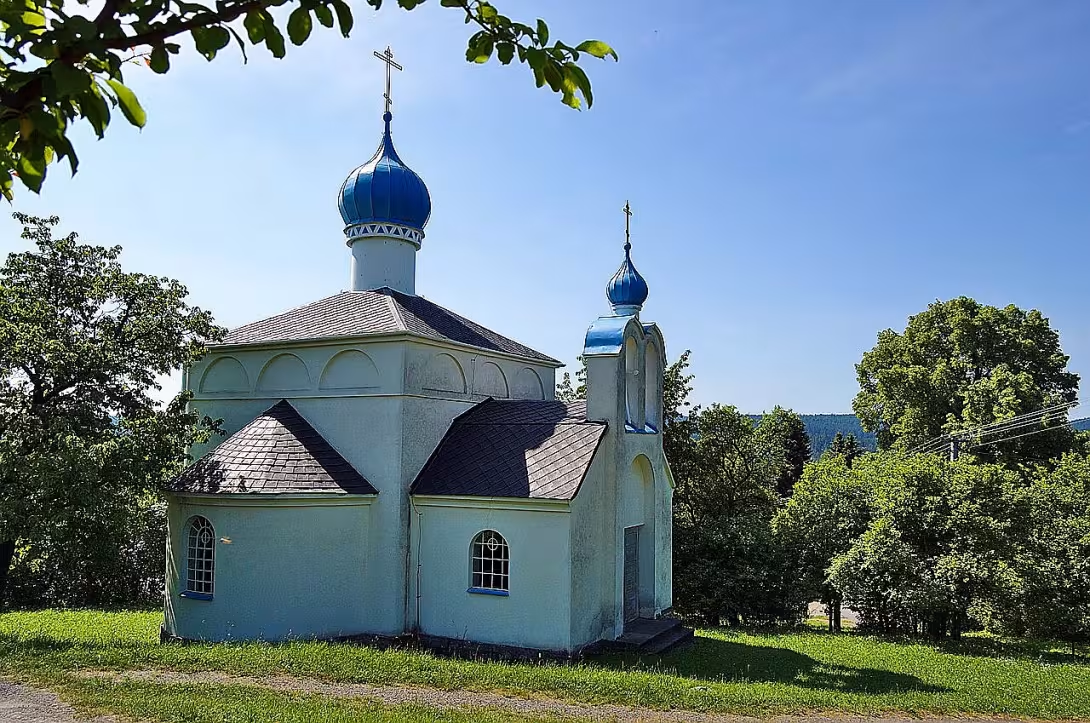
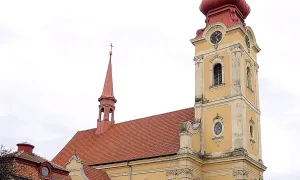
The Church of Saint Wenceslas in Střemeníčko is a modern Orthodox sacred building within the Řimice community, located in Luká municipality, Olomoucký kraj. Constructed between 1936 and 1937, it served local Orthodox believers who found traveling to services in Řimice challenging. Although not listed as a cultural monument, its historical significance is deeply rooted in the community's religious life.
The church's origins are linked to the establishment of an Orthodox Church Community in Řimice during the 1920s. Several dozen Orthodox residents of Střemeníčko and nearby areas found it difficult to attend services due to distance from Řimice, prompting the decision to build a closer church. The foundation stone was blessed on May 3, 1936, by Archimandrite Andrej Kolomacký, who also designed the project. Construction used materials saved from the nearby Church of Saints Cyril and Methodius in Chudobín, completed shortly before. Bishop Gorazd consecrated the church in May 1937, with finishing touches extending until 1939.
Architecturally, the Church of Saint Wenceslas features a unique design with a square base and semi-circular apses on three sides, reflecting both functional and spiritual considerations. The fourth side hosts a square vestibule topped with an arcade in the façade, originally intended for bells—though now only one remains. Inside, the nave is separated from the altar area by a simple iconostasis, also designed by Archimandrite Andrej Kolomacký. This design underscores the church's modest yet significant role as a spiritual center.
Throughout its history, the church has experienced various changes in administration and community engagement. Initially not intended to be a permanent seat for clergy, it was served by visiting priests or retired clergy who assisted where possible. Josef Mlčoch managed the church until 1942 when he perished after being taken for forced labor following Reinhard Heydrich's assassination. After World War II, his relative, Marie Mlčochová, took over these duties. Over time, spiritual administration shifted from Vilémov u Litovle to Chudobín and eventually back to Řimice. Despite a decline in regular services by the early 21st century, the church remains significant for its annual liturgy on Saint Wenceslas Day.
Today, while regular services have ceased, the Church of Saint Wenceslas continues to hold cultural and historical value for visitors interested in exploring religious diversity within Czechoslovakia's predominantly Catholic regions. Its unique architectural style and connection to local history make it a noteworthy site for those keen on understanding Orthodox Christianity's broader narrative in Central Europe.
Visitors are invited to explore this modest yet historically rich church, appreciating its role as a testament to community resilience and religious diversity during a transformative period in Czechoslovakia's history.
Then and now
Drag the slider to compare how the landmark may have looked when it was built with the view today.
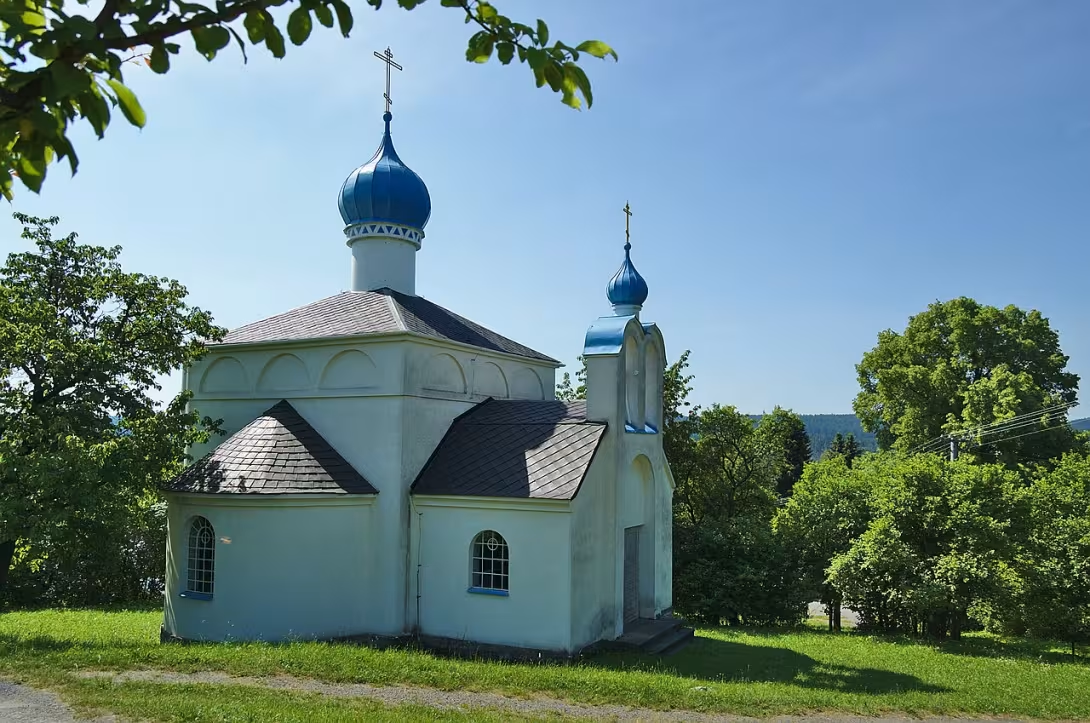
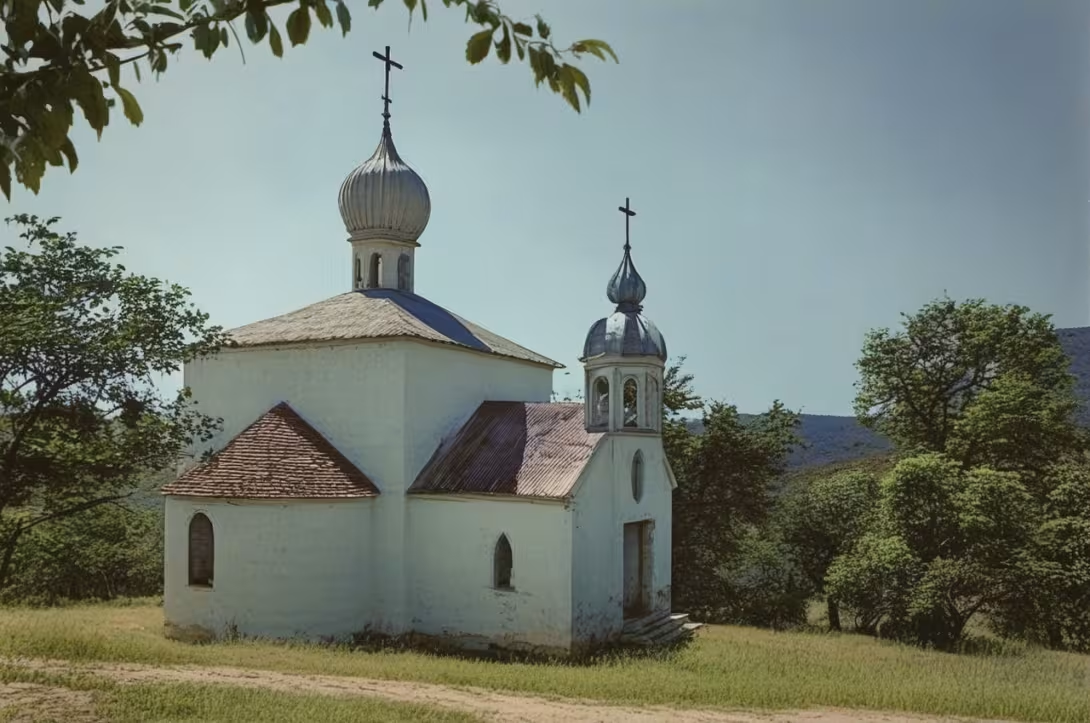
The historical appearance on the left is an AI-generated visualisation and serves as inspiration only.
Historical milestones
- 1936
- The foundation stone of the Church of Saint Wenceslas was blessed.
- 1937
- Bishop Gorazd consecrated the church.
Architectural development
The Church of Saint Wenceslas was constructed using materials saved from the nearby Church of Saints Cyril and Methodius in Chudobín. Designed by Archimandrite Andrej Kolomacký, it features a simple yet functional architectural style with an iconostasis separating the nave from the altar area, also designed by Kolomacký.
Historical events
- 1936
- The foundation stone of the Church of Saint Wenceslas was blessed on May 3rd.
- 1937
- Bishop Gorazd consecrated the church in May, with additional finishing touches completed by 1939.
Points of interest
- The Church of Saint Wenceslas was constructed using materials from the nearby Church of Saints Cyril and Methodius in Chudobín, showcasing resourcefulness and community collaboration during its development.
- Archimandrite Andrej Kolomacký played a dual role in the church's creation, both blessing the foundation stone and designing the interior elements such as the iconostasis, highlighting his significant influence on the project.
- The church originally featured four bells, but now only one remains. This reflects changes over time and perhaps challenges in maintaining or replacing historical artifacts within smaller communities.
- Josef Mlčoch, who managed the church until 1942, tragically perished after being taken for forced labor following Reinhard Heydrich's assassination, illustrating how local histories are intertwined with broader national events during turbulent times.
Guide
This guide is narrated by a synthetic voice generated by artificial intelligence.
Show guide text
This text was created by artificial intelligence and has not been editorially reviewed. It may contain inaccuracies.
Welcome to the Church of Saint Wenceslas in Střemeníčko, an architectural gem nestled within this serene landscape. As you stand before it, take a moment to absorb its modern yet timeless presence—a testament to both faith and community spirit.
This sacred building was constructed between 1936 and 1937, serving as a beacon for local Orthodox believers who previously faced challenges traveling to services in Řimice. The foundation stone of this church was blessed in 1936, marking the beginning of its journey. By 1937, Bishop Gorazd had consecrated it, solidifying its role within the community.
Architecturally, the Church of Saint Wenceslas is a marvel with its unique design featuring a square base and semi-circular apses on three sides. These elements not only define its aesthetic but also reflect its functional purpose—creating a space that resonates with both tradition and modernity.
As you gaze at the structure, notice how it harmoniously blends into its surroundings while standing out as a distinct landmark. The use of materials from the nearby Church of Saints Cyril and Methodius in Chudobín showcases resourcefulness and community collaboration during its development—a fascinating aspect of its history.
Archimandrite Andrej Kolomacký was instrumental in the church's creation, playing a dual role that left an indelible mark on this sacred place. His vision and dedication are woven into every corner of the building, inviting you to explore deeper connections with its past.
A particularly intriguing aspect of this church is how it embodies the spirit of adaptation and resilience. The repurposing of materials from another local church highlights a narrative of unity and shared heritage—a story that continues to inspire those who visit.
As we conclude our brief exploration, I invite you to continue discovering more about this remarkable place. Whether you're drawn by its architectural beauty or its rich history, the Church of Saint Wenceslas in Střemeníčko offers a unique glimpse into the heart of this community. Thank you for joining me on this journey, and may your visit be both enlightening and inspiring.
Tips for visitors
The best time to visit the Church of Saint Wenceslas in Střemeníčko is during late spring or early fall when the weather is mild, and the surrounding landscape is particularly beautiful with blooming flowers or colorful foliage. These seasons also tend to be less crowded, allowing for a more peaceful experience. Additionally, visiting on weekdays can provide an even quieter atmosphere compared to weekends.
This ensures a smooth journey without unexpected delays.
Also, carrying a light jacket is advisable since weather conditions can change quickly, especially during transitional seasons like spring and fall.
For photography enthusiasts, the best spots for capturing images of the Church of Saint Wenceslas are around its exterior where natural lighting enhances its modern Orthodox architecture. Early morning or late afternoon provides softer light that highlights the building's features beautifully. Inside, if permitted, photographing during services can offer a unique glimpse into the local religious practices.
Nearby attractions within 30 minutes include exploring the surrounding countryside of Střemeníčko, which offers picturesque landscapes perfect for nature walks or picnics. For families with children, this area provides an excellent opportunity to engage in outdoor activities and enjoy the natural beauty of the region.
Frequently asked questions
Can the monument be visited?
Religious buildings are usually open mainly during services; at other times a visit is normally arranged with the parish or the operator. We have not verified specific times.
Where is the monument?
Location: Střemeníčko, Olomoucký kraj. The map on this page shows the exact spot.
Businesses nearby
Do you run a restaurant, accommodation, shop, museum, rental, wellness or other visitor service near this monument? Show yourself directly to the people heading to it — this is how they will see you in the app and on the web:
Events nearby
Zdroj akcí: otevřená data měst a obcí ČR (Národní katalog otevřených dat) a kalendář akcí Národního památkového ústavu.
Accommodation nearby
Trips and activities nearby
Guided tours, tickets and activities nearby from GetYourGuide
Affiliate link: if you buy from the partner, we may receive a commission. The price for you does not change.
Search tours and activities →Themed route
Tematická výletní trasa - Kostel svatého Václava (Střemeníčko)
1. Kostel svatého Václava (Střemeníčko) - Typ: Historická památka - Proč stojí za návštěvu: Tento kostel je klíčovým historickým a kulturním centrem obce Střemeníčko. Jeho architektura odráží bohatou historii regionu, přičemž v sobotu může být místo pro návštěvu expozice nebo místních akcí.
2. Nádvoří kostela - Typ: Kulturní areál - Proč stojí za návštěvu: Nádvoří poskytuje klidné místo k prohlídce a odpočinku, zatímco si užíváte panoramatické výhledy na okolní krajinu. Zde můžete také přihlédnout ke kulturním akcím nebo tradičním událostem organizovaným komunitou.
3. Věž kostela - Typ: Historický prvek - Proč stojí za návštěvu: Výhled z věže nabízí jedinečný pohled na obec Střemeníčko a okolní krajinu. Je to ideální místo pro fotografii a prohlédnutí si historických detailů stavby.
4. Místní tržiště (pokud je k dispozici) - Typ: Tradiční místní akce - Proč stojí za návštěvu: Navštívte místní trh, který se koná v blízkosti kostela. Zde můžete objevit regionální produkty a potraviny, zatímco si užijete atmosféru tradičního trhu.
5. Kulturní centrum obce (pokud je k dispozici) - Typ: Kulturní instituce - Proč stojí za návštěvu: Toto místo nabízí různé kulturní akce, výstavy nebo workshop, které mohou být zajímavé pro zájemce o regionální kulturu a historii. Je to ideální doplněk ke hlavnímu cíli trasy.
Tato trasa nabízí komplexní pohled na kulturní a historický život obce Střemeníčko, zaměřený především kolem kostela svatého Václava.
Seasonal recommendations
Spring: Spring at the Church of Saint Wenceslas in Střemeníčko offers a rejuvenating atmosphere as nature awakens around this historical site. The surrounding landscape is adorned with blooming flowers and fresh greenery, providing a picturesque backdrop for visitors. Soft sunlight filters through budding trees, casting gentle shadows on the church's ancient stones. It's an ideal time to appreciate the natural beauty while exploring the serene ambiance of the area. Visitors should dress in layers as temperatures can vary, and early mornings might still be cool. This season typically sees fewer crowds, allowing for a more intimate experience.
Summer: Summer is the peak season for visiting the Church of Saint Wenceslas, with long daylight hours enhancing the church's architectural details under bright sunlight. The warm weather invites visitors to enjoy outdoor activities in the surrounding countryside. However, this also means larger crowds and busier days, so arriving early can help avoid the busiest times. Comfortable walking shoes and light clothing are recommended due to the heat, along with sunscreen for protection against prolonged sun exposure. This period offers vibrant community events that add to the lively atmosphere.
Autumn: Autumn transforms Střemeníčko into a tapestry of warm colors as leaves turn amber and gold, creating an enchanting setting around the Church of Saint Wenceslas. The cooler temperatures make it pleasant for leisurely strolls through the area, with crisp air enhancing the sensory experience of visiting historical sites. This season often sees fewer visitors compared to summer, providing a quieter opportunity to explore. Layered clothing is advisable as evenings can become chilly quickly, and carrying an umbrella might be wise due to unpredictable weather.
Winter: Winter envelops the Church of Saint Wenceslas in Střemeníčko with a serene, almost mystical atmosphere. The church stands out against the stark beauty of the snow-covered landscape, offering a unique perspective on its historical architecture. Shorter days mean earlier closures, so planning your visit during daylight hours is essential. Visitors should dress warmly in insulated clothing and wear waterproof footwear to navigate potentially icy paths comfortably. Despite fewer visitors due to colder weather, this season offers a peaceful experience with minimal distractions from the natural beauty of winter.
Visualizations and artistic views


The visualisations are generated by artificial intelligence and serve as inspiration.
Photos from the area
Real photos taken near the monument


Zdroj a licence jsou uvedeny u každého snímku.
Tips from visitors
No tips yet. Be the first!
Log in and add your tip.
Sources and literature
Photos: Jiří Komárek / CC BY-SA 4.0 — Wikimedia Commons. The author and licence also appear when you hover over the image.
Faktickým podkladem tohoto textu byl článek na Wikipedii, jehož autory jsou přispěvatelé Wikipedie. Článek je dostupný pod licencí CC BY-SA 4.0.
Location on the map
Příběhy a pověsti
Legendy, pověsti a příběhy spjaté s touto památkou
Fotografie návštěvníků
Zatím žádné fotografie. Buďte první, kdo přidá fotografii z návštěvy!
Log in a přidejte svou fotografii nebo hodnoťte.
Za ověřenou návštěvu v aplikaci získáte víc bodů — poznáme podle GPS, že jste na místě.
Reviews and comments