






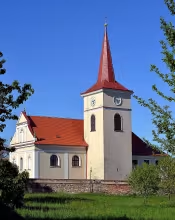
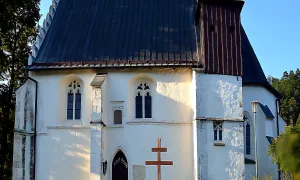
The Church of Saint Lawrence in Domašov is a Roman Catholic church located in the village within the Brno-Country District. Recognized as a cultural monument of the Czech Republic, this parish church stands out for its historical importance and architectural evolution from late Romanesque to early Baroque styles. Originally constructed before 1255, it underwent significant transformations over the centuries, culminating in an expansion and redesign into an early Baroque style by 1670.
The origins of the Church of Saint Lawrence trace back to a period when late Romanesque and early Gothic architectural elements were prevalent. Built before 1255, its initial structure featured a rectangular chancel and eastern sections of the nave's walls, which have survived through time. The church's historical context is deeply rooted in the broader European landscape of the late 17th century, during which it was transformed into an early Baroque edifice. This era coincided with Bohemia being part of the Habsburg Monarchy, a period marked by significant religious and architectural shifts influenced by events like the Thirty Years' War and the Counter-Reformation.
Architecturally, the Church of Saint Lawrence has undergone several notable changes. Initially constructed in a late Romanesque to early Gothic style, it saw additions such as a sacristy on its northern side and a bell tower on the southern side during the first half of the 16th century. The most substantial transformation occurred in 1670 when the church was expanded westward, redesigned into an early Baroque style, and its vaulting altered to a barrel shape. Further modifications included adding a clock face to the tower in 1879 and constructing a new sacristy with an oratory on the south side of the chancel in 1908.
Throughout its history, the Church of Saint Lawrence has remained a central religious site for the local community. Its architectural evolution reflects broader historical trends and cultural influences, making it a significant monument within the region. The church's transformation into an early Baroque structure during the late 17th century highlights its adaptation to changing artistic and religious currents.
Today, the Church of Saint Lawrence stands as a testament to the rich history and cultural heritage of Domašov. It remains accessible to visitors who wish to explore its architectural beauty and historical importance. The church's journey from a medieval structure to an early Baroque masterpiece offers a unique glimpse into the past, making it a worthwhile destination for those interested in architecture, history, or religious heritage.
Visiting the Church of Saint Lawrence provides an opportunity to connect with the cultural and historical narratives that have shaped this region. Its enduring presence as a parish church underscores its importance to the local community while inviting visitors to appreciate its architectural evolution and historical significance.
Historical milestones
- prior to 1255
- The original construction of St. Lawrence's Church.
- first half of the 16th century
- Addition of a sacristy and tower.
- 1670
- Transformation into early Baroque architecture.
- 1879
- Installation of clock on church tower.
- 1908
- Construction of a new sacristy and oratory.
Architectural development
Initially constructed in a late Romanesque to early Gothic style before 1255, the Church of Saint Lawrence saw significant architectural changes by the mid-16th century with additions like a sacristy and a bell tower. The most substantial transformation occurred in 1670 when it was expanded westward, redesigned into an early Baroque style, and its vaulting altered to a barrel shape. Further modifications included adding a clock face to the tower in 1879 and constructing a new sacristy with an oratory on the south side of the chancel in 1908.
Historical events
The original late Romanesque to early Gothic structure of the church was built before 1255.
In 1670, the church underwent major reconstruction, expanding and redesigning it into an early Baroque style.
Points of interest
- The Church of Saint Lawrence was initially constructed before 1255 and features remnants of its original late Romanesque architecture in the eastern sections of the nave's walls, showcasing a rare survival of medieval construction techniques.
- In the first half of the 16th century, the church underwent significant additions with a sacristy on its northern side and a bell tower on the southern side, reflecting the architectural trends and practical needs of that era.
Guide
Show guide text
Welcome to the Church of Saint Lawrence in Domašov, a serene and historic Roman Catholic church nestled within this charming village in the Brno-Country District. As you stand here, take a moment to absorb the peaceful atmosphere surrounding this cultural monument of the Czech Republic.
The origins of this church trace back before 1255, where its initial construction began with elements of late Romanesque architecture. Over time, it evolved through various architectural phases, including early Gothic influences. By the first half of the 16th century, significant additions were made to the structure, such as a sacristy and a tower, enhancing both its functionality and grandeur.
Fast forward to 1670, when the church underwent a transformation into early Baroque architecture, marking a new era in its long history. This period introduced more ornate elements that you can still sense today. In 1879, the church's tower was further adorned with the installation of bells, adding an auditory dimension to its visual splendor.
As you look around, notice how the eastern sections of the nave's walls retain remnants of their original late Romanesque architecture. These rare survivals offer a glimpse into medieval construction techniques and are testament to the craftsmanship of a bygone era. Although the architects remain unknown, the church stands as a silent witness to countless stories and lives that have passed through its doors.
While specific historical figures connected to this site might not be documented, the Church of Saint Lawrence has undoubtedly been a focal point for the local community throughout its existence, serving as their parish church and spiritual haven.
One fascinating aspect of this church is how it encapsulates centuries of architectural evolution while maintaining its core identity. It’s intriguing to think about the hands that shaped these stones and the prayers whispered within these walls over generations.
As you continue your exploration, I invite you to take in every detail—the way light filters through the windows, casting patterns on the ancient stone floors, and the subtle echoes of history embedded in each corner. This church is not just a building; it's a living narrative waiting for you to discover its secrets.
Thank you for joining me on this journey through time at the Church of Saint Lawrence. I encourage you to wander further and let your curiosity guide you as you uncover more about this remarkable place. Safe travels, and may your visit here be both enlightening and inspiring.
Businesses nearby
Do you run a restaurant, accommodation, shop, museum, rental, wellness or other visitor service near this monument? Show yourself directly to the people heading to it — this is how they will see you in the app and on the web:
Accommodation nearby
Trips and activities nearby
Guided tours, tickets and activities nearby from GetYourGuide
Search tours and activities →Themed route
Tematická výletní trasa: Kostel svatého Vavřince (Domašov) a okolí
1. Kostel svatého Vavřince, Domašov - *Typ:* Religiózní památka - *Proč stojí za návštěvu:* Tento barokní kostel je nejen duchovním centrem obce, ale také architektonickou perli s bohatými historickými prvky. Jeho interiér nabízí pohled na umělecká díla a historické artefakty, které svědčí o dlouhodobém kulturním vývoji oblasti.
2. Obecní úřad Domašov - *Typ:* Historický stavební objekt - *Proč stojí za návštěvu:* Původně sloužil jako školní budova, tento historický objekt představuje architektonické změny v regionu. Jeho fasáda a interiér zachovávají prvky minulých století, což poskytuje vhled do místního dědictví.
3. Kaple svaté Anny - *Typ:* Religiózní památka - *Proč stojí za návštěvu:* Tato kaple, nacházející se nedaleko kostela svatého Vavřince, je známá svým klidným prostředím a historickou hodnotou. Je to místo pro meditaci a poskytuje pohled na místní krajinu.
4. Náves Domašov - *Typ:* Městské náměstí - *Proč stojí za návštěvu:* Centrální část obce, kde se nachází místní tržiště a historické budovy. Náves je ideálním místem pro procházku, přestávku a poznání každodenního života v Domašově.
5. Místní muzeum (pokud existuje) - *Typ:* Kulturní instituce - *Proč stojí za návštěvu:* Muzeum nabízí exponáty a informace o historii Domašova a okolního regionu. Je to výchozí bod pro pochopení kulturního a historického kontextu oblasti.
Tato trasa poskytuje komplexní pohled na duchovní, historickou a kulturu Domašova, což ji činí ideální pro návštěvníky zainteresované v hlubší znalosti této oblasti.
Seasonal recommendations
Jaro: In the spring, St. Lawrence Church in Domašov is a hive of activity as nature awakens and the surrounding green meadows take on beautiful hues. Sunny days provide ideal lighting for photographing the architectural details of the church, with sunlight creating exciting shadows and colors. Visitors may be affected by chilly mornings and dampness during this period, so it's advisable to dress in layered clothing that can easily adapt to changing conditions. Due to its attractive weather, the church is popular among visitors, especially on Saturday afternoons and weekends, so it is recommended to visit early in the morning or later in the day for a more relaxed experience.
Léto: The summer months bring warm sunny days and long hours of daylight, creating ideal conditions for visiting St. Lawrence Church. The green meadows around the monument take on full color, and the sounds of birds add to an atmosphere of tranquility, making it an inviting environment for relaxation. However, the peak of the summer season can mean high visitor numbers, especially midweek and during the day, so it is advisable to visit early in the morning or later in the evening. Dress lightly but don't forget sun protection and plenty of drinking water.
Podzim: In autumn, the area around St. Lawrence Church in Domašov takes on a special pastel hue as tree leaves change into vibrant shades of red and orange. This seasonal shift creates a romantic atmosphere ideal for leisurely strolls or photography. While visitor numbers are usually lower compared to summer, there may be a slight increase due to tourist activities related to holidays like St. Catherine's Day. It is advisable to dress warmly and bring blankets or throws for comfort, especially if visiting the church later in the day.
Zima: During the winter months, the atmosphere around St. Lawrence Church in Domašov is quiet and serene, with the possibility of seeing snow cover on mountains and trees. This seasonal change brings unique aesthetic views often illuminated by the light reflecting off weathered buildings and the church itself. However, opening hours for the monument may be reduced during winter months, so it's important to check current times before visiting. Given the cold conditions and possible snow, dressing warmly is essential, including a coat, protective footwear, and wide gloves. Visiting the church early in the morning can be an ideal choice for experiencing tranquility without crowds.
Visualizations and artistic views

Vizualizace jsou generovány umělou inteligencí a slouží jako inspirace.
Tips from visitors
No tips yet. Be the first!
Log in and add your tip.


Reviews and comments