



Kostel svaté Kateřiny (Svatá Kateřina) Church
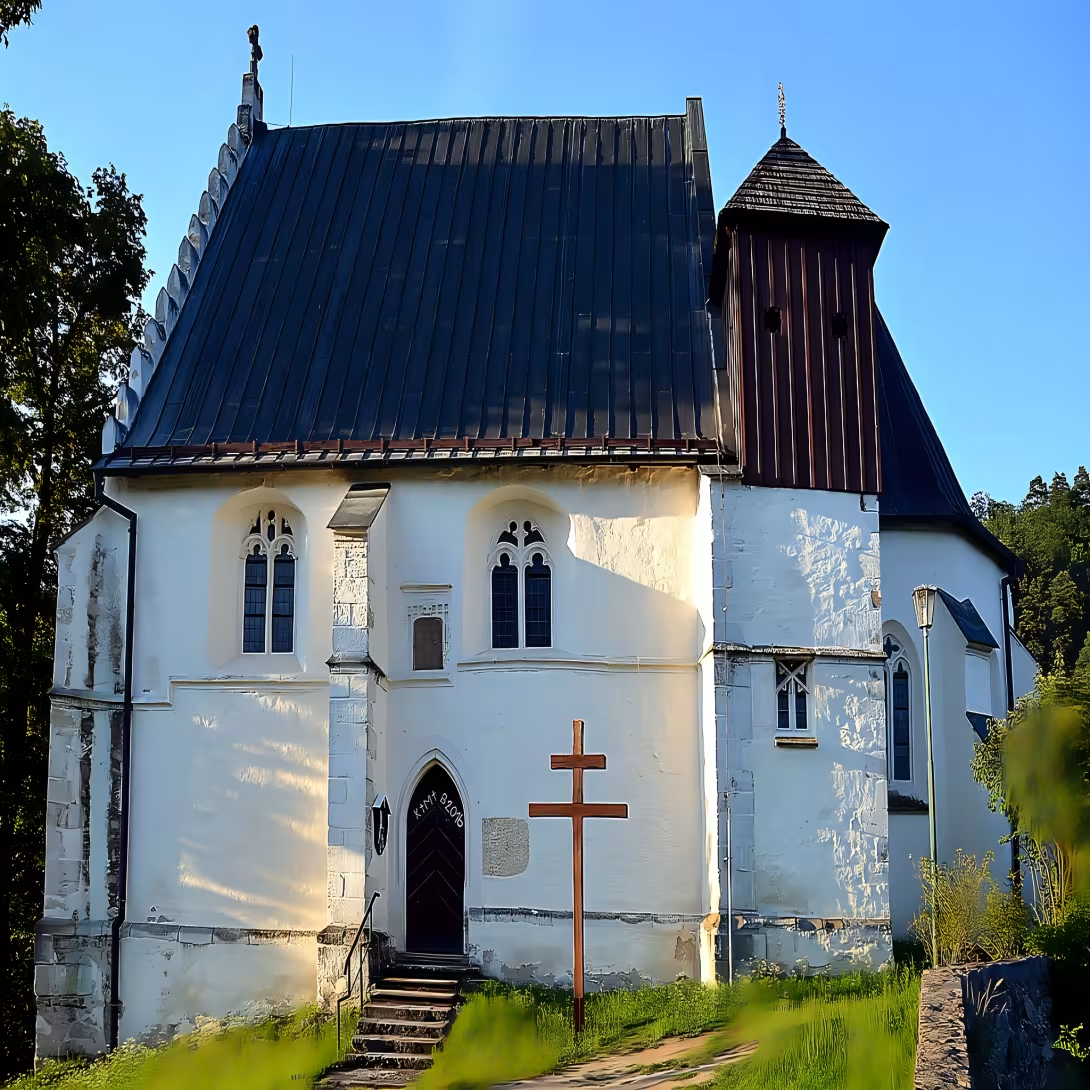
The Church of Saint Catherine in Svatá Kateřina is a late Gothic church with significant historical importance. Situated in the village of Svatá Kateřina, Jihomoravský kraj, it stands on an elevated rocky outcrop traditionally linked to a pagan sacrificial stone and later associated with Saints Cyril and Methodius. The current form dates back to the end of the 15th century, constructed or reconstructed by the Černohorský family from Boskovice. Despite several renovations, it has retained its original late Gothic style.
The origins are intertwined with local legends and historical figures. Tradition holds that the site was once a pagan sacrificial stone, later linked to Saints Cyril and Methodius who reportedly stopped there in 861 on their journey from Olomouc to Brno. The church's current form emerged at the end of the 15th century under the Černohorský family’s influence. It is unclear whether this structure represents a new construction or a transformation of an existing building.
Architecturally, the Church was built in two phases: the presbytery slightly earlier than the nave. Originally dedicated to Saints Peter and Paul, it features a polygonal presbytery, a three-aisled hall with cross vaulting, and a low bell tower. The main altar, dedicated to Saint Catherine, dates back to 1710. Notably, the church has retained its original late Gothic style without later architectural modifications.
Throughout history, the Church experienced shifts between Catholic and Protestant clergy, leading to multiple consecrations marked by red crosses on the walls. In the 19th century, due to deterioration, a reconstruction funded by public collection took place, completed in 1855. During this period, numerous ancient pilgrim inscriptions were discovered on the interior walls during later reconstructions.
The church has been a significant pilgrimage site since the post-White Mountain period, associated with various miracles and healings, as evidenced by commemorative plaques. A Roman papal brief from 1733 attests to its importance, guaranteeing indulgences for pilgrims visiting the church. Pilgrimages continue today, held in summer around Saints Cyril and Methodius' feast day and in November on Saint Catherine's day.
Today, the Church of Saint Catherine remains a site of historical and cultural interest. Regular services are held only on Saturdays, but it is open to visitors during events like "Noci kostelů" (Night of Churches). The church’s preservation of its late Gothic style, along with its rich history and connection to local legends, makes it a worthwhile destination for those interested in exploring the region's heritage. Visitors can appreciate not only the architectural beauty but also the layers of history embedded within this remarkable monument.
Then and now
Drag the slider to compare how the landmark may have looked when it was built with the view today.
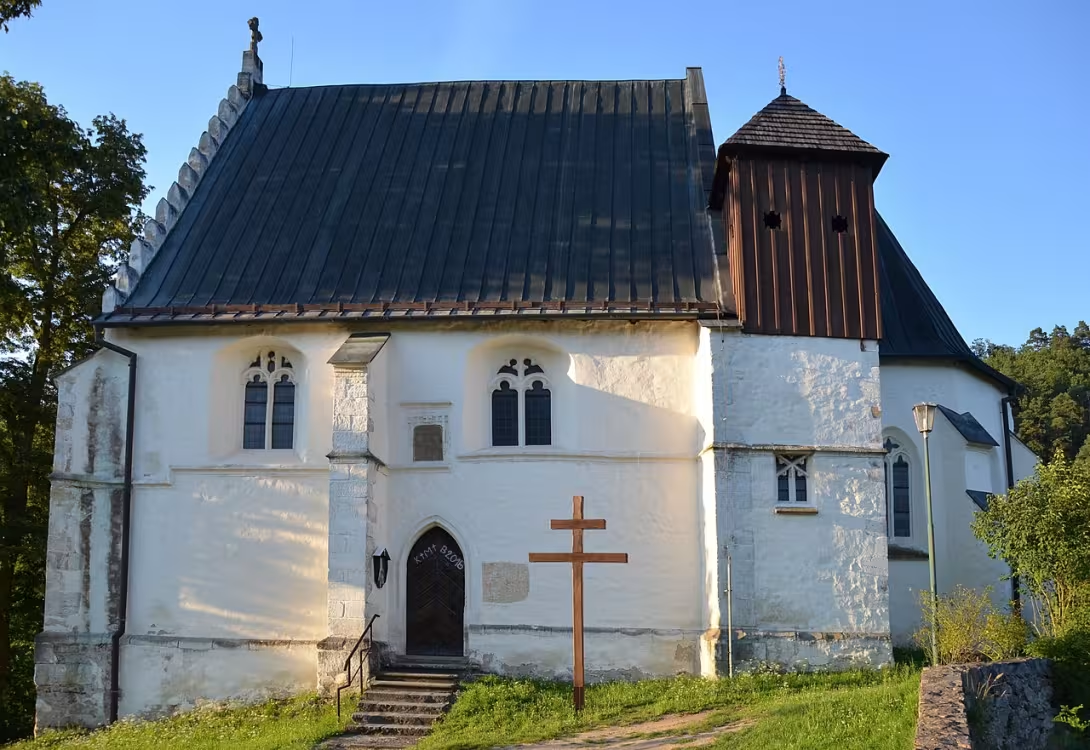

The historical appearance on the left is an AI-generated visualisation and serves as inspiration only.
Historical milestones
- 1855
- Completion of the church's reconstruction funded by public collection.
- 20th century
- Repairing of damaged vaults during early 20th-century renovations.
Architectural development
The church was constructed in two phases with the presbytery built slightly earlier than the nave. Originally dedicated to Saints Peter and Paul, it features a polygonal presbytery, a three-aisled hall with cross vaulting, and a low bell tower. The main altar, dedicated to Saint Catherine, dates back to 1710.
Historical events
The church was associated with both Catholic and Protestant clergy throughout its history, leading to multiple consecrations marked by red consecration crosses on the walls.
In the 19th century, due to deterioration, a reconstruction funded by public collection took place, completed in 1855.
Points of interest
- The Church of Saint Catherine is built on a site traditionally linked to a pagan sacrificial stone, which later became associated with Saints Cyril and Methodius. This connection highlights the blending of pre-Christian and Christian traditions in the area.
- It's uncertain whether the church represents a new construction or a transformation of an existing building at the end of the 15th century, reflecting common practices of that era where older structures were often repurposed rather than completely rebuilt.
- The church has undergone several consecrations marked by red crosses on its walls, indicating shifts between Catholic and Protestant clergy over time. This reflects the historical religious tensions in the region during different periods.
- During a 19th-century reconstruction funded by public collection, numerous ancient pilgrim inscriptions were discovered on the interior walls. These inscriptions provide valuable insights into the church's long history as a pilgrimage site.
- A Roman papal brief from 1733 granted indulgences to pilgrims visiting the Church of Saint Catherine, underscoring its significance within the Catholic tradition and attracting visitors seeking spiritual benefits.
Guide
This guide is narrated by a synthetic voice generated by artificial intelligence.
Show guide text
This text was created by artificial intelligence and has not been editorially reviewed. It may contain inaccuracies.
The Church of Saint Catherine stands on an elevated rocky outcrop in the village of Svatá Kateřina, which today belongs to the municipality of Šebrov-Kateřina in the Blanensko region. According to local legend, there used to be a pagan sacrificial stone at this site. Later, the place became associated with Cyril and Methodius. They are said to have stopped here in the year 861 on their way from Olomouc to Brno and erected a cross. A first wooden church was supposed to have grown in its place.
The present late Gothic appearance dates from the end of the 15th century and is connected with the family of the Černohorskis of Boskovice. It is not entirely clear whether this was a new construction or a renovation of an older church. Building apparently took place in two phases, with the chancel built somewhat earlier than the nave. The church was originally apparently dedicated to Saint Peter and Paul, as suggested by an inscription on the choir loft. Unlike most similar structures, it was not renovated in later centuries, and so it has retained its original Gothic appearance. By the 19th century it was quite dilapidated. A folk collection paid for its repair, which was completed in 1855. In the nineteen twenties, the damaged vault was then repaired.
It is a small building made of rough stone. It has a many-sided chancel, a three-aisled nave with a cross vault and a low prismatic bell tower, made of stone at the bottom and wood at the top. The main altar of Saint Catherine dates from 1710, and the wooden statue of the saint is from the 15th century. Original paintings have been preserved on the walls, ancient pilgrimage inscriptions and a number of red crosses. These remind us that Catholic and Protestant priests alternated here several times, and the church had to be reconsecrated repeatedly. Figural paintings, on the other hand, are completely absent.
After the Thirty Years' War, the church became a popular pilgrimage site. Memorial plaques commemorated miracles and healings. In the 17th century, an inhabited hermitage is also documented here. A papal brief from 1733 guaranteed pilgrims indulgences. Pilgrimages take place to this day, in summer around the feast of Cyril and Methodius, and in November on the feast of Saint Catherine.
The origin of the church is accompanied by a number of uncertainties. The structure is more elaborate than would be expected of a simple country church. Moreover, a vault was discovered under the floor in the first half of the 19th century. Only a few damaged wooden coffins were found in it, and we still do not know who it was originally meant to serve.
Frequently asked questions
Can the monument be visited?
Religious buildings are usually open mainly during services; at other times a visit is normally arranged with the parish or the operator. We have not verified specific times.
Where is the monument?
Location: Svatá Kateřina, Jihomoravský kraj. The map on this page shows the exact spot.
Why is the monument protected?
It is listed in the Central List of Cultural Monuments of the Czech Republic as a cultural monument (register no. 33787/7-616).
Businesses nearby
Do you run a restaurant, accommodation, shop, museum, rental, wellness or other visitor service near this monument? Show yourself directly to the people heading to it — this is how they will see you in the app and on the web:
Events nearby




Zdroj akcí: otevřená data měst a obcí ČR (Národní katalog otevřených dat) a kalendář akcí Národního památkového ústavu.
Accommodation nearby
Trips and activities nearby
Guided tours, tickets and activities nearby from GetYourGuide
Affiliate link: if you buy from the partner, we may receive a commission. The price for you does not change.
Search tours and activities →Themed route
Tematická Výletní Trasa: Kostel svaté Kateřiny a Okolí
1. Kostel svaté Kateřiny (Svatá Kateřina)
Typ: Religiózní památka
Proč stojí za návštěvu: Tento barokní kostel je architektonickou perli obce Svatá Kateřina, známý svou krásnou vnitřní dekorací a historií. Je to ideální místo pro ty, kdo mají zájem o dějiny a umění.
2. Obecní úřad Svatá Kateřina
Typ: Administrativní budova
Proč stojí za návštěvu: Obecní úřad je nejen administrativním centrem obce, ale také hostí různé kulturní akce a výstavy. Je to skvělý způsob, jak se dozvědět více o místní komunitě a jejích aktivitách.
3. Místní tržiště
Typ: Tržiště
Proč stojí za návštěvu: Místní tržiště nabízí širokou paletu produktů od místních zemědělců a řemeslníků. Je to skvělý příležitost pro nakupování autentických potravin a ručně vyrobených výrobků, stejně jako pro setkání s místními obyvateli.
4. Park u kostela
Typ: Místní park
Proč stojí za návštěvu: Park u kostela je místo klidu a odpočinku, kde si můžete užít přírodní krásy obce. Je to ideální místo pro piknik nebo jen pro chvilku relaxace v zeleni.
5. Místní muzeum
Typ: Muzeum
Proč stojí za návštěvu: Místní muzeum nabízí vhled do historie a kultury obce Svatá Kateřina. Exponáty zde představují život místních obyvatel v minulosti, což je cenný zdroj informací pro každého, kdo se zajímá o historii.
Tato trasa nabízí komplexní pohled na kulturní a historickou bohatost obce Svatá Kateřina.
Seasonal recommendations
Spring: Visiting the Church of Saint Catherine during spring offers a unique experience as the surrounding landscape bursts into vibrant colors with blooming flowers and fresh greenery, creating an enchanting atmosphere. Visitors should be prepared for occasional showers typical of the season by wearing layers that can easily be adjusted. Arriving early in the day is advisable to avoid larger crowds and fully appreciate the serene ambiance before midday.
Summer: The summer months bring a lively atmosphere to the Church of Saint Catherine, with longer daylight hours allowing visitors to explore both the church's interior and its picturesque surroundings under bright sunlight. This period often sees an increase in visitor numbers due to school holidays, so arriving early is recommended to enjoy a quieter visit. Comfortable walking shoes are essential for exploring the area comfortably, and light clothing is advisable to stay cool during the warmer days.
Autumn: Autumn presents a spectacular backdrop of golden hues and falling leaves around the Church of Saint Catherine, offering a cozy and reflective atmosphere perfect for photography or leisurely walks. The cooler temperatures make it an ideal time for visitors who prefer less crowded conditions compared to summer months. Layered clothing is recommended to accommodate the fluctuating temperatures typical of this season. This period also offers a more intimate experience with fewer tourists around, allowing for a deeper appreciation of the church's serene beauty.
Winter: Winter transforms the Church of Saint Catherine into a picturesque scene with snow-covered surroundings and potentially festive decorations during the holiday season. The shorter days mean visiting hours are reduced, so planning ahead is crucial to ensure you have enough time to explore. Warm clothing, including coats, hats, and gloves, is essential to stay comfortable in the cold weather. Despite the chilly conditions, winter offers a unique charm with its quiet atmosphere and stunning views of the church against the backdrop of a crisp winter landscape.
Visualizations and artistic views


The visualisations are generated by artificial intelligence and serve as inspiration.
Photos from the area
Real photos taken near the monument


Zdroj a licence jsou uvedeny u každého snímku.
Tips from visitors
No tips yet. Be the first!
Log in and add your tip.
Sources and literature
Photos: Lasy / CC BY-SA 4.0, rozlišení zvýšeno umělou inteligencí — Wikimedia Commons. The author and licence also appear when you hover over the image.
Faktickým podkladem tohoto textu byl článek na Wikipedii, jehož autory jsou přispěvatelé Wikipedie. Článek je dostupný pod licencí CC BY-SA 4.0.
Location on the map




Příběhy a pověsti
Legendy, pověsti a příběhy spjaté s touto památkou
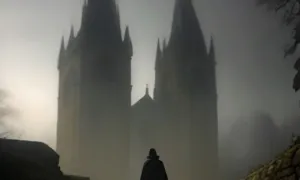
Příběh: Kostel svaté Kateřiny (Svatá Kateřina)
Bylo to v pondělí ráno, kdy Martin zjistil, že jeho život je na půli roztržený provazem viny a lítosti. Stál u kamenitého schodiště vedoucího nahoru do koste…
Číst příběh
Pověst: Kostel svaté Kateřiny (Svatá Kateřina)
Podle místní pověsti stávalo na skalním ostrohu nad Svatou Kateřinou, dávno předtím než znělo v těchto končinách slovo křesťanské, místo, které lidé v okolí …
Číst příběhFotografie návštěvníků
Zatím žádné fotografie. Buďte první, kdo přidá fotografii z návštěvy!
Log in a přidejte svou fotografii nebo hodnoťte.
Za ověřenou návštěvu v aplikaci získáte víc bodů — poznáme podle GPS, že jste na místě.
Reviews and comments