






Kostel svatého Vavřince (Ruda nad Moravou) Church
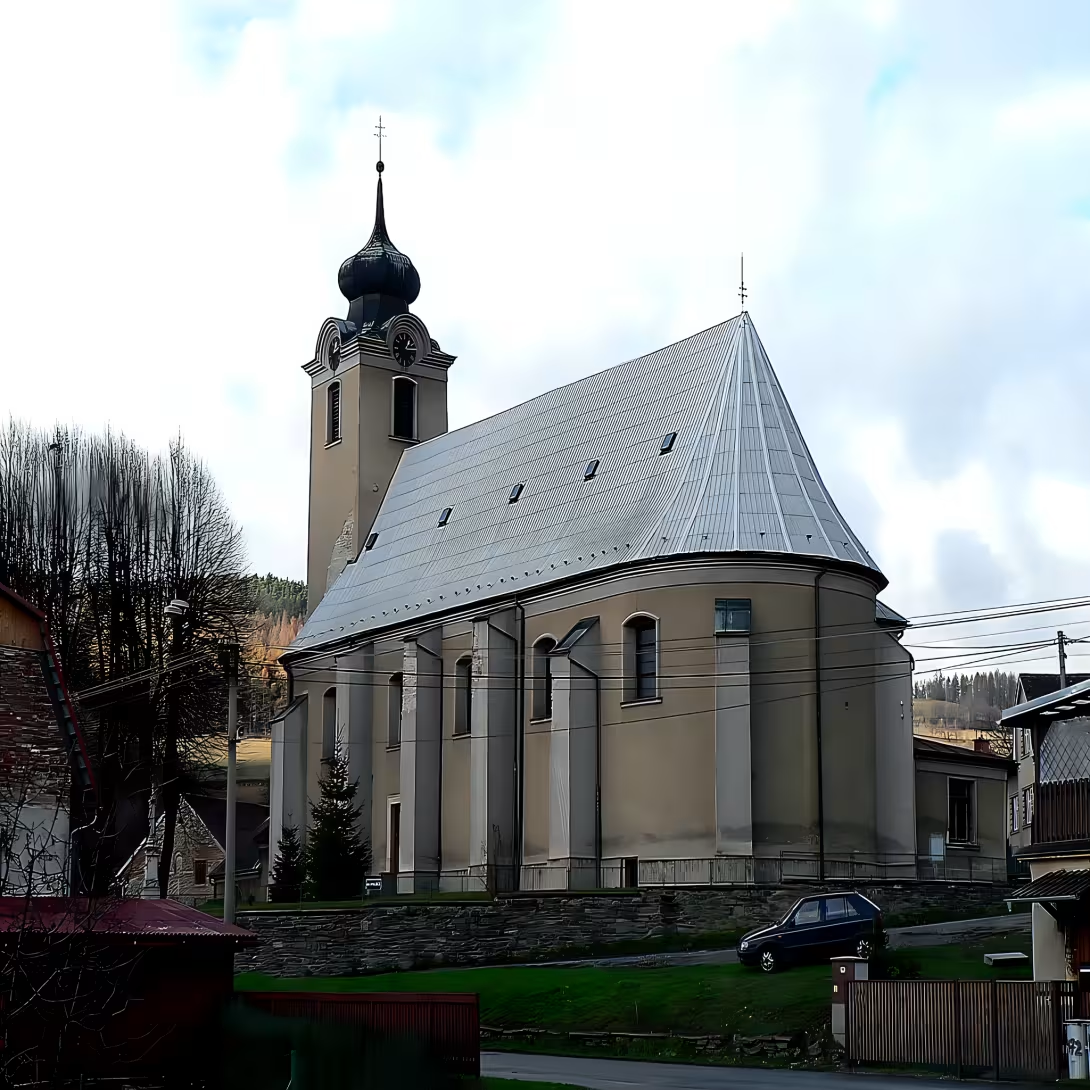
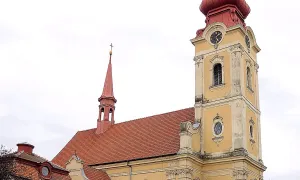
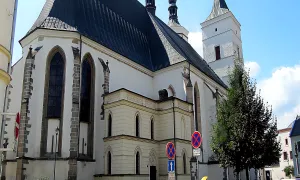
The Church of Saint Lawrence in Ruda nad Morava is an architectural highlight of the village, serving as its parish church. Built at the end of the 18th century, it replaced a medieval Gothic structure destroyed during the Thirty Years' War and rebuilt in 1676. The current neoclassical building, consecrated in 1806, features a wooden tower with shingle roofing and is adorned with significant artworks, including an altarpiece by Ignác Dullinger.
The church's origins trace back to the early 14th century when records first mention a parish in Ruda nad Morava with a Gothic church and cemetery. The original structure was destroyed during the Thirty Years' War, leading to its reconstruction in 1676. By the late 18th century, under the Lichtenštejn family's ownership since 1622, Prince Alois Josef Lichtenštejn commissioned the new neoclassical church on a former cemetery site. This period marked significant socio-political changes in Bohemia as part of the Habsburg Monarchy, influenced by Enlightenment ideas that shaped architecture and religious practices across Europe.
Architecturally, the Church of Saint Lawrence underwent several transformations over the centuries. Initially Gothic, it was replaced with a neoclassical design featuring a wooden shingled tower. The church's interior includes an altarpiece by Ignác Dullinger, a notable Viennese painter, adding to its artistic significance. In the late 19th century, additions included a new stone bell tower with a belfry and renovations to the interior. Further modifications occurred in the mid-20th century following Vatican II guidelines, leading to changes such as the removal of altars and installation of new flooring.
Throughout its history, various owners and administrators influenced the church's development. The Lichtenštejn family played a crucial role during its construction in the late 18th century. More recently, figures like farář ThDr. František Tomáštík contributed to its enhancement between 1918 and 1938 through renovations and improvements.
Key events include its consecration in 1806 and several architectural modifications over the years. Notably, two original bells were requisitioned during World War I for military purposes, reflecting the broader historical context of the time. The church's location on elevated ground with a stone retaining wall that once bordered an old cemetery adds to its historical charm.
Today, the Church of Saint Lawrence remains a significant cultural and architectural landmark in Ruda nad Morava. It stands as a testament to the village's rich history and evolving styles of religious architecture over centuries. The church is accessible to visitors interested in exploring its neoclassical design, artistic elements, and historical significance. Its role as part of a cultural, social, and sports center further enhances its value as a community hub.
Visiting the Church of Saint Lawrence offers a unique opportunity to delve into the architectural and historical tapestry of Ruda nad Morava. It stands not only as a place of worship but also as a monument encapsulating centuries of history, artistry, and cultural evolution.
Then and now
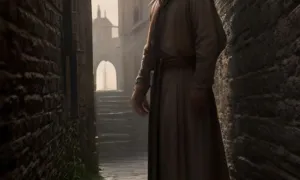
Drag the slider to compare how the landmark may have looked when it was built with the view today.
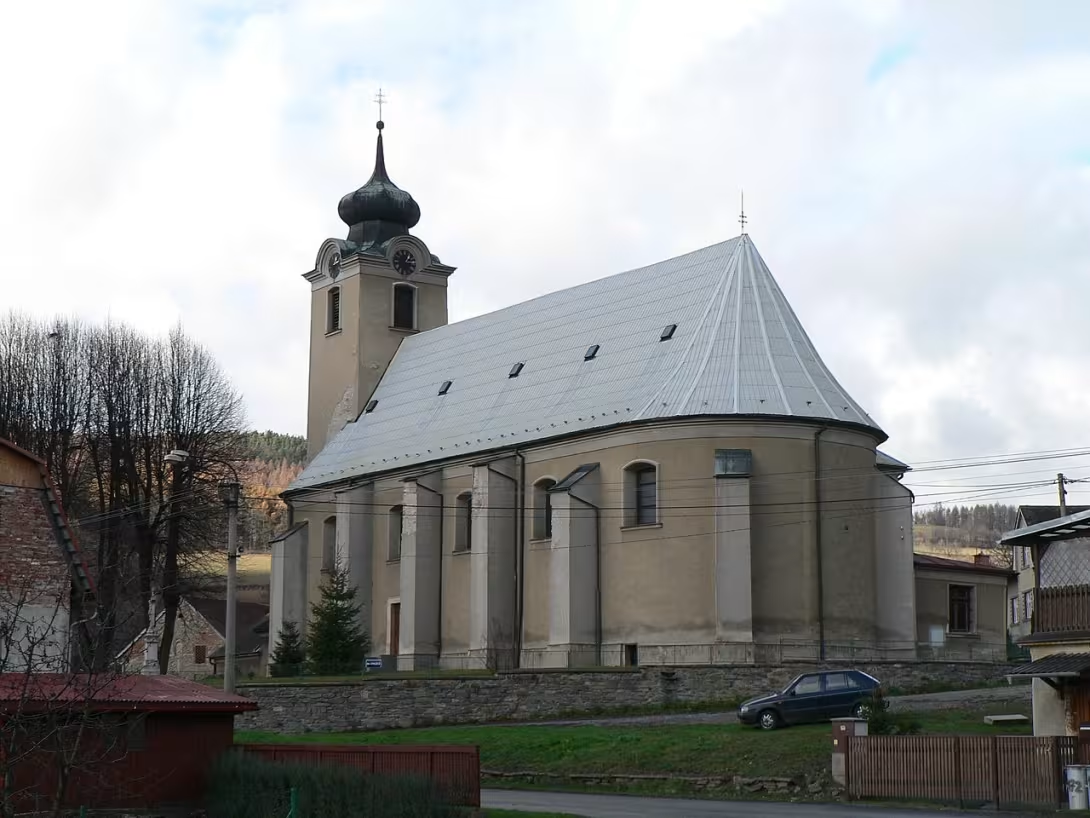
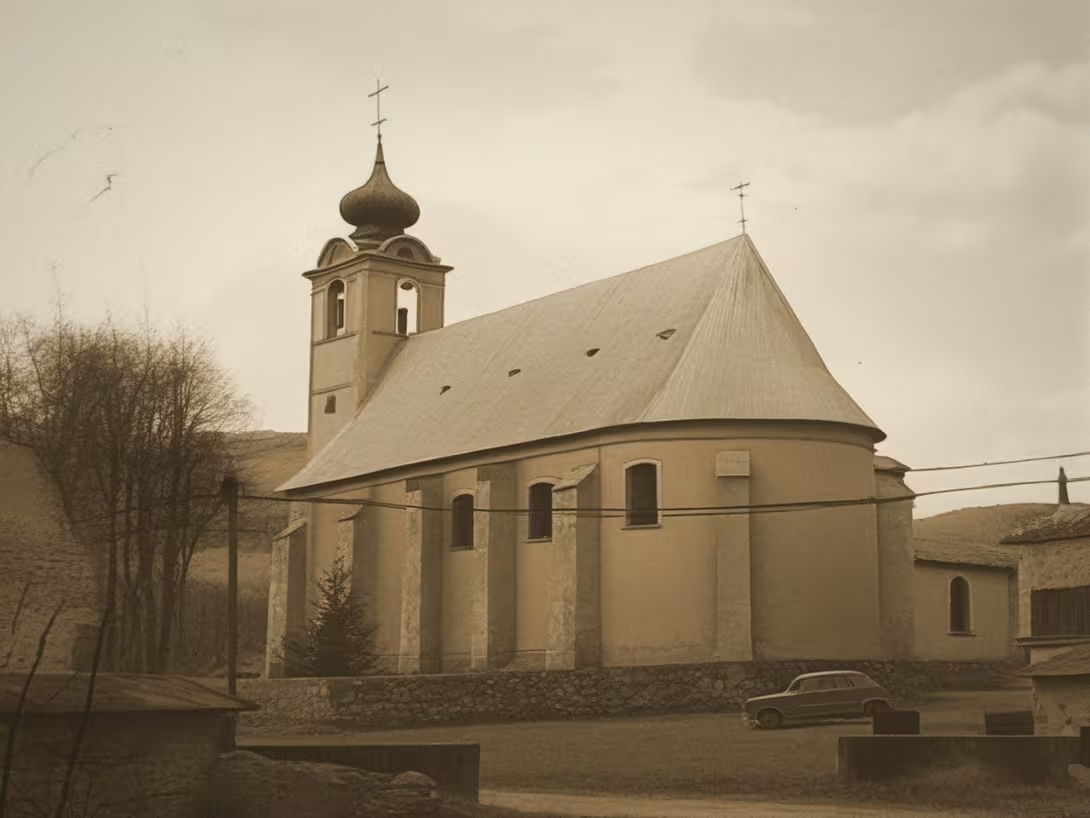
The historical appearance on the left is an AI-generated visualisation and serves as inspiration only.
Historical milestones
- 1806
- The church was consecrated.
- 1852
- A covered walkway with stairs was added to the church.
- 1886
- A new stone bell tower with a belfry was constructed.
Architectural development
The Church of Saint Lawrence underwent several architectural changes over the centuries. Initially a Gothic structure, it was replaced in the late 18th century with a neoclassical design featuring a wooden shingled tower and an altarpiece by Ignác Dullinger. In the late 19th century, additions included a new stone bell tower and renovations to the interior. Further modifications occurred in the mid-20th century following Vatican II guidelines.
Historical events
In 1351, the first written records mention a parish in Ruda nad Morava with a Gothic church and cemetery.
The original church was destroyed during the Thirty Years' War, leading to its reconstruction in 1676.
A new neoclassical church was built between 1784 and 1806 by Prince Alois Josef Lichtenštejn.
Owners
The estate of Ruda nad Morava belonged to the Lichtenštejn family from 1622. In 1784, Prince Alois Josef Lichtenštejn commissioned the construction of the new church on the site of a former cemetery.
Points of interest
- The Church of Saint Lawrence replaced a medieval Gothic structure that was destroyed during the Thirty Years' War and rebuilt in 1676, highlighting the turbulent history of Ruda nad Morava during this period. - Two original bells from the church were requisitioned for military use during World War I, illustrating how historical events impacted local religious sites.
- The church's wooden tower with shingle roofing is a distinctive feature that contrasts with its neoclassical design, reflecting a blend of architectural influences over time.
Guide
This guide is narrated by a synthetic voice generated by artificial intelligence.
Show guide text
This text was created by artificial intelligence and has not been editorially reviewed. It may contain inaccuracies.
Welcome to the Church of Saint Lawrence in Ruda nad Morava, a remarkable architectural gem nestled within this charming village. As you stand here, take a moment to absorb the serene ambiance that envelops you. The church's neoclassical façade stands as a testament to both history and artistry, its wooden tower capped with shingle roofing gracefully reaching towards the sky.
The story of this church is deeply intertwined with Ruda nad Morava’s turbulent past. Originally, a medieval Gothic structure occupied this site, which was destroyed during the Thirty Years' War—a period marked by widespread conflict across Europe. In 1676, the community rebuilt their place of worship, only for it to be replaced at the end of the 18th century with the current neoclassical edifice we see today. Consecrated in 1806, this church marks a new chapter, symbolizing resilience and renewal.
Now, let your eyes wander across the architectural details that define this sacred space. Notice the elegant lines and proportions characteristic of neoclassicism, which give it an air of timeless grace. The wooden tower is particularly striking, its shingle roofing contrasting with the stonework below—a blend of materials that speaks to both tradition and innovation.
As you walk around, consider the historical figures connected to this site. Alois Josef Lichtenštejn stands out as a notable personality linked to the church’s history, though much about him remains enshrouded in mystery, adding an intriguing layer to your visit.
A fascinating tidbit about the church is its resilience during times of conflict. During World War I, two original bells from this very tower were requisitioned for military use—a reminder of how even places of peace can be swept up in global events.
The church also underwent significant changes over time. In 1852, a covered walkway with stairs was added, enhancing its accessibility and functionality. Later, in 1886, the structure was further augmented by a new stone bell tower equipped with a belfry, adding both strength and beauty to this historic site.
As you continue your exploration of Ruda nad Morava, let yourself be drawn into the layers of history that surround you. Each corner of this village tells a story, inviting you to delve deeper into its past. Thank you for joining us on this journey through time at the Church of Saint Lawrence. We hope it has enriched your understanding and appreciation of this remarkable place. Safe travels as you uncover more of Ruda nad Morava’s hidden treasures!
Tips for visitors
The best time to visit the Church of Saint Lawrence in Ruda nad Morava is during late spring or early autumn, when the weather is pleasant for walking around the elevated grounds and exploring the surrounding area. These seasons offer mild temperatures and vibrant natural scenery, enhancing your experience as you explore both the church and its historical surroundings.
Parking and transport options are convenient for visitors to Ruda nad Morava. The church can be accessed by car, with parking available nearby; however, it is advisable to verify current parking arrangements before your visit. Public transportation is also an option, providing a way to reach the area without driving. For the most accurate travel information, consult local transit resources or online search tools.
When planning your visit, consider bringing comfortable walking shoes as you may want to explore the church grounds and nearby areas. A camera is recommended for capturing the architectural beauty of the church and its surroundings. Additionally, carrying a light jacket can be useful due to changing weather conditions, especially in the cooler months.
Photography enthusiasts will find several spots around the Church of Saint Lawrence ideal for capturing stunning images. The elevated position offers excellent vantage points during sunrise or sunset when the lighting is soft and warm, highlighting the church's architectural details against the landscape. Be sure to check the light conditions as they can vary throughout the day.
For families with children visiting the area around Ruda nad Morava, there are several activities within a 30-minute radius that can make your trip enjoyable for all ages. The new cemetery established in 1831 and its surroundings serve as a cultural and social hub, offering space for leisurely walks and picnics. Additionally, nearby sports facilities provide opportunities for children to engage in outdoor activities.
Businesses nearby
Do you run a restaurant, accommodation, shop, museum, rental, wellness or other visitor service near this monument? Show yourself directly to the people heading to it — this is how they will see you in the app and on the web:
Nearby
The church stands on elevated ground with a stone retaining wall that once bordered an old cemetery. The surrounding area includes a new cemetery established in 1831 and serves as a cultural, social, and sports center.
Accommodation nearby
Themed route
Thematic Walking Tour: Ruda nad Moravou
1. Kostel svatého Vavřince (Church of Saint Lawrence) - *Type:* Historical Church - *Why Visit:* Begin your journey at the heart of Ruda nad Moravou, exploring the historic Church of Saint Lawrence. This church stands majestically on elevated ground, offering panoramic views of the surrounding area. The stone retaining wall that once bordered an old cemetery adds to its historical charm and significance.
2. Starý hřbitov (Old Cemetery) - *Type:* Historical Site - *Why Visit:* Just a short walk from the church is the site of the old cemetery, marked by the remnants of the stone retaining wall. This area provides insight into the town's past and its historical burial practices. It serves as an evocative reminder of the community’s heritage.
3. Nový hřbitov (New Cemetery) - *Type:* Cultural Site - *Why Visit:* Established in 1831, this new cemetery is a testament to the town's evolving history and cultural landscape. As you stroll through its serene paths, reflect on the generations that have shaped Ruda nad Moravou. It’s not just a resting place but also a cultural hub.
4. Místní kulturní, sociální a sportovní centrum (Local Cultural, Social, and Sports Center) - *Type:* Community Hub - *Why Visit:* Conclude your tour at the local center that serves as the heart of community life in Ruda nad Moravou. This vibrant hub offers opportunities to engage with cultural events, social gatherings, and sports activities, providing a glimpse into the town’s active community spirit.
This thematic walking tour encapsulates the historical and cultural essence of Ruda nad Moravou, offering visitors a comprehensive experience of its heritage and contemporary vibrancy.
Seasonal recommendations
Spring: Visiting the Church of Saint Lawrence during spring offers a unique experience as nature awakens around Ruda nad Moravou. The surrounding landscapes are adorned with vibrant wildflowers and lush greenery, creating an enchanting atmosphere that complements the historic architecture of the church. As daylight extends into the evening, the natural light enhances the intricate details of the church's facade and interiors. Visitors should dress in layers to accommodate fluctuating temperatures and consider arriving early in the morning or later in the afternoon to avoid larger crowds typically seen during this popular season.
Summer: Summer is an ideal time for exploring the Church of Saint Lawrence when the long days provide ample daylight, allowing visitors to fully appreciate the church's architectural beauty. The warm weather encourages outdoor activities around Ruda nad Moravou, making it a perfect opportunity to combine a visit with a leisurely walk through nearby nature trails or parks. However, due to peak tourist season, it is advisable to arrive early in the morning to beat the crowds and ensure a more personal experience. Comfortable walking shoes and light clothing are recommended to stay cool during your visit.
Autumn: The autumn months offer a serene backdrop for visiting the Church of Saint Lawrence, as Ruda nad Moravou transforms with rich hues of orange, red, and gold. This season provides a tranquil atmosphere, ideal for appreciating the church's historical significance without the hustle and bustle of peak tourist times. The cooler temperatures make it comfortable to explore both indoors and outdoors, but visitors should bring warm layers or jackets as evenings can become quite chilly. Late afternoon visits are particularly beautiful when the setting sun casts a golden glow over the landscape.
Winter: Winter brings a quiet charm to the Church of Saint Lawrence, with snow-covered surroundings creating a picturesque scene that enhances the church's historic appeal. The shorter days mean less natural light inside the church, but this can add to the cozy and intimate atmosphere during visits. Due to colder temperatures and potential snowfall, it is essential to dress warmly in layers and wear sturdy boots for any outdoor exploration. Visitors should also plan their visit earlier in the day as opening hours may be reduced during the winter months, allowing more time to enjoy the peaceful ambiance.
Visualizations and artistic views


The visualisations are generated by artificial intelligence and serve as inspiration.
Photos from the area
Real photos taken near the monument

Zdroj a licence jsou uvedeny u každého snímku.
Tips from visitors
No tips yet. Be the first!
Log in and add your tip.
Sources and literature
Fotografie: Martin Vavřík / Public domain, rozlišení zvýšeno umělou inteligencí — Wikimedia Commons. The author and licence also appear when you hover over the image.
Faktickým podkladem tohoto textu byl článek na Wikipedii, jehož autory jsou přispěvatelé Wikipedie. Článek je dostupný pod licencí CC BY-SA 4.0.
Location on the map
Příběhy a pověsti
Legendy, pověsti a příběhy spjaté s touto památkou
Fotografie návštěvníků
Zatím žádné fotografie. Buďte první, kdo přidá fotografii z návštěvy!
Přihlaste se a přidejte svou fotografii nebo hodnoťte.
Za ověřenou návštěvu v aplikaci získáte víc bodů — poznáme podle GPS, že jste na místě.
Reviews and comments