






Kostel svatého Vojtěcha (Předměstí) Church
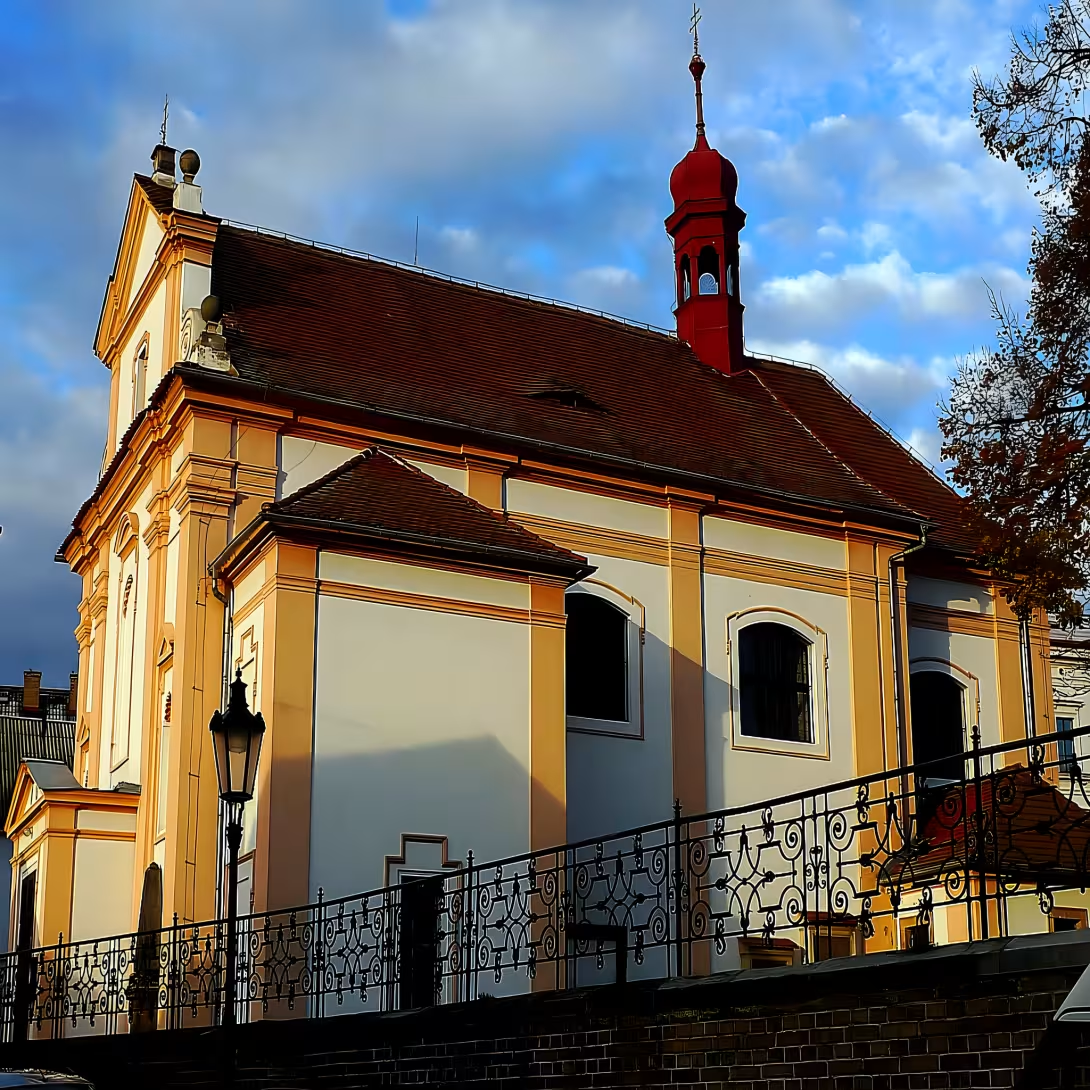
The Church of Saint Vojta in Předměstí is an important Baroque sacred monument in the historic settlement of the Principle in Litomerice. The first mentioned in historical records in 1363, underwent a remarkable transformation between 1703 and 1708 under architect Octavio Broggio. This church is not only an architectural jewel, but also a cultural treasure protected as a national monument of the Czech Republic.
The origin of the St. Vojt church dates back to 1363 and marks its long-standing presence in the region. At the beginning of the 18th century, when it underwent baroque transformation, the Czechs were part of the Habsburg monarchy. During this period, Baroque art and architecture flourish throughout Europe, which significantly influenced the Catholic Church's efforts to counter-Reformation to inspire faith through nobility.
The church has a longitudinal boat in architecture with attached presbytery and sacraments, with distinctive baroque elements such as pilasters and optional paediments. The exterior is marked with two-piece facade with risalite, pilaster and bulking shield, while the interior boasts a barrel vault with lunettes. The church is mainly based in the pneumatic organs created by Heinrich Schiffner, which adds to its artistic importance. In 1915 the painting of St. Vojts was restored within the church, financed by a diocesan museum company, highlighting its cultural and historical value.
The Baroque transformation led by Octavio Broggio from 1703 to 1708 is a key moment in the history of the church. It is assumed that Broggio followed the earlier design of his father Giulia of 1689, who contributed to the church of the current architectural form. This period of renovation reflects a wider European trend towards the Baroque aesthetics at that time.
Near the church is a bell tower built in 1774, with a pyramid shape with a bell tower and an open ground floor, where the Renaissance figurative tombstone of Bedřich Sesima from 1582 is housed. This area also includes several Renaissance and empir- style tombstones, adding a layer of historical depth on site.
Today, the Church of St. Vojts remains open to visitors who wish to explore rich history and architectural beauty. Its importance as a Baroque monument, combined with cultural artifacts such as Schiffner's organs and renewed painting of St. Vojts, makes it a valuable destination for people interested in Czech heritage.
Church of Saint Vojtěch is not only the will of the artistic and religious zeal of his time, but also a valuable piece of cultural history. His preservation as a national monument ensures that future generations can appreciate his beauty and historical significance. Visitors are invited to explore this remarkable site where history and art converge in a quiet environment.
Then and now
Drag the slider to compare how the landmark may have looked when it was built with the view today.
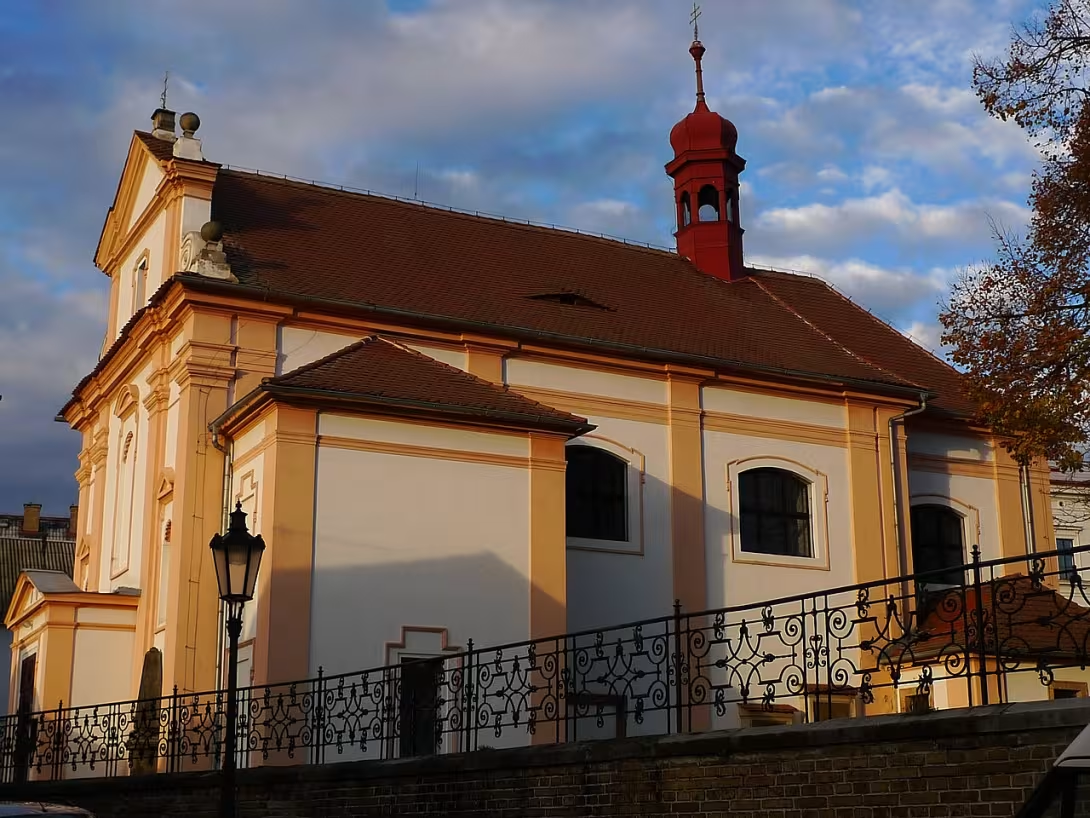
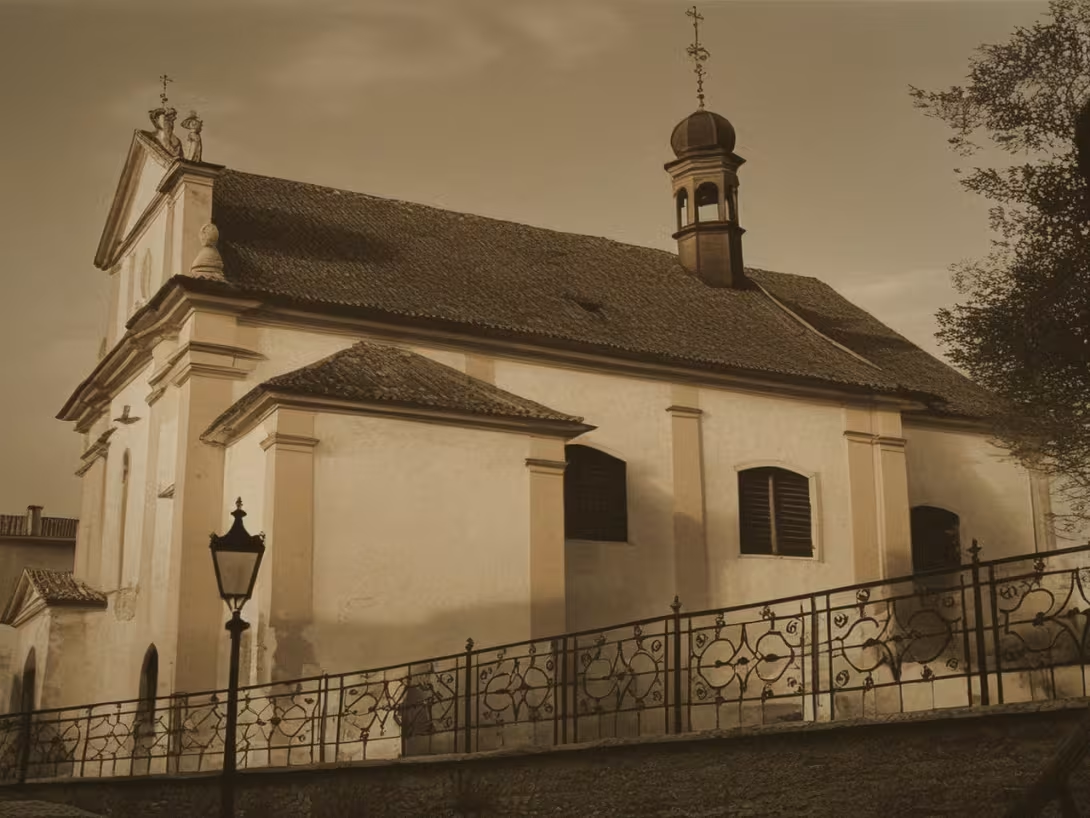
The historical appearance on the left is an AI-generated visualisation and serves as inspiration only.
Historical milestones
- 1363
- The first historical mention of St. Vojt's Church.
- 1703
- Baroque transformation church begins under Octavio Broggio.
- 1708
- Completion of baroque transformation Octavio Broggio.
- 1774
- Construction of the bell tower adjacent to the church.
- 1915
- Restoring the Holy Vojt painting in the church.
Architectural development
The church of Saint Vojty originally dates back to the 14th century, with its first mention in 1363. She underwent a significant baroque transformation between 1703 and 1708 under architect Octavio Broggio, which probably followed the earlier design of his father Giulia from 1689. The church is equipped with a longitudinal boat, a flat presbytery and attached sacraments. Its interior contains an barrel safe with lunettes and was equipped in 1879.
Historical events
First mention in historical records from 1363.
Baroque transformation led by Octavio Broggio from 1703 to 1708.
Points of interest
- The Baroque transformation of the Church of Saint Vojty was conducted by Octavio Broggio, which probably followed the earlier design of his father Giulia from 1689. This family collaboration adds a unique layer to the architectural evolution of the church.
- The Renaissance painting tombstone of Bedřich Sesima from 1582 is located on the open ground floor of the bell tower adjacent to the church. His presence underlines a mixture of historical periods represented at this place, adding depth to his cultural narrative.
- The pneumatic organs created by Heinrich Schiffner are an important feature within the church, which shows not only the musical heritage but also the craftsmanship and technological advances of its time, which increases the artistic importance of the church.
- In 1915, the painting of St. Vojts with funds from the Diocese Museum Society was restored. This reconstruction effort underlines the commitment of the community to preserve its cultural heritage and to preserve the historical integrity of works of art within the church.
- The church is part of a historical settlement called the Principle, which adds an element of geographical scheming, as it combines this Baroque monument with a wider local history that does not need to be widely recognised outside regional contexts.
Guide
This guide is narrated by a synthetic voice generated by artificial intelligence.
Show guide text
This text was created by artificial intelligence and has not been editorially reviewed. It may contain inaccuracies.
Welcome to the historical Church of St. Vojts in Předměstí, an amazing example of baroque architecture hidden in the charming settlement of the Principle, Litoměřice. As you stand here, take a moment to absorb the size and elegance that surrounds you - proof of the century of history and art.
The origin of this sacred site dates back to 1363, when it was first mentioned in historical records. Over time the church developed, but its most important transformation took place between 1703 and 1708 under the expert guidance of architect Octavio Broggio. This period meant a shift towards baroque style, characterised by dramatic expressions and complex details that you can still admire today.
As you look around, notice the longitudinal ship with attached presbytery and sacraments - the hallmark of baroque architecture. The design probably followed an earlier plan by Father Octavio Broggio, Giulia, of 1689, shows fascinating family cooperation in his architectural evolution. Notice how the structure harmonizes form and function, creating an atmosphere that is both spiritual and inspiring.
When exploring you can be attracted to the Renaissance figurative tombstone of Bedřich Sesima, a unique feature that adds depth to the historical story of the church. This piece not only connects us to the past, but also raises curiosity about those who passed through these lands before us.
In 1774 the adjacent bell tower was built, which further strengthens the presence of the church in the landscape. And in 1915, the painting of St. Vojts was restored, which ensured that its beauty and importance would continue to be appreciated by future generations.
At the end of your visit, take a last look at this remarkable monument. Let his history and art surround you, and consider examining the other stories he holds. Thank you for joining us on this journey through time and architecture. We hope that this experience has enriched your recognition of the Church of St. Vojts in Předměstí.
Tips for visitors
The best time to visit the Church of St. Vojts is at the end of spring or early autumn when the weather is pleasant, which allows a comfortable survey of Baroque architecture and quiet surroundings. These seasons offer optimal lighting conditions for the recognition of complex details of the church without crowds, which could be present in peak tourist months.
Parking near St. Vojt's Church can be restricted due to its location in the historic settlement Principle, so visitors are encouraged to use public transport. The area is accessible by bus and other forms of public transport, however it is advisable to check the current routes and plans online or via the local travel application for the most efficient route.
When planning your visit, consider bringing comfortable walking shoes as an examination of historical sites often involves navigation uneven surfaces. A camera with a zoom lens can be beneficial for capturing detailed pictures of the architecture church without disturbing any ongoing service. In addition, it is recommended to carry water and some refreshments, especially if you plan to explore the area.
Photographic enthusiasts will find several places around the Church of St. Vojt, ideal for the capture of baroque beauty. The morning light provides a soft glow that increases the facade of the church while the late afternoon offers dramatic shadows that highlight architectural details. Keep in mind any restrictions on photography during service or in certain areas.
For people interested in exploring nearby attractions within 30 minutes, consider visiting other historical monuments and natural landscapes around Litoměřice. Although there are no specific recommendations available, the region is famous for its rich history and picturesque beauty, which offers a variety of cultural and outdoor activities suitable for all ages.
Businesses nearby
Do you run a restaurant, accommodation, shop, museum, rental, wellness or other visitor service near this monument? Show yourself directly to the people heading to it — this is how they will see you in the app and on the web:
Events nearby

Zdroj akcí: otevřená data měst a obcí ČR (Národní katalog otevřených dat) a kalendář akcí Národního památkového ústavu.
Nearby
ITEX Show interactive overview of the surroundings - restaurants, accommodation, rentals and other places within a 15 km radius.
Data: OpenStreetMap contributors, 15 km radius.
‡ Historical monuments
- North Czech Art Gallery in Litoměřice (0.3 km)
- Krematorium Litoměřice (0.9 km)
- Karel Hynek Mácha (1.1 km)
- Terezin memorial (2.7 km)
- Magdeburg barracks (3.5 km)
- Terezín Memorial (3.7 km)
- Castle Kamyk (4.1 km)
- Memory plate for victims of communist zvels (6.1 km)
Restaurant and catering
- Budvarka (0.2 km)
- Brewery Hall (0.2 km)
- U Kata (0.2 km - U Katovna 58 / 59)
- Johannahof (0.3 km - Tolstoy 871 / 1)
- Sparta (0.3 km)
- Refreshs (0.3 km)
- Gurmania (0.3 km)
- Council cellar (0.4 km)
Accommodation
- Hostel U St. Stephen (0.1 km - Comenius 748 / 4)
- Brewery Hall (0.2 km)
- Guesthouse Mácha (0.2 km - Bakery 496 / 17)
- Hotel Dejmalick (0.3 km)
- U Saint Wenceslas (0.3 km)
- U Pine (0.5 km)
- Sokol (0.5 km)
- Hotel Apollon (0.6 km - On Valech 2094 / 25)
› Rental and sports
- Skicenter (0.2 km)
- Sokol (0.5 km)
- norskamoda (0.6 km)
- Rooms Camp (0.6 km - Teplická 2327)
- Swimming pool (0.8 km - Daliborova 2078 / 7)
- Yacht-Club Lovosice (1.0 km)
- City pool ASK Lovosice (5.5 km)
- Yacht-club Lovosice (5.5 km)
© Tourism and nature
- Lovosce (ŽST) (5.6 km)
- Lovosice centrum (6.0 km)
- Lovoš (fork blue and yellow) (7.4 km)
- Lovoš (tur. ch.) (7.8 km)
- Lovos (7.8 km)
- Vchynice (8.2 km)
- Struženka (9.4 km)
- Boreč (10.1 km)
Accommodation nearby
Trips and activities nearby
Guided tours, tickets and activities nearby from GetYourGuide
Affiliate link: if you buy from the partner, we may receive a commission. The price for you does not change.
Search tours and activities →Themed route
Thematic cruise route: Kostel svatého Vojtěcha (Předměstí)
1. Kostel svatého Vojtěcha (Předměstí) - Church The beginning of the world trip at the recluse cube, which is not only the religious centre of the village of Prefém, but also architectural pearls. This Baroque church was set at the beginning of the 18th table and our beautiful interior with rich decoration. It's the perfect city for those to be about history and architecture.
2. Civil House (Premé) - Historical buildings The approximate 200 metrons from the church will turn to an obese house, which is an example of smaller architecture and history. This building was the fall of my state administration and is worth challenging for a legislative proposal to be historic.
3. Nicholas pond - Pond Follow the world route to the Mikuláš pond, which is located about 500 metres from the general house. This small pond offers a quiet and pleasant setting for a short pass or relaxation on its way. It's an ideal place for those who are sure to be and calm.
4. Stopped area Předměstí - Location After the appointment of the pond, it shall be included in the stopped part of the village to which zero applies and houses with historical design. This site offers environmental support in conversion to a hedgehog tradition.
5. Kostel svatého Vojtěcha (Předměstí) - Church Close your trip with a new block of St. Vojtěch's, where you can check to see if they missed the objective details. This church is a common transition of rich history and cultures compared to the handover.
This route allows you to read the main memory and the surrounding intentions, which are one of the main features of the trade.
Seasonal recommendations
Spring: Visiting the Church of St. Vojts in spring offers a peaceful experience as nature awakens around this historic place. The surrounding gardens and parks burst with vibrant colors that provide a picturesque background for your visit. This time of year is characterized by mild weather, making it ideal for peaceful walks after exploring the church of architectural beauty. While the crowds are generally manageable, arriving early in the morning can provide a calmer experience in front of the visitors herd to enjoy a pleasant spring day.
Summer: The summer at St. Vojt's Church is marked by long daily hours and warm weather, ideal for outdoor activities in its surroundings. The church often hosts various cultural events during this season, increasing its historical charm with live performances or exhibitions. However, it is important to be prepared for larger crowds, especially on weekends and holidays. Arriving early can help avoid the busiest times, and wearing comfortable clothes is appropriate due to the heat.
Autumn: Autumn brings a unique atmosphere to the Church of St. Vojts because the leaves change colour, creating a stunning natural tapestry around the historical structure. Thanks to cold temperatures is the perfect time for photographers who want to capture the beauty of the church in the background of autumn leaves. While the crowds are smaller compared to summer, it is also a popular time for local festivals and events, so checking the timetable in advance can improve your visit.
Winter: Winter turns the Church of St. Vojts into a magical destination with historical architecture supplemented by a blanket of snow and festive decorations. Short days mean that a visit early is recommended to as many daily hours as possible. This season often offers special lighting of displays or events, adding a charming touch to your visit. Get warmly dressed in layers and prepare for any closure during extreme weather conditions, as the services can be limited due to adverse weather conditions.
Visualizations and artistic views


The visualisations are generated by artificial intelligence and serve as inspiration.
Photos from the area
Real photos taken near the monument

Zdroj a licence jsou uvedeny u každého snímku.
Tips from visitors
No tips yet. Be the first!
Log in and add your tip.
Sources and literature
Photos: H2k4 / CC BY-SA 3.0, rozlišení zvýšeno umělou inteligencí — Wikimedia Commons. The author and licence also appear when you hover over the image.
Faktickým podkladem tohoto textu byl článek na Wikipedii, jehož autory jsou přispěvatelé Wikipedie. Článek je dostupný pod licencí CC BY-SA 4.0.
Location on the map

Příběhy a pověsti
Legendy, pověsti a příběhy spjaté s touto památkou
Fotografie návštěvníků
Zatím žádné fotografie. Buďte první, kdo přidá fotografii z návštěvy!
Log in a přidejte svou fotografii nebo hodnoťte.
Za ověřenou návštěvu v aplikaci získáte víc bodů — poznáme podle GPS, že jste na místě.
Reviews and comments