






Kostel svatého Wolfganga (Vikantice) Church
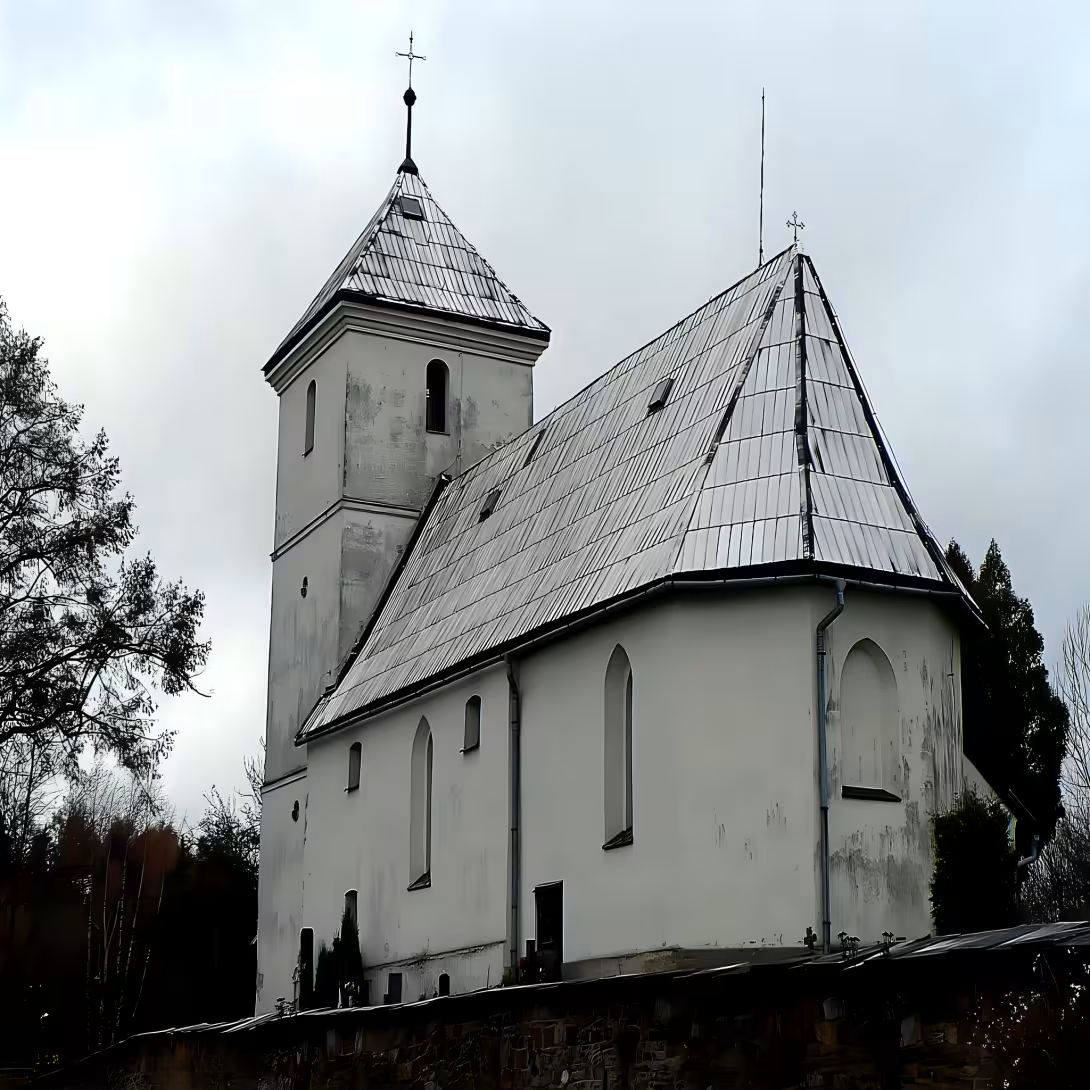
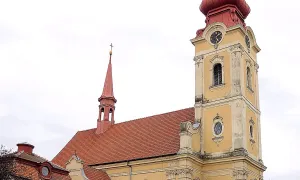
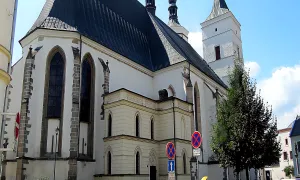
The Church of Saint Wolfgang in Vikantice is a simple late Renaissance building from the 16th century, situated in the village of Vikantice, in the Šumperk District, Olomouc Region. This monument is notable for its typological value and has been protected as a cultural monument since 1958. It stands on a cemetery surrounded by a stone wall, with a single-nave oblong floor plan and a three-sided chancel.
The church was built in the late 16th century, with the exact date of its construction unknown. A bell with the date 1577 was hung in the church, indicating that the building was likely completed before this date. The church was expanded in 1611 with a Renaissance bell tower, enhancing its architectural significance.
The Church of Saint Wolfgang is a prime example of late Renaissance architecture, characterized by its simple yet elegant design. The building features a three-story tower with fragments of Renaissance sgraffito ornamentation preserved in the basement. The main entrance is through a vaulted undercroft, while the nave is flat-ceilinged with fan vaults and stucco mirrors. The sacristy is vaulted with lunettes, and a music gallery and additional windows were added to the nave in the 18th or 19th century.
The church's interior is adorned with a main altar from around 1700, featuring a wooden crucifix and a pulpit from the first third of the 17th century. The pulpit is decorated with intricate ornamentation and a rollwerk, while the parapet features polychrome sculptures of four Old Testament prophets. The church also boasts a pipe organ, built by the firm Franz Kolb and Sons in 1893.
The Church of Saint Wolfgang has undergone several changes throughout its history, including the addition of a porch in 1850. Unfortunately, the church's ownership and administration are not specified in the available sources, and it is unclear if there have been any significant changes in its fortunes.
The Church of Saint Wolfgang is a unique example of late Renaissance architecture in the region, offering a glimpse into the cultural and architectural changes that took place in the Czech lands during the 16th century. Visitors can explore the church's interior and admire its simple yet elegant design, as well as learn about its rich history and cultural significance.
Then and now
Drag the slider to compare how the landmark may have looked when it was built with the view today.
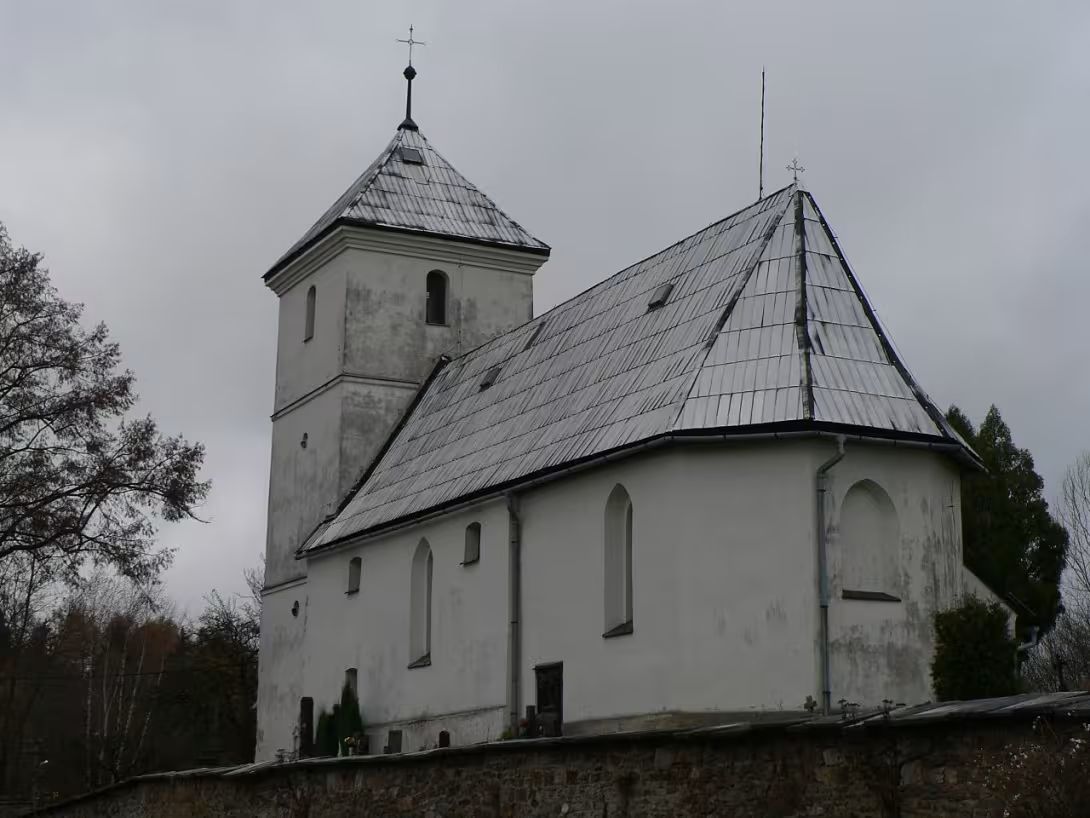
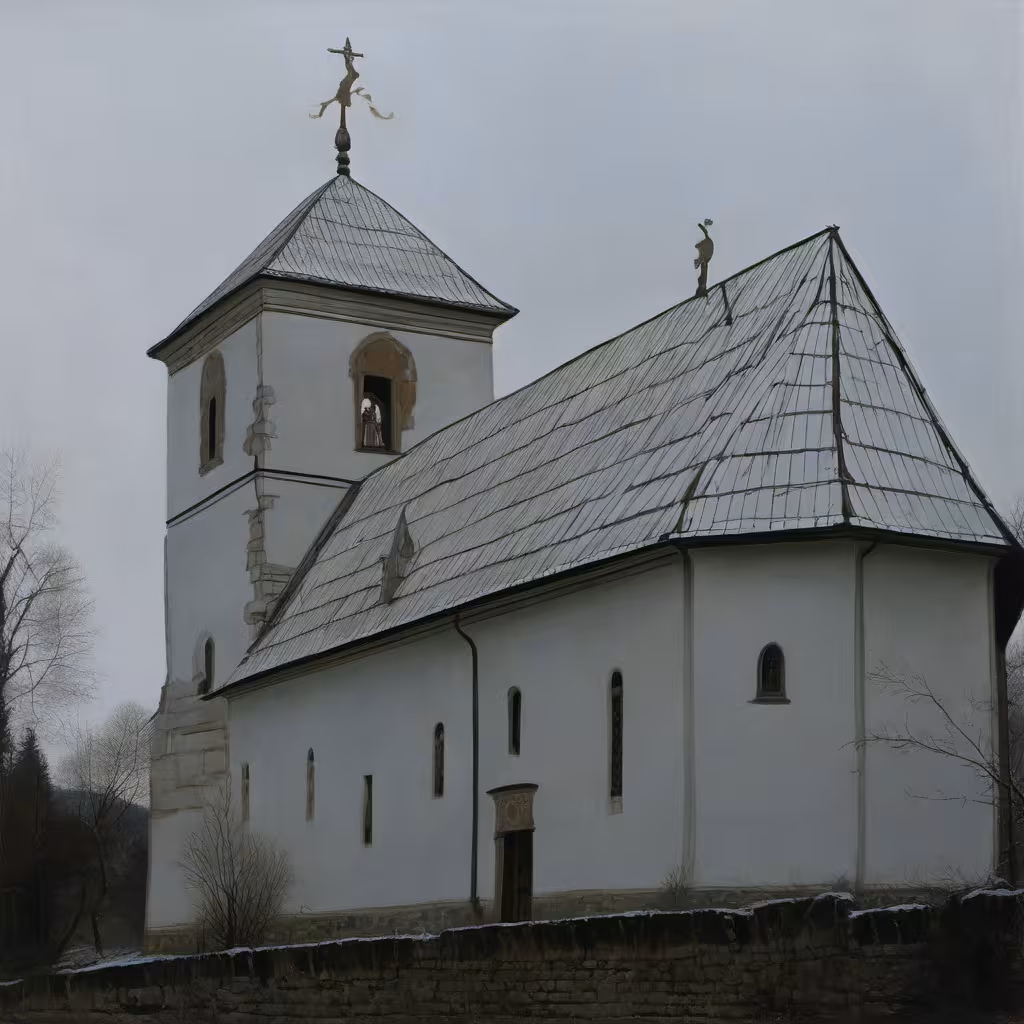
The historical appearance on the left is an AI-generated visualisation and serves as inspiration only.
Historical milestones
- 1577
- Bell with this date was hung in the church
- 1600
- Construction of the church began
- 1611
- Renaissance bell tower was added
- 1700
- Main altar was created
- 1850
- Porch was added
- 1893
- Pipe organ was built
- 1958
- Protected as a cultural monument
Architectural development
The church was built in the late 16th century, with the bell tower added in 1611. In the 18th or 19th century, a music gallery and additional windows were added to the nave. The porch was added in 1850.
Historical events
- 1577
- A bell with this date was hung in the church.
- 1611
- The church was expanded with a Renaissance bell tower.
- 1850
- A porch was added to the church.
Points of interest
– The Church of Saint Wolfgang in Vikantice is said to be built on a site where a medieval castle once stood. Unfortunately, there is no concrete evidence to support this claim.
– The church's bell tower was built in 1611, but it was not the original one. The first bell tower was built in the 16th century, but it was destroyed by lightning.
– The church's interior features a unique wooden crucifix from around 1700, which is a rare example of its kind in the region. The crucifix is decorated with intricate carvings and is considered a valuable piece of art.
– The Church of Saint Wolfgang has a long and complex history, with several changes and renovations taking place over the centuries. Unfortunately, many of these changes are not well-documented, making it difficult to reconstruct the church's history.
– The church's pipe organ, built by Franz Kolb and Sons in 1893, is a rare example of its kind in the region. It features a unique blend of Gothic and Baroque styles, making it a valuable addition to the church's cultural heritage.
Guide
This guide is narrated by a synthetic voice generated by artificial intelligence.
Show guide text
This text was created by artificial intelligence and has not been editorially reviewed. It may contain inaccuracies.
Welcome to Vikantice! You are standing in front of the Church of Saint Wolfgang, a simple yet interesting Renaissance building from the 16th century. It is located on a cemetery surrounded by a stone wall, and its plain rectangular nave and three-sided presbytery welcome you for exploration.
Let's delve into history. The Church of Saint Wolfgang holds typological significance and has been protected as a cultural monument since 1958. The first mentions of the church date back to 1577 when a bell was hung there with an inscription indicating the year. Construction work on the church itself began in 1600, and by 1611 a Renaissance tower had been added. In 1700, the main altar was created, a vestibule was attached in 1850, and a pipe organ loft was built in 1893.
Now pay attention to the architecture of the church. Notice the simple yet purposeful façade and the spacious three-story tower. On the tower, you can see remnants of Renaissance sgraffito ornaments. Take a look at the front of the church where you can notice simple but striking details.
The Church of Saint Wolfgang also has its secrets and curiosities. According to legend, a medieval castle once stood on this site, but there are no concrete evidence that it actually did.
Allow me to invite you to further explore this interesting church. Take a look inside, examine the organ, and peek into the history hidden behind the walls of this Renaissance church.
Businesses nearby
Do you run a restaurant, accommodation, shop, museum, rental, wellness or other visitor service near this monument? Show yourself directly to the people heading to it — this is how they will see you in the app and on the web:
Events nearby
Zdroj akcí: otevřená data měst a obcí ČR (Národní katalog otevřených dat) a kalendář akcí Národního památkového ústavu.
Nearby
The church is located in the village of Vikantice, in the Šumperk District, Olomouc Region.
Accommodation nearby
Themed route
Trasa: Vikantice and Surroundings
1. Church of Saint Wolfgang (Vikantice) - the main highlight of this tour is this church, which is worth visiting for its unique architecture and historical significance. 2. Vicarage in Vikantice - worth visiting for its architecture and the opportunity to take a tour. 3. Cemetery in Vikantice - worth visiting for its peaceful atmosphere and historical significance. 4. Reservoir on Vikantický Stream - worth visiting for its natural beauty and relaxation opportunities.
Seasonal recommendations
Jaro: In the spring season, St. Wolfgang's Church is surrounded by blooming trees and flowers, creating a pleasant atmosphere. Practical tips: The best time to visit the church is in March or April when crowds are still small. It’s advisable to bring sunglasses and comfortable shoes for walking around the area.
Summer: During the main summer season, St. Wolfgang's Church is very popular, so it’s good to arrive early to avoid large crowds. The atmosphere is pleasant in summer, but temperatures can be high, so it’s a good idea to bring an umbrella and something to drink. Lighting is good, making photography easy.
Fall: In the autumn season, St. Wolfgang's Church is surrounded by beautiful colors of falling leaves, creating a pleasant atmosphere. Practical tips: The best time to visit the church is in September or October when crowds are smaller. It’s advisable to bring warm clothing as temperatures can be chilly.
Winter: During winter, St. Wolfgang's Church is open only for limited hours, so it’s good to check opening times in advance. The atmosphere is calm and quiet, but temperatures can be very low, so it’s a good idea to bring warm clothing and a scarf.
Visualizations and artistic views


The visualisations are generated by artificial intelligence and serve as inspiration.
Photos from the area
Real photos taken near the monument


Zdroj a licence jsou uvedeny u každého snímku.
Tips from visitors
No tips yet. Be the first!
Log in and add your tip.
Sources and literature
Photos: Martin Vavřík / Public domain, rozlišení zvýšeno umělou inteligencí — Wikimedia Commons. The author and licence also appear when you hover over the image.
Faktickým podkladem tohoto textu byl článek na Wikipedii, jehož autory jsou přispěvatelé Wikipedie. Článek je dostupný pod licencí CC BY-SA 4.0.
Location on the map

Příběhy a pověsti
Legendy, pověsti a příběhy spjaté s touto památkou

Příběh: Kostel svatého Wolfganga (Vikantice)
Bylo to v pondělí ráno, kdy Martin zjistil, že jeho život je podoben ztracenému listu ve velkém hřebenu vesnických ulic. Vyháněn svými dluhy a osamělostí, už…
Číst příběh
Pověst: Kostel svatého Wolfganga (Vikantice)
Podle místní pověsti zvon, který visí ve věži kostela svatého Wolfganga ve Vikanticích od roku 1577, nebyl nikdy ulit jen z vůle lidské. Staří obyvatelé z ok…
Číst příběhFotografie návštěvníků
Zatím žádné fotografie. Buďte první, kdo přidá fotografii z návštěvy!
Log in a přidejte svou fotografii nebo hodnoťte.
Za ověřenou návštěvu v aplikaci získáte víc bodů — poznáme podle GPS, že jste na místě.
Reviews and comments