






Kostel Všech svatých (Bratrušov) Church
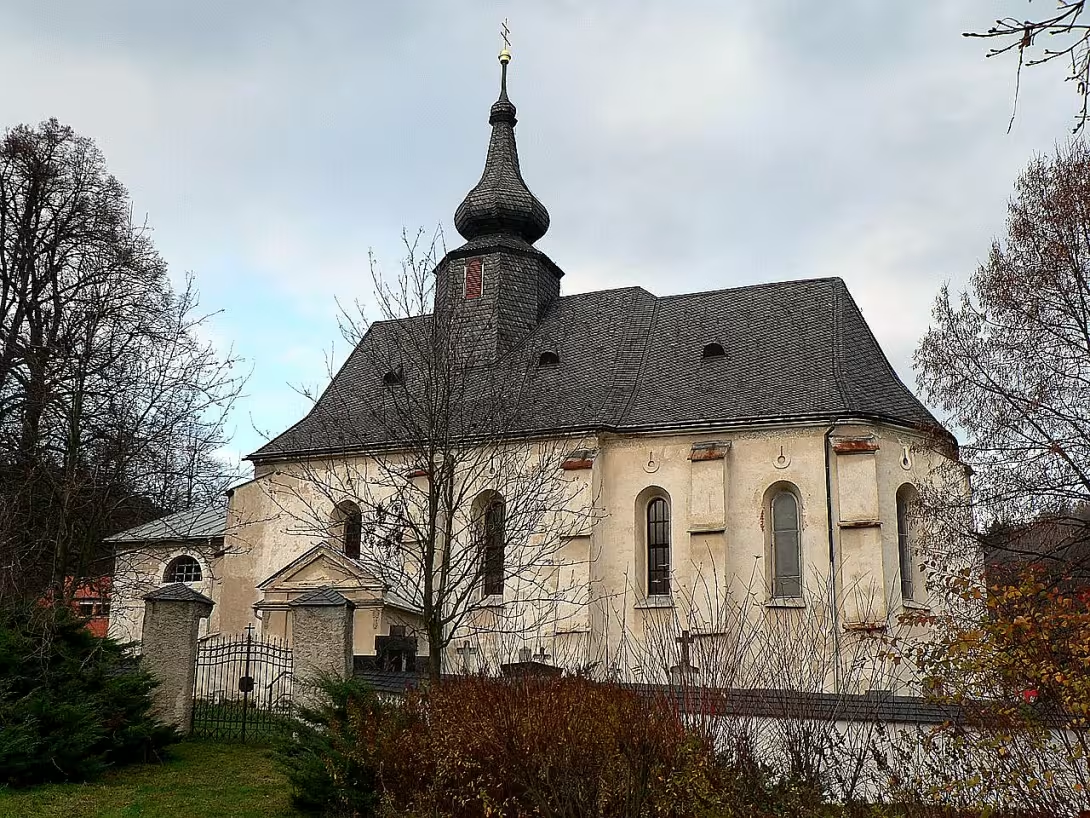
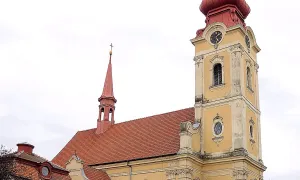
The Church of All Saints in Bratrušov is a late Renaissance monument built in 1603. It reflects the religious transformations of early 17th-century Bohemia. Located in the village of Bratrušov within the Šumperk District of Olomoucký kraj, this church initially served non-Catholic congregations and was Catholicized with a parish added in 1784.
Jan ze Žerotína constructed the church during a period of significant religious change in Bohemia due to the European Reformation. Initially serving non-Catholic communities, it later adapted to changing religious dynamics by incorporating a Catholic parish in 1784.
Architecturally, the Church of All Saints features a late Renaissance style with a single nave and polygonal closure, topped by an octagonal tower above the roof ridge. The structure is supported by twice-offset buttresses externally. Its exterior includes sgraffito bands, though they are now significantly damaged. The church's rustic appearance resembles other early 16th-century churches that no longer exist, such as those in Rapotíně and Petrov nad Desnou. In 1833, a small neoclassical porch was added to the nave side.
Throughout its history, the Church of All Saints has undergone significant transformations. Initially built by Jan ze Žerotína for non-Catholic services in 1603, it became Catholicized with a parish addition in 1784. These changes mirror broader religious shifts within Bohemia during this period. The church's architecture and modifications highlight its adaptability to evolving religious needs.
The interior features a wooden pulpit extending into typical Lutheran tribunes on either side, reflecting its initial non-Catholic purpose. A wooden balustrade with conical elements forms the western gallery's railing. Above the altar hangs an oil painting purchased in 1800 from Ondřej Schmiedt, an Austrian academic painter, adding to the church’s artistic heritage.
Today, the Church of All Saints stands as a testament to its rich history and architectural significance. It is accessible to visitors interested in exploring its unique blend of Renaissance architecture and historical transformations. The church's enduring presence in Bratrušov makes it a worthwhile destination for those intrigued by religious history and architectural evolution. Its story invites reflection on the broader cultural shifts that have shaped this region, offering an enriching experience for all who visit.
Then and now
Drag the slider to compare how the landmark may have looked when it was built with the view today.
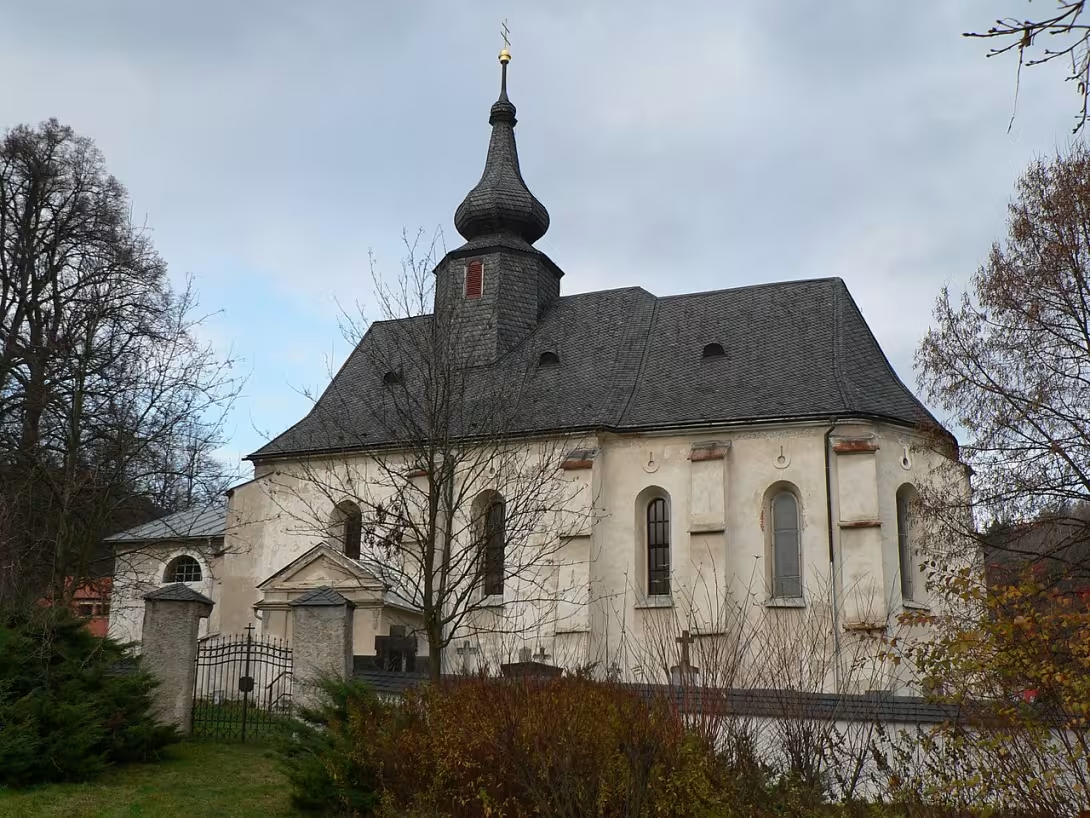
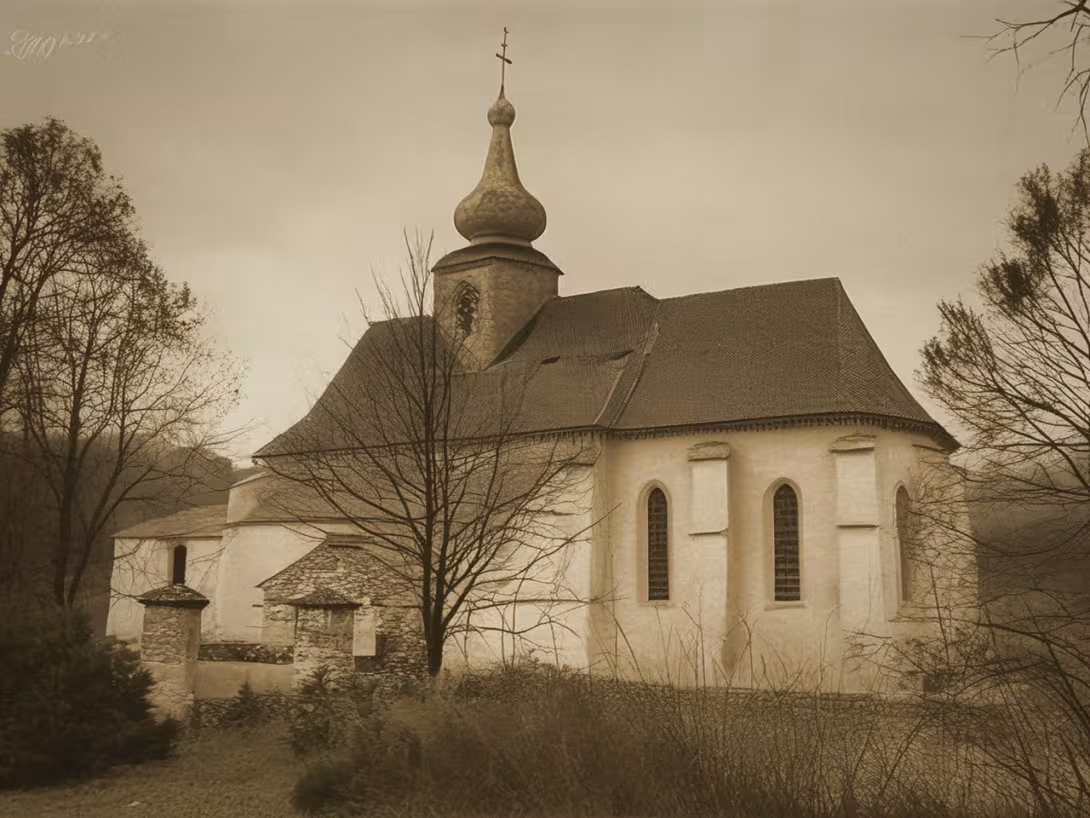
The historical appearance on the left is an AI-generated visualisation and serves as inspiration only.
Historical milestones
- 1603
- The Church of All Saints was built by Jan ze Žerotína.
- 1784
- Addition of a Catholic parish to the church.
- 1833
- Addition of a small neoclassical vestibule on the side of the nave.
- 1800
- Purchase of an oil painting by Ondřej Schmiedt for the church.
Architectural development
The Church of All Saints features a late Renaissance architectural style with a single nave and polygonal closure. It has an octagonal tower above the roof ridge, supported by twice-offset buttresses. The exterior includes sgraffito bands and a rustic appearance similar to other lost churches from the early 16th century. In 1833, a small neoclassical porch was added on the side of the nave.
Historical events
1603: The church was built by Jan ze Žerotína for non-Catholic services.
1784: A Catholic parish was added to the church.
Points of interest
- The Church of All Saints was originally constructed to serve non-Catholic congregations during a time when Bohemia was experiencing significant religious upheaval due to the European Reformation. This reflects its role in accommodating diverse religious practices before becoming Catholicized.
- Architecturally, the church's exterior features sgraffito bands that are now significantly damaged. These decorative elements were once vibrant and contributed to the building’s distinctive aesthetic, adding a layer of historical artistry despite their current state.
- The wooden pulpit inside the church extends into typical Lutheran tribunes on either side, highlighting its original purpose for non-Catholic services. This design element is a rare architectural feature that emphasizes the church's initial role in accommodating Protestant worship practices.
- In 1833, a small neoclassical porch was added to the nave side of the church. This addition represents one of the few modifications made to the structure over centuries, blending Renaissance architecture with later stylistic influences and reflecting ongoing adaptations to its surroundings.
- The oil painting above the altar, acquired in 1800 from Ondřej Schmiedt, an Austrian academic painter, adds a unique artistic dimension to the church. This artwork not only enhances the interior's aesthetic but also connects the building to broader European art traditions of that era.
Guide
This guide is narrated by a synthetic voice generated by artificial intelligence.
Show guide text
This text was created by artificial intelligence and has not been editorially reviewed. It may contain inaccuracies.
Welcome to the Church of All Saints in Bratrušov, a remarkable testament to the late Renaissance era and the rich tapestry of religious history that this region has witnessed. As you stand before this architectural gem, take a moment to absorb its serene presence amidst the landscape of Olomoucký kraj. Its elegant structure speaks volumes about the past, inviting us on a journey through time.
The story of this church begins in 1603 when it was commissioned by Jan ze Žerotína. In an era marked by religious upheaval across Bohemia due to the European Reformation, the Church of All Saints was initially built to accommodate non-Catholic congregations. This reflects its role as a beacon of diversity and tolerance during a tumultuous period in history.
As you gaze upon the church's architecture, notice its single nave leading to a polygonal closure—a design choice that adds both grace and complexity to the structure. The octagonal tower rising above the roof ridge is particularly striking, capturing your attention with its commanding presence against the sky. These architectural elements are not just visually appealing but also tell the story of a building designed to unify people under one spiritual roof.
Throughout its history, this church has been central to significant religious transformations. In 1784, it underwent Catholicization and was integrated into the local Catholic parish system, marking another chapter in its storied existence. Later, in 1833, a neoclassical portico was added on the nave side, blending new architectural styles with the existing structure.
One of the intriguing tales linked to this church involves Ondřej Schmiedt, an artist whose oil painting was acquired for the church around 1800. This piece adds another layer to the church's rich cultural tapestry, highlighting its role as a custodian of art and history.
A fascinating aspect of the Church of All Saints is its original purpose during a time when Bohemia was navigating significant religious shifts. Initially serving non-Catholic congregations, it stands as a testament to an era that sought accommodation amidst diversity before fully embracing Catholicism.
As we conclude our visit here today, I invite you to continue exploring this historic site at your own pace. Let the stories and architecture of the Church of All Saints in Bratrušov inspire you and offer a glimpse into a past where faith, art, and community intertwined. Thank you for joining me on this journey through time, and may your exploration be as enriching as it is enlightening.
Frequently asked questions
Can the monument be visited?
Religious buildings are usually open mainly during services; at other times a visit is normally arranged with the parish or the operator. We have not verified specific times.
Where is the monument?
Location: Bratrušov, Olomoucký kraj. The map on this page shows the exact spot.
Why is the monument protected?
It is listed in the Central List of Cultural Monuments of the Czech Republic as a cultural monument (register no. 23306/8-852).
Businesses nearby
Do you run a restaurant, accommodation, shop, museum, rental, wellness or other visitor service near this monument? Show yourself directly to the people heading to it — this is how they will see you in the app and on the web:
Events nearby


Zdroj akcí: otevřená data měst a obcí ČR (Národní katalog otevřených dat) a kalendář akcí Národního památkového ústavu.
Accommodation nearby
Themed route
Thematic Tour Route: Bratrušov and Surroundings
1. Kostel Všech svatých (Bratrušov) - Church of All Saints - Type: Historical Landmark - Why Visit: This stunning Baroque church, dating back to the 18th century, is a centerpiece of Bratrušov's cultural heritage. Its intricate architecture and serene atmosphere make it an ideal starting point for exploring the village’s historical charm.
2. Bratrušov Village Square - Type: Historical Site - Why Visit: Located just outside the church, the village square is a picturesque area that reflects traditional Moravian village life. It offers a glimpse into the local history and community spirit, with its charming buildings and inviting atmosphere.
3. Local Farmsteads in Bratrušov - Type: Cultural Site - Why Visit: As you wander through Bratrušov, visit some of the traditional farmsteads that dot the landscape. These structures provide insight into rural life and agricultural practices in the region, showcasing their historical significance and architectural beauty.
4. Bratrušov Cemetery - Type: Historical Site - Why Visit: The local cemetery is a place of quiet reflection and history, with tombstones that tell stories from generations past. It offers a unique perspective on the village’s heritage and serves as a peaceful conclusion to your exploration.
This route provides an immersive experience into Bratrušov's rich cultural tapestry, focusing on its historical landmarks and local charm without straying beyond the immediate area.
Seasonal recommendations
Spring: The arrival of spring at the Church of All Saints in Bratrušov brings a refreshing transformation to the landscape surrounding this historical site. The church is bathed in soft, natural light that accentuates its architectural details, creating an inviting atmosphere for visitors. As nature awakens, the nearby fields and forests are adorned with vibrant wildflowers and budding trees, offering picturesque views for those who venture beyond the church grounds. During this season, it's advisable to wear comfortable layers as temperatures can vary throughout the day. Visiting in late morning or early afternoon is ideal when the weather is milder, allowing you to fully appreciate both the interior of the church and its natural surroundings.
Summer: Summer at the Church of All Saints is characterized by long daylight hours that enhance the beauty of this historic site. The lush greenery and blooming flora create a serene backdrop for visitors exploring the area. This period often sees increased foot traffic, especially during peak tourist seasons, so arriving early in the day can help avoid larger crowds and provide a more tranquil experience. It's recommended to wear light clothing and bring sunscreen to protect against the sun. Staying hydrated is essential, as summer temperatures can be quite warm, making it important to plan your visit accordingly.
Autumn: Autumn brings a stunning display of colors to the Church of All Saints in Bratrušov, with its surrounding landscape turning into a palette of reds, oranges, and yellows. The gentle autumn light creates a cozy and contemplative atmosphere, perfect for enjoying the church's serene environment. As temperatures begin to drop, it’s wise to dress warmly and consider bringing a jacket or sweater for comfort. This season is ideal for photography enthusiasts looking to capture the picturesque scenery. Visiting in late morning can provide excellent lighting conditions while avoiding the chillier evenings that autumn nights bring.
Winter: Winter transforms the Church of All Saints into a magical destination, with snow often blanketing the area and adding a touch of enchantment to its historic architecture. The shorter days mean the church is illuminated by soft, golden light during the limited daylight hours, creating an intimate atmosphere for visitors. This season typically sees fewer tourists, offering a more peaceful experience. It's essential to wear warm clothing, including hats and gloves, as temperatures can be quite cold. Planning your visit in the late morning will allow you to make the most of the available daylight while enjoying the church’s tranquil winter setting.
Visualizations and artistic views


The visualisations are generated by artificial intelligence and serve as inspiration.
Photos from the area
Real photos taken near the monument

Zdroj a licence jsou uvedeny u každého snímku.
Tips from visitors
No tips yet. Be the first!
Log in and add your tip.
Sources and literature
Photos: Martin Vavřík / Public domain — Wikimedia Commons. The author and licence also appear when you hover over the image.
Faktickým podkladem tohoto textu byl článek na Wikipedii, jehož autory jsou přispěvatelé Wikipedie. Článek je dostupný pod licencí CC BY-SA 4.0.
Location on the map
Příběhy a pověsti
Legendy, pověsti a příběhy spjaté s touto památkou
Fotografie návštěvníků
Zatím žádné fotografie. Buďte první, kdo přidá fotografii z návštěvy!
Log in a přidejte svou fotografii nebo hodnoťte.
Za ověřenou návštěvu v aplikaci získáte víc bodů — poznáme podle GPS, že jste na místě.
Reviews and comments