



kostel Všech svatých (Dobromilice) Church
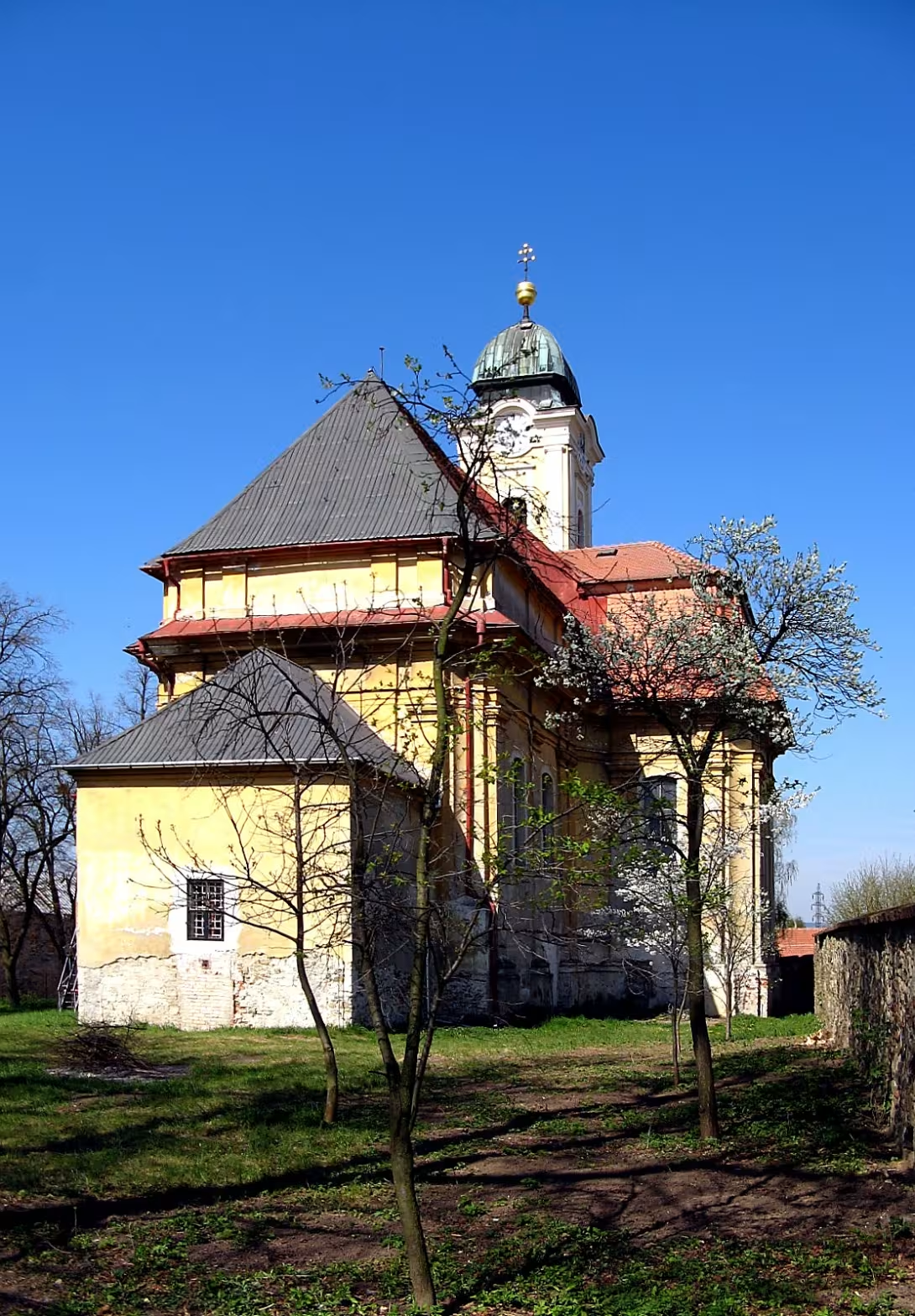
The Church of All Saints in Dobromilice is a significant Baroque church located in the Prostějov District, approximately 5 kilometers northwest of Němčice nad Hanou. This architectural treasure has a rich history dating back to the 13th century, with a Romanesque predecessor on the site. The current building was rebuilt in the 16th century and underwent significant changes in the 18th century, making it a notable landmark in the region.
The church's history began with a Romanesque predecessor, likely built in the second half of the 13th century. The current building was rebuilt in the 16th century by the Žalkovští ze Žalkovic family, who were significant landowners in the region. They initiated a Renaissance-style renovation, completed in 1592, as evidenced by a commemorative inscription in the sacristy. The church also served as a family tomb, where Marta Žalkovská ze Žalkovic (died 1564), her husband Matyáš Žalkovský ze Žalkovic (died 1590), their son Jan Žalkovský ze Žalkovic (died after 1614), and his wife Anežka Bítovská ze Slavíkovic (died 1609) were buried.
The church's architecture is a single-nave design with a sacristy and a tower featuring a Baroque belfry. The interior is decorated with a monumental altar and a Renaissance pulpit, adorned with the coats of arms of Jan Žalkovský ze Žalkovic and Anežka Bítovská ze Slavíkovic. The church also features a Baroque belfry and a Renaissance-style sacristy. The exterior facades, excluding the sacristy facades, have high windows with segmental arches.
In the 18th century, the Kořenští z Terešova family, influential landowners in the region, undertook significant changes to the church. František hrabě Kořenský z Terešova initiated a major renovation, completed in 1762. The church was damaged during World War II and underwent restoration in 1947.
The church has a rich history, with various events taking place within its walls. In 1669, the church was re-established as a parish church. The Kořenští z Terešova family acquired the church in 1737, and František hrabě Kořenský z Terešova initiated a major renovation in 1762. A tower with a bell and clock was built in 1817, and new organs were purchased in 1886. Two new bells were acquired in 1967, and the church underwent restoration in 1992.
Today, the Church of All Saints in Dobromilice is a significant cultural and historical landmark in the region. The church is surrounded by a historic cemetery and a hrobka of the Bukůvků z Bukůvky family. Visitors can admire the church's architectural beauty and learn about its rich history. The church is a must-visit destination for those interested in history, architecture, and culture.
Then and now
Drag the slider to compare how the landmark may have looked when it was built with the view today.
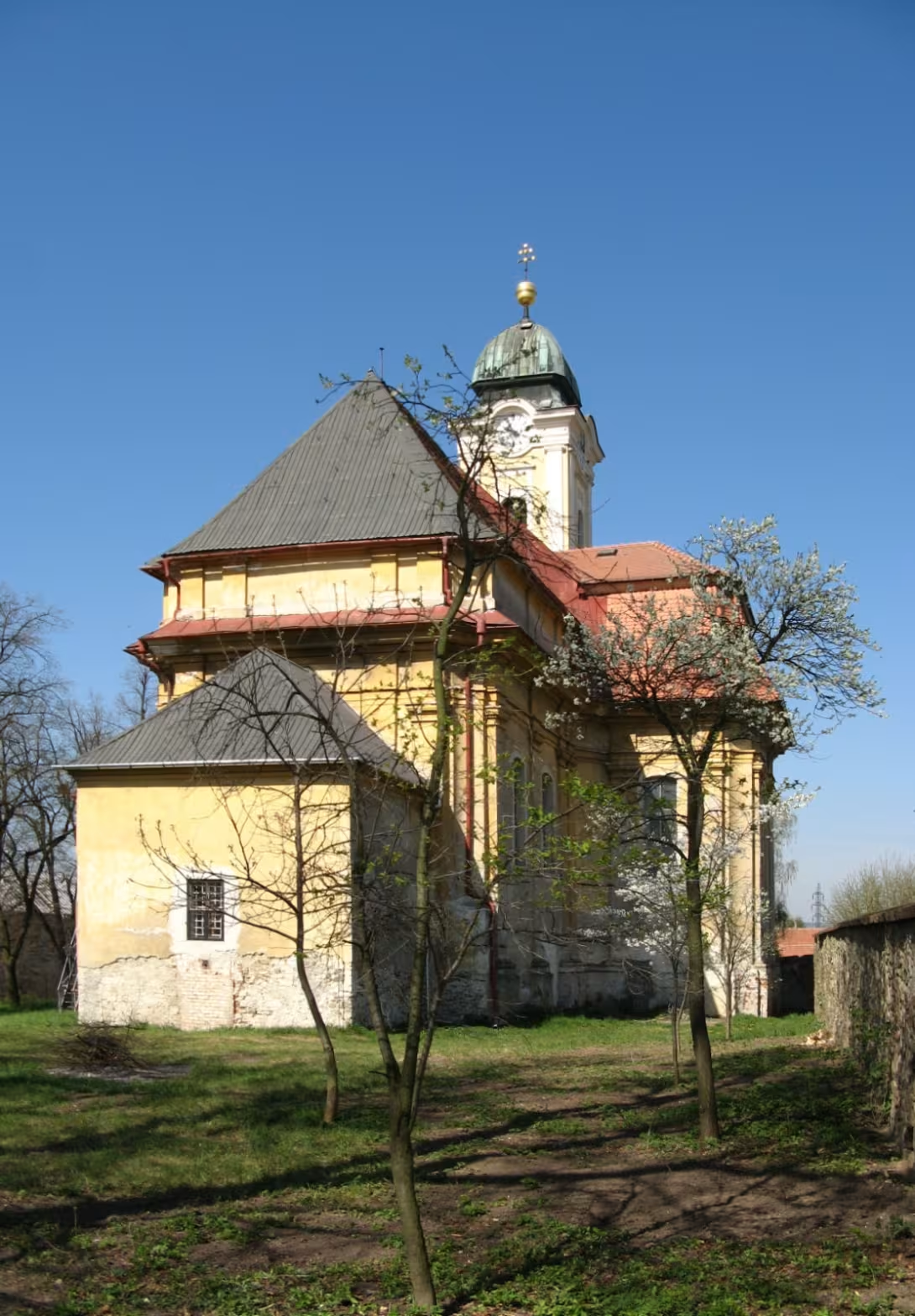

The historical appearance on the left is an AI-generated visualisation and serves as inspiration only.
Historical milestones
- 1564
- Marta Žalkovská ze Žalkovic died and was buried in the church.
- 1590
- Matyáš Žalkovský ze Žalkovic died and was buried in the church.
- 1623
- A bell named Ježíš was cast.
- 1669
- The church was re-established as a parish church.
- 1737
- The Kořenští z Terešova family acquired the church.
- 1762
- The church underwent significant changes under the ownership of František hrabě Kořenský z Terešova.
- 1817
- A tower with a bell and clock was built.
- 1886
- New organs were purchased.
- 1967
- Two new bells were purchased.
- 1992
- The church underwent restoration.
- 1947
- The church was restored after damage during World War II.
Architectural development
The church has undergone several architectural phases, including a Romanesque predecessor, a 16th-century Baroque rebuild, and an 18th-century renovation. The church features a single-nave design with a sacristy and a tower with a baroque belfry. The interior is decorated with a monumental altar and a Renaissance pulpit.
Historical events
The church was rebuilt in the 16th century by the Žalkovští ze Žalkovic family.
The church was damaged by a fire in 1622 and was later restored.
The church underwent significant changes in the 18th century under the ownership of the Kořenští z Terešova family.
The church was damaged during World War II and underwent restoration in 1947.
Owners
Žalkovští ze Žalkovic, Jiří Flodt z Bokštejna, Kořenští z Terešova, Marie Anna von Reichenau, provdaná hraběnka Clam-Martinic
Points of interest
– The Church of All Saints in Dobromilice has a unique feature – a hrobka, a family tomb, where several members of the Žalkovští ze Žalkovic family were buried.
– The church's interior is decorated with a Renaissance pulpit adorned with the coats of arms of Jan Žalkovský ze Žalkovic and Anežka Bítovská ze Slavíkovic, which is a rare example of a family's crest being displayed in a church.
– The Kořenští z Terešova family, who acquired the church in 1737, were influential landowners in the region and undertook significant changes to the church in the 18th century, including a major renovation in 1762.
– The church's tower features a baroque belfry, which was built in 1817, and is equipped with a bell and clock.
– The church has a historic cemetery surrounding it, which includes a hrobka of the Bukůvků z Bukůvky family, adding to the church's cultural and historical significance.
Guide
This guide is narrated by a synthetic voice generated by artificial intelligence.
Show guide text
This text was created by artificial intelligence and has not been editorially reviewed. It may contain inaccuracies.
The Church of All Saints in Dobromilice, approximately five kilometers northwest of Němčic nad Hanou, is a parish church and has been a protected cultural monument since 1958. Today it has a Baroque appearance, but its origins are much older.
A Late Romanesque church stood on this site, most likely from the middle of the thirteenth century. Its remains were found in the area of the chancel and sacristy. At the end of the sixteenth century, the knights the Žalkovskis from Žalkovice, the then owners of the estate, initiated an expensive Renaissance reconstruction. It was completed in 1592, as a commemorative inscription in the masonry of the sacristy reminds us. The church then became the family tomb of the Žalkovskis.
In 1614 the Žalkovskis sold Dobromilice to Jiří Flodt z Bokštejna. He became involved in the Estates' Revolt and after 1620 lost the estate. Two years later a fire struck the church. The village then fell under the care of the parish in nearby Otaslavice and the church ceased to be used. Dobromilice received its own priest again only in 1669.
The Kořenskis from Terešov, who owned Dobromilice from 1737, initiated another major reconstruction. It was completed in 1762. Count František Kořenský had the interior completely redesigned and acquired a monumental high altar with a painting of All Saints by the painter František Antonín Sebastini. The bell tower with bells and a clock was added only in 1817 and was built by Countess Marie Anna Clam-Martinicová.
Both world wars deprived the church of most of its bells. Only the bell called Jesus, cast in 1623, remained. At the end of the Second World War, an aerial bomb damaged the area around the church, destroying the external staircase and a stone cross. The damage was repaired by a general restoration completed in 1947.
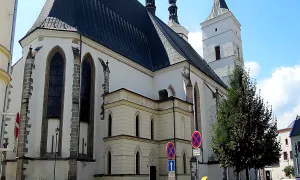
The church is a single-nave hall building on a rectangular ground plan. Two tall square-shaped chapels stand on either side of the nave, and two sacristies adjoin the southern and eastern sides. The western façade is dominated by a prismatic bell tower crowned with a Baroque dome. Inside, the altar of All Saints dominates, and there is a Renaissance stone pulpit with the coats of arms of Jan Žalkovský ze Žalkovic and his wife Anežka Bítovská ze Slavíkovic.
Right next to the church stands a historicizing funeral chapel with a tomb of the noble family Bukůvků z Bukůvky from the seventies of the nineteenth century. Around it remained an open space with the remains of the former cemetery.
Tips for visitors
The best time to visit the Church of All Saints in Dobromilice is during the spring and summer months when the weather is pleasant and the surrounding nature is in full bloom.
It's a good idea to bring a camera to capture the beautiful architecture and surroundings of the church.
The best spots for photography are around the church's exterior and in the nearby fields and forests.
Visitors can also explore the nearby village of Němčice nad Hanou, which is a significant cultural and historical center in the region.
Frequently asked questions
Can the monument be visited?
Religious buildings are usually open mainly during services; at other times a visit is normally arranged with the parish or the operator. We have not verified specific times.
Where is the monument?
Location: Dobromilice, Olomoucký kraj. The map on this page shows the exact spot.
Why is the monument protected?
It is listed in the Central List of Cultural Monuments of the Czech Republic as a cultural monument (register no. 32787/7-5510).
Businesses nearby
Do you run a restaurant, accommodation, shop, museum, rental, wellness or other visitor service near this monument? Show yourself directly to the people heading to it — this is how they will see you in the app and on the web:
Nearby
The church is located in a rural area surrounded by fields and forests. The nearby village of Němčice nad Hanou is a significant cultural and historical center in the region.
Accommodation nearby
Trips and activities nearby
Guided tours, tickets and activities nearby from GetYourGuide
Affiliate link: if you buy from the partner, we may receive a commission. The price for you does not change.
Search tours and activities →Themed route
Tematická výletní trasa: Dobromilice a okolí
1. Kostel Všech svatých (Dobromilice) - hlavní cíl této výletní trasy. Tento kostel je významnou kulturní a historickou památkou v regionu. Návštěvníci si mohou prohlédnout jeho architekturu a vnitřní vybavení.
2. Němčice nad Hanou - kulturní a historické centrum v okolí. Město nabízí bohatou historii a kulturu, která je zde dobře patrná v jeho budovách a památkách.
3. Nádvoří kostela Všech svatých - návštěvníci si mohou prohlédnout nádvoří kostela, které nabízí klidné a klidné prostředí pro odpočinek a relaxaci.
4. Věž kostela Všech svatých - návštěvníci si mohou vystoupit do věže a z ní si prohlédnout okolí.
5. Park u kostela Všech svatých - návštěvníci si mohou prohlédnout park, který nabízí klidné prostředí a příležitost k relaxaci.
Seasonal recommendations
Jaro
Spring is the ideal time to visit the Church of All Saints in Dobromilice because nature around it begins to bloom, creating a beautiful backdrop for photography. The atmosphere is calm and quiet, allowing for a deeper exploration of this historic landmark. We recommend visiting the church in May or June when the weather is typically sunny and warm. Don't forget to bring your camera so visitors can capture the beautiful sunlight on the historical facades.
Summer
Summer is the main season for visitors to the Church of All Saints in Dobromilice. We recommend arriving early to avoid crowds and explore the church without unnecessary delays. It's also an ideal time for photography as sunny weather allows you to capture the beautiful details of the historic parts of the church.
Autumn
Autumn is a beautiful season to visit the Church of All Saints in Dobromilice. The colors of autumn foliage develop around the church, creating a pleasant environment for strolling. The atmosphere is calm and quiet, allowing for a deeper exploration of this historic landmark. We recommend visiting the church in September or October when the weather is typically mild and sunny.
Winter
Winter is a quiet season for visitors to the Church of All Saints in Dobromilice. It's also important to bring warm clothing to ward off the cold and windy weather. The atmosphere is quiet and calm, allowing for a deeper exploration of this historic landmark.
Visualizations and artistic views


The visualisations are generated by artificial intelligence and serve as inspiration.
Photos from the area
Real photos taken near the monument


Zdroj a licence jsou uvedeny u každého snímku.
Atmosphere of the place
This atmospheric visualisation of the place and period was generated by artificial intelligence. It is not real footage of the location.
Tips from visitors
No tips yet. Be the first!
Log in and add your tip.
Sources and literature
Photos: Lubomír Kaprál / CC BY-SA 3.0 — Wikimedia Commons. The author and licence also appear when you hover over the image.
Faktickým podkladem tohoto textu byl článek na Wikipedii, jehož autory jsou přispěvatelé Wikipedie. Článek je dostupný pod licencí CC BY-SA 4.0.
Location on the map


Příběhy a pověsti
Legendy, pověsti a příběhy spjaté s touto památkou
Fotografie návštěvníků
Zatím žádné fotografie. Buďte první, kdo přidá fotografii z návštěvy!
Log in a přidejte svou fotografii nebo hodnoťte.
Za ověřenou návštěvu v aplikaci získáte víc bodů — poznáme podle GPS, že jste na místě.
Reviews and comments