



Kostel Všech svatých (Moravský Krumlov) Church
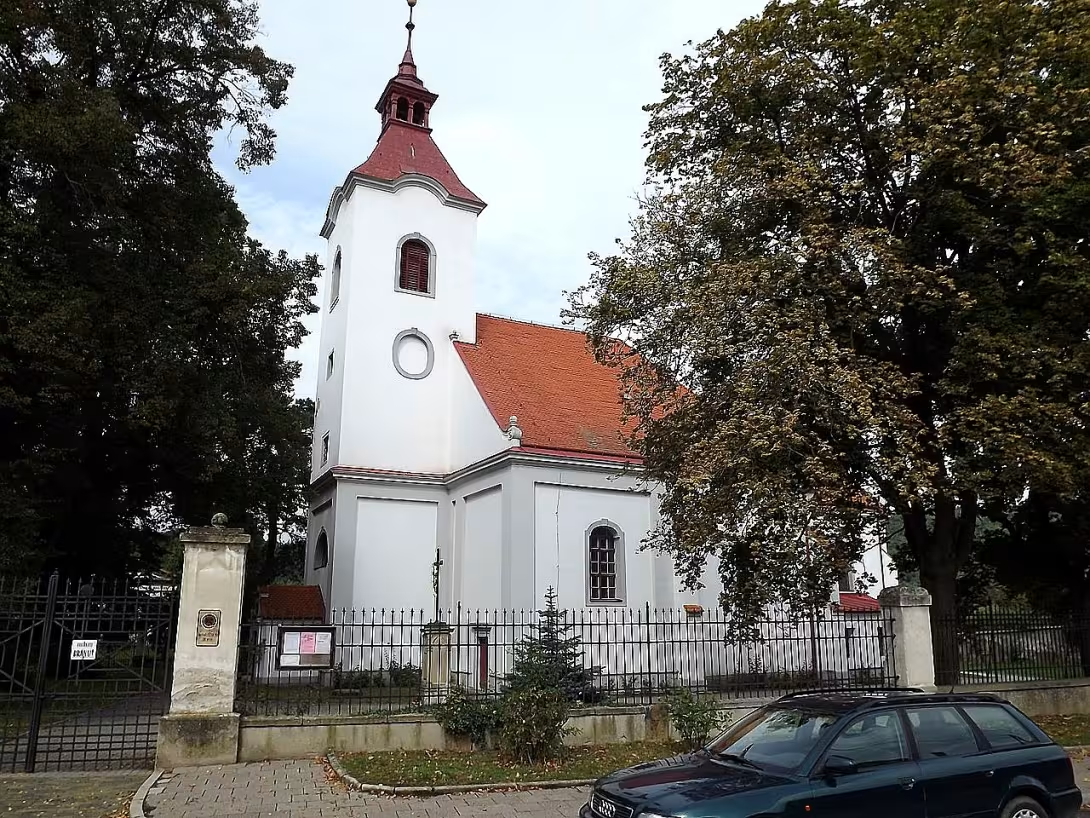
The Church of All Saints is one of the important buildings of Moravian Krumlov. It is a parish church of the local parish, which since its inception is the centre of religious life in the region. It is protected by state protection of the Czech Republic as a cultural monument.
The first beginnings of this temple go deep into the Middle Ages. The church has been documented by written reports since 1248. He was originally dedicated to St. Vavranice, patron saint of the parish. The construction was a Gothic, architectural style common at that time in a wide region. Like many Catholic churches in the Czech Republic, this one also passed heavy tests in the Hussite era - the construction was ravaged by Hussites. Restoration came rather early in 1466 when the temple was restored and returned to service.
Another serious damage was sustained by the church in the seventeenth century. In 1630 he was hit by a fire. This disaster was followed by a long process of reconstruction lasting from 1636 to 1646. Part of the renewal was the change of initiation - the church was newly dedicated to all saints, which was reflected in its present name. Some elements were preserved from the Gothic building: the original vault, the remnants of the tower and an interesting portal characteristically completed into the triangle.
The interior of the church keeps valuable historical artifacts. There is a preserved tombstone, which reminds of important personalities connected with Moravian Krumlov. One of them was given to the builder of the Renaissance reconstruction of the local chateau, Leonardo Garu di Bisono. The church is historically related to the rectory in the immediate vicinity, where the Bishop of Unity, Brother Jan Blahoslav, allegedly ended his life in 1571.
During the nineteenth century, the buildings gradually aged and required maintenance. In 1873 the church was rebuilt and adapted to the needs of the time. Today, the church stands as a testament to the rich and complex past of Moravian Krumlov - from late Gothic beginnings to dramatic twists of Hussite times to gradual changes in the New Age.
Then and now
Drag the slider to compare how the landmark may have looked when it was built with the view today.
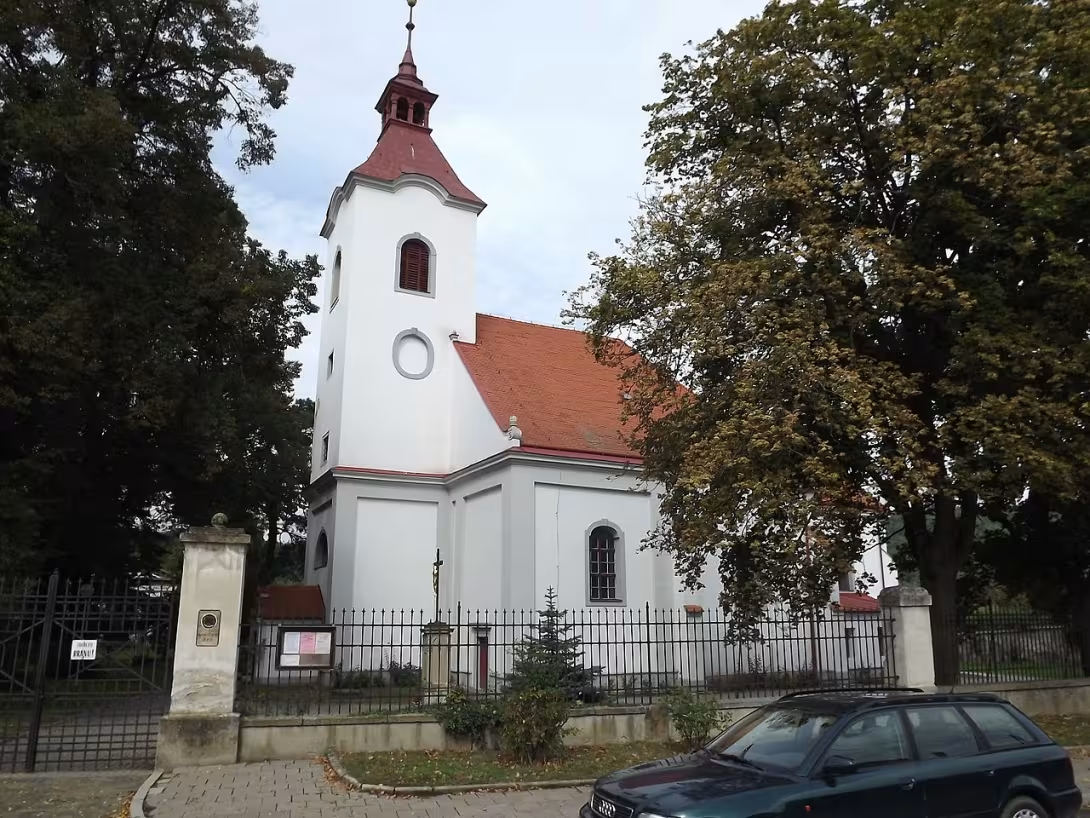
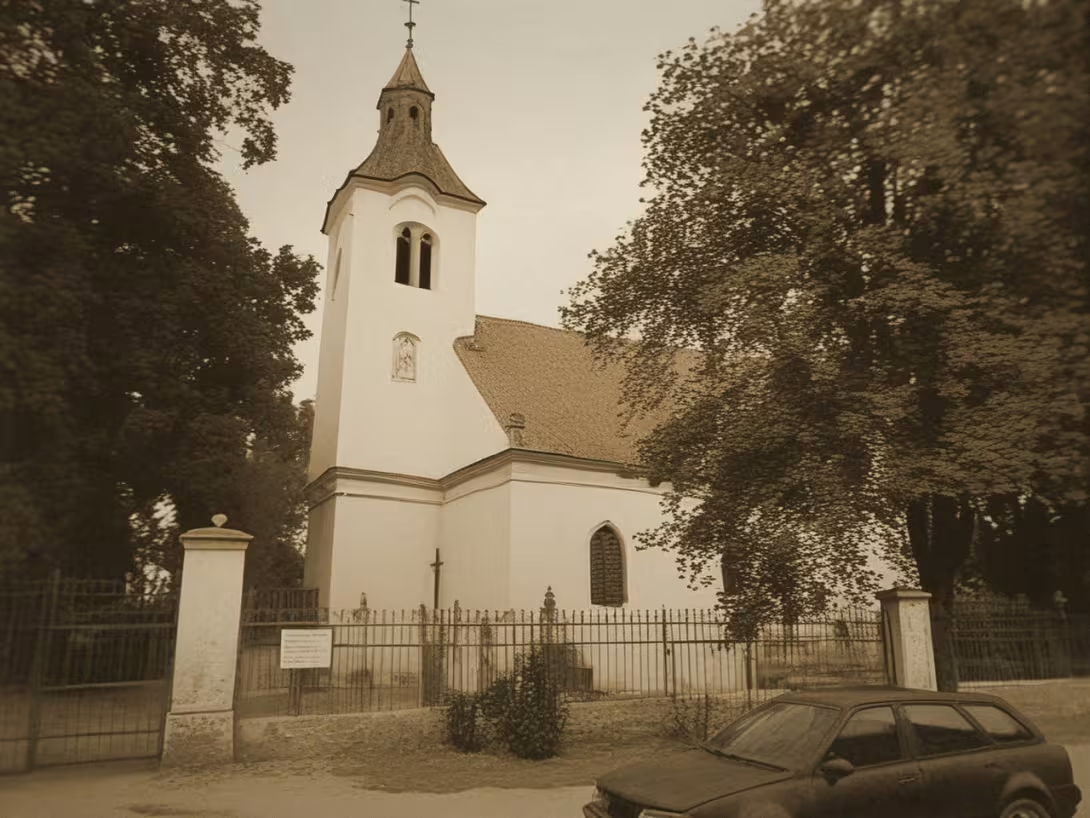
The historical appearance on the left is an AI-generated visualisation and serves as inspiration only.
Historical milestones
- 1248
- First written mention of the church, originally dedicated to St. Lawrence
- 1466
- Restoring the church on Hussite raids
- 1630
- The destruction of the church by fire
- 1636-1646
- Baroque reconstruction and new initiation to all saints
Architectural development
The original Romanesque building from the 13th century was gradually rebuilt. Gothic elements appeared after Hussite raids, when the church was restored in 1466. The most significant baroque modifications took place after the fire in 1630, when only part of the tower and vault were preserved. The Renaissance portal is one of the few preserved elements of the original Romanesque form.
Historical events
Destruction of Hussite in the 15th century, subsequently restored in 1466
Fire in 1630 and Baroque reconstruction in 1636-1646
Maintenance of parts of original Romanesque vaults and portals
Last major adjustment in 1873
Points of interest
- The Church of All Saints has been documented in writing since 1248 and was originally dedicated to St. Vavránek.
- In Hussite time, the church was ravaged by Hussites, but already in 1466 it was repaired and put back into service.
- In 1630 he was destroyed by a fire, followed by reconstruction from 1636 to 1646, during which the church was newly dedicated to all saints.
- The original Gothic building was preserved by the original vault, the remains of the tower and the portal with a triangular ending.
- In the interior there is a tombstone of an important personality, builder of the Renaissance castle Leonardo Garu di Bisono.
Guide
This guide is narrated by a synthetic voice generated by artificial intelligence.
Show guide text
This text was created by artificial intelligence and has not been editorially reviewed. It may contain inaccuracies.
The Church of All Saints is a Roman Catholic parish church in Moravský Krumlov. It is protected as a cultural monument of the Czech Republic.
The first mention of the parish church here dates from 1248. At that time it was dedicated to Saint Lawrence. The Hussite forces devastated the Gothic building and it was restored in 1466. In 1630, a fire damaged the church. This was followed by a reconstruction from 1636 to 1646, and after that the church received a new dedication, to All Saints. Another renovation took place in 1873.
From the original Gothic building, the vault, part of the tower, and a portal topped with a triangle have been preserved.
The church contains preserved tombstones. One of them belongs to Leonardo Garu di Bisono, the builder who gave the Moravský Krumlov chateau its Renaissance appearance.
Right next to the church is a Roman Catholic parish office. According to records, Jan Blahoslav, a bishop of the Unity of the Brethren, died at the rectory in 1571.
Tips for visitors
The best time to visit the church is from 9 to 15 hours when the light is ideal for shooting and air temperature comfortable for visitors. Since this is a historical monument, we recommend taking a scarf or a cap against dust and leg fatigue.
Parking is possible on nearby streets or in nearby garage. Transportation is available by bus or walk from the centre of Moravian Krumlov.
Don't forget to bring a camera to grab beautiful architectural details and visit memories.
Photography is permitted, but please respect the privacy of other visitors. The best places for photography are the front of the church, tower and interior.
Frequently asked questions
Is Kostel Všech svatých (Moravský Krumlov) open to the public?
Yes, the church is open to the public. The tour is possible without booking.
How do I get to the place by car / public transport?
By car you can reach the centre of Moravian Krumlov and then walk 5 minutes to the church. The public transport stops near the church.
How much is the entrance fee and is it paid on the spot?
Payment shall be made directly at the entrance.
Is the tour suitable for children and seniors?
Yes, a church tour is also suitable for families with children or seniors. The church has accessible staircases and uncomplicated spaces.
How long does the tour take?
The church tour takes approximately 30 minutes.
What are the opening times and booking is required?
The church is open daily from 9:00 to 15:00. Reservations are not required; visitors can enter at any time during the opening hours.
What's interesting in the immediate vicinity?
In the immediate vicinity of the church there is a historical centre of Moravian Krumlov with a number of other monuments such as the chateau or town hall. There are also restaurants and cafés nearby.
For kids
Imagine going back to when Moravský Krumlov was a small town with wooden houses and baths. The Church of All Saints stood at the place where it stands today. It was the only church in the whole area and people from around here came to pray and celebrate their greatest moments in life.
How did it look here? There lived a local population that lived from agriculture, livestock farming and craft activities. They were proud people who loved their homes and protected them from the attacks of riots and war conflicts.
Businesses nearby
Do you run a restaurant, accommodation, shop, museum, rental, wellness or other visitor service near this monument? Show yourself directly to the people heading to it — this is how they will see you in the app and on the web:
Nearby
- Classicist tomb from the 19th century, part of the historical whole church.
- A 17th century Baroque artwork.
- Historical cemetery with cast iron cross.
Accommodation nearby
Trips and activities nearby
Guided tours, tickets and activities nearby from GetYourGuide
Affiliate link: if you buy from the partner, we may receive a commission. The price for you does not change.
Search tours and activities →Themed route
Thematic cruise route Moravský Krumlov - spiritual and historical circuit
1. Church of All Saints Baroque church from the 18th century, which dominates the square. Its interior with rich decoration and historical tombstones is a unique example of Moravian Baroque art. His acoustics, which attracts music lovers, are also interesting.
2. Liechtenstein Tomb In the immediate vicinity of the church is this classical tomb from the 19th century. It is part of the family burial ground of Liechtenstein and represents a rare example of sacral architecture associated with a major European dynasty.
3. Baroque statue of St. John Nepomuk The statue stands before the entrance to the church and is one of the oldest Baroque works of art in the village. Its artistic value and historical importance make it an interesting stop before entering the church.
4. Church cemetery The ancient cemetery surrounding the church is full of historical tombstones and commemorative stones. It's a place of quiet and reflects the rich history of the village. A walk between the tombstones offers a look into the past of Moravian Krumlov.
Seasonal recommendations
Spring brings freshness and awakening nature around the church, which complements its greenery with historical architecture. The lighting is fine during this period, which makes it easier to observe the details of the construction. I recommend wearing layered clothes because spring weather is usually variable in this area. It is best to visit the memory of the morning when the air is the purest and the attendance is still mild.
In the summer months the atmosphere is very lively and the sun hits the walls of the church in full force, highlighting its shapes. The days are long, but due to the high summer season, you have to prepare for more people. For the best experiences and avoiding heat I recommend you come right after opening. Dress lightly and don't forget to protect yourself from the sun and plenty of fluids.
The autumn season offers a calm and melancholy atmosphere, which is perfectly complementary to the spiritual character of the place. The golden colours of leaves and morning fog create magical lights, especially in the low sun. It is the perfect time for those who seek peace because crowds of tourists gradually disappear. Prepare yourself a warmer outfit, because the cooler air can be impact, and the best time to visit is this afternoon.
Winter turns the surroundings into a quiet and freezing landscape, which is very noble, especially if everything is covered with snow. In this period, the attendance is the lowest, allowing you to perceive the memory in almost complete privacy. Due to shorter daily times and lower temperatures it is necessary to take very warm clothes and plan a tour around noon when the lights are most.
Visualizations and artistic views


The visualisations are generated by artificial intelligence and serve as inspiration.
Photos from the area
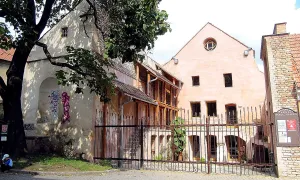
Real photos taken near the monument


Zdroj a licence jsou uvedeny u každého snímku.
Atmosphere of the place
This atmospheric visualisation of the place and period was generated by artificial intelligence. It is not real footage of the location.
Tips from visitors
No tips yet. Be the first!
Log in and add your tip.
Sources and literature
Photos: JAn Dudík / CC BY-SA 3.0 — Wikimedia Commons. The author and licence also appear when you hover over the image.
Faktickým podkladem tohoto textu byl článek na Wikipedii, jehož autory jsou přispěvatelé Wikipedie. Článek je dostupný pod licencí CC BY-SA 4.0.
Location on the map



Příběhy a pověsti
Legendy, pověsti a příběhy spjaté s touto památkou
Fotografie návštěvníků
Zatím žádné fotografie. Buďte první, kdo přidá fotografii z návštěvy!
Log in a přidejte svou fotografii nebo hodnoťte.
Za ověřenou návštěvu v aplikaci získáte víc bodů — poznáme podle GPS, že jste na místě.
Reviews and comments