






Kostel Všech svatých (Spořice) Church
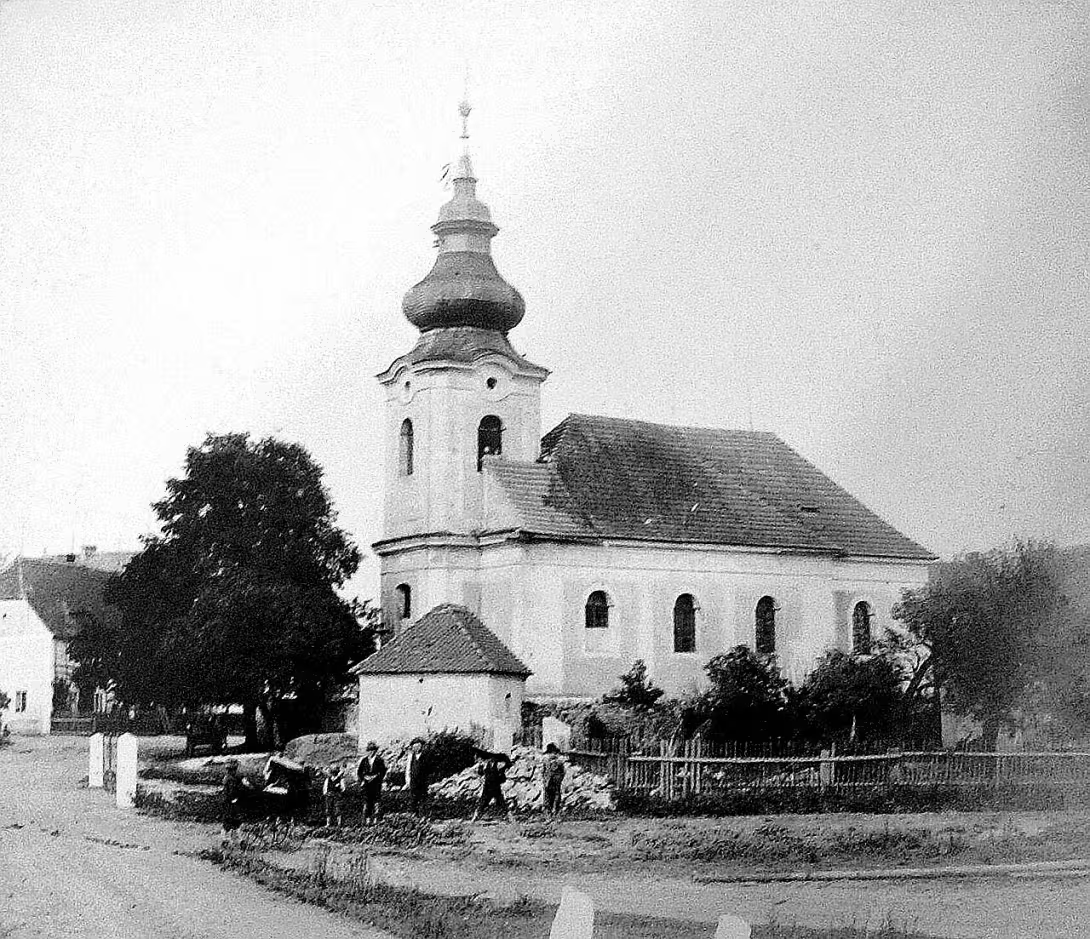
Objekt se nedochoval — na místě dnes nestojí. Následující text popisuje jeho historii, ne současnou návštěvu.
The Church of All Saints in Krbice, now part of Spořice, stands as a testament to religious devotion and the impact of modernization on cultural heritage. Originally constructed in Gothic style during the second half of the 14th century, it underwent significant Baroque renovations between 1768 and 1770 after a devastating fire in 1764. Initiated by František Michal z Martinic, these changes transformed its architectural identity while maintaining its role as the parish church for Krbice until its eventual demolition due to industrial expansion.
The origins of the Church of All Saints are rooted in the religious and cultural developments of 14th-century Bohemia within the Holy Roman Empire. During this period, Gothic architecture was prevalent across Europe, reflecting broader ecclesiastical construction trends. The church's initial design featured a single-nave structure with a square presbytery, typical of the Gothic style, which later underwent significant transformation.
Architecturally, the Baroque renovation introduced several key elements that distinguished it from its original form. The church was characterized by oblong ground plans and a partially protruding belfry at the western façade. Its facades were adorned with pilasters and semi-circular windows, adding to the Baroque aesthetic initiated after the 1764 fire. Inside, the nave boasted a flat mirror vault ceiling supported by two pillars, from which a segmentally curved balustrade extended into the space.
The church's interior was richly decorated with works attributed to Jakub Eberle, a notable sculptor from Mašťov. Among its furnishings were an edicule altar featuring Tuscan columns and volute wings adorned with angel figures, alongside retablo altars dedicated to the Sacred Heart of Jesus and the Virgin Mary. Additional sculptures included depictions of saints such as Saint Prokop, Saint Vojtěch, Saint Barbara, and Saint Anne, complemented by a baroque crucifix dated 1722.
Ownership and administration of the church were primarily under local religious authorities until its demolition. The decision to demolish the village Krbice began in 1983 due to environmental concerns related to industrial expansion, leading to the destruction of the church two years later. Despite this loss, some elements of the church's original furnishings were preserved and relocated to the deanery in Chomutov.
Today, while the physical structure no longer stands, the Church of All Saints remains a significant historical site within the region. Its story reflects broader themes of cultural transformation and preservation amidst modernization pressures. Visitors interested in exploring this aspect of Czech history can delve into its legacy through local archives and museums that house some of its original artifacts.
The Church of All Saints serves as a poignant reminder of the delicate balance between preserving heritage and accommodating progress. It invites reflection on how communities navigate these challenges, making it a worthwhile subject for those intrigued by historical narratives and architectural evolution.
Then and now
Drag the slider to compare how the landmark may have looked when it was built with the view today.
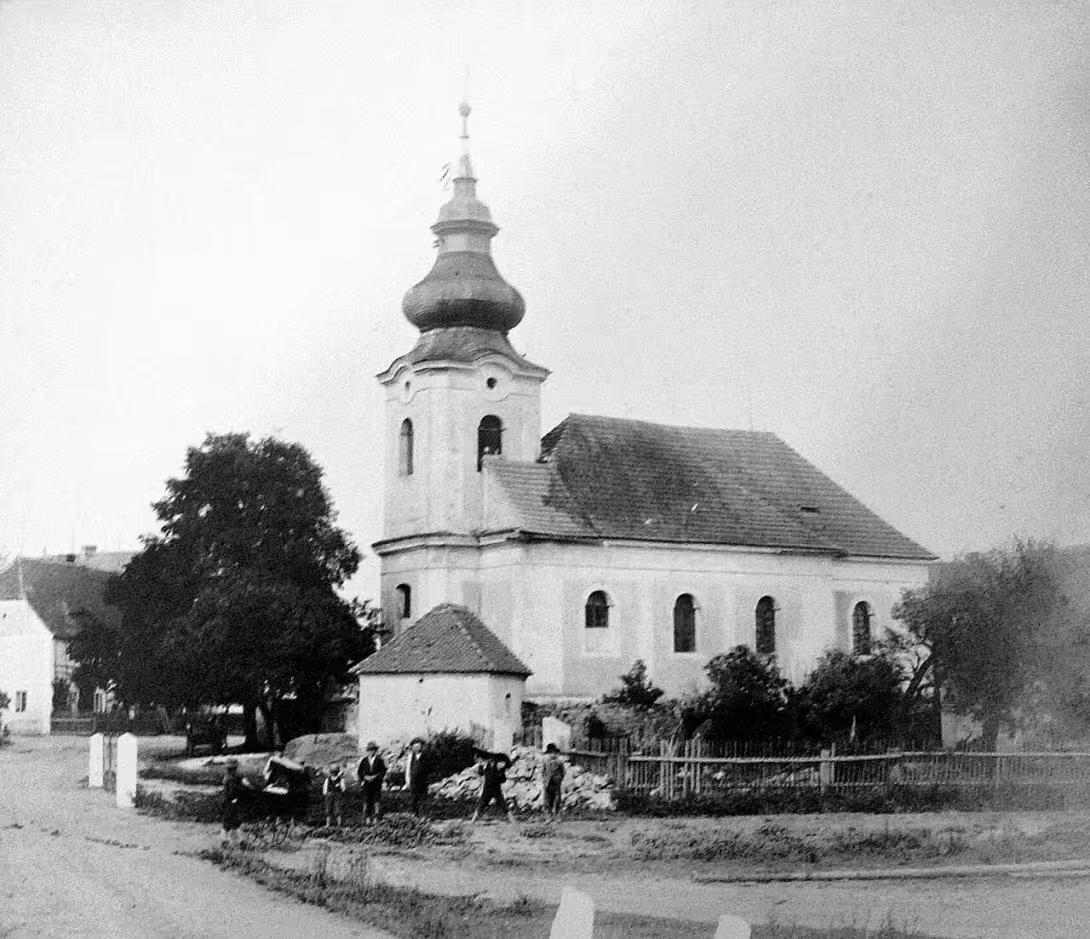

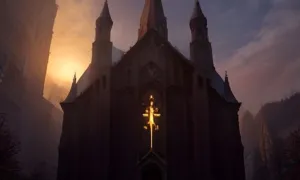
The historical appearance on the left is an AI-generated visualisation and serves as inspiration only.
Historical milestones
- c. 1350
- The original building of the church in Gothic style.
- 1764
- The church was destroyed by fire.
- 1768-1770
- Baroque reconstruction of the church under the direction of František Michal z Martinic.
- 1983
- Start of the demolition of the village Krbice due to environmental concerns.
- 1985
- Demolition of the Church of All Saints.
Architectural development
Originally constructed in Gothic style during the second half of the 14th century, the Church of All Saints underwent a major transformation into Baroque architecture between 1768-1770. This renovation followed a devastating fire in 1764 and was initiated by František Michal z Martinic. The church featured a single-nave design with a square presbytery and a partially protruding belfry.
Historical events
The church was significantly rebuilt in Baroque style between 1768-1770 after a fire in 1764.
Demolition began in 1983 due to environmental concerns, and the church was destroyed two years later.
Points of interest
- The Church of All Saints was originally built in the Gothic style during the 14th century but underwent a dramatic transformation to Baroque architecture after a fire in 1764. This shift reflects how architectural styles can evolve dramatically due to unforeseen events like natural disasters.
- Jakub Eberle, a sculptor from Mašťov, contributed significantly to the church's interior decoration with his works on altars and sculptures of saints. His involvement highlights the role local artisans played in enriching religious sites during that era.
- Despite its eventual demolition due to industrial expansion in 1985, some elements of the Church of All Saints were preserved and relocated to the deanery in Chomutov. This act of preservation underscores efforts to maintain cultural heritage even when physical structures are lost.
- The church's Baroque transformation was spearheaded by František Michal z Martinic after a devastating fire in 1764, illustrating how influential figures can significantly impact architectural and cultural landscapes through restoration projects.
- Although the Church of All Saints no longer exists physically, its legacy is preserved through local archives and museums that house some of its original artifacts. This preservation effort highlights the importance of documenting historical sites to maintain their stories for future generations.
Guide
This guide is narrated by a synthetic voice generated by artificial intelligence.
Show guide text
This text was created by artificial intelligence and has not been editorially reviewed. It may contain inaccuracies.
The Church of All Saints no longer stands. It used to be the parish church in Krbice, a village in the Chomutov district, which ceased to exist due to coal mining.
The church was built in the second half of the fourteenth century as a Gothic structure. In 1764 a fire damaged the village and the church was subsequently significantly reconstructed in the Baroque style, between 1768 and 1770, or according to other sources between 1766 and 1769. The reconstruction was initiated by František Michal z Martinic. It was supposed to be demolished as late as 1997 because the Nástup quarry was expanding. However, due to poor environmental conditions, the village began to be cleared as early as 1983 and the church was demolished two years later, in 1985.
It was a single-nave structure with a rectangular ground plan and a square presbytery. A prismatic tower partially projected in front of the western facade. The facades were articulated by pilaster strips and windows topped with semicircles. In the south wall was a portal bearing the date 1768. The nave had a flat coffered ceiling. It contained a gallery on two pillars, whose balustrade with balusters extended into the nave in an undulating curve. The presbytery, vaulted with a flat barrel vault, was separated from the nave by a semicircular triumphal arch.
The interior furnishings dated from around 1770 and were partly created by the workshop of wood carver Jakub Eberle z Mašťova. The main altar had Tuscan columns supporting an entablature and cornice. In the centre was an image of All Saints in a Rococo frame, with wings depicting angels on either side. Two side altars were dedicated to the Sacred Heart of Jesus and the Virgin Mary. They were complemented by statues of Saint Prokop, Saint Vojtěch, Saint Barbara and Saint Agnes, as well as angels and a group depicting the Holy Trinity. Another altar belonged to Saint John of Nepomuk.
Older than the Baroque altars was a sandstone baptismal font from around 1730 and a crucifix by Waitzmann from 1722. The church had paintings of Saint Anne and Saint Joseph hanging inside. There was also a neo-Gothic cast iron epitaph of the parents of Bishop Karel Hanl from 1841. Part of the furnishings was moved to the deanery in Kadaň before the church was demolished.
Businesses nearby
Do you run a restaurant, accommodation, shop, museum, rental, wellness or other visitor service near this monument? Show yourself directly to the people heading to it — this is how they will see you in the app and on the web:
Nearby
The area around Spořice, where Krbice once stood, is characterized by industrial activity related to the Nástup quarry. The landscape has been significantly altered due to mining operations.
Visualizations and artistic views


The visualisations are generated by artificial intelligence and serve as inspiration.
Photos from the area
Real photos taken near the monument

Zdroj a licence jsou uvedeny u každého snímku.
Tips from visitors
No tips yet. Be the first!
Log in and add your tip.
Sources and literature
Photos: autor neuveden / Public domain — Wikimedia Commons. The author and licence also appear when you hover over the image.
Faktickým podkladem tohoto textu byl článek na Wikipedii, jehož autory jsou přispěvatelé Wikipedie. Článek je dostupný pod licencí CC BY-SA 4.0.
Location on the map

Příběhy a pověsti
Legendy, pověsti a příběhy spjaté s touto památkou
Fotografie návštěvníků
Zatím žádné fotografie. Buďte první, kdo přidá fotografii z návštěvy!
Log in a přidejte svou fotografii nebo hodnoťte.
Za ověřenou návštěvu v aplikaci získáte víc bodů — poznáme podle GPS, že jste na místě.
Reviews and comments