



Kostel Zvěstování Panny Marie (Ostrov) Church
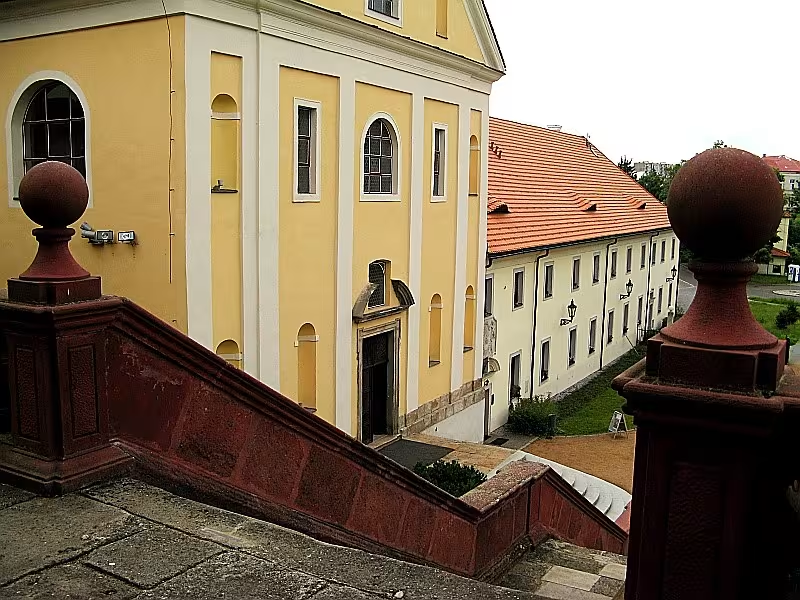
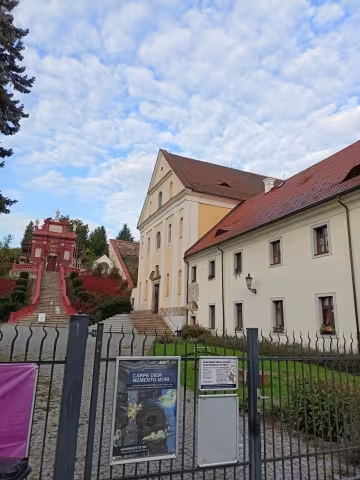
Kostel Zvěstování Panny Marie in Ostrov is an early Baroque monastic church located on the town's southwestern edge. Built between 1666 and 1673 by Duchess Anna Magdalena of Saxe-Lauenburg, it was consecrated in 1674 with Archbishop Mathias Ferdinand Sobek z Bielenberka present. The church is renowned for its rich Baroque style, reflecting artistic trends of the era, and has served various roles throughout history, including as a cultural center today.
The origins of Kostel Zvěstování Panny Marie date back to the late 17th century when Bohemia was part of the Habsburg Monarchy. This period saw significant cultural and architectural development under Baroque influence, with increased patronage from nobility for religious and artistic projects across Europe. Duchess Anna Magdalena commissioned the church as a testament to her devotion and status, resulting in its construction by renowned Prague architect Martin Reiner. Although it is not confirmed whether Reiner authored the plans, his involvement is documented through preserved sketches by Wolfgang Dientzhofer.
Architecturally, Kostel Zvěstování Panny Marie exemplifies early Baroque design with intricate sculptural elements crafted by Martin Möckel. In 1673, Nikolaus Löw of Prague created three bells and other bell components for the monastery, enhancing its auditory features. Despite damage during both World Wars, which led to the confiscation and loss of some bells, the central bell dedicated to St. Anna remains preserved in Ostrov's parish church tower.
Ownership and administration of the church have changed dramatically over time. Initially owned by a local monastery, it was confiscated during World War I for military purposes, resulting in the loss of its smallest bell. In 1945, during World War II, the Sisters of Christian Love took over before it became property of the Czechoslovak army in 1953. This period saw significant damage and looting until a comprehensive reconstruction occurred between 2001 and 2007.
Throughout its history, Kostel Zvěstování Panny Marie has witnessed key events. Its consecration in 1674 marked its religious significance, while the confiscation of bells during both World Wars reflects its strategic importance. The church's transformation into a cultural center post-reconstruction highlights its resilience and adaptability.
Today, Kostel Zvěstování Panny Marie serves as a vibrant cultural hub and venue for porcelain exhibitions, attracting visitors interested in history, architecture, and art. Its serene location on the southwestern edge of Ostrov complements its historical significance, inviting exploration of nearby attractions within a five-kilometer radius.
Kostel Zvěstování Panny Marie stands as a testament to Bohemia's rich cultural heritage during the Baroque period. Its enduring presence and transformation into a cultural center underscore its importance not only as a religious site but also as a beacon of historical resilience. Visitors are encouraged to explore this remarkable monument, where history and art converge in a serene setting.
Then and now
Drag the slider to compare how the landmark may have looked when it was built with the view today.
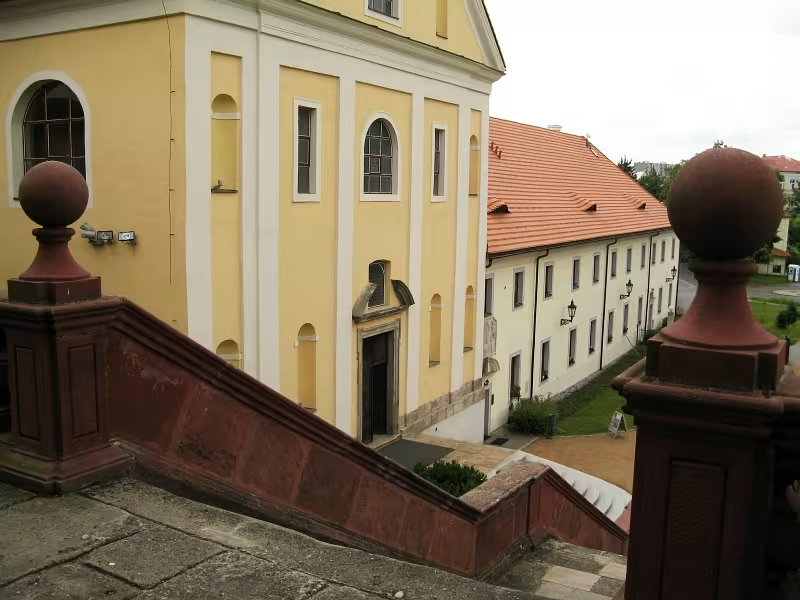
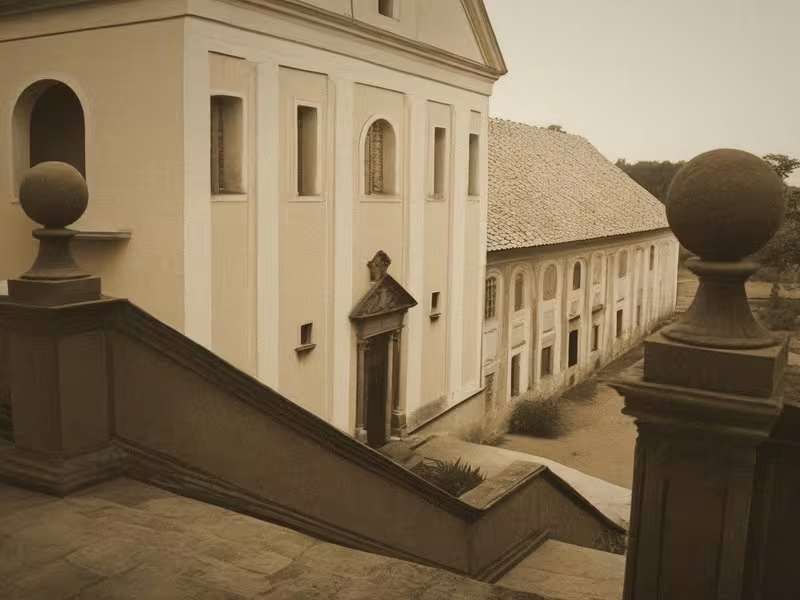
The historical appearance on the left is an AI-generated visualisation and serves as inspiration only.
Historical milestones
- 1674
- The church was consecrated.
- 1918
- The smallest bell was confiscated for war efforts.
- 1945
- The church was taken over by the Sisters of Christian Love.
Architectural development
The church's design is attributed to Martin Reiner, with plans preserved in Wolfgang Dientzhofer's sketchbook. The sculptural elements were crafted by Martin Möckel, and three bells along with other bell components were made by Nikolaus Löw in 1673. After suffering damage during the wars, a comprehensive reconstruction took place between 2001 and 2007.
Historical events
Consecrated in 1674 with Archbishop Mathias Ferdinand Sobek z Bielenberka present.
In World War I, the smallest bell was confiscated for war efforts.
During World War II, the church was taken over by the Sisters of Christian Love.
Owners
Initially owned by the local monastery
During World War I and II, ownership changed to military forces
Points of interest
- The church's bells have a tumultuous history; during World War I and II, several were confiscated or lost due to military requisitioning, yet the central bell dedicated to St. Anna remains preserved in Ostrov's parish church tower.
- Although Martin Reiner is often credited with designing Kostel Zvěstování Panny Marie, there is no definitive proof he authored the plans; however, his involvement is supported by sketches attributed to Wolfgang Dientzhofer.
- The architectural style of Kostel Zvěstování Panny Marie features intricate sculptural elements crafted by Martin Möckel, highlighting the church's embodiment of early Baroque design, a testament to the artistic trends of its time.
- Throughout history, ownership and administration of the church have shifted dramatically; from being owned by a local monastery, it was confiscated during World War I for military use, later taken over by the Sisters of Christian Love in 1945, and eventually became property of the Czechoslovak army in 1953.
- Despite suffering significant damage and looting during its time under military control, Kostel Zvěstování Panny Marie underwent a comprehensive reconstruction between 2001 and 2007, transforming it into a cultural center that now hosts porcelain exhibitions.
Guide
This guide is narrated by a synthetic voice generated by artificial intelligence.
Show guide text
This text was created by artificial intelligence and has not been editorially reviewed. It may contain inaccuracies.
The Church of the Annunciation of the Virgin Mary stands on the southwestern edge of Ostrov. It is an early Baroque monastery church that was built between 1666 and 1673 at the wish of Duchess Anna Magdalena of Saxe-Lauenburg. It was consecrated in 1674, and on that occasion the Prague Archbishop Mathias Ferdinand Sobek of Bielenberg was present.
The construction contract was signed on May 22, 1666 by Prague builder Martin Reiner. Whether he also designed the church is still unknown. However, the church plan has been preserved in the sketchbook of Wolfgang Dientzenhofer, who worked for Reiner. The sculptural decoration was overseen by sculptor Martin Möckel. In 1673, imperial bell founder Nikolaus Löw from Prague cast three bells for the monastery, two bell chimes for the clock, and five altar bells.
The subsequent fate of the church was less fortunate. During the First World War, it was decided that the smallest bell would be confiscated for war purposes. Eventually, the largest bell and the small bell also disappeared from the tower. During the Second World War, the church was seized by the Sisters of Christian Love. In 1953 it went to the Czechoslovak army and soldiers were stationed there. The entire complex, including the church, was then completely devastated and its furnishings were destroyed or stolen.
Of the original bells, only one has survived – the middle bell dedicated to Saint Anne. For security reasons, it was removed from the tower on November 17, 1989, and since then the monastery church has had no bells. The bell of Saint Anne now hangs in the tower of the Ostrov parish church of Saint Michael.
Between 2001 and 2007, the town of Ostrov had the church and the entire monastery complex renovated. Today the church serves as a cultural center and houses an exhibition of porcelain.
Tips for visitors
The best time to visit Kostel Zvěstování Panny Marie is during the late spring or early autumn months, when the weather is pleasant and the surrounding landscape of Ostrov is particularly vibrant with blooming flora. This period also offers softer lighting conditions for photography, enhancing the beauty of the church's Baroque architecture.
When visiting Kostel Zvěstování Panny Marie, consider bringing comfortable walking shoes as you may want to explore the serene landscape surrounding the church. A camera is recommended to capture the stunning architecture of the church, especially during golden hour when the light accentuates its Baroque details. Additionally, a small notebook or sketchpad could be useful for jotting down thoughts or sketches.
For photography enthusiasts, some of the best spots around Kostel Zvěstování Panny Marie include the southwestern edge where the church is situated, offering panoramic views with the serene landscape as a backdrop. The morning light can beautifully highlight the intricate details of the church’s facade, while late afternoon provides warm lighting that enhances its Baroque features.
Nearby attractions within a 30-minute drive or walk from Kostel Zvěstování Panny Marie include other historical sites and natural landscapes in Ostrov. Families with children might enjoy exploring these local attractions which are suitable for all ages, providing both educational and recreational opportunities.
Frequently asked questions
Can the monument be visited?
Religious buildings are usually open mainly during services; at other times a visit is normally arranged with the parish or the operator. We have not verified specific times.
Where is the monument?
Location: Ostrov, Karlovarský kraj. The map on this page shows the exact spot.
Why is the monument protected?
It is listed in the Central List of Cultural Monuments of the Czech Republic as a cultural monument. It is protected as part of a larger listed ensemble.
Businesses nearby
Do you run a restaurant, accommodation, shop, museum, rental, wellness or other visitor service near this monument? Show yourself directly to the people heading to it — this is how they will see you in the app and on the web:
Nearby
Located on the southwestern edge of Ostrov, the church is surrounded by a serene landscape that complements its historical architecture. Nearby, visitors can explore other local attractions and natural features within a five-kilometer radius.
Accommodation nearby
Trips and activities nearby
Guided tours, tickets and activities nearby from GetYourGuide
Affiliate link: if you buy from the partner, we may receive a commission. The price for you does not change.
Search tours and activities →Themed route
Thematic Walking Tour: The Charm of Ostrov
1. Kostel Zvěstování Panny Marie (Ostrov)
Type: Historical Church
Why Visit: Begin your journey at this stunning example of historical architecture located on the southwestern edge of Ostrov. The church, with its serene surroundings, offers a peaceful retreat and an opportunity to appreciate its architectural beauty and spiritual significance.
2. Local Park near Kostel Zvěstování Panny Marie
Type: Park
Why Visit: Just a short walk from the church, this local park provides a perfect spot for relaxation amidst nature. Enjoy leisurely strolls or picnics while soaking in the tranquility of the area's natural landscape.
3. Historical Walking Path around Ostrov
Type: Walking Trail
Why Visit: Explore the historical walking path that meanders through the outskirts of Ostrov. This trail offers insights into the local history and culture, with scenic views that highlight the region’s natural beauty.
This tour allows you to immerse yourself in the charm of Ostrov, combining architectural marvels with serene nature walks.
Seasonal recommendations
Spring: Visiting the Church of the Annunciation of the Blessed Virgin Mary in Ostrov during spring offers a unique experience as nature awakens around this historical site. The surrounding landscape is lush with blooming flowers and fresh greenery, creating a vibrant backdrop that enhances the church's architectural beauty. Soft morning light filters through the trees, casting gentle shadows on the stone façade. This season typically sees fewer visitors compared to summer, making it an ideal time for those seeking tranquility. It’s recommended to wear comfortable walking shoes as you explore the nearby paths and gardens. Arriving in the late morning can help avoid any lingering chill from the night.
Summer: Summer at the Church of the Annunciation is perfect for experiencing its grandeur under clear blue skies, with the lush greenery in full bloom creating a picturesque setting. This season attracts more visitors due to favorable weather conditions and longer daylight hours, so arriving early in the morning can help you avoid crowds. The church often hosts various cultural events during this period, adding to the lively atmosphere. Visitors should dress comfortably for warm weather, bringing along hats or sunscreen to protect against the sun. Exploring the surrounding areas after your visit can further enhance your experience with a leisurely stroll through Ostrov’s scenic landscapes.
Autumn: The autumn season transforms the Church of the Annunciation into a serene haven amidst the vibrant colors of falling leaves. This time of year offers a more subdued atmosphere, as the foliage shifts from green to shades of orange and red, creating stunning visual contrasts against the church's historic architecture. Cooler temperatures make it an ideal period for photography enthusiasts looking to capture the site in its seasonal splendor. Visitors should dress warmly and bring layers, as evenings can become quite chilly. The quieter ambiance compared to summer makes autumn a perfect time for those seeking a peaceful visit.
Winter: Winter brings a magical atmosphere to the Church of the Annunciation, with snow-covered landscapes adding an enchanting touch to this historic site. Shorter days mean that visiting in the late morning or early afternoon is advisable to make the most of natural light and ensure you have enough time to explore before closing hours. The church may be less crowded during winter months, offering a more intimate experience. It’s important to dress warmly with layers, including hats, gloves, and insulated footwear, as temperatures can drop significantly. Snowy paths around the church provide picturesque walking opportunities, perfect for those looking to enjoy the serene beauty of Ostrov in its wintry state.
Visualizations and artistic views


The visualisations are generated by artificial intelligence and serve as inspiration.
Photos from the area
Real photos taken near the monument


Zdroj a licence jsou uvedeny u každého snímku.
Tips from visitors
No tips yet. Be the first!
Log in and add your tip.
Sources and literature
Photos: Sovicka169 / CC BY-SA 3.0 — Wikimedia Commons. The author and licence also appear when you hover over the image.
Faktickým podkladem tohoto textu byl článek na Wikipedii, jehož autory jsou přispěvatelé Wikipedie. Článek je dostupný pod licencí CC BY-SA 4.0.
Location on the map

Příběhy a pověsti
Legendy, pověsti a příběhy spjaté s touto památkou

Za ověřenou návštěvu v aplikaci získáte víc bodů — poznáme podle GPS, že jste na místě.
Reviews and comments