



Košumberk Ruin
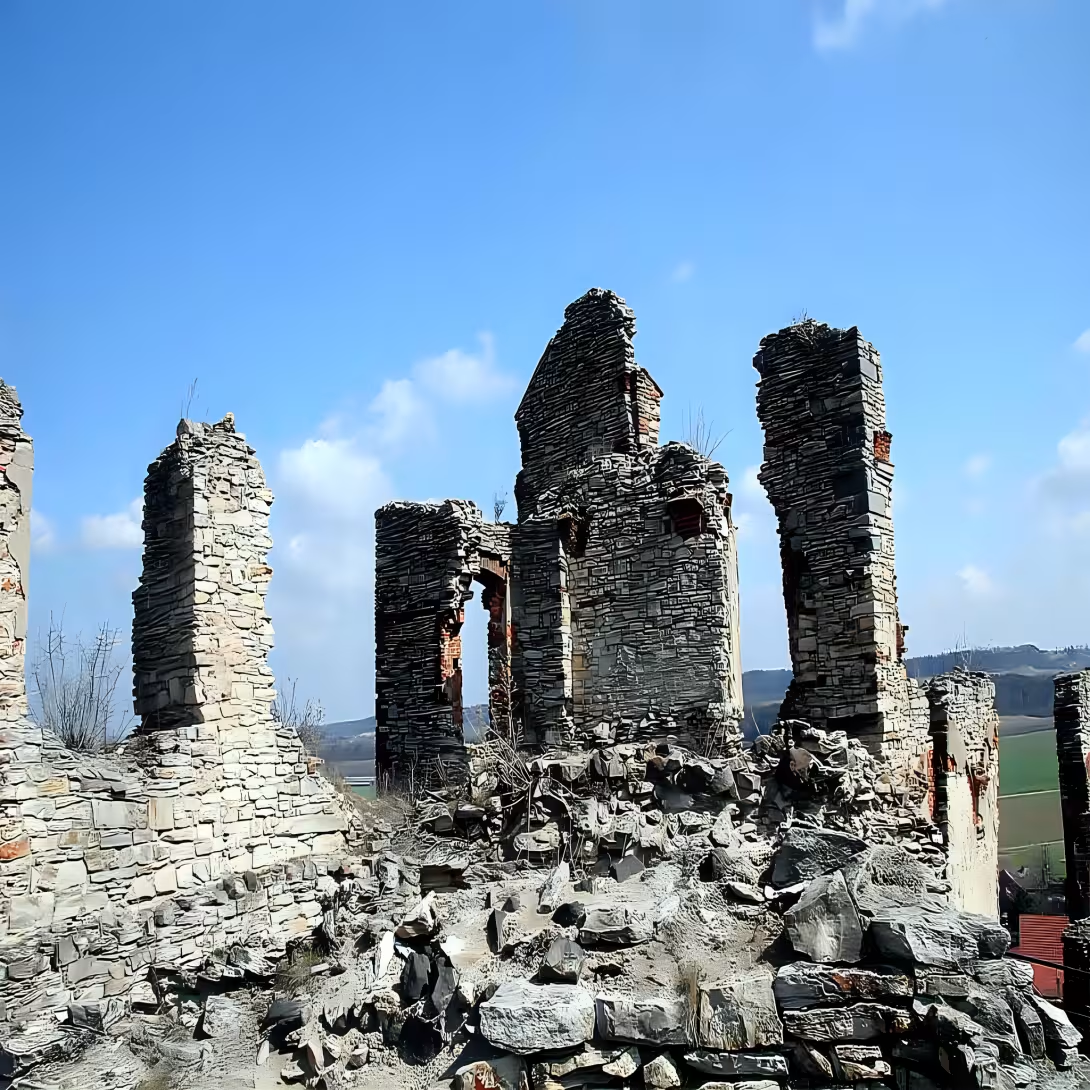
Košumberk is primarily the ruins of a Gothic castle situated atop a hill overlooking the Novohradka River valley in Košumberk village, within the Luže district of Pardubický kraj. Established in the second half of the 13th century, this site holds historical significance due to its architectural evolution and notable ownership changes over time. Today, it features remnants such as a tower, parts of a palace wall, and a gate, along with a Renaissance building that now houses a museum offering guided tours.
The origins of Košumberk trace back to the late 13th century when it was founded during a period marked by significant political and cultural developments in Bohemia under the Přemyslid dynasty. The castle's first documented mention appears in historical records from 1312, indicating its early importance. By 1372, the lords of Chlum, founders of the Slavatové z Chlumu a Košumberka family, were recorded as owners and undertook significant architectural changes by rebuilding it into a late Gothic style.
Architecturally, Košumberk began as a Gothic structure that underwent several transformations. The castle was rebuilt in the late 14th century into a late Gothic style by its owners. A devastating fire in 1573 led to further modifications, including the addition of a large Renaissance palace around 1600. By 1684, the Jesuits acquired Košumberk and established both a church and their residence there.
Throughout its history, Košumberk experienced various ownerships that influenced its fortunes. After being rebuilt into late Gothic style by the lords of Chlum in the 14th century, it was destroyed by fire in 1573. The Jesuits' acquisition in 1684 marked another significant chapter as they established a church and residence on the site.
Key events at Košumberk include gatherings to honor Jan Hus in 1868 and 1869, reflecting its cultural significance beyond architectural history. In 1922, an association dedicated to saving Košumberk conserved the ruins, ensuring their preservation for future generations.
Today, Košumberk stands as a testament to its rich historical tapestry. Visitors can access the site on foot via a path from Luže or by car, with parking available near the castle. The area is also accessible by bus from nearby towns and features a new wooden boardwalk for easier access. With 9,604 visitors in 2017 alone, Košumberk continues to attract those interested in its storied past.
Košumberk offers more than just historical intrigue; it provides an opportunity to explore the architectural evolution of a site that has witnessed centuries of change. Its blend of Gothic and Renaissance elements, coupled with its cultural significance, makes it a worthwhile destination for history enthusiasts. Visitors are invited to experience this remarkable monument firsthand, where guided tours offer insights into its storied past.
Then and now
Drag the slider to compare how the landmark may have looked when it was built with the view today.
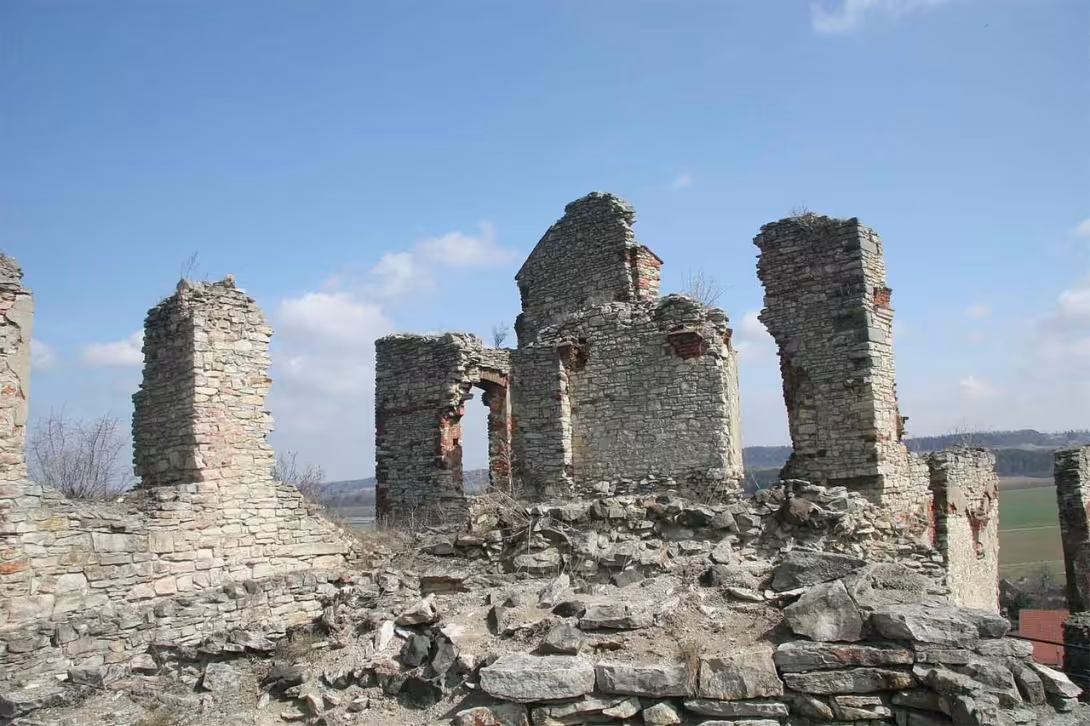

The historical appearance on the left is an AI-generated visualisation and serves as inspiration only.
Historical milestones
- 1312
- First documented mention of Košumberk.
- 1372
- Ownership by the lords of Chlum, founders of the Slavata family.
- 1573
- The castle was destroyed by fire.
- 1684
- Jesuits acquired Košumberk and established a church and residence.
Architectural development
Košumberk began as a Gothic structure and underwent significant transformations. In the late 14th century, it was rebuilt into a late Gothic style by its owners. A major fire in 1573 led to further changes, including the addition of a Renaissance palace around 1600. The Jesuits later acquired the site in 1684.
Historical events
In 1312, Košumberk is first mentioned in historical records.
The castle was rebuilt into late Gothic style by its owners in the 14th century.
A fire destroyed the castle in 1573.
By around 1600, a large Renaissance palace was added to the site.
Owners
The castle was initially owned by the lords of Chlum in 1372, who were founders of the Slavata family. In 1684, it became property of the Jesuits, who established a church and residence there.
Points of interest
- In 1868 and 1869, Košumberk became a gathering spot for those honoring Jan Hus, reflecting its role as more than just an architectural site but also a cultural meeting point. - The Jesuits' acquisition of the castle in 1684 led to the establishment of both a church and their residence, marking a significant phase where religious influence shaped the site's history. - A devastating fire in 1573 prompted major reconstruction efforts that included the addition of a large Renaissance palace around 1600, showcasing how adversity spurred architectural innovation at Košumberk. - The association formed in 1922 to save Košumberk played a crucial role in preserving its ruins, ensuring that future generations could appreciate this historical monument. - Despite its ruinous state today, the castle's blend of Gothic and Renaissance elements offers visitors a unique glimpse into the architectural evolution spanning several centuries at Košumberk.
Guide
This guide is narrated by a synthetic voice generated by artificial intelligence.
Show guide text
This text was created by artificial intelligence and has not been editorially reviewed. It may contain inaccuracies.
Košumberk is nowadays mostly a ruin of a Gothic castle. It stands on a hill of the same name that is 374 meters high above sea level, above the valley of the Novohradka River in the Chrudim district. It lies approximately 10 kilometers southwest of Vysoké Mýto and 6 kilometers northwest of Skutče and falls under the administration of the city of Luže.
The castle probably originated in the second half of the 13th century. The oldest wood that was successfully dated using dendrochronology points to this, and it was felled after 1255. The first written mentions of the castle come from the year 1312. In 1372, the lords from Chlum are listed as its owners, the founders of the Slavata family, who were known as the Slavatas of Chlum and Košumberk. They rebuilt the castle in the late Gothic style.
In 1573, the castle burned down. Around the year 1600, a large Renaissance château was added to it. In 1684, the Jesuits acquired it and established a church there as well as their residence. By the end of the 18th century, the castle was already being spoken of as a deserted place and the building gradually turned into ruins.
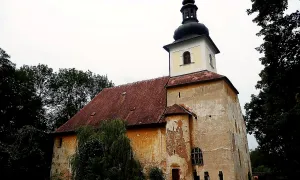
A turning point came in 1922. The then owner of the Košumberk estate, a prince from the Thurn-Taxis family, donated the ruins to the Society for the Rescue of Košumberk Castle, and it had it conserved that same year. To this day, the torso of a square tower, part of the palace walls, a gate, and remains of fortifications have been preserved. The only intact building is the Renaissance building of the castellan's office, which today houses the castle museum.
Košumberk also has its place in the national history of the 19th century. In the years 1868 and 1869, gatherings of the people were held here in honor of Jan Hus.
Tips for visitors
The best time to visit Košumberk is during late spring or early autumn when the weather is pleasant, and the surrounding landscape of rolling hills and river valleys is particularly beautiful. These seasons offer comfortable temperatures for exploring the ruins without the summer crowds or winter chill. Additionally, visiting during these times allows you to enjoy outdoor activities in the nearby natural areas.
It's advisable to check current transportation options and schedules in advance to ensure a smooth journey.
When visiting Košumberk, it is recommended to wear comfortable walking shoes as there are uneven paths leading up to the castle ruins. Bring along water, sunscreen, and perhaps a hat or light jacket depending on the weather. A packed lunch can be enjoyed at one of the scenic spots around the site, making for a relaxing day out.
For photography enthusiasts, Košumberk offers several picturesque spots, especially during sunrise or sunset when the lighting is soft and enhances the dramatic appearance of the ruins against the backdrop of the Novohradka River valley. The hilltop location provides panoramic views that are ideal for capturing the historical ambiance of the area.
Nearby attractions within a 30-minute drive include Vysoké Mýto, known for its charming town center and cultural events, as well as Skutče, which offers insights into local history. Families with children might enjoy exploring these towns' parks or visiting nearby natural trails that are suitable for young explorers.
Frequently asked questions
Can the monument be visited?
This is a ruin. Such sites are often freely accessible, but some can only be visited with a guide or are closed for safety reasons. We have not verified the current situation – take care and respect any restrictions.
Where is the monument?
Location: Košumberk, Pardubický kraj. The map on this page shows the exact spot.
Why is the monument protected?
It is listed in the Central List of Cultural Monuments of the Czech Republic as a cultural monument (register no. 38789/6-905).
Businesses nearby
Do you run a restaurant, accommodation, shop, museum, rental, wellness or other visitor service near this monument? Show yourself directly to the people heading to it — this is how they will see you in the app and on the web:
Nearby
Košumberk is surrounded by a landscape that includes the Novohradka River valley and nearby towns such as Vysoké Mýto, Skutče, and Luže. The area offers natural beauty with its rolling hills and historical ambiance.
Accommodation nearby
Themed route
Thematic Tour Itinerary: Košumberk and Surroundings
1. Košumberk Castle Ruins
Type: Historical Site
Why Visit: Explore the remnants of this medieval castle, perched on a hilltop offering panoramic views of the surrounding landscape. The ruins provide insight into the region's feudal history and architectural evolution.
2. Novohradka River Valley Walk
Type: Nature Trail
Why Visit: Stroll along the picturesque Novohradka River valley, which meanders through lush greenery and rolling hills near Košumberk. This walk is perfect for nature lovers seeking tranquility and scenic beauty.
3. Vysoké Mýto
Type: Town Exploration
Why Visit: A short journey from Košumberk, Vysoké Mýto offers a charming town atmosphere with historical architecture and local shops. It's an ideal spot for a leisurely afternoon exploring its quaint streets.
4. Skutče
Type: Cultural Experience
Why Visit: Known for its rich cultural heritage, Skutče is home to traditional Czech crafts and local festivals. Visitors can immerse themselves in the town's vibrant community life and enjoy regional delicacies.
5. Luže
Type: Historical Town
Why Visit: Conclude your journey in Luže, a historic town with well-preserved buildings and a charming old town square. It provides a glimpse into the region's past while offering modern amenities for relaxation.
This itinerary offers a blend of history, nature, and culture, allowing visitors to fully appreciate the unique charm of Košumberk and its surroundings.
Seasonal recommendations
Spring: Visiting Košumberk during the spring offers a unique experience as nature begins to awaken, blanketing the ruins with vibrant wildflowers and fresh greenery. The gentle morning light casts long shadows across the ancient stones, creating a serene atmosphere perfect for photography or quiet reflection. Spring is characterized by milder temperatures, making it an ideal time for comfortable exploration without the summer crowds. Visitors should wear layers as mornings can be cool, but afternoons may warm up significantly.
Summer: The summer season at Košumberk brings long days of sunshine that illuminate the ruins in a golden light, enhancing their historical beauty and creating a lively atmosphere. Lightweight clothing is recommended due to warm temperatures, along with sun protection such as hats and sunscreen. The surrounding landscape is lush and green, providing picturesque settings for picnics or leisurely walks around the site.
Autumn: Autumn transforms Košumberk into a breathtaking tapestry of reds, oranges, and yellows as deciduous trees shed their leaves. The cooler temperatures make it a comfortable time to explore without the summer heat, while the softer light of late afternoon adds a mystical quality to the ruins. This season is less crowded than summer, offering a more peaceful experience. Visitors should wear warm layers and consider bringing an umbrella or raincoat as autumn weather can be unpredictable.
Winter: Winter at Košumberk presents a stark yet beautiful landscape where snow-covered ruins stand against a crisp white backdrop. The shorter days mean visits are best planned for midday when the light is most favorable, though the atmosphere during sunrise or sunset can also be magical. Visitors should dress warmly in layers and wear sturdy boots to navigate potentially icy paths. Due to reduced daylight hours, opening times may vary, so checking ahead is advisable. Winter offers a unique, quieter experience with fewer visitors, allowing for an intimate encounter with history.
Visualizations and artistic views


The visualisations are generated by artificial intelligence and serve as inspiration.
Photos from the area
Real photos taken near the monument


Zdroj a licence jsou uvedeny u každého snímku.
Tips from visitors
No tips yet. Be the first!
Log in and add your tip.
Sources and literature
Photos: Original uploader was Zp at cs.wikipedia / CC BY-SA 3.0, rozlišení zvýšeno umělou inteligencí — Wikimedia Commons. The author and licence also appear when you hover over the image.
Faktickým podkladem tohoto textu byl článek na Wikipedii, jehož autory jsou přispěvatelé Wikipedie. Článek je dostupný pod licencí CC BY-SA 4.0.
Location on the map

Příběhy a pověsti
Legendy, pověsti a příběhy spjaté s touto památkou
Příběh: Košumberk
Bylo to v pondělí ráno, kdy Martin z Chlumu se probudil do chladného vzduchu pronikajícího oknem své komory ve starém hradním paláci. Přes kvetoucí louky a o…
Číst příběh
Pověst: Košumberk
Podle místní pověsti, která se v okolí Luže předávala z generace na generaci, nebyl požár roku 1573 pouhou náhodou. Staří obyvatelé vyprávějí, že posledního …
Číst příběhFotografie návštěvníků
Zatím žádné fotografie. Buďte první, kdo přidá fotografii z návštěvy!
Log in a přidejte svou fotografii nebo hodnoťte.
Za ověřenou návštěvu v aplikaci získáte víc bodů — poznáme podle GPS, že jste na místě.
Reviews and comments