



Krchleby Fortress
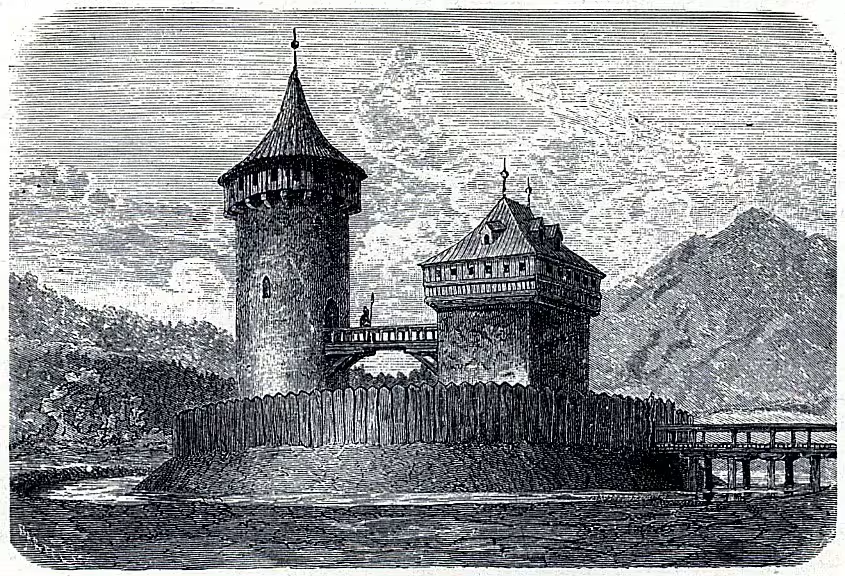
Objekt se nedochoval — na místě dnes nestojí. Následující text popisuje jeho historii, ne současnou návštěvu.
Krchleby are a extinct water fortress located in the Pardubice part of the city of Lány na Důlku. This medieval object is important with its specific egg plan, which is still visible to this day in the landscape, and the history associated with the development of lower aristocratic settlements.
There is little left of the oldest history. The first mention of the site dates back to 1323, when Beneš z Krchleb is listed here. At the time of the foundation of the fortress in the 14th century there was a boom in the construction of smaller fortified settlements of lower nobility.
The architecture of the building was defined by an oval plan surrounding the defensive moat and wall. The whole system was powered by water from nearby ponds, among which was one called Hardy, and could flood not only the moat but also the inner areas of the fort. Inside the wall were two elevated buildings - one round and the other square. According to historians, these buildings could have been connected by a wooden bridge or bridge.
The owners' history has undergone some fundamental changes. In 1346, Jan Žák z Krchleb sold the fort to John and Jiøík from Ohništ'an. In 1502 the fort was sold to the city of Chrudim, but it was taken away in 1547 for participation in the state resistance. A year later, Jan z Pernštejna bought it and added it to the Pardubice estate, thereby losing its original function. The fortress subsequently disappeared in the seventeenth century.
Among the attractions are the finding of a sword from the 13th or 14th century at the site of the fortress. The oval plan of the building is still visible on the aerial maps at the southeast edge of the village.
Today the site is protected as a cultural monument, which happened in 1958. The remains of the stronghold which survived until after World War II were subsequently torn during collectivization. Visiting this place offers a view of traces of medieval fortifications, which are preserved in the form of agricultural landscapes after centuries and modern agriculture.
Historical milestones
- 1323
- First mention of Benesha of Krchleb.
- 1346
- Sale of the fort by Jan the pupil from Krchleb John and Jiøík from Ohništ'an.
- 1502
- Sell the fort to the city of Chrudim.
- 1547
- Withdrawal of the fort of the city of Chrudim for participation in the state resistance.
- 1548
- Buy Jan from Pernštejn and join the Pardubice estate.
- 1958
- Announcement of the fortress by cultural monument.
Architectural development
The fort had an oily plan with a defensive moat and a wall. The building consisted of two buildings on the heights, one being round and the other being square. According to historians, the buildings were connected by a wooden bridge or bridge.
Historical events
1547: Removed from the city of Chrudim for participation in the state resistance. 1548: Buy Jan from Pernštejn and join the Pardubice estate.
Owners
Beneš z Krchleb (1323), Jan Žák z Krchleb (until 1346), Jan and Jiřík from Ohništán (from 1346), the city of Chrudim (1502- 1547), Jan z Pernštejna (from 1548).
Points of interest
- Krchleby are a extinct water fortress located in the Pardubice part of the city of Lány na Důlku.
- This medieval object is important with its specific ovaloid plan, which is still visible in the landscape.
- In 1323 Beneš z Krchleb is listed here as the first known owner of the fort.
- Among the attractions are the finding of a sword from the 13th or 14th century at the site of the fortress.
- The site has been protected as a cultural monument since 1958.
Guide
Show guide text
This text was created by artificial intelligence and has not been editorially reviewed. It may contain inaccuracies.
Welcome to the site, which was once home to the water fortress Krchleby, a magnificent monument to medieval architecture located in the Pardubice part of the rope on the pit. Before you spread the valley with a hint of the past, where the waters of the defensive ponds once flowed and the walls of the fort shone. Although only traces of its existence remain today, it is a place full of historical awareness and imagination.
Let's dive into the history of Krchleb. The first mention of the fort dates back to 1323 when Beneš z Krchleb was listed as its owner. The fortress was a water fortress, which became not only a defensive, but also a symbolic structure for local inhabitants. In 1346 it was sold to Jan Žák z Krchleb Jan and Jiøík of Ohništ'an. Subsequently, the fortress became the property of the city of Chrudim in 1502, but already in the next decade it was taken for participation in the state resistance and bought by Jan from Pernštejn. As part of collectivisation, the fortress was destroyed, but already in 1958 its place was declared a cultural monument.
Look up and see the outline of what once were walls. Even though they are now only Earth reliefs, you can imagine a defensive moat and a wall that was powered by the waters of nearby ponds. Inside the fort were two buildings - one round and the other square, probably connected by a wooden footbridge. These details give us a picture of the complex architectural structure that has been designed with regard to defence and comfort.
Krchleby is associated with a number of interesting historical personalities. Beneš z Krchleb as the first known owner of the fort or Jan Žák z Krchleb that sold it are just some of them. The most significant mention, however, deserves Jan z Pernštejna, who bought the fort and added it to its Pardubice estate.
The interesting thing about this place is that even after its disappearance, Krchleby has become a symbol of the region's resilience and history. Here you can not only look at the monument-protected reliefs, but also imagine life at a time when the fort was fully functional.
Now that you have fallen in love with the secret of Krchleb, I invite you to explore other parts of the rope on the pit. Every stone and valley has a story to discover. I hope this guide inspired you to explore the history and beauty of our region. Thank you for your visit and have a nice day!
Businesses nearby
Do you run a restaurant, accommodation, shop, museum, rental, wellness or other visitor service near this monument? Show yourself directly to the people heading to it — this is how they will see you in the app and on the web:
Nearby
Podolský stream and surrounding village Lány na Důlku.
Visualizations and artistic views


The visualisations are generated by artificial intelligence and serve as inspiration.
Photos from the area
Real photos taken near the monument

Zdroj a licence jsou uvedeny u každého snímku.
Tips from visitors
No tips yet. Be the first!
Log in and add your tip.
Sources and literature
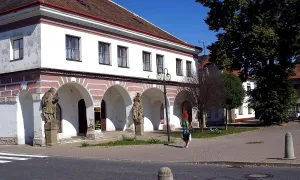
Photos: Vojtěch Král z Dobré Vody / CC BY-SA 4.0 — Wikimedia Commons. The author and licence also appear when you hover over the image.
Faktickým podkladem tohoto textu byl článek na Wikipedii, jehož autory jsou přispěvatelé Wikipedie. Článek je dostupný pod licencí CC BY-SA 4.0.
Location on the map
More monuments – Lány na Důlku
Show all in the municipality


Příběhy a pověsti
Legendy, pověsti a příběhy spjaté s touto památkou
Fotografie návštěvníků
Zatím žádné fotografie. Buďte první, kdo přidá fotografii z návštěvy!
Log in a přidejte svou fotografii nebo hodnoťte.
Za ověřenou návštěvu v aplikaci získáte víc bodů — poznáme podle GPS, že jste na místě.
Reviews and comments