






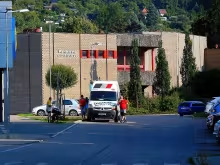
Kulturní Centrum Golf in Semily is a notable example of brutalist architecture from the late 20th century. Located in the Liberec Region, it was constructed between 1972 and 1979 under architect Pavel Švancer's guidance. Originally serving as a corporate building for Kolora, its significance lies in both its architectural style and historical context during communist Czechoslovakia.
The origins of Kulturní Centrum Golf are rooted in the socialist era, reflecting the architectural trends of that time. Designed by Pavel Švancer and completed in 1979, it emerged from financial constraints through brigádnicky construction methods. This approach involved collective labor efforts typical of the period, allowing for completion despite budgetary limitations. The complex initially had three sections, with an additional hotel structure added in 1986.
Architecturally, Kulturní Centrum Golf exemplifies brutalism, characterized by stark geometric forms and raw concrete typical of the 1970s and 1980s. This style reflects the utilitarian ethos of the era, emphasizing functionality over ornamentation. Both the main building and hotel were constructed in this distinctive style, creating a cohesive aesthetic that stands out in Semily's urban landscape.
Ownership has shifted significantly since its inception. Initially owned by Kolora, it came under state control following the Velvet Revolution. In 2003, the city of Semily purchased the neglected building for 3 million korun, marking a pivotal moment in its history. The adjacent hotel was later acquired by the city in 2019 for 3.675 million korun. Despite efforts to have it recognized as cultural heritage, these attempts were unsuccessful when rejected by the Ministry of Culture of the Czech Republic.
Throughout its existence, Kulturní Centrum Golf has witnessed key events underscoring its historical importance. The official opening on December 8, 1979, marked a significant milestone. Subsequent developments included the addition of the hotel structure in 1986, expanding the complex's functionality and appeal.
Today, it stands as a testament to its era, having undergone renovations such as insulation improvements in 2014. While not designated as cultural heritage, local authorities continue to respect it due to its architectural significance. The site remains accessible to visitors interested in exploring brutalist architecture and understanding the socio-political context of its creation.
Kulturní Centrum Golf offers a unique glimpse into the architectural and historical landscape of late 20th-century Czechoslovakia. Its preservation efforts highlight the ongoing dialogue between past and present, making it a worthwhile destination for those interested in history or architecture. Visitors are invited to explore this remarkable site and appreciate its place within Semily's cultural tapestry.
Historical milestones
- 1972
- Beginning of construction of the Cultural Center Golf under the direction of architect Pavel Švancer.
- 1979
- Official opening of the Cultural Center Golf on December 8th.
- 1986
- Addition of a hotel structure to complete the complex.
- 1989
- After the Velvet Revolution, ownership transferred from Kolor to the state.
- 2003
- The city of Semily purchased the building for 3 million crowns.
- 2014
- Insulation re
Architectural development
Designed in the brutalist style typical of the 1970s and 1980s, Kulturní centrum Golf was constructed using brigádnicky methods due to financial constraints. The complex includes a main building and an additional hotel built in the same architectural style.
Historical events
Construction began in 1972 and was completed in December 1979.
In 1986, an additional hotel structure was added to the complex.
The building was purchased by the city of Semily in 2003 for renovation purposes.
Efforts to have it recognized as cultural heritage were rejected by the Ministry of Culture of the Czech Republic.
Owners
Originally owned by the company Kolora, the state took over after the Velvet Revolution. In 2003, the city of Semily purchased the neglected building for 3 million korun. The city also acquired the adjacent hotel in 2019 for 3.675 million korun.
Points of interest
- Despite its bold architectural style, Kulturní Centrum Golf was constructed using brigádnicky methods due to financial constraints, showcasing the resourcefulness typical of socialist-era projects in Czechoslovakia.
- The complex's initial ownership by Kolora, a company known for producing dyes and pigments, highlights an interesting intersection between industrial functionality and architectural innovation during the communist era.
Guide
Show guide text
Welcome to the Kulturní centrum Golf in Semily, a remarkable testament to architectural innovation and history. As you stand here, take a moment to absorb the striking presence of this brutalist complex designed by architect Pavel Švancer. The robust concrete forms rise before you, a bold statement against the backdrop of the Liberecký kraj landscape.
The story of this site begins in 1972 when construction commenced under the visionary guidance of Pavel Švancer. It was during a time when Czechoslovakia's socialist era demanded both creativity and resourcefulness from its architects. The complex, completed between 1972 and 1979, served as a corporate building for Kolora, a company known for producing dyes. Its construction reflects the ingenuity typical of that period, with brigádnicky methods employed due to financial constraints.
As you explore further, notice how the architecture commands attention. The stark, geometric lines of the buildings are emblematic of brutalism, an architectural style characterized by its raw concrete aesthetics and monumental forms. Observe the three distinct sections of the complex, each contributing to a cohesive yet dynamic whole. In 1986, a hotel structure was added, enhancing the functionality and appeal of the site.
The history of this place is not just about architecture but also about transitions in ownership and purpose. After the Velvet Revolution in 1989, the property transitioned from Kolora to state ownership. Later, in 2003, the city of Semily acquired it for three million korun, marking a new chapter in its story.
An intriguing aspect of Kulturní centrum Golf is how it encapsulates the spirit and challenges of its time. Despite its architectural significance, efforts to have it recognized as cultural heritage were unsuccessful—a reminder of the complex relationship between preservation and progress.
As you continue your visit, take note of the renovations carried out in 2014, which included insulation improvements. These updates ensure that this architectural gem continues to stand strong for future generations to appreciate.
We invite you to delve deeper into the history and architecture surrounding you. Explore each section, imagine the stories these walls could tell, and reflect on the era that shaped them. Thank you for joining us at Kulturní centrum Golf; we hope your journey here has been enlightening and inspiring.
Businesses nearby
Do you run a restaurant, accommodation, shop, museum, rental, wellness or other visitor service near this monument? Show yourself directly to the people heading to it — this is how they will see you in the app and on the web:
Nearby
Semily is a town in the Liberec Region known for its cultural and historical significance. The area around Kulturní centrum Golf includes various modern structures, but no specific natural features or other monuments are mentioned within a 5 km radius.
Accommodation nearby
Trips and activities nearby
Guided tours, tickets and activities nearby from GetYourGuide
Search tours and activities →Themed route
Tematická výletní trasa: Kulturní centrum Golf a okolí
1. Kulturní centrum Golf - Typ: Moderní kulturní prostor - Proč stojí za návštěvu: Kulturní centrum Golf je srdcem kultury v Semilech, nabízející různé umělecké a divadelní akce. Je to moderní architektonický milník, který slouží jako platforma pro místní i mezinárodní umělce.
2. Centrum města Semily - Typ: Historické náměstí - Proč stojí za návštěvu: Centrum města je historickým srdcem Semilek, kde se nachází významné architektonické památky a pohodlné procházky po ulicích. Náměstí nabízí přehled o historii města a je ideálním místem pro relaxaci.
3. Městský park v Semilech - Typ: Městská zeleň - Proč stojí za návštěvu: Tento park poskytuje klidnou útulku uprostřed města, ideální pro relaxaci a krátké procházky. Je to místo, kde se můžete odpojit od ruchu a užít si přírodní prostředí v centru města.
4. Kostel svatého Jakuba Většího - Typ: Historický kostel - Proč stojí za návštěvu: Tento barokní kostel je jednou z nejznámějších památek v Semilech. Jeho architektura a historie nabízejí pohled do minulosti města, což ho činí nezbytným pro každého cestovatele.
5. Náměstí Míru - Typ: Historické náměstí - Proč stojí za návštěvu: Náměstí Míru je důležitým historickým místem, kde se konaly významné události. Jeho centrální poloha a architektonické prvky ho činí atraktivní pro návštěvníky zainteresované o historii města.
Tato trasa nabízí kombinaci moderního kulturního prostoru s historickými památkami, což vytváří harmonickou cestu skrze Semily.
Seasonal recommendations
Spring: Spring at the Golf Cultural Center in Semily is a time of renewal and vibrant colors, as nature awakens with blooming flowers and fresh greenery enveloping the historic site. The soft light of spring enhances the architectural details of the center, creating an inviting atmosphere for visitors to explore its cultural offerings. During this season, it's advisable to wear comfortable layers, as temperatures can vary between cool mornings and warmer afternoons. While the crowds are generally moderate, arriving in the morning can help you enjoy a more tranquil experience before the day becomes busier.
Summer: Summer at the Golf Cultural Center is characterized by long days filled with sunshine, making it an ideal time to explore the site's outdoor spaces and cultural events. The lush greenery provides a picturesque backdrop for any visit, while the warm weather encourages visitors to spend extended periods outdoors. Due to its popularity during this season, especially in peak tourist months, it’s wise to arrive early to avoid larger crowds. Light, breathable clothing is recommended, along with sun protection such as hats and sunscreen.
Autumn: Autumn brings a stunning display of colors to the Golf Cultural Center, as the surrounding landscape transforms into shades of red, orange, and gold. The cooler temperatures make for comfortable exploration of both indoor exhibits and outdoor areas, while the softer light enhances the historic ambiance of the site. This season is less crowded than summer, offering a more relaxed visit. Layered clothing is advisable to accommodate fluctuating temperatures, and carrying an umbrella or raincoat might be prudent due to occasional autumn showers.
Winter: Winter at the Golf Cultural Center offers a serene and quiet atmosphere, with snow often blanketing the area in a peaceful layer that adds charm to its historic architecture. The shorter days mean fewer visitors, allowing for a more intimate experience of the cultural offerings within the center. However, it’s important to dress warmly in layers, including hats, gloves, and insulated footwear, as temperatures can be quite cold. Additionally, check opening hours as they may be reduced during this season due to weather conditions.
Visualizations and artistic views

Vizualizace jsou generovány umělou inteligencí a slouží jako inspirace.


Tips from visitors
No tips yet. Be the first!
Log in and add your tip.


Reviews and comments