






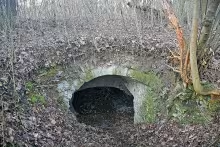
Kuncberk: A Ruined Castle in the Heart of Bohemia
Kuncberk is a ruined castle situated near the village of Křinec in the Nymburk District of the Czech Republic. This six-sided fortress, built before 1470 by Jan Křinecký z Ronova, boasts a rich history spanning over four centuries. Today, it stands as a testament to the region's complex past, offering a glimpse into the lives of the nobility who once called it home.
The castle's origins date back to the 15th century, when Jan Křinecký z Ronova constructed it on a low, dominant hill in a flat landscape. Little is known about its earliest history, but it changed hands several times over the centuries. In 1575, Jindřich z Valdštejna purchased the castle, which was eventually abandoned and described as ruined in 1638. The Morzinové family acquired the property in 1650 and built a small Baroque chateau on the site between 1659 and 1680.
The castle's architecture is characterized by its six-sided floor plan and a moat with a large wall. The chateau, built by the Morzinové, had an octagonal floor plan, a stone ground floor, and a half-timbered upper floor. The interior of the castle is not well-documented, but some of the remaining vaulted spaces may have originated from the original castle. The most notable feature is the wide, circular moat and the massive wall that once surrounded it, which would have allowed for the deployment of heavy artillery.
The castle's ownership changed hands several times, with the Bethmanny family acquiring it in the 19th century. However, the castle was eventually demolished in 1891. Today, the site remains a ruin, with the moat and wall still visible. Visitors can explore the remains of the castle and gain insight into the lives of the nobility who once inhabited it.
Kuncberk is a fascinating piece of history, offering a glimpse into the complex past of Bohemia. Its rich history, architectural features, and remnants of the castle's former grandeur make it a worthwhile visit for anyone interested in exploring the region's cultural heritage.
Historical milestones
- kolem 1470
- Jan Křinecký z Ronova built the castle
- 1575
- Jindřich z Valdštejna purchased the castle
- 1638
- The castle was described as ruined
- 1650
- The Morzinové family acquired the property
- 1659
- The Morzinové built a small Baroque chateau
- 1680
- The Morzinové completed the Baroque chateau
- 1891
- The castle was demolished
Architectural development
The castle had a six-sided floor plan and a moat with a large wall. The castle was later replaced by a small Baroque chateau built by Morzinové between 1659 and 1680. The chateau had an octagonal floor plan, a stone ground floor, and a half-timbered upper floor.
Historical events
- 1470
- Built by Jan Křinecký z Ronova
- 1575
- Purchased by Jindřich z Valdštejna
- 1638
- Described as ruined
- 1650
- Purchased by Morzinové
- 1891
- Demolished
Owners
Jan Křinecký z Ronova, Jindřich z Valdštejna, Morzinové, Bethmanny
Points of interest
– The castle's original purpose was not as a noble residence, but as a fortified stronghold, likely used for military defense in the 15th century.
– The castle's unique six-sided floor plan is a rare architectural feature in Central European castles, making it a notable example of medieval fortification design.
– The Morzinové family's Baroque chateau, built between 1659 and 1680, is one of the earliest examples of this architectural style in the region, showcasing the family's wealth and influence.
Guide
Show guide text
Welcome before Kuncberk, the ruins of a castle nestled within a forest near the village of Křinec. You stand before gently undulating fortifications stretching from north to south. Look up and notice how the castle ruin disappears into the crowns of trees. Kuncberk is truly an extraordinary example of medieval fortification that distinctly stands out from other castles in this part of Europe.
Let's delve into its historical context. Kuncberk was built before 1470 by Jan Křinecký z Ronova. After his death, the castle changed hands several times until it was acquired by Jindřich z Valdštejna in 1575. The ruins now lie on Morzinových lands, who later modified them in Baroque style.
Notice the unique hexagonal layout of the castle. It is indeed a rare architectural feature in Central Europe. Take a look at the castle gate and observe how it was integrated into the fortifications. Kuncberk was originally built as a fortress, not as a noble estate. It is likely that it served as a military stronghold in the 15th century.
Let's return to some of the key figures associated with Kuncberk. Despite its rich history, little is known about them. However, we can assume that the castle was an important defensive point in the region.
An interesting fact is that Kuncberk was originally built as a fortress, not as a noble estate. This is indeed a rare and intriguing use in the history of medieval castles.
Return to the castle before you. Examine its fortifications and ruins. Kuncberk is truly an extraordinary example of medieval fortification that offers many questions and answers. We hope it has intrigued you and that you have enjoyed your visit.
Businesses nearby
Do you run a restaurant, accommodation, shop, museum, rental, wellness or other visitor service near this monument? Show yourself directly to the people heading to it — this is how they will see you in the app and on the web:
Nearby
The castle is located in a flat landscape near the village of Křinec.
Accommodation nearby
Themed route
Křinecká trasa
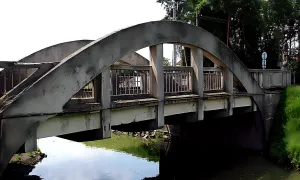
1. Kuncberk (zřícenina) Kuncberk is the ruins of a castle located on a hill above the village of Křinec. An interesting fact is that the castle was built in the 14th century and served for centuries as the seat of the lords of Kuncberk.
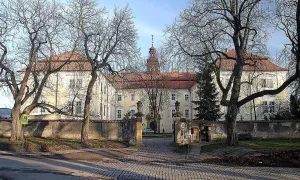
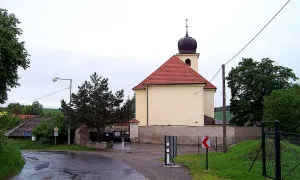
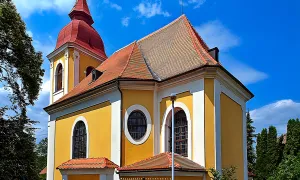
2. Křinecká kaple Křinecká kaple is a small but peaceful chapel located near the ruins of Kuncberk Castle. It's an ideal spot for rest and admiration.
3. Křinecký hřbitov Křinecký hřbitov is a small cemetery located near the ruins of Kuncberk Castle. It's a quiet and peaceful place where you can stop to listen to the silence.
Seasonal recommendations
Jaro
In the spring, Kuncberk is surrounded by blooming trees and flowers that create a beautiful green backdrop for the ruins. The atmosphere is calm and quiet, with clear sunlight. Practical tips: The best time to visit is in May when the weather is warmest and there are fewest rains. We recommend bringing comfortable shoes and casual clothing for walking around the ruins.
Léto
The main summer season is ideal for visiting Kuncberk, as it is open year-round. The atmosphere is relaxed and cheerful, with many families and tourists. Practical tips: We recommend arriving early since there are large crowds of people. Bring plenty of water and a snack pack, as you won't have the opportunity to eat here.
Podzim
The autumn season is ideal for visiting Kuncberk because there is beautiful fall foliage and the atmosphere is calm and quiet. Practical tips: The best time to visit is in September or October when the weather is warm and dry. We recommend bringing comfortable shoes and casual clothing for walking around the ruins.
Zima
In winter, Kuncberk is surrounded by white snowfall and there is a calm and quiet atmosphere. Practical tips: The best time to visit is in December or January when operating hours are shorter and warm clothing is necessary. We recommend bringing warm clothes and a scarf for walking around the ruins.
Visualizations and artistic views

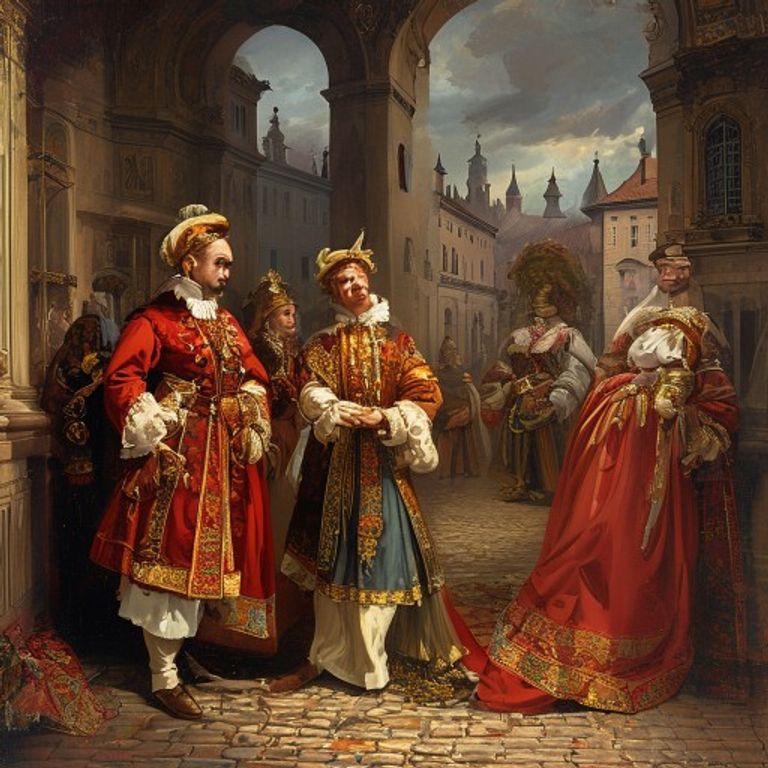
Vizualizace jsou generovány umělou inteligencí a slouží jako inspirace.


Tips from visitors
No tips yet. Be the first!
Log in and add your tip.
Location on the map


Příběhy a pověsti
Legendy, pověsti a příběhy spjaté s touto památkou
Reviews and comments