






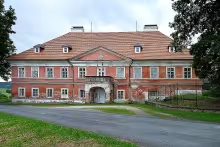
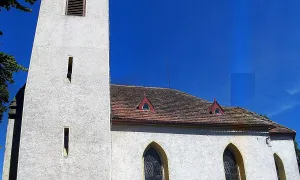
Kundratice Castle is a historic estate located in the village of Kundratice near Hartmanice, in the Plzeňský kraj region of the Czech Republic. Originally established as a Renaissance manor house in the late seventeenth century, it transformed into its current Empire style during the nineteenth century. The castle features a single-story rectangular layout with eleven window axes on the longer side and five on the shorter side, adorned with flat dormers and keystones. It has been protected as a cultural monument since 1964.
The origins of Kundratice Castle trace back to the late seventeenth century when it was first established as a Renaissance manor house. This period in Bohemia saw significant political and cultural changes under Habsburg rule, following the Thirty Years' War. The consolidation of power by the Habsburgs influenced architectural styles across Europe, setting the stage for the castle's initial construction.
Architecturally, Kundratice Castle began as a Renaissance manor house but underwent substantial transformations in the eighteenth and nineteenth centuries to adopt its current Empire style. The building features flat dormers, keystones, and rusticated ground floor facades with a three-bay central risalit on the main entrance. These elements contribute to its distinctive appearance and historical significance.
Throughout its history, Kundratice Castle has seen various owners who influenced its fortunes and transformations. Initially documented in 1684 as a manor house with a brewery, it was owned by Wilhelm Eichhorn von Reichenpach in 1675. Subsequent owners included Alexi Mikuláš Šafman von Hamrles, Adam Bartoloměj Koc von Dobrše and Vilém Alex Běšin von Běšin (1684), Maxmiliána Helena, geborene Kocová von Dobrše, Maria Františka Novohradská von Kolowrat, geborene von Jarošína (1702), Jan Nepomuk Kryštof František von Villani de Castello Pillonico and František Karlo von Villani (1710-1865). In 1861, W. Huttary purchased the castle, followed by František Hašek until his execution by Nazis on June 5, 1942. The castle was under state ownership from 1948 to 1992 before being acquired by Eliška Hašková-Coolidge in 1992.
Key events at Kundratice Castle include its architectural transformation from a Renaissance manor to an Empire-style estate and the tragic execution of František Hašek during World War II. These highlight both the castle's evolving aesthetic and its role within broader historical contexts.
Today, Kundratice Castle is surrounded by an English park with remnants of garden structures and a two-story granary ruin. A bridge provides access to the first floor of the western facade, leading into this picturesque setting. The nearby village of Kříženec was historically part of the estate, adding to its historical allure.
Visiting Kundratice Castle offers a glimpse into the architectural evolution from Renaissance to Empire style and an opportunity to explore its rich history. Its cultural significance as a protected monument makes it a worthwhile destination for those interested in Czech heritage and architecture.
Historical milestones
- 1684
- First documented mention of the manor house with brewery.
- 1861
- W. Huttary purchased the castle.
- 1942
- František Hašek was executed by Nazis.
Architectural development
Kundratice Castle began as a Renaissance manor house in the late seventeenth century. It underwent significant architectural changes to adopt its current Empire style in the eighteenth and nineteenth centuries. The castle features flat dormers, keystones, and rusticated ground floor facades with a three-bay central risalit on the main entrance.
Historical events
The castle was transformed from a Renaissance manor to its current Empire style in the eighteenth and nineteenth centuries.
František Hašek, owner during the First Republic, was executed by Nazis on June 5, 1942.
Owners
Wilhelm Eichhorn von Reichenpach (1675)
Alexi Mikuláš Šafman von Hamrles
Adam Bartoloměj Koc von Dobrše and Vilém Alex Běšin von Běšin (1684)
Maxmiliána Helena, geborene Kocová von Dobrše
Maria Františka Novohradská von Kolowrat, geborene von Jarošína (1702)
Jan Nepomuk Kryštof František von Villani de Castello Pillonico and František Karlo von Villani (1710-1865)
W. Huttary (1861)
František Hašek (until 1948)
State ownership (1948-1992)
Eliška Hašková-Coolidge (since 1992)
Points of interest
- The castle's transformation from a Renaissance manor house to an Empire-style estate reflects the broader European architectural trends influenced by Habsburg rule in Bohemia after the Thirty Years' War. - František Hašek, one of the castle's notable owners, was executed by Nazis on June 5, 1942, marking a tragic chapter in its history during World War II.
- The estate once included the village of Kříženec, which adds to its historical significance as part of a larger manorial domain rather than just an isolated architectural site.
Guide
Show guide text
Welcome to the historic estate of Kundratice Castle, nestled in the picturesque village of Kundratice near Hartmanice in the Plzeňský kraj region of the Czech Republic. As you stand here, take a moment to soak in the serene beauty and rich history that surrounds this enchanting site.
The origins of Kundratice Castle trace back to the late seventeenth century when it was first established as a Renaissance manor house. This period marked an era of cultural rebirth across Europe, with architecture reflecting elegance and symmetry. Over time, particularly during the nineteenth century, the castle underwent significant transformations, adopting the Empire style that you see today—a testament to the broader European architectural trends influenced by Habsburg rule in Bohemia after the Thirty Years' War.
As your eyes wander over the single-story rectangular structure, notice the harmonious blend of historical influences. The facade is a canvas showcasing the evolution from its Renaissance roots to the grandeur of Empire style, characterized by classical details and symmetry that speak volumes about its storied past.
Kundratice Castle has been home to many notable figures throughout history. Wilhelm Eichhorn von Reichenpach and Alexi Mikuláš Šafman von Hamrles were among its early custodians, each leaving their mark on the estate's legacy. The castle later came under the ownership of Adam Bartoloměj Koc von Dobrše and his wife, Maxmiliána Helena, who played pivotal roles in its development.
One cannot speak of Kundratice Castle without mentioning František Hašek—a key figure whose life intertwined with this place. In 1942, during the turmoil of World War II, Hašek was executed by the Nazis, a somber chapter in the castle's history that adds depth to its narrative.
As you continue your exploration, let yourself be intrigued by the stories and secrets held within these walls. The transformation of Kundratice Castle from a Renaissance manor house to an Empire-style estate is not just about architectural changes; it reflects the shifting tides of European history and culture.
We invite you now to wander further, to discover more about this captivating place and its many layers of history. As you delve deeper into the heart of Kundratice, may your journey be filled with wonder and discovery. Thank you for visiting—may the stories of Kundratice Castle linger in your mind long after you've departed.
Businesses nearby
Do you run a restaurant, accommodation, shop, museum, rental, wellness or other visitor service near this monument? Show yourself directly to the people heading to it — this is how they will see you in the app and on the web:
Nearby
Kundratice Castle is surrounded by an English park with fragments of garden buildings. The nearby village of Kříženec was historically part of the estate.
Accommodation nearby
Themed route
Thematic Tour Route: Kundratice Castle and Surroundings
1. Kundratice Castle *Type:* Historical Monument *Why Visit:* Explore the grandeur of this historical castle, surrounded by an enchanting English park with remnants of garden buildings that offer a glimpse into its past splendor.
2. English Park at Kundratice Castle *Type:* Botanical and Recreational Area *Why Visit:* Wander through the beautifully landscaped English park, where nature blends seamlessly with history, providing serene walking paths and picturesque views ideal for relaxation and reflection.
3. Kříženec Village *Type:* Historical Settlement *Why Visit:* Discover the quaint village of Kříženec, historically linked to the Kundratice estate, offering insights into rural life and architecture that have remained unchanged over centuries.
4. Garden Building Fragments at Kundratice Castle *Type:* Architectural Remnants *Why Visit:* Delve into the architectural history of the castle through its surviving garden buildings, each telling a story of past elegance and utility within the estate’s grounds.
5. Kundratice Castle Nádvoří (Courtyard) *Type:* Historical Courtyard *Why Visit:* Experience the central courtyard of Kundratice Castle, where visitors can immerse themselves in its historical ambiance and enjoy panoramic views of the surrounding parkland.
This route offers a comprehensive exploration of the cultural and natural heritage of the Kundratice area, providing a rich experience for history enthusiasts and nature lovers alike.
Seasonal recommendations
Spring: Spring at Kundratice Castle offers a picturesque setting as nature awakens with blooming flowers and lush greenery, creating an idyllic backdrop for exploring the historical site. The softer light of spring enhances the castle's architectural details, providing excellent conditions for photography. Visitors should expect occasional rain showers, so carrying a lightweight waterproof jacket is advisable. This season sees moderate visitor numbers, allowing for a more relaxed exploration. Early morning visits are recommended to enjoy the tranquil atmosphere and avoid any potential drizzle.
Summer: Summer at Kundratice Castle brings vibrant colors as gardens flourish with an array of flowers, making it an ideal time for nature enthusiasts and photographers alike. The warm weather encourages outdoor activities, but visitors should be prepared for larger crowds during peak tourist season. Arriving early in the morning or later in the afternoon can help avoid the busiest times. Comfortable walking shoes and light clothing are recommended due to longer daylight hours and warmer temperatures.
Autumn: Autumn transforms Kundratice Castle into a stunning display of warm hues, with leaves turning shades of red, orange, and gold. The cooler weather creates a cozy atmosphere perfect for leisurely strolls through the grounds. This season is less crowded than summer, offering a more serene experience. Visitors should dress in layers to accommodate fluctuating temperatures throughout the day. Early morning visits are ideal to capture the soft light filtering through the colorful foliage.
Winter: Winter at Kundratice Castle provides a magical setting with snow-covered landscapes that enhance its historical charm. The castle's architecture is particularly striking against the stark winter backdrop, making it a popular time for photographers seeking unique shots. However, visitor numbers can be lower due to shorter daylight hours and potential weather-related closures. It’s essential to dress warmly in layers, including hats, gloves, and waterproof boots, as conditions can vary. Planning visits during midday ensures better lighting and longer opening times.
Visualizations and artistic views

Vizualizace jsou generovány umělou inteligencí a slouží jako inspirace.


Tips from visitors
No tips yet. Be the first!
Log in and add your tip.
Location on the map


Příběhy a pověsti
Legendy, pověsti a příběhy spjaté s touto památkou
Reviews and comments