



kamenný most v Rabštejně nad Střelou Bridge
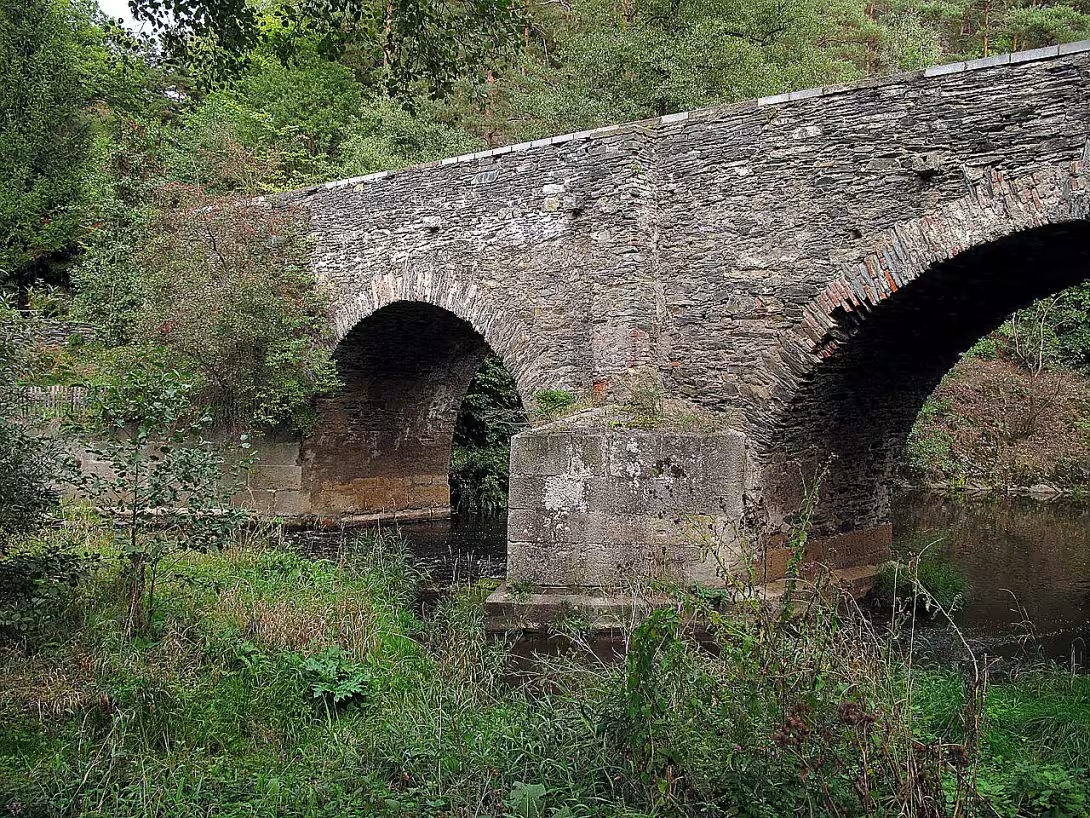
The Kamenný Most in Rabštejn nad Střelou is a historic Gothic stone bridge spanning the Střela River. Constructed between 1335 and 1340, it stands as one of the oldest surviving stone bridges in the Czech Republic. Its construction coincided with Rabštejn's transformation into an enclosed town, highlighting its strategic importance during medieval times. The robust structure and picturesque setting make it a cherished landmark that blends history with natural beauty.
The bridge's origins are closely tied to Rabštejn nad Střelou's development in the mid-14th century under King John of Luxembourg. Oldřich Pluh z Rabštejna, a favored nobleman and highest land marshal of the king, played a pivotal role in its creation. After acquiring the rabštejnský statek post-1321, he initiated the transformation into an enclosed town by reconstructing existing fortifications and establishing a new settlement with municipal rights granted on September 21, 1337. The construction of Kamenný Most likely occurred during this period to enhance regional connectivity along a route from Cheb to Loket, Žlutice, Rakovník, and Prague.
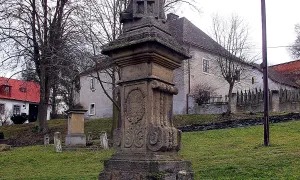
Architecturally, the bridge is constructed from rough sandstone and unworked quarry stone, with arches spanning six meters. It features seven grooves for drainage and is topped with granite slabs. Its parapet wall includes břidlice, while upper sections are covered with žulovými (granite) plates. A notable feature was a baroque statue of St. John Nepomucký, now relocated to a nearby rock formation.
Throughout its history, Kamenný Most has remained integral to the region's infrastructure. Despite being only one-lane wide with a 4.3-meter roadway, it continues as part of the II/206 road, accommodating vehicles up to 24 tons, prioritizing those descending from Nového Dvora.
In recent years, Kamenný Most has gained attention beyond its historical significance. It is a favored location for Czech and international filmmakers, having been featured in films such as "Šťastný smolař" and "Svatojánský věneček." In 2011, it also served as the setting for a remix of Depeche Mode's "Personal Jesus" music video. A significant restoration project was undertaken between 2017 and 2020 to preserve its structural integrity.
Today, Kamenný Most remains accessible to visitors, offering scenic views of the surrounding landscape along with a glimpse into medieval engineering. Its status as a cultural monument underscores its historical value and enduring legacy. For those interested in history, architecture, or simply enjoying picturesque settings, a visit to this remarkable bridge is well worth the journey.
Then and now
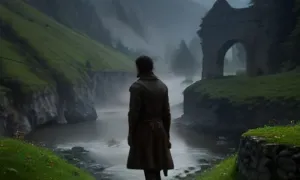
Drag the slider to compare how the landmark may have looked when it was built with the view today.
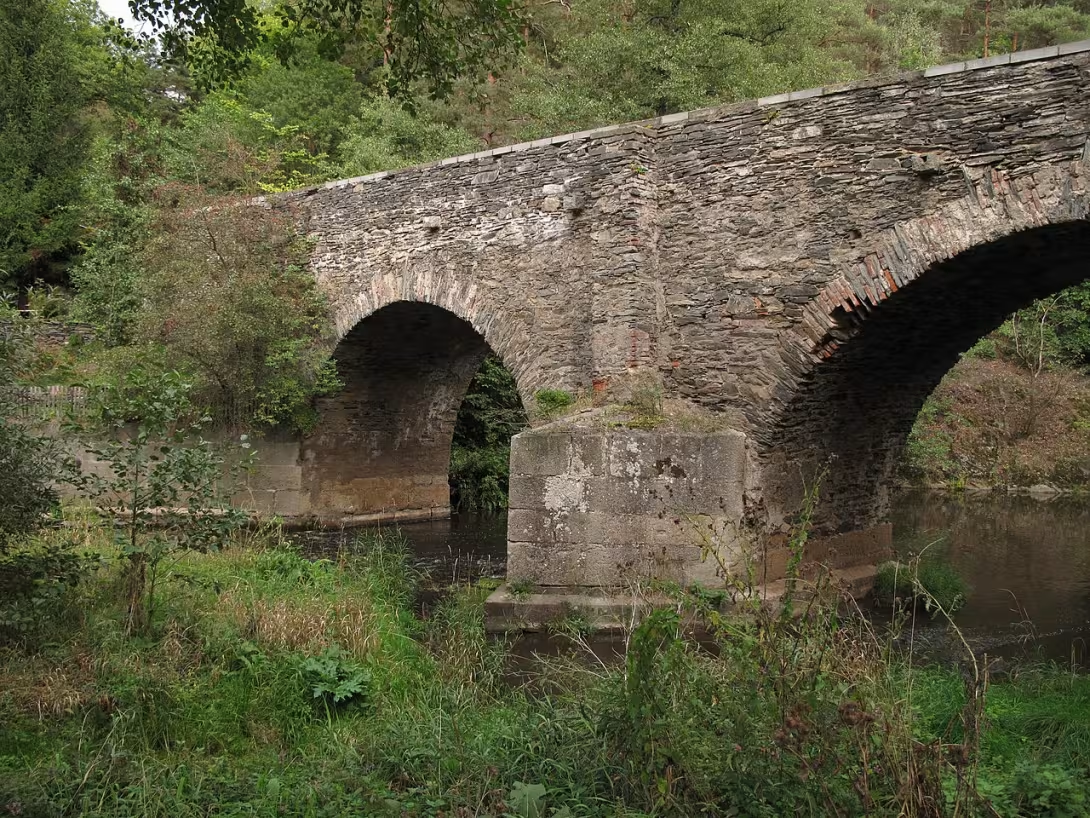

The historical appearance on the left is an AI-generated visualisation and serves as inspiration only.
Historical milestones
- 1335–1340
- Construction of the Kamenný Most as part of Rabštejn's development into an enclosed town.
- 2017–2020
- Major reconstruction to preserve the bridge.
Architectural development
Constructed from rough sandstone and unworked quarry stone, the Kamenný Most features seven grooves for drainage. Its arches have a six-meter span, and it is topped with slabs of granite. The bridge underwent significant reconstruction between 2017 and 2020 to preserve its structural integrity.
Historical events
Construction began in 1335 as part of the development of Rabštejn nad Střelou into an enclosed town.
The bridge was completed around 1340, serving as a crucial link on a regional route.
Points of interest
- The Kamenný Most was constructed during a period of significant development in Rabštejn nad Střelou, which saw the transformation from an open settlement into an enclosed town with fortified structures and new municipal rights. - Oldřich Pluh z Rabštejna played a key role not only as King John of Luxembourg's favored nobleman but also as the highest land marshal, influencing both military and civil developments in the region during its construction. - The bridge features seven grooves for drainage, an architectural detail that highlights medieval engineering techniques aimed at preserving the structure against water damage. - A baroque statue of St. John Nepomucký once adorned the bridge but was later moved to a nearby rock formation, reflecting changes in cultural and religious practices over time. - Despite its historical origins, Kamenný Most has been featured in modern media, including films like "Šťastný smolař" and as a backdrop for Depeche Mode's "Personal Jesus" music video remix, showcasing its enduring appeal across different eras.
Guide
This guide is narrated by a synthetic voice generated by artificial intelligence.
Show guide text
This text was created by artificial intelligence and has not been editorially reviewed. It may contain inaccuracies.
The stone bridge in Rabštejně nad Střelou spans the Střela River on the northeastern edge of the former historic town. It is probably a Gothic structure that was built sometime between 1335 and 1340. If this dating is correct, the bridge is older than the Charles Bridge in Prague and, after the stone bridge in Písek, it is the second oldest preserved bridge in the Czech Republic. It is registered as a cultural monument.
The bridge was probably built at the initiative of Oldřich Pluh of Rabštejn, the highest land chamberlain and a favorite of King John of Luxembourg. He purchased the Rabštejn estate after 1321, had the original castle rebuilt, and founded a fortified town at its foot. He obtained Prague city rights for it on September 21, 1337. It is believed that the bridge was built around that same time. A territorial route crossed it from Cheb to Loket, Žlutice, Rakovník and further to Prague. In Rabštejn there was supposedly another bridge called the Leather Bridge, situated between two castle towers.
The bridge measures 55 meters in length and is 4.3 meters wide. The arches have a span of six meters and the pier is protected by an ice breaker. The lower part is built of smoothly dressed blocks of coarse-grained sandstone, while the upper part is made of unworked quarried stone and slate. The parapet wall at the top is covered with granite slabs and the roadway has seven drainage channels. A Baroque statue of Saint John of Nepomuk and a wooden cross once stood on the bridge. The statue was later moved to a nearby rock.
The old bridge continues to serve traffic today as part of road number 206, which is classified as a secondary road. The roadway is single-lane though, because two traffic lanes would require a width of at least 5.5 meters. The last major reconstruction took place from 2017 to 2020.
The bridge has become a favorite location for Czech and foreign filmmakers. The films The Lucky Loser and The Saint John's Wreath were filmed here. In 2011 the bridge also became the setting for a remix of the Personal Jesus music video by Depeche Mode.
Tips for visitors
The best time to visit Kamenný most in Rabštejn nad Střelou is during late spring or early autumn. During these seasons, you can enjoy mild weather and vibrant natural surroundings without the crowds of summer tourists. The foliage offers picturesque views, especially in autumn when the colors are at their peak. Additionally, visiting on a weekday might provide a more tranquil experience compared to weekends.
If you're using public transport, ensure to verify current routes and schedules through a reliable travel app or website, as they may change over time.
When visiting Kamenný most, consider bringing comfortable walking shoes, especially if you plan on exploring the surrounding landscape. A light jacket might be useful due to variable weather conditions. For those interested in learning more about the bridge's history and architecture, a guidebook or map of the area could enhance your visit.
Photography enthusiasts will find several spots around Kamenný most ideal for capturing its Gothic beauty. The best lighting is usually during the golden hours—shortly after sunrise or before sunset—when the light is soft and warm. Additionally, taking photos from the rock where the statue of St. John Nepomucene was relocated can provide a stunning backdrop.
For families with children, Rabštejn nad Střelou offers more than just the historic bridge. The surrounding landscape provides opportunities for outdoor activities such as hiking or picnicking. Exploring nearby natural features can be both educational and entertaining for kids. Remember to bring snacks and water to keep everyone energized during your visit.
Frequently asked questions
Can the monument be visited?
This is a structure in a public space that can usually be seen from outside free of charge. We have not verified that this particular one is freely accessible.
Where is the monument?
Location: Rabštejn nad Střelou, Plzeňský kraj. The map on this page shows the exact spot.
Why is the monument protected?
It is listed in the Central List of Cultural Monuments of the Czech Republic as a cultural monument (register no. 35563/4-1562).
Businesses nearby
Do you run a restaurant, accommodation, shop, museum, rental, wellness or other visitor service near this monument? Show yourself directly to the people heading to it — this is how they will see you in the app and on the web:
Events nearby
Zdroj akcí: otevřená data měst a obcí ČR (Národní katalog otevřených dat) a kalendář akcí Národního památkového ústavu.
Nearby
The bridge is located near Rabštejn nad Střelou, offering scenic views of the surrounding landscape. It lies on a route that historically connected Cheb to Loket, Žlutice, Rakovník, and Prague.
Accommodation nearby
Themed route
Rabštejn nad Střelou - historical route
1. Žlutice - a town worth visiting for its historic architecture and cultural heritage. The town is located on the trail that connected Cheb with Loket, Rakovník, and Prague.
2. Rabštejn nad Střelou - a village where you can find a stone bridge, which is the main destination of our excursion route. It is situated in a peaceful environment and offers beautiful views of the surrounding landscape.
3. Loket - a town located on the trail connecting Cheb with Žlutice and Prague. It has a rich history and offers many cultural and historical attractions.
Seasonal recommendations
Jaro: Spring is the ideal time to visit the stone bridge in Rabštejn nad Střelou because nature around the bridge is in full bloom. The lush green color dominates over flowering trees and various flowers. The atmosphere is relaxed and full of life. We recommend visiting the bridge during the spring season, as there are fewer people than in the summer season. The best time to visit the bridge is in the morning or evening when the sun is weakest and temperatures are pleasant.
Visualizations and artistic views


The visualisations are generated by artificial intelligence and serve as inspiration.
Photos from the area
Real photos taken near the monument


Zdroj a licence jsou uvedeny u každého snímku.
Tips from visitors
No tips yet. Be the first!
Log in and add your tip.
Sources and literature
Photos: Juandev / CC BY-SA 3.0 — Wikimedia Commons. The author and licence also appear when you hover over the image.
Faktickým podkladem tohoto textu byl článek na Wikipedii, jehož autory jsou přispěvatelé Wikipedie. Článek je dostupný pod licencí CC BY-SA 4.0.
Location on the map




Příběhy a pověsti
Legendy, pověsti a příběhy spjaté s touto památkou
Fotografie návštěvníků
Zatím žádné fotografie. Buďte první, kdo přidá fotografii z návštěvy!
Log in a přidejte svou fotografii nebo hodnoťte.
Za ověřenou návštěvu v aplikaci získáte víc bodů — poznáme podle GPS, že jste na místě.
Reviews and comments