






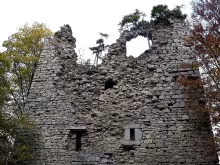
Kunžvart Castle is a captivating historical monument nestled in the Šumava mountain range, specifically on the eastern slope of Strážný hill. Standing at an elevation of 1,037 meters, it ranks among the highest castles in the Czech Republic. This castle ruin holds significant cultural value as it was originally constructed to protect the Golden Route between Vimperk and Passau, a vital trade path during its time.
The origins of Kunžvart Castle trace back to the mid-15th century, although the first documented mention dates to 1359 in an imperial charter by Emperor Karel IV. At that time, ownership was confirmed for Pešek z Janovic and his nephews. The castle gained prominence under King Václav IV, who allowed the Vimperk lords to renew a branch of the Golden Route, highlighting its strategic importance.
Architecturally, Kunžvart Castle featured a wooden defensive wall and a preserved square tower with flat ceilings. This tower had three floors and possibly additional wooden or palisade structures. The castle's design included access from the west through a rock fissure adapted as a moat, emphasizing its strategic military planning.
Ownership of the castle changed hands over time but remained significant under the reigns of emperors Karel IV and Václav IV. By 1547, reports indicated that no one resided at the castle anymore, marking the beginning of its decline. In 1578, two old chambers burned down, further contributing to its deterioration.
Today, Kunžvart Castle is accessible to the public as a protected cultural monument. Visitors can explore the remnants of this historical site and appreciate its strategic location near the town of Strážný. The castle offers access to a border crossing into Germany and is situated within the scenic Šumava mountain range, reachable via a blue-marked tourist trail.
Kunžvart Castle's rich history and unique elevation make it a worthwhile destination for those interested in exploring Czech heritage. Its preservation as a cultural monument ensures that future generations can appreciate its historical significance and architectural features. Visitors are invited to experience this remarkable site and immerse themselves in the stories of its past.
Historical milestones
- 1359
- First documented mention in an imperial charter by Karel IV.
- 1547
- Report indicating that no one resided at the castle anymore.
- 1578
- Two old chambers burned down, marking the beginning of its decline.
Architectural development
The castle featured a wooden defensive wall and a preserved square tower with flat ceilings. The tower had three floors and possibly additional wooden or palisade structures. Access was from the west through a rock fissure adapted as a moat, highlighting its strategic design.
Historical events
1359: First documented mention in an imperial charter by Karel IV.
1547: Report indicating that no one resided at the castle anymore.
1578: Two old chambers burned down, marking the beginning of its decline.
Owners
The castle was first mentioned in 1359 when Emperor Karel IV confirmed its ownership to Pešek z Janovic and his nephews. It later became significant under King Václav IV, who allowed the Vimperk lords to renew a branch of the Golden Route.
Points of interest
- Despite its strategic importance on the Golden Route, Kunžvart Castle was never fully completed, leaving it as a ruin with only partial defenses like the wooden wall and square tower still visible today.
- Legends suggest that during the castle's decline in the 16th century, local folklore spoke of hidden treasures within its walls, leading to numerous treasure hunts by adventurers over the centuries, although none have been successful so far.
Guide
Show guide text
Welcome to the historical site of Kunžvart, a captivating castle ruin nestled on the eastern slope of Strážný hill in the Šumava mountain range. As you stand here at an elevation of 1037 meters, you are among the highest points where such ruins grace the Czech landscape. Before you lies a testament to medieval ambition and strategic foresight—a place that whispers tales from centuries past.
Kunžvart's origins date back to the mid-14th century when it was first mentioned in an imperial charter by Emperor Karel IV in 1359. This castle was strategically positioned along the Golden Route, a vital trade path connecting Vimperk and Passau. Its purpose was clear: to serve as a guardian of this bustling corridor that once saw traders and travelers pass through its domain.
As you look around, take note of what remains of Kunžvart's architectural splendor. Although it never reached completion, the remnants speak volumes about medieval castle construction. Notice the partial defenses still visible today—the wooden wall and the square tower standing as silent sentinels over the landscape. These elements offer a glimpse into the past, where fortifications were both functional and symbolic.
The history of Kunžvart is intertwined with notable figures such as Karel IV and Václav IV, whose reigns marked significant periods in Bohemian history. Their influence echoes through time, shaping not only this site but also the broader historical narrative of the region.
As you absorb these details, let your imagination wander to the legends that have grown around Kunžvart during its decline in the 16th century. Local folklore speaks of mysterious events and tales from a bygone era, adding an air of intrigue to the already captivating site.
I invite you to continue exploring this fascinating place, where history and legend merge seamlessly. As you move forward, let the stories of Kunžvart inspire your journey through time. Thank you for joining me on this exploration, and may your curiosity lead you to discover even more about the rich tapestry of our shared past.
Tips for visitors
The best time to visit Kunžvart is during late spring or early autumn when the weather is mild, making it ideal for exploring the ruins without the discomfort of summer heat or winter cold. During these seasons, the surrounding Šumava mountain range offers breathtaking views and a chance to enjoy nature at its peak beauty. Additionally, visiting outside of peak tourist season means fewer crowds, allowing you to appreciate the tranquility of this historic site.
Parking is available near the entrance to the blue-marked tourist trail that leads to Kunžvart. Public transportation options are limited, so driving is recommended for convenience. If you choose to use public transport, check current routes and schedules in advance as they may vary. The area's accessibility by car makes it easier to plan your visit without worrying about parking availability or long commutes.
When visiting Kunžvart, bring comfortable walking shoes suitable for uneven terrain, a hat, sunscreen, and plenty of water, especially during warmer months. A camera is essential to capture the stunning views from the ruins and the picturesque landscape of the Šumava mountains. Additionally, consider bringing binoculars if you're interested in bird watching or exploring the natural surroundings.
For photography enthusiasts, the best spots at Kunžvart are those offering panoramic views of the surrounding Šumava mountain range, especially during sunrise and sunset when the light is soft and golden. The elevated position provides a unique perspective for capturing both the ruins and the expansive landscape. Early morning or late afternoon visits can offer the most dramatic lighting conditions.
Nearby attractions within 30 minutes include the charming town of Strážný, which offers quaint shops and local cuisine. For families with children, consider visiting the nearby nature trails that are part of the blue-marked tourist path, providing an opportunity for a fun and educational outdoor experience. These trails offer easy walks suitable for all ages, making them perfect for family outings.
Businesses nearby
Do you run a restaurant, accommodation, shop, museum, rental, wellness or other visitor service near this monument? Show yourself directly to the people heading to it — this is how they will see you in the app and on the web:
Nearby
Located near the town of Strážný, Kunžvart offers access to a border crossing into Germany. The surrounding landscape includes the Šumava mountain range and is accessible via a blue-marked tourist trail.
Accommodation nearby
Themed route
Tematická výletní trasa: Zřícenina Kunžvart a okolí
1. Zřícenina Kunžvart (zřícenina) Začněte svou cestu u zříceniny Kunžvart, která je historickým místem na hranici Česka a Německa. Tato pevnost byla důležitým strategickým bodem v minulosti a nyní slouží jako svědkové historie regionu. Prozkoumejte zříceniny a užijte si panoramatický pohled na okolní krajinu.
2. Šumavská hranice (přírodní útvar) Pokračujte směrem k Šumavské hranici, která je součástí Šumavy a nabízí nádherný pohled na horskou krajinu. Toto místo vám umožní ocenit přírodní krásy oblasti a poskytne možnost pro krátké procházky nebo pikniky.
3. Česko-německý hranicový průsmyk (přírodní útvar) Následujte cestu k česko-německému hranicovému průsmyku, který je důležitou trasou pro turisty i obchodníky. Toto místo nabízí jedinečný pohled na historii a současnost regionu, kde se setkávají dvě země.
4. Šumavské lesy (přírodní útvar) Zavolejte si do Šumavských lesů, které jsou součástí širšího horského parku a nabízejí možnost prozkoumat divokou přírodu. Tato oblast je ideální pro milovníky pěškování nebo jen relaxace v klidné prostředí.
Tato trasa vám umožní prozkoumat historické a přírodní krásy oblasti kolem zříceniny Kunžvart, nabízející kombinaci kultury a přírody.
Seasonal recommendations
Jaro: In the spring season, the ruins of Kunžvart in Strážné transform into a place full of life and renewal as new foliage begins to cover the rocky structures. Sunlight penetrates through mists, creating dramatic lighting that enhances the atmospheric beauty of the ruins. This time of year is ideal for photography due to changing color tones and mild weather, which allow comfortable walks. Visitors should be prepared for possible rainy periods; therefore, it's advisable to wear water-resistant clothing and shoes that provide good protection against wet ground. Despite fewer visitors compared to the winter season, it's still a good idea to arrive early in the morning to enjoy a more tranquil environment.
Léto: Summer offers the sweetest moments for visiting the ruins of Kunžvart, with sunny days and beautiful evenings attracting many tourists. Natural lighting is optimal for exploring architectural details while attentive listening allows one to enjoy the melodious songs of birds, adding to the atmosphere. Due to the high number of visitors, it's best to arrive early in the morning or later in the evening to avoid crowds. Clothing should be light and protective against the sun; don't underestimate the importance of hydration drinks and skin protection as warm weather can be exhausting. Despite attractive weather conditions, consider the possibility of summer thunderstorms, so bring along rainproof clothing.
Podzim: In autumn, the ruins of Kunžvart offer a unique view of colorful foliage and magical lighting that creates an atmosphere of nostalgia and tranquility. Shorter days and cooler weather attract fewer visitors, ensuring a more intimate experience of the monument. The beautiful colors of the leafy growth create a stunning backdrop for photography and exploring historical walls. Visitors should be prepared for colder temperatures and possible rain; therefore, layered clothing is advisable to allow easy adjustment according to temperature changes. Despite fewer visitors, there can be days with high tourist numbers, so it's good to check for any events or activities in Strážné before planning your visit.
Zima: A winter visit to the ruins of Kunžvart offers a completely different perspective, where snow cover and ice formations add a mystical atmosphere. Cold weather and fewer sunny days mean shorter opening hours but also a lower number of visitors, allowing for more comfortable exploration of the ruins. Icy and snowy conditions may affect access to certain parts of the monument, so it's important to check the current status before visiting. Warm clothing and protective boots are essential for comfort during a chilly walk, as well as protection against wind. Despite attractive winter conditions, it is advisable to arrive early in the morning to enjoy a more tranquil environment and avoid potential closures due to sudden weather changes.
Visualizations and artistic views

Vizualizace jsou generovány umělou inteligencí a slouží jako inspirace.

Tips from visitors
No tips yet. Be the first!
Log in and add your tip.


Reviews and comments