






Kostel svatého Filipa a Jakuba (Tábor) Church
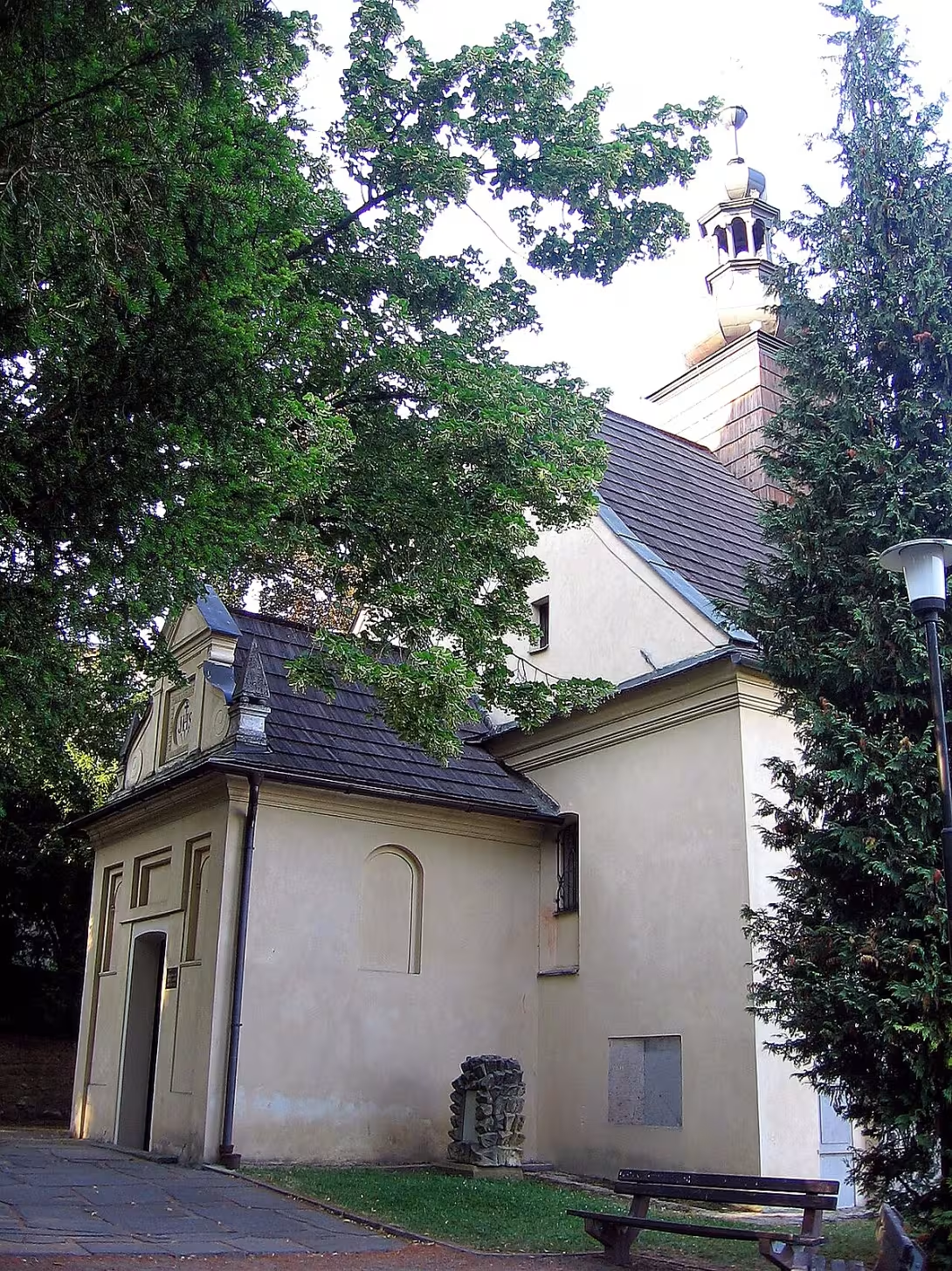
St. Philip and James Church in Tábor is a single-boat, originally Gothic church built in the 14th century. It has been recognised as an important cultural monument since 1958. Located outside the historical centre near the former castle Kotnov, it has three baroque altars from the beginning of the 18th century and keeps tombstones from the middle of the 16th century. Its historical importance is increased by its location in a winding place with an adjacent park which once served as a cemetery.
The origin of this monument dates back to the 14th century, during a period marked by religious upheaval in Bohemia, which led to Hussite wars. The first documented mention of the church dates back to 1388, when Ondřej of Ústí founded two altars within the chapel at the time. This structure faced destruction during the Hussite wars and later underwent reconstruction, although it was eventually burned by Prussian forces in 1744. In 1746, there was a significant transformation with Baroque reconstruction under the leadership of Dean Pavel Klášterský of Rosengarten.
The church started as a Gothic chapel, but evolved in different stages. After being destroyed during the Hussite wars and later burned by Prussian troops, it was significantly renovated in the Baroque style in 1746. The current form of the church resulted from the restoration between 1973 and 1990, which preserved its historical nature while adapting it to modern use.
The ownership and administration of the church of St. Philip and James have recorded significant changes over time. In 1973, the church was originally part of the church ownership of Tábora. Since 1997, it has been leased to the Old Catholic Church by the city of Tábor and marks a new chapter in its history.
The key events associated with this monument include Baroque reconstruction and its role as places of major funerals. There are important figures buried nearby like Josef Nemek, husband of Božena Nemco. In addition, the church and its park house a common grave for soldiers of the First World War, adds to its historical depth.
Today, the church of St. Philip and James is accessible to visitors and serves as an active place of worship under the ancient Catholic Church. Its rich history, architectural evolution and cultural importance make it a convincing place worth visiting. The church offers not only views of Tábor's past, but also stands as proof of resistance during centuries of change. Visitors are invited to explore this historical monument and appreciate its lasting legacy in the heart of Tábora.
Then and now
Drag the slider to compare how the landmark may have looked when it was built with the view today.
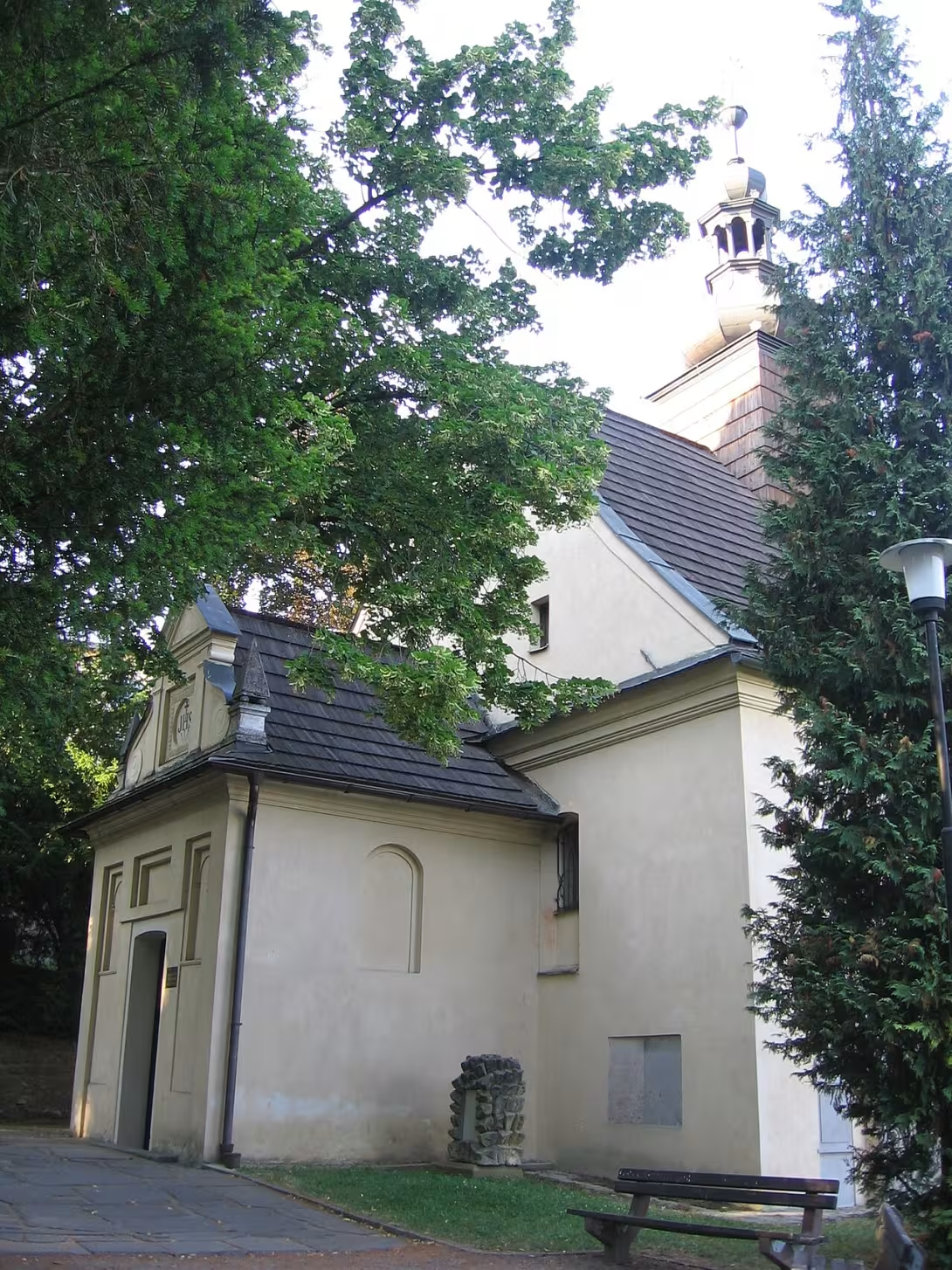
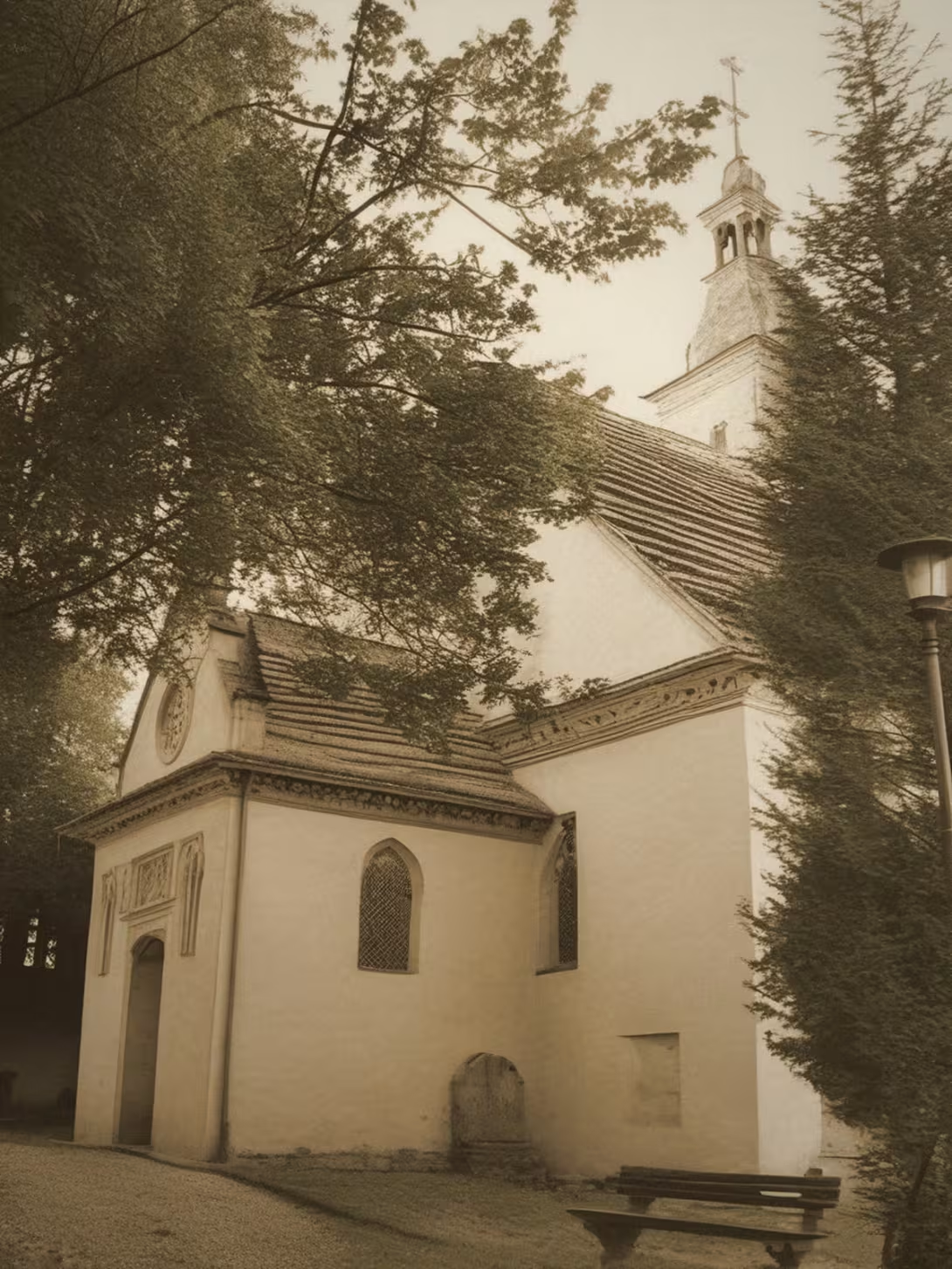
The historical appearance on the left is an AI-generated visualisation and serves as inspiration only.
Historical milestones
- 1388
- Ondrej of Ústí founded two altars in the chapel.
- 1744
- the church was burned by prussian forces.
- 1746
- Baroque reconstruction of the church initiated by Dean Pavel Klášterský of Rosengarten.
Architectural development
Originally built as a Gothic chapel in the 14th century, the building was destroyed during Hussite wars and later rebuilt. In 1744 it was burned by Prussian soldiers, but in 1746 it underwent a significant Baroque reconstruction under the leadership of Dean Pavel Klášterský of Rosengarten. The church was restored between 1973 and 1990.
Historical events
- 1388
- Ondrej of Ústí founded two altars in the chapel.
- 1746
- the church was reconstructed after it was destroyed by Prussian forces in 1744.
- 1997
- The old Catholic church started using the church for services, starting on July 6th.
Owners
The church was initially part of the church shares of Tábora, later transferred to state ownership in 1973 and since 1997 it has been leased to the Old Catholic Church by the city of Tábor.
Points of interest
- St. Philip and James Church is located near the site of former Kotnov Chateau, which suggests a historical link between these two important monuments in Tábor.
- During his stormy history, the church was burned by Prussian forces in 1744, an event that underlines the strategic importance of Tábor during military conflicts involving Prussia.
- The Baroque reconstruction of the church in 1746 was supervised by Dean Pavel Klášterský of Rosengarten, a remarkable figure whose influence is still visible in the architectural style and design of the building.
- Josef German, husband of renowned Czech writer Božena Nemcová, is buried near the church and connects him with an important literary figure in Czech history and culture.
- The park adjacent to the church once served as a cemetery, adding layers of historical importance because it contains common graves from the First World War that reflect the role of the campfire during major European conflicts.
Guide
This guide is narrated by a synthetic voice generated by artificial intelligence.
Show guide text
This text was created by artificial intelligence and has not been editorially reviewed. It may contain inaccuracies.
The Church of Saint Philip and James is the oldest sacred building in Tábor. It is a single-nave church originally built in the Gothic style in the 14th century, which today serves the Old Catholic Church. It has been listed among cultural monuments since 1958.
The church is located outside the historic center of the city and adjoins the southern side of the former Kotnov castle. It stands in the northeastern corner of an extensive park on a sloping plot of land. The park was formerly a cemetery. On the east, it is enclosed by a massive retaining wall, beneath which the slope descends all the way to the Lužnice River.
The first mention dates from 1388. At that time it was still a chapel, in which Andrew of Ústí, a canon of Prague's church, founded two altars. During the Hussite Wars, the chapel was destroyed along with Kotnov castle. Unlike the castle, however, it was later restored. In 1744 it was burned down by Prussian troops. Two years later, in 1746, at the urging of Dean Paul Klášterský of Rosengarten, it was remodeled in the Baroque style into a church. It then served as a cemetery chapel.
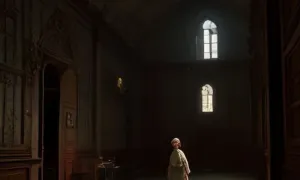
The building has a rectangular floor plan and a three-sided presbytery. At the western façade there is a vestibule with a Gothic portal. In the western part of the nave stands a wooden gallery supported by two columns. In the chancel there are three Baroque altars from the beginning of the 18th century. Inside, tombstones from the second half of the 16th century have also been preserved.
Many notable figures of Tábor and the Tábor region are buried in the former cemetery. Among them lies Josef Němec, the husband of Božena Němcová, who died in 1879. His monument was created by Jan Vítězslav Dušek. In the park there is also a common grave of soldiers from the First World War.
In 1973, the deanery transferred the church and park to the ownership of the Czechoslovak state, and the city of Tábor acquired them. Between 1973 and 1990, the church underwent reconstruction to its present form. Since July 1997, the city has rented it to the Old Catholic Church. The first Old Catholic service was held there on July 6, 1997, on the feast day of Master Jan Hus. Two weeks later, Bishop Dušan Hejbal blessed the church. Today it serves the services of the Tábor parish community. On May 1, 2025, Bishop Pavel Benedikt Stránský consecrated a bell named Master Jan Hus there.
Tips for visitors
The best time to visit the church of St. Philip and James is at the end of spring or early autumn when the weather is pleasant, and the surrounding park offers a beautiful environment for exploration. Visiting outside the top tourist season can also provide a calmer experience. Place church near Kotnov Chateau adds a historical context that increases your visit.
Public transport routes may vary, so checking the current plans online before you travel ensures a smooth journey. The proximity of to the Tábor historical centre is easy to reach from different places.
When visiting the church of St. Philip and James, consider bringing comfortable walking shoes as you will probably explore both the church grounds and its park. The camera is recommended for capturing stunning architecture and picturesque views, especially during the golden hour when light increases the historical environment. In addition, carrying a bottle of water and some refreshments can make your visit more enjoyable.
For lovers of photography is among the best places an exterior church where you can capture its gothic features in the background of the valley of the Luželka river. The park offers picturesque views that are ideal for landscape shots, especially at sunrise or sunset when light is soft and warm. Exploring different angles around the church will help capture unique perspectives.
Near attractions within a 30-minute drive include Kotnov Chateau, which provides insight into medieval architecture and history. Its location on a steep slope offers panoramic views of the surroundings. For families with children, visiting this site can be both educational and fun because they offer various activities and stories about the Tábor rich past.
Frequently asked questions
Can the monument be visited?
Religious buildings are usually open mainly during services; at other times a visit is normally arranged with the parish or the operator. We have not verified specific times.
Where is the monument?
Location: Tábor, Jihočeský kraj. The map on this page shows the exact spot.
Why is the monument protected?
It is listed in the Central List of Cultural Monuments of the Czech Republic as a cultural monument (register no. 22924/3-4620).
Businesses nearby
Do you run a restaurant, accommodation, shop, museum, rental, wellness or other visitor service near this monument? Show yourself directly to the people heading to it — this is how they will see you in the app and on the web:
Nearby
the church and its park are located outside the Tábor historical center near the former castle Kotnov. The area has a steep slope towards the Lužka river with residential buildings on the south side.
Accommodation nearby
Themed route
Thematic walking tour: Táboro historical and natural charm
1. Church of St. Philip and James (Church of St. Philip and James) - * Type: * Religious / sacred pages - * Why Visit: * Start your journey in this wonderful Baroque church, famous for its architectural beauty and peaceful atmosphere. The location of the church offers panoramic views of the surrounding landscape, which sets the tone for exploring the rich cultural heritage Tábora.
2. U Church Park (Church Park) - * Type: * Natural / Vacation Area - * Why Visit: * Walk through the lush park adjacent to the church, where nature and peace mix smoothly with historical significance. This area provides a quiet haven for reflection and relaxation after visiting the church.
3. Chateau ruins Kotnov - * Type: * Historic site - * Why Visit: * Venture towards the remains of Kotnov Chateau, located near the church. Although the ruins remain, they offer a flash into the Tábor medieval past and provide an excellent view of the appreciation of steep slopes leading to the river Lužka.
4. Southern Living Area - * Type: * Cultural / architectural - * Why Visit: * Explore residential buildings on the south side of the slope which represents a mixture of traditional and modern architecture. These houses reflect local lifestyle and provide a view of the community's connection with its historical roots.
5. Lukovice River Viewpoint - * Type: * Scenic stain - * Why Visit: * Close your tour with a view of the river Lužnice at the foot of the slope. This place offers a breathtaking view and serves as an ideal place to think about the natural beauty and historical importance that you encountered during your journey.
This thematic walking tour includes Tabor unique blend of history, nature and culture, which offers an enrichment experience for visitors who are interested in exploring these elements in a compact area.
Seasonal recommendations
Spring: Church of St. Philip and James in the spring season received an unambiguous command with nature around them, when they are intended to go into the green forest. The sunny days are an ideal time to acquire the historical interior of the church with clear adoption, which is architectural details and artwork. They can expect a small crowd, because the people who own them will get tired after winter. It is supplied to wear complementary shoes and light suits because temperatures can Bet Promised. The best data is based on the fact that it is in recalculated hours when the sun is the hottest and the interior of the skeleton is full-bodied.
Summer: The Church of St. Philip and Jacob offers on the green landscape, where the surrounding nature is in full strength. The sunny day illuminates the church interior, allowing you to understand its historical details in the light of the longest embrace. Summer is a bag also a significant summer service for tourists, which knows the height of the massive written and potential common queues across the board. They should be appointed early in the morning or later in the evening to avoid heat and davom. Wearing Light Clothing, Sunshine Glasses and Additional Drinking Reaper is resting to ensure the conditions to be fulfilled.
Autumn: Autumn offers the Church of St. Philip and James an atmosphere full of silence and tranquility when tree leaves graduate in material colours. Sunny days may be designed to ensure that the conditions laid down in this Regulation are met. They may enviest fewer crowds, not in the summer victims, with the help of the pami. It should be noted that some of them have the same characteristics as other products and may have other characteristics. The best data based on the fact that it is in calculated hours when the sun is the hottest and the atmosphere is calm in the pedestal.
Winter: The winter intensity of the Church of St. Philip and James offers only one atmosphere with left deliveries on the trees and the possibility to look at the church in peace, because many tourists are opposites. Sunshine days are an ideal time basis for fulfillment, where clear conditions can be achieved to highlight historical education. The entrustment authorities should be subject to checks in order to verify whether and how those requirements have been met. Wearing a warm round, veiny leather shoe or rainy for healthy stimuli is tricky. The best time based on it is at noon, when the sun lights up the church and the atmosphere makes it warmer.
Visualizations and artistic views


The visualisations are generated by artificial intelligence and serve as inspiration.
Photos from the area
Real photos taken near the monument


Zdroj a licence jsou uvedeny u každého snímku.
Tips from visitors
No tips yet. Be the first!
Log in and add your tip.
Sources and literature
Photos: Jik jik / CC BY-SA 3.0 — Wikimedia Commons. The author and licence also appear when you hover over the image.
Faktickým podkladem tohoto textu byl článek na Wikipedii, jehož autory jsou přispěvatelé Wikipedie. Článek je dostupný pod licencí CC BY-SA 4.0.
Location on the map



Příběhy a pověsti
Legendy, pověsti a příběhy spjaté s touto památkou
Fotografie návštěvníků
Zatím žádné fotografie. Buďte první, kdo přidá fotografii z návštěvy!
Log in a přidejte svou fotografii nebo hodnoťte.
Za ověřenou návštěvu v aplikaci získáte víc bodů — poznáme podle GPS, že jste na místě.
Reviews and comments