






Oltářní křídla z Roudník Wing altar
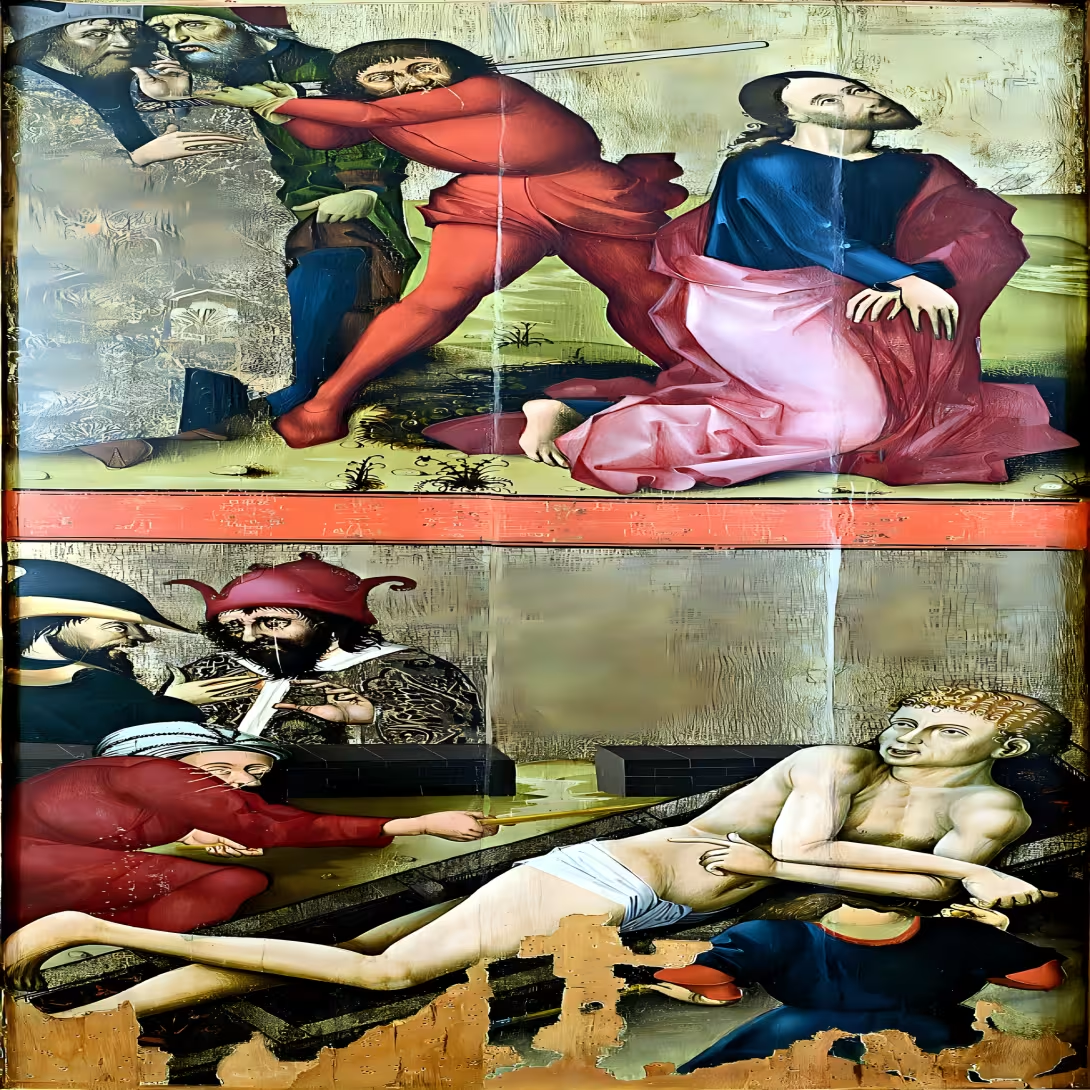
In the Hussite Museum in Tábor, a pair of rare altar wings were preserved by a late Gothic retabl, created in the 1970s to the 1980s by an unknown painter for the parish church of St. Wenceslas in Roudníky near Chabarovice in Ústí nad Labem. The work probably comes from one of the then Prague workshops and has the status of a national cultural monument. The two-sided painted plates are exceptional because they contain the oldest preserved Czech Gothic plate painting with the image of Master Jan Hus.
Each of the cut-off wing plates measures 162 centimeters in height and 68 centimetres in width. The left wing depicts the upper part of the House of St. Jacob the Greater, which is attended by two discussing figures - especially the person in the brocade with the mitra represents the great priest Abiathra and symbolizes the prelates who condemned John Hus. The lower part shows the burning of St. Vavranice with Emperor Decius. On the outside of the left wing is St. Jacob the Bigger with a pilgrim staff and St. Vavřinec holding a book and a palm branch. The right wing is internally in the upper part of the Torture of St. Shebestian, which is watched by Emperor Diocletian with a crown on his head, and in the lower half of the Burning of Master Jan Hus. This burning dominates the figure of a man in a prince's hat - it is the falckrabbi Louis of Wittelsbach, whom Emperor Zikmund handed over to Goose for execution. On the outside of the right wing are Saint James Minor and in the lower part of St. Stephen. With this choice of saints, Master Jan Hus was assigned to the primaries of the Christian Church.
Although the wings are not dated or signed, the stylish analysis points to their emergence in the 1970s to 1980s. The painter had the knowledge of the work of the Sovereign altar master and drew from the Norimberg designs of Hans Pleydenwurff and the Brussels designs of Dirck Bouts. Since Saint James the Bigger appears on both boards twice and James the Smaller once, it is assumed that the client was Hussite Governor Jakoubek of Vřesovice, who owned the Roudních during the Hussite War, or his son Jan, who acquired the Roudních in 1467.
A remarkable story is how the plates survived a dangerous period of recatolation in the seventeenth and eighteenth centuries. They were second-cut and equipped with a layer of baroque marble, which made their original content hidden and thus escaped destruction. The church of St. Wenceslas in Roudníky, for which the altar was intended, has been documented since 1352 as a parish and was Gothic rebuilt in 1486, during the life of John of Vřesovice.
The rarity of these boards lies not only in their artistic quality, but also in the fact that they are the oldest preserved Czech proof of the depiction of Master Jan Hus as a primordial martyr alongside the saints. Their preservation during the dangerous period of reCatholicism, enabled by baroque marble, makes them a unique testament to the Hussite godliness of the fifteenth century.
Then and now
Drag the slider to compare how the landmark may have looked when it was built with the view today.
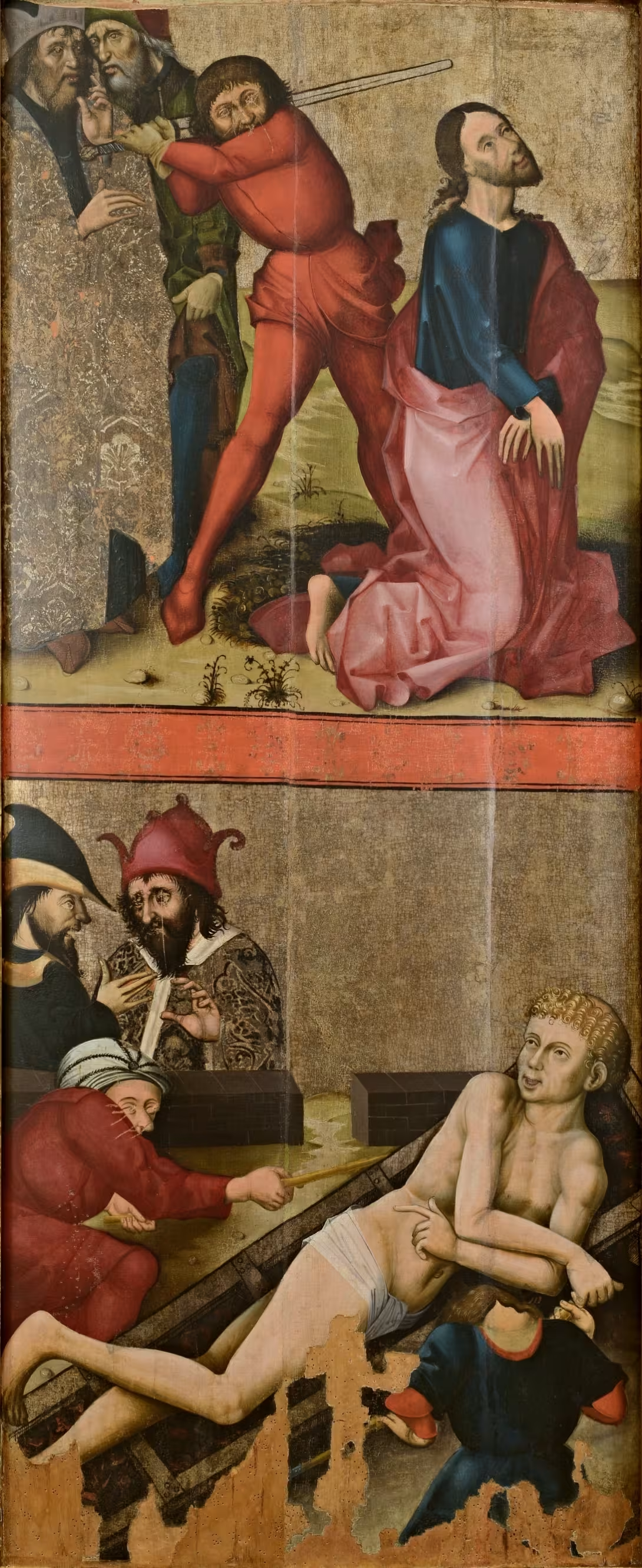
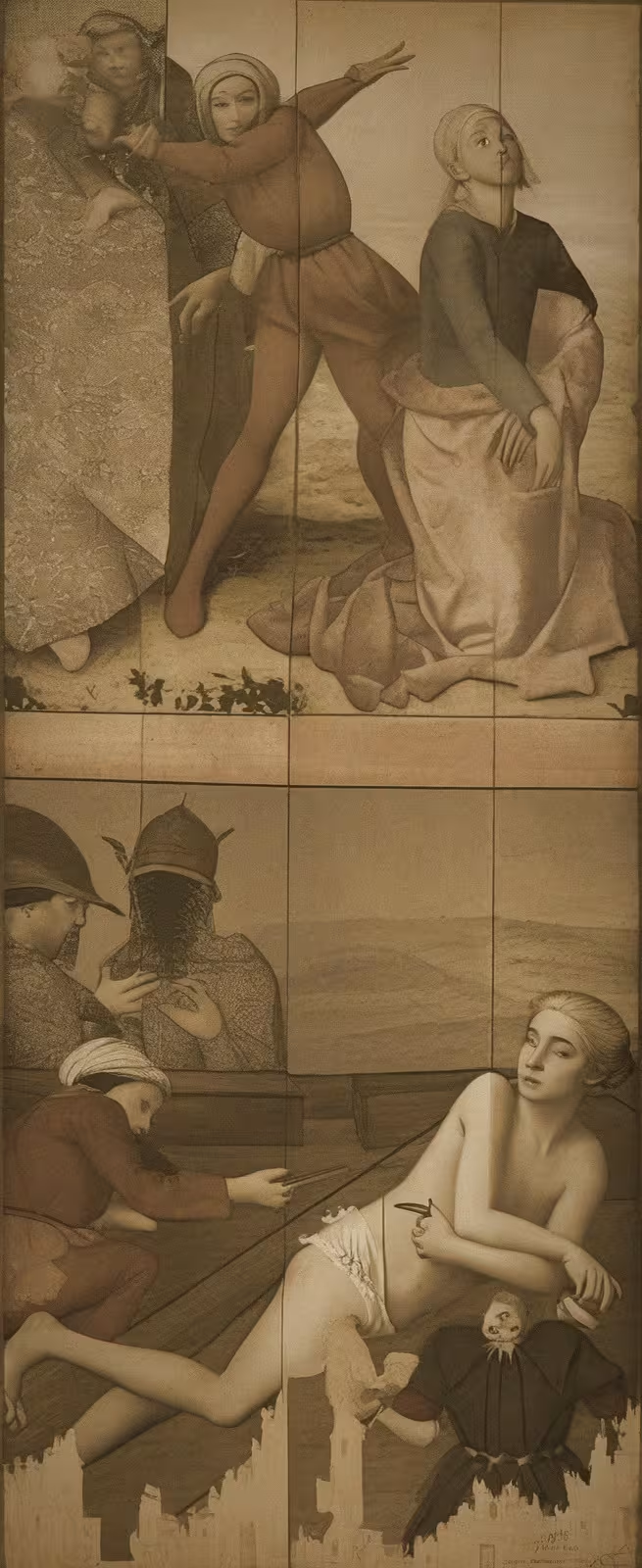
The historical appearance on the left is an AI-generated visualisation and serves as inspiration only.
Historical milestones
- before 1486
- The emergence of wings in the Prague workshop, probably for the Hussite parish in Roudniky. The painter was influenced by Western European patterns (Nuremberg, Brussels).
- 1486
- Gothic reconstruction of St.
Architectural development
Wings are cut by plate paintings originally part of the late Gothic retabl. The original medium plate was not preserved, probably depicting the Crucifixion of Christ or the Last Supper. The wings were provided with a baroque layer of marble, which saved them from destruction during recatolation. Material: wooden plates (dimensions 162 × 68 cm, after frame 179 × 82 cm).
Historical events
- before 1486
- The emergence of wings in the Prague workshop for St. Wenceslas's Church in Roudniky, probably for the Hussite parish.
- 17.-18th century
- The wings survived the reCatholization thanks to baroque marble that protected them from destruction.
- 1900
- The wings were moved to the Hussite Museum in Tábor and gained the status of national cultural monument.
Points of interest
- The altar wings are the oldest preserved Czech proof of the depiction of Master Jan Hus.
- The work dates back to the Prague workshop from the 1970s to 1980s.
- The wings were second-cut and covered in baroque marble, which saved their lives during recatharisation.
- On the boards are depicted saints, among whom Master Jan Hus is assigned to the primaries of the Christian Church.
- There are characters like the falckraba Ludwig of Wittelsbach who gave the Goose to the execution.
Guide
This guide is narrated by a synthetic voice generated by artificial intelligence.
Show guide text
This text was created by artificial intelligence and has not been editorially reviewed. It may contain inaccuracies.
Welcome to one of the rarest treasures you can see in this place. You are standing right in front of the altar wings of Roudík, a work that carries an enormous amount of history, faith and unexpected salvation. You may see at first glance only two old, cut-down wooden wings, which act unusually, but believe me, it is in these details and in their imperfections that their greatest strength lies. Imagine looking at the surviving fragment of something much larger, the remains of a beautiful, late Gothic altar that once served as the center of spiritual life in one of the Czech parishes.
Let us now return to the time when this work was created. Imagine Prague workshops at the end of the 15th century, probably between the 1970s and the 1980s. At that time Prague was a cultural heart and centre of artistic creation that affected the whole area. These wings were not made randomly; was probably intended for the village church of St. Wenceslas in Roudniky. At that time this area was strongly linked to the Hussite tradition and the wings were probably ordered for this particular Hussite parish. The artist who painted these records was not just a craftsman, but a man who watched the latest trends from all over Europe. In his work you can feel the breath of great world directions, especially the influences from Nuremberg and Brussels, which at that time determined the rules of the best European painting.
Now pay attention to the work itself and what is right in front of your eyes. Look at these two records. They are examples of so-called board painting, a technique that reached its peak at that time. Notice that the wings are painted both sides. This means that each party had its own meaning and its own story that could change depending on whether the altar was closed or open to believers. If you look at the edges now, you'll notice that they're cut. It's not the artist's fault, it's the result of later history. These wings have been modified over the centuries to fit into new spaces or to meet new demands, which, while taking away their original dimensions, has preserved their essence.
And it is in this very essence that the most important thing is hidden. Now give your view to those paintings that appear to you through layers of time. This work is not just a beautiful example of Gothic art, but a historical document. This is the oldest preserved Czech painting, which contains a picture of Master Jan Hus. But you won't see him here as a scholar or a reformer, but as a prime martyr. It's an incredible view of how Hus was perceived in the period when his legacy was still pouring live into people's memories. This painting is one of the oldest proofs of how the Czech art began to display the character of this important man.
Who was behind this work? And who was behind him financially? Although the name of the painter himself remains hidden in history, we can try to estimate. It was probably a master from the Prague environment who was able to combine local needs with high artistic style. Then we can speculate on the client. Historical records and context of the time suggest that important figures such as Jakoubek from Vřesovice or his son Jan from Vřesovice could be behind the creation. These people had the power and the means to support the creation of such a costly and important altar for their parish.
But now I want to invite you to think of one great mystery and miraculous story of survival that took place much later than the altar was finished. Imagine a period of reCatholisation when the religious map of the country was changing and old, Hussite symbols were often sought after and destroyed. These wings stood on the edge of extinction. But how did they escape destruction? The answer is unexpected and shows what you see on the surface.
Notice what looks like baroque marble. These patterns that imitate precious stone are not the original part of the Gothic work. They were added in the seventeenth or eighteenth century. And it was this marble, this baroque camouflage that saved the wings. When people looked at these objects at the time of reCatholicization, they did not see dangerous Hussite symbols or depictions of Jan Hus. All they saw was an ordinary, decorative baroque wing with a marble pattern that looked like part of a new, then religious style. This layer of paint, which was originally only an aesthetic supplement, became an invisible shield which protected the oldest Czech painting from destruction. It's a fascinating example of how art sometimes has to hide in order to survive for future generations.
This story of hiding and saving continued until modern times. In nineteenth century, these wings were moved here to the Hussite Museum in Tábor, where they acquired the status of national cultural monument. Since then, it has served as a silent witness to our history, reminding us how fragile culture can be and how powerful an artistic detail can be.
Look at them for a while. Feel the texture, the colors that go beyond the centuries, and think of all the eyes that looked at them 500 years ago, even the ones that see them today. Each crack and every layer of paint tells its own story of faith, political twists and incredible random happiness.
I hope that this short journey over time has helped you better understand the importance of what you are seeing. Don't want everything at once, let these images run out. And when you continue your journey through the museum, remember that even the smallest details can hide the greatest secrets of history. Thank you for the tour together and we wish you a wonderful rest of your visit.
Tips for visitors
The best time to visit is autumn or spring when the weather is quiet and ideal for exploring historical monuments. These periods also offer a beautiful view of the surrounding countryside.
Parking in Tábor can be found near the city parking lot or near the center, while for public transport, the city offers bus transport with several routes leading to the historical core.
When visiting, bring your protective clothing if you plan to walk outside. Remember also the water and sun cream during the summer months.
Photography is best obtained in early mornings or evenings when light is softer. The best places for photos are close to the church and in the square Tábor.
In the vicinity of the monument you can visit the historic church of St. James, castle walls or enjoy relaxation in the park near the river Lužík.
For families with children it is suitable to visit a local zoo or museum offering interactive exhibitions for younger and older visitors.
Frequently asked questions
Is Oltářní křídla z Roudník open to the public?
Yes, the altar wings are displayed at the local museum and are available for inspection during the opening hours.
How do I get to the place by car / public transport?
It is possible to park by car near city parks or near the centre. The public transport offers buses that stop in the historical core of Tábora.
How much is the entrance fee and is it paid on the spot?
The entrance to the museum is paid on site. The price may vary according to the type of ticket (adult, child, student).
Is the tour suitable for children and seniors?
Yes, the tour is also accessible to children and seniors. The museum offers explanatory notes and information material in easily understandable form.
How long does the tour take?
An altar wing tour can take approximately 30 minutes, depending on how carefully you want to focus on the details.
What are the opening times and booking is required?
The museum is usually open from Monday to Friday at 10: 00 - 16: 00. Reservation is not required, but it is recommended to check the current opening hours on the museum website.
What's interesting in the immediate vicinity?
In the surroundings you can visit the historic church of St. James, castle walls or enjoy relaxation in the park near the river Lužík.
For kids
Imagine going back 540 years and traveling through time! It's like having a magic book that allows you to see the past. How about we get to a little town called Roudník? Here is the church of St. Wenceslas and there is a hidden treasure you would have to see! It is the altar wings of the Roudních - like bilateral paintings, full of secrets and beauty.
Businesses nearby
Do you run a restaurant, accommodation, shop, museum, rental, wellness or other visitor service near this monument? Show yourself directly to the people heading to it — this is how they will see you in the app and on the web:
Nearby
ITEX Show interactive overview of the surroundings - restaurants, accommodation, rentals and other places within a 15 km radius.
Data: OpenStreetMap contributors, 15 km radius.
‡ Historical monuments
- Bechýnská brana (0.0 km - Mikuláš z Husi square 44)
- Jan Žizka z Trocnova (0.2 km)
- Bechýnská brana (0.2 km - Kotnovská 138)
- Spooky Underground and Museum of Old Crafts (0.2 km)
- Bechynski Gate (0.2 km)
- House Mill (0.2 km)
- Hussite Museum (0.2 km)
- Muzeum legaxZ3ZX (0.3 km)
Restaurant and catering
- On meetings (0.1 km)
- ORIGINAL 1869 Tábor (0.8 km - 9 May 519 / 7)
- U Lamb (1.2 km)
- Bar on Rohlika (2.1 km)
- Bar on Kope (2.4 km)
- Peta (2.5 km)
- Silvia (2.6 km)
- Eden (6.7 km)
Accommodation
- Alfa (0.2 km)
- Niagara (0.6 km)
- Palcát (0.8 km)
- Small Jordan (2.4 km)
- Hostel (2.5 km)
- Relax (3.6 km - Warsaw 2708)
- Hubert (4.0 km - Shafaríkova 1073)
- Na Myth (4.5 km)
› Rental and sports
- HUDY sport (0.4 km - Prague 233)
- Mira Sport (0.9 km)
- Fitness club Dášá (0.9 km)
- Centrum Bivita (1.0 km)
- Apex bike (1.1 km)
- Nord Blanc (1.1 km)
- Yogastation (1.3 km)
- ČD Bike (1.6 km)
© Tourism and nature
- Tábor - Křižikov square (0.6 km)
- Klokety (church) (0.7 km)
- Sezimovo Ústí zaměstí (square) (3.8 km)
- Radimovice u Tábora (4.8 km)
- Ovozna Kozský porok (5.1 km)
- Borotín (10.6 km)
- Stone Lhotax (11.4 km)
- Diedice (11.8 km)
Accommodation nearby
Themed route
Thematic cruise route: Oltářní křídla z Roudník and their historical context
1. Church of St. Wenceslas in Roudnice * Type: * Gothic church with Baroque elements. * Why visit? * Here originally stood famous altar wings whose art championships and history are closely linked to this place. The church dates from the 14th century, but its reconstruction in 1486 reflects the time when wings were formed.
2. Natural Reservations Roudnice beech * Type: * Protected beech with relict trees. * Why visit? * This reservation, about two kilometres from the church, offers a peaceful walk between rare plant species and trees that have grown here for centuries. Ideal for relaxation between historic stops.
3. Hussite Museum in Tábor * Type: * Museum exhibition dedicated to the Hussite era. Why visit? Here are today placed altar wings from Roudík, which represent the peak of gothic painting. The museum is also an important centre for knowledge of Hussite history, which is closely related to wings.
* The route is designed to combine the original place of wings with their current exposure and natural charm of the surroundings. *
Seasonal recommendations
Spring In spring, when nature awakens to life, the altar wing from Roudík takes on its charm a new dimension. The light of the sun, which begins to flow through the stained glass, creates a game of shadows and colours on wooden reliefs, which emphasizes fine details of the art processing. The surrounding park and gardens, still not fully blooming, bring a calm atmosphere, ideal for careful tours without disturbing crowds. It is convenient to visit a memory early in the morning or in the morning when the light is softer and the traffic is lower. Light but warm clothing is recommended - spring weather in southern Bohemia can be variable, with cold morning hours and sudden sunny spills. The tour in this period is ideal for those who appreciate a quiet, meditative encounter with an artwork without summer crowds.
Summer In the summer months, when the sun shines most intensely, the altar wing from Roudník appears in full glory, but a visit requires a strategy. Direct sunlight penetrating through the stained glass can create sharp shadows that distort the view of reliefs and therefore it is best to view the work from a suitable angle or in a shadow. In the main summer season it is recommended to come immediately after opening to avoid crowds of tourists who often visit Tábor. Light, breathable clothes and sun protection are essential - temperatures in the South Bohemia Region may exceed 30 ° C in July and August. The tour during this period is ideal for families with children who can be interested not only in artistic work but also in the surrounding environment full of green and flowers.
Autumn Autumn brings a unique atmosphere to Tábora and its monuments, where golden shades of leaves are reflected in a calm light that penetrates through the stained glass of altar wings. In this period, when nature gradually goes to sleep, the wood and the color of reliefs gain a deeper, more mysterious touch. Visiting in September or October is ideal for those who prefer a quiet environment without summer crowds, while autumn weather is usually pleasant, even if the cooler wind may appear. Hot, laminated clothing is recommended, which allows easy adaptation to temperature changes. The best time for a tour is in the afternoon when light falls sloping and creates interesting effects on relief. In advent time, when Christmas is near, the monument can also be decorated with candles, which adds a special Christmas charm to the visit.
Winter The winter visit to the altar wings of Roudík offers a unique opportunity to experience the work under conditions where light falls sloping and creates dramatic shadows on wooden reliefs. The snow covering the surrounding landscape and the freezing air environment gives the monument a mysterious, almost fairy tale atmosphere. However, shorter opening times and limited availability of guides should be foreseen in winter months, so it is appropriate to check the current regime in advance. Hot but comfortable clothes, including gloves and hats, are essential because temperatures in the winter in southern Bohemia may fall below freezing. The best time to visit is in the afternoon when enough light enters the interior without being too sharp. Winter tranquility also allows a more focused tour without disturbing influences, which is ideal for lovers of details.
Visualizations and artistic views


The visualisations are generated by artificial intelligence and serve as inspiration.
Photos from the area
Real photos taken near the monument


Zdroj a licence jsou uvedeny u každého snímku.
Atmosphere of the place
This atmospheric visualisation of the place and period was generated by artificial intelligence. It is not real footage of the location.
Tips from visitors
No tips yet. Be the first!
Log in and add your tip.
Sources and literature
Fotografie: anonymous / Public domain, rozlišení zvýšeno umělou inteligencí — Wikimedia Commons. The author and licence also appear when you hover over the image.
Faktickým podkladem tohoto textu byl článek na Wikipedii, jehož autory jsou přispěvatelé Wikipedie. Článek je dostupný pod licencí CC BY-SA 4.0.
Location on the map


Příběhy a pověsti
Legendy, pověsti a příběhy spjaté s touto památkou
Fotografie návštěvníků
Zatím žádné fotografie. Buďte první, kdo přidá fotografii z návštěvy!
Přihlaste se a přidejte svou fotografii nebo hodnoťte.
Za ověřenou návštěvu v aplikaci získáte víc bodů — poznáme podle GPS, že jste na místě.
Reviews and comments