






Kostel Proměnění Páně na hoře Tábor Church
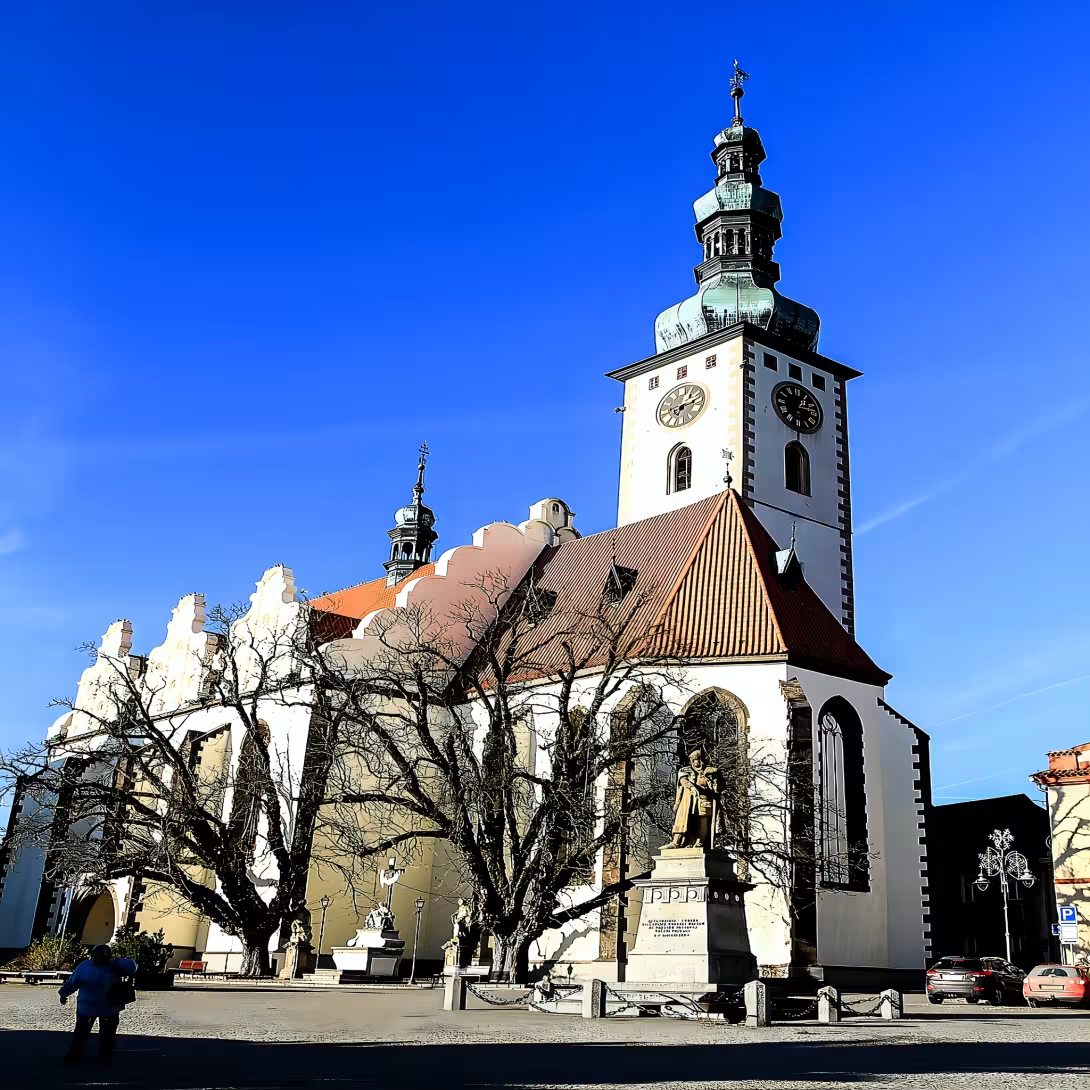
Church Transformation The Lord stands in the highest place Žizkov Square in Tábor and is now a Roman Catholic dean church. The construction started in 1440 with the town hall building. Details were not preserved from the construction process in the second half of the 15th century.
The first clearly documented milestone is 1512, when the tripod was encapsulated by a Gothic network vault. This demanding work was designed and carried out by Master Stanek of Prague's Small Party in a record short time of a few months. The church is 46 metres long and 26 metres wide.
In the subsequent decades, the church has been struggling with repeated fires. After the fire in 1532, which damaged the tower, the Renaissance style was repaired and the Renaissance shields were erected in 1559. The fire hit the church again in 1602. During the Thirty Years' War, he was damaged in November 1621 by a shooting at the siege of imperial troops, and the Swedes damaged the tower so much that it threatened to collapse - the clock machine was then moved to the city hall. In 1622, the Catholics took over as part of the progressive reCatholics.
In 1677 the Italian builder Giovanni de Capauli repaired the tower. The original Renaissance gallery was removed and the tower was given a new Baroque three-stage dome. Renaissance shops on the sides of the church were demolished in 1678. In 1795, a Baroque altar was installed by Ignac Hammer of Březnice.
From 1896 to 1898 the church was regotized by architect Josef Mocker. The second sacristy was added and the original Baroque altar was replaced in 1898 by the neo-Gothic altar by the carver Josef Krejčík.
The last major construction event so far was the repair of the roof and floors between 2006 and 2009, caused by leakage into the interior. The work required approximately CZK 15 million, of which around 85% were covered by the European Union; the remaining part was carried by the city of Tábor and the parish. The roof covers were replaced by 1,000 m ², half the roof was repaired above the ship and the roofs were completely reconstructed above the presbytery. After the completion of archaeological research, the floors in the whole church were also restored.
The exterior of the church facing the square consists of the south side with four Gothic windows in the presbytery and four in the boat. Two high Renaissance arch shields from 1559 stand on the west and east sides; On the north side there are three smaller shields also from the same year, on the south there are smaller shields that occurred before 1600. From the roof above the boat comes the bell tower - the sandtusnik. The Gothic tower with baroque fighting reaches 77.80 metres and is the highest tower in southern Bohemia; leads to approximately 250 stairs.
For the curious visitor Tábora church offers a rare degree: Gothic construction from the beginning of the 16th century, Renaissance shields, Baroque tower and neo-gothic elements from Mocker's hand - all under one roof, in the heart of a square whose history reaches into the Hussite period.
Then and now
Drag the slider to compare how the landmark may have looked when it was built with the view today.
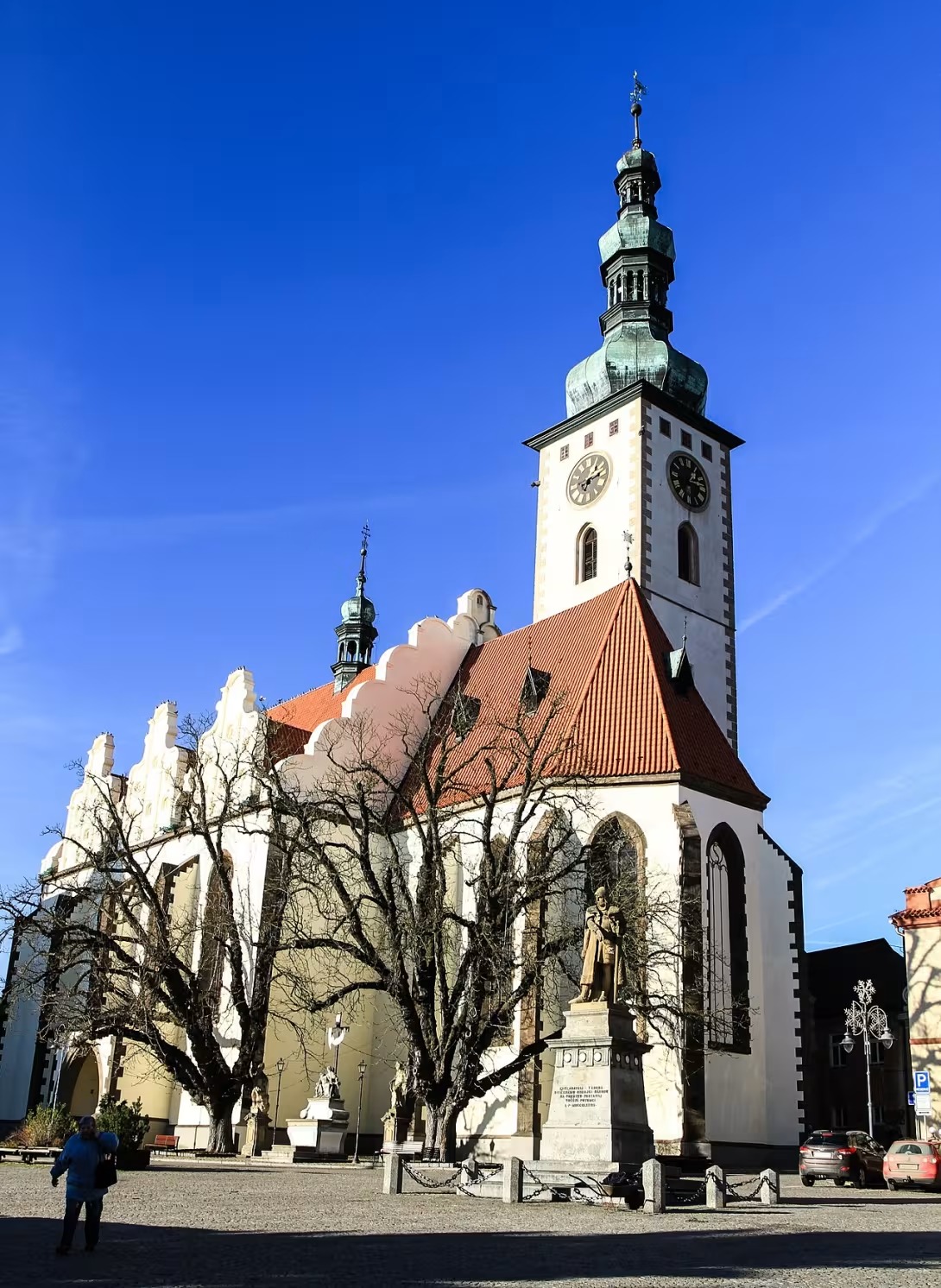
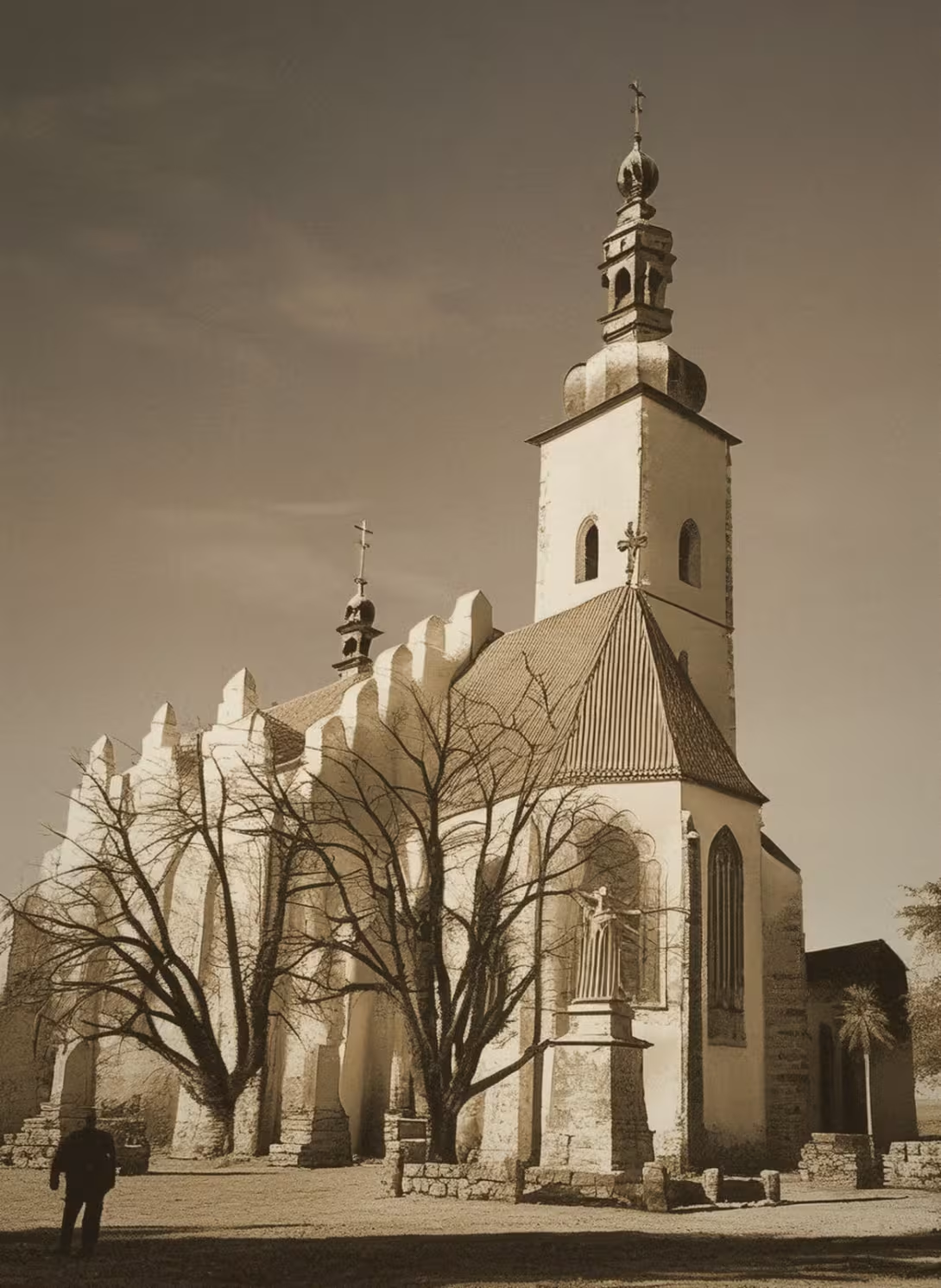
The historical appearance on the left is an AI-generated visualisation and serves as inspiration only.
Historical milestones
- 1440
- The beginning of the building of a very attractive church together with the construction of the town hall.
- 1512
- Endangering the tripod with a gothic net vault by Master Stanek in record short time.
- 1532
- A church fire and a subsequent Renaissance repair.
- 1622
- Taking the parish of Catholics as part of the reCatholics.
- 1677
- Baroque reconstruction of the tower by Italian architect Giovanni de Capauuli.
- 1896-1898
Architectural development
The church was founded in 1440 as a tradivistic building, the tripod was surrounded by a Gothic network vault in 1512 by Master Stanek. The 1532 fire was followed by Renaissance modifications, including 1559 shields. In the 17th century the Baroque reconstruction of the tower (1677) and the loss of the original shops. A new altar and sacristy were built in 1896-1898. The last extensive repair of the roof and floors took place in 2006-2009.
Historical events
- 1532
- The fire damaged the church and the tower, followed by a Renaissance repair.
- 1621
- Damage to the shooting during the Thirty Years' War in the siege of imperial troops.
- 1677
- Baroque reconstruction of the tower by Italian architect Giovanni de Capauuli.
- 1963
- Listed on the list of cultural monuments.
Points of interest
- The church was built in 1440 for the oppressive church at the same time as the construction of the town hall.
- In 1512, the tripod was covered by a Gothic network vault by Master Stanek from Prague in several months.
- Church measures 46 meters in length and 26 metres in width.
- The Gothic tower with baroque fighting is the highest tower in southern Bohemia (77.80 meters) and leads to it approximately 250 stairs.
- In 2006-2009, extensive repairs were carried out to the roof and floors, financed mainly by the European Union.
Guide
This guide is narrated by a synthetic voice generated by artificial intelligence.
Show guide text
This text was created by artificial intelligence and has not been editorially reviewed. It may contain inaccuracies.
Welcome to the heart of the historic Tábor. You are standing on Zizkov Square and one of the most important and important buildings in this city stands before you. Take a look at the monumental building, which, with its size and height, completely controls the space around it and forms an essential part of the camp's panoramic view. Feel the atmosphere of the place where history, faith and architecture are mixed. Church Transformation The Lord is not just an ordinary state, he is a living witness for centuries, bearing the traces of many times and events that shaped this city and the entire region.
Let us now return together to the deep last century, namely 1440. That was when the foundations of this important temple began to be laid. It is important to remember that at that time Tábor was the center of major religious movements. This church was originally built for the Utraquist Church and its creation was closely linked to the construction of the Town Hall, which was established at the same time as it. Imagine the dynamic of the city at that time, where key structures for administration and the spiritual life of the community were built at one time. From the very beginning, this temple has become a pillar of the local public and religious space.
Now pay attention to the architecture itself and to what you are watching right now. The church is a late Gothic hall temple. This means that its inner space consists of three ships which together form a harmonious and spacious whole. If you would like to realize its true extent, the church measures 46 meters in length and 26 meters in width. Now, when you look up to the sky and watch that monumental tower that rises over the entire city, realize its incredible height. It measures more than seventy-seven metres, more precisely seventy-seven metres and eighty-four centimetres, making it the tallest tower in all southern Bohemia. Notice how its gothic foundation clashes with baroque fighting. This fascinating combination of styles is a result of a long and complicated history, when the church had to face fires, wars and numerous reconstructions, while maintaining its Gothic core while accepting later Renaissance and Baroque elements.
The stories of the people who created it are hidden in this architecture. Did you know, for example, that in 1512 Master Stanek from Prague finished the enclosing of the tripod with a Gothic mains vault? That was a technical miracle at that time, because he was able to do all this demanding work in a record short time, in just a few months. The Italian architect Giovanni de Capauli is another important figure that you can see here through clues in architecture. In 1677 he performed a Baroque reconstruction of the tower, giving the building its present, characteristic appearance. And if you ever decide to enter, you will encounter the neo-Gothic altar created by Josef Krejčík in the late nineteenth century. The whole look of the church today, as you are now seeing, was also fundamentally influenced by the regotization under the guidance of Josef Mocker from 1896 to 1898. Each of these men has left his own trail in this building, which has interconnected over the centuries into one whole.
But there is also something that can really impress you and leave you in awe. It's the ability to survive this place. Church Transformation The Lord has passed an incredible number of trials. In 1532 the church was struck by a devastating fire, followed by a Renaissance repair. In 1622, the parish of Catholics was then taken over as part of the reCatholics process. Despite all these storms, over wars and changing religious preferences, the church still stands here in its place. It's fascinating how the Gothic core could be preserved in one building, even though different shapes and aesthetic directions have spread around it over the centuries. This constancy of history is precisely what makes this temple so special.
Now that you know the story of this dominant panoramic view of the camp and you know what this building is all about, I suggest you continue your tour of the area. Feel every line, every detail, and imagine the people who stood before you hundreds of years ago. Let yourself drift through the atmosphere of this place and enjoy the beauty of the historic Tábora. I wish you another pleasant journey around this beautiful city.
Tips for visitors
{'paragraph': 'The best time to visit the Church of the Change of the Lord is in the summer months, namely from May to September. In this period the weather is pleasant and sunny, which allows comfortable tours of the outside parts of the church and the surrounding square. In addition, several cultural events such as concerts or historical performances are often organised in the summer months, which can make the visit even more interesting. It is recommended to avoid weekends when the site is often crowded.'}
{'paragraph': 'The church is accessible by car and public transport. If you arrive by car, it is recommended to find a parking lot near Zizkov Square where there are plenty of parking places. If you prefer public transport, stops are well available in the area. Check the current connections and routes in the traffic search engine. In the vicinity of the church it is possible to park in public parking lots which are usually free of charge or at a symbolic price.'}
{'paragraph': 'When visiting the church, take on comfortable clothes and shoes because it is a historic building with many stairs and uneven surface. It is also recommended to take a small umbrella or raincoat because there may not be enough shade on the outside areas. For a more comfortable tour you can also take a small notebook and pencil if you want to note something. Remember also enough water, especially in the summer months.'}
{'paragraph': 'Photography within the church is usually allowed, but certain rules must be followed. The best places for photos are the outdoor parts of the church, especially its facade and tower. For quality images we recommend choosing time around morning or afternoon hours when the light is softer and more pleasant. During the sunny noon, light can be too strong and images can be clear. The inner spaces of the church should be photographed in the natural light that penetrates the windows.'}
{'paragraph': 'Several other interesting places are worth visiting around the church. The remains of the Tábor walls, located approximately 300 metres west of the church, offer a fascinating view of the history of the city. Zizkov Square, which dominates the church, is the centre of Tábora and offers a number of historical monuments and picturesque streets. There is also a church of St. John the Baptist nearby, which is another important historical object in Tábor. These locations are all easily accessible by foot.'}
{'paragraph': For visiting with children it is advisable to use the interactive elements offered by the church, such as informative boards or the possibility of viewing historical objects. The children will surely be intrigued by the high tower of the church, which can rise up and get a stunning view of the city. In the vicinity of the church you can find small cafes and shops where children can relax and refresh themselves. It is also advisable for families with small children to visit Žižkov Square, where there is enough room for safe children's stay. '}
Frequently asked questions
Is Kostel Proměnění Páně na hoře Tábor open to the public?
Yes, the church is open to the public all year round, except for some holidays and events.
How do I get to the place by car / public transport?
City bus transport or walk from the city center Tábora.
How much is the entrance fee and is it paid on the spot?
Admission is free, but it is possible to contribute to the collection for maintenance of monuments.
Is the tour suitable for children and seniors?
Yes, it is advisable to visit the church with children or seniors because there are wide pavement and plenty of seating.
How long does the tour take?
The tour takes approximately 30 minutes.
What are the opening times and booking is required?
The church is open daily from 9: 00 to 17: 00. Reservation is not required, but we recommend contacting the administration of the church in advance.
What's interesting in the immediate vicinity?
There is a nature reserve and other cultural monuments of the city Tábora.
For kids
Imagine going back to the time when on Mount Tábor the kingdom of the Czech prince Przemysl Otakar II replaced the chateau and other buildings.
It was like a game where you're a hero and you have to discover the secrets of the past. How would you feel if you were in the middle of history? Who would be your girlfriend or your friend?
On Mount Tábor there was a royal mansion and chateau which protected the city of Tábor. The city was an important place for Czech princes, because there was a strategic location and convenient accessibility of the river Lužík.
Businesses nearby
Do you run a restaurant, accommodation, shop, museum, rental, wellness or other visitor service near this monument? Show yourself directly to the people heading to it — this is how they will see you in the app and on the web:
Nearby
The church is surrounded by a nature reserve and other cultural monuments.
Accommodation nearby
Themed route
Thematic cruise route: The Lord's Change and the Historical Heart Tábora
1. Church of the Transformation of the Lord * Main destination - Gothic pearl on Mount Tábor. * This 13th century church, built on the site of an older pilgrimage site, is a unique example of early Gothic architecture with a richly decorated facade. Its location on the hill offers not only spiritual but also picturesque views of the city.
2. Žižkov Square * Approximately 300 meters from the church. * The central square with the historical core, where the key events of the Hussite wars took place. It dominates Zizkov's statue and picturesque houses with Renaissance elements - an ideal place to walk and explore the spirit of the camp.
3. Church of St. John the Baptist * 800 meters north. * The Gothic church with an impressive tower and a richly decorated portal is another gem of the Middle Ages. Its interior and surrounding square offer a quiet atmosphere to relax after visiting the main destination.
4. Tábor walls * Remains of medieval fortification about 300 meters west of the church. * Get close to the original wall walls that protected the city from Hussite expeditions. Here you can feel an authentic atmosphere of medieval Tábora.
* Recommended order: * Start at the Church of the Transformation of the Lord, continue to the Žižkov Square, then visit the church of St. John the Baptist and end with a tour of the walls. The route is compact and allows you to know key historical elements of the city.
Seasonal recommendations
Spring During the spring, the Church of the Lord's Transformation on Mount Tábor is surrounded by green robes - surrounding forests and vineyards flourish, while the sun, which at this time lingers longer over the horizon, disperses light over the stone walls of the church and creates a shadow game on its gothic details. The morning fog often covers the top of the hill, which gives the visit a mysterious atmosphere as if the monument was awakening from winter sleep. It is convenient to visit it early in the morning when the air is clean and the temperature is pleasant; In the afternoon, however, a breeze may appear, so light, but wind-resistant clothing is ideal. This season, visitors are calmer than in the summer, but avoid weekends when tourists come from around here. The best time is between April and May, when nature offers not only flowers, but also decent temperatures for walking along the hill.
Summer In the summer months, the Church of the Transformation of the Lord becomes one of the most visited places in the region, not only because of its architecture, but also because the sun shines directly into the interior at noon and creates a warm, almost meditative atmosphere in the interior of the church. The surrounding area is dry and warm, but due to the altitude (586 meters) the air is fresher than in the lowland. It is recommended to arrive early in the morning to avoid crowds starting to gather from the ninth hour. Suitable is light but sufficiently covering clothing - the sun on the bare stone can be intense, so wear a hat or hat. In the main summer season (July-August) it is also worth taking water, because the shady places around the church are not many. Evening visits are pleasant, but watch out for the sunset, which is fast on the mountain.
Autumn Autumn brings to the church area The transformation of the Lord's rich palette of colors - the forests dress in red, yellow and brown shades that contradict the dark stone walls of the church. The sun shines lower here at this time, so its light falls directly into the window niche and creates warm, golden reflections in the interior of the church. The atmosphere is calm and thoughtful, often accompanied by rustling leaves or distant wind sounds in the trees. It is convenient to visit it in September or early October when temperatures are pleasant and crowds smaller than in summer. Clothes should be layered - it is cold in the morning and evening, while the afternoon can be sunny. Watch out for rainy days when the road to the hill can become slippery; comfortable shoes with good grip are suitable.
Winter Winter visit to the Church of the Transformation of the Lord offers a unique atmosphere - the snow cover turns the surrounding landscape into a white-grey landscape, while the sun, which is shining briefly at this time, creates sharp, dramatic shadows on the stone walls of the church. The interior is heated and illuminated, which creates a sense of comfort, especially in advent time, when Christmas concerts or worship are often held here. It is convenient to come in the morning when the light is the most beautiful and the crowds are less. Clothes should be warm, but not too bulky - it is often cold in the church, so wear a scarf or a light coat. The opening times of the monument are shorter in winter, so check in advance if the church is accessible. Walking on a snowy hill is more challenging, so take firm shoes and possibly chopsticks.
Visualizations and artistic views


The visualisations are generated by artificial intelligence and serve as inspiration.
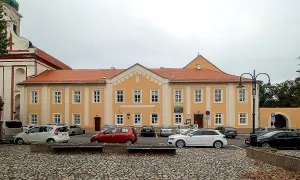
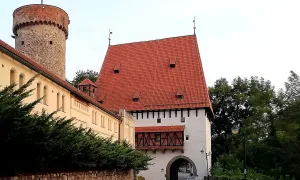
Photos from the area
Real photos taken near the monument


Zdroj a licence jsou uvedeny u každého snímku.
View from the area
This animation was generated by artificial intelligence from a real photograph of the surroundings. The motion and details are not real footage of the location.
Atmosphere of the place
This atmospheric visualisation of the place and period was generated by artificial intelligence. It is not real footage of the location.
Tips from visitors
No tips yet. Be the first!
Log in and add your tip.
Sources and literature
Fotografie: Ondřej Kořínek / CC BY-SA 4.0, rozlišení zvýšeno umělou inteligencí — Wikimedia Commons. The author and licence also appear when you hover over the image.
Faktickým podkladem tohoto textu byl článek na Wikipedii, jehož autory jsou přispěvatelé Wikipedie. Článek je dostupný pod licencí CC BY-SA 4.0.
Location on the map



Příběhy a pověsti
Legendy, pověsti a příběhy spjaté s touto památkou
Fotografie návštěvníků
Zatím žádné fotografie. Buďte první, kdo přidá fotografii z návštěvy!
Přihlaste se a přidejte svou fotografii nebo hodnoťte.
Za ověřenou návštěvu v aplikaci získáte víc bodů — poznáme podle GPS, že jste na místě.
Reviews and comments