



kostel svatého Petra a Pavla (Kaplice) Church
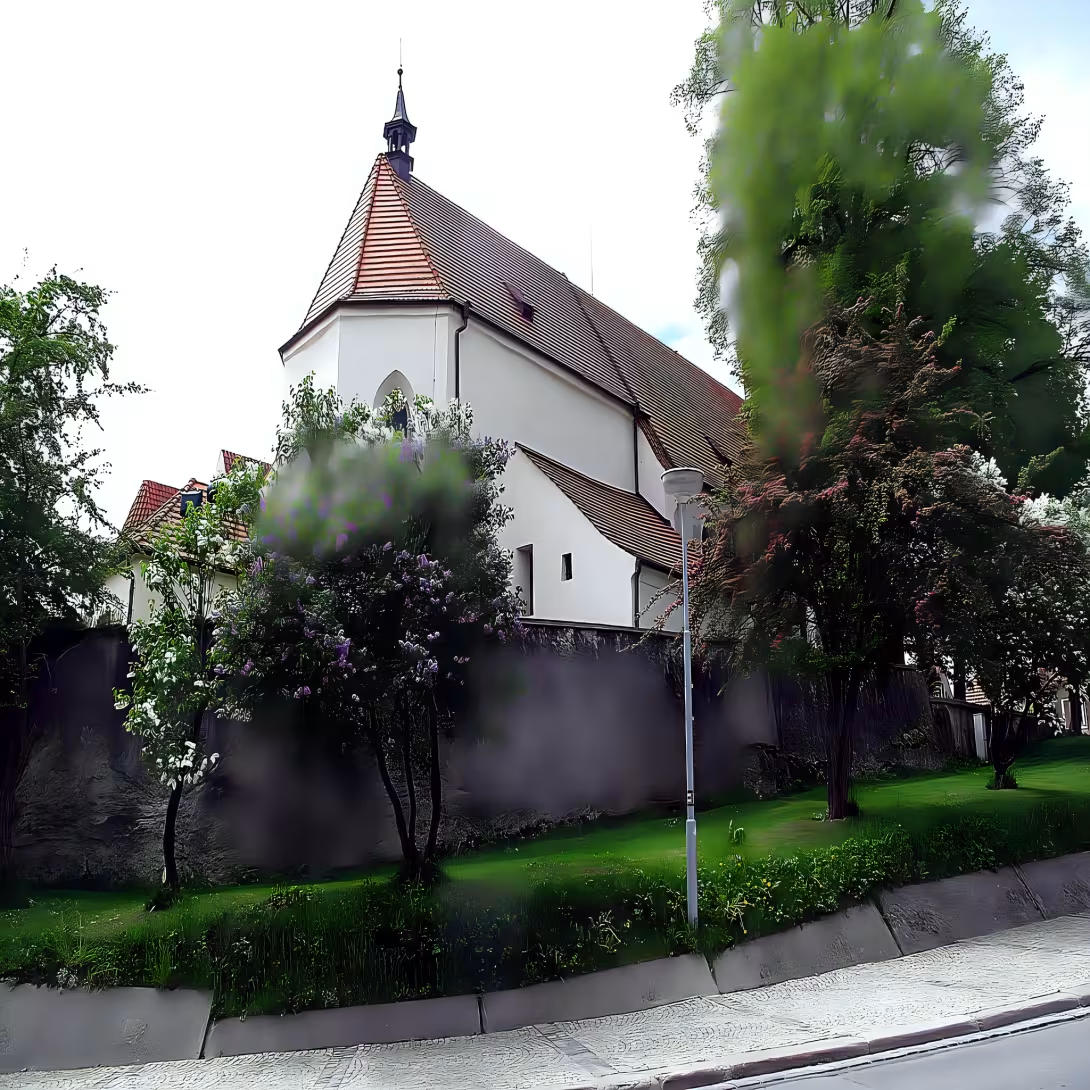
The Church of Saint Peter and Paul in Kaplice is a testament to architectural resilience and historical evolution. Situated on the eastern side of the town within the Jihočeský kraj region, this parish and deanery church features an asymmetrical hall design with an elongated polygonal presbytery. Recognized as a cultural monument since May 3, 1958, it reflects centuries of architectural transformation from early Gothic origins to Baroque modifications.
The earliest documented mention of the Church dates back to April 15, 1257, when Pope Alexander IV issued a papal indulgence dedicating it to Blessed Virgin Mary. Initially managed by Premonstratensians from Milevsko, its construction began in the mid-13th century during the early Gothic period. The surviving lower walls of the nave, tower, and triumphal arch are remnants of this era. By the late 15th century, a polygonally ended presbytery with vaults was added, marking significant architectural developments.
Throughout its history, the church has endured numerous fires that necessitated extensive reconstructions. Notably, in 1507, a devastating fire led to major changes, transforming the nave into vaulted sections divided into two aisles. The Baroque period brought further enhancements; in 1726, a new organ was installed, enriching its musical heritage. By 1788, the church had been elevated to deanery status, reflecting its growing importance within the community.
The architecture of the Church is characterized by its asymmetrical hall design with an elongated polygonal presbytery. The building's exterior features an opus mixtum of brick and stone, typical of Gothic structures, while the interior boasts intricate vaulting and a richly decorated altar area. The church's resilience is evident in its ability to withstand multiple fires over the centuries, including those in 1387, 1419, 1428, 1549, 1675, and 1718.
Ownership and administration of the Church have evolved alongside its architectural transformations. Initially under the care of Premonstratensians from Milevsko, it later became a deanery church, reflecting shifts in ecclesiastical governance. These changes underscore the church's enduring significance within the region's religious landscape.
Today, the Church of Saint Peter and Paul remains an accessible site for visitors interested in exploring its rich history and architectural beauty. Its status as a cultural monument ensures that it is well-preserved, offering insights into centuries of Bohemian heritage. Visitors are invited to appreciate this remarkable structure, which stands not only as a place of worship but also as a symbol of resilience and historical continuity.
Then and now
Drag the slider to compare how the landmark may have looked when it was built with the view today.
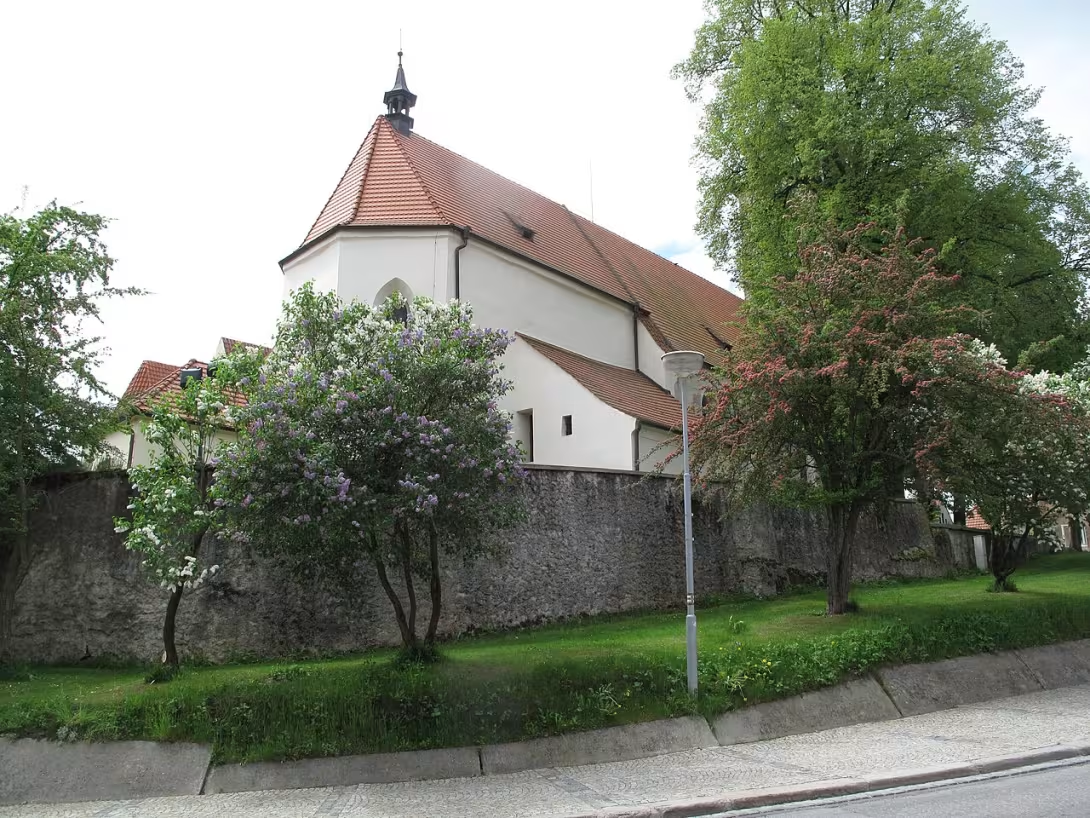

The historical appearance on the left is an AI-generated visualisation and serves as inspiration only.
Historical milestones
- 1257
- First written mention of the parish church.
- 1507
- Significant reconstruction following a major fire.
- 1788
- Elevation to deanery status.
Architectural development
Construction began in the early Gothic period during the mid-13th century, with surviving lower walls of the nave, tower, and triumphal arch. The late Gothic era saw additions like a polygonally ended presbytery with vaults around the end of the 15th century. Multiple fires throughout history necessitated several reconstructions, including Baroque modifications in the 18th century.
Historical events
The first written mention of the parish church dates back to April 15, 1257, in a papal indulgence by Pope Alexander IV. Initially dedicated to Blessed Virgin Mary and managed by Premonstratensians from Milevsko.
In 1507, a devastating fire led to significant reconstruction, transforming the nave into vaulted sections divided into two aisles.
The church was elevated to deanery status in 1788.
Points of interest
- Despite its association with Saint Peter and Paul today, the Church of Saint Peter and Paul in Kaplice was originally dedicated to the Blessed Virgin Mary by a papal indulgence from Pope Alexander IV in 1257.
- The church's resilience is highlighted by its survival through numerous fires over the centuries. Notably, after a devastating fire in 1507, it underwent significant reconstruction that transformed its nave into vaulted sections divided into two aisles.
- In 1726, during the Baroque period, the church was enhanced with the installation of a new organ, adding to its musical heritage and reflecting broader architectural trends of the time.
- The Church's asymmetrical hall design with an elongated polygonal presbytery is a unique feature that showcases the blend of Gothic and later Baroque influences in its architecture.
- Ownership transitions from the Premonstratensians of Milevsko to becoming a deanery church by 1788 reflect shifts in ecclesiastical governance, emphasizing its growing importance within the region's religious landscape.
Guide
This guide is narrated by a synthetic voice generated by artificial intelligence.
Show guide text
This text was created by artificial intelligence and has not been editorially reviewed. It may contain inaccuracies.
Church of Saints Peter and Paul is located on the eastern side of Kaplice and is the parish and deanery church of the town. However, it was originally not dedicated to the apostles, but to the Blessed Virgin Mary. This is how it appears in the first written mention from April 15, 1257, an indulgence letter from Pope Alexander the Fourth. The parish was then administered by the Premonstratensians from the monastery in Milevsko.
The early Gothic core of the church was created in the second third of the thirteenth century. The masonry of the lower parts of the nave, the tower, and the triumphal arch have been preserved from it. An old cemetery gradually formed around the church. A smaller Church of Saint Florian on its southern edge originally served as a cemetery mortuary chapel.
The history of the church is in many ways the history of fires. The oldest ones are documented in the years 1387, 1419, and 1428. At the turn of the fifteenth and sixteenth centuries, a late Gothic presbytery with vaulting was added. A great fire in 1507 then led to a fundamental reconstruction. The originally flat-ceilinged nave was vaulted and divided into two sections. Thus the present asymmetrical hall church with two naves was created, with an elongated presbytery ending in a polygon. Further fires came in the years 1549, 1675, and 1718.
In the eighteenth century, the church received new organ pipes. In 1740, the tower was raised by one more storey and acquired a cupola-shaped roof. It became a deanery church in 1788. Burials at the old cemetery then ceased, and in the first half of the nineteenth century, residential buildings grew up on its site.
In the second half of the nineteenth century, the church underwent re-gothicization. In 1868, the gallery in the northern nave was removed and granite paving was laid. In the same year, a neo-Gothic high altar by court sculptor Rind was consecrated. The windows received wooden tracery. This was followed by a neo-Gothic pulpit, and in 1887, new two-manual organ pipes by Karel Schiffner. The clock was installed on the tower in 1895, although the clockmaker Salzer had already manufactured its mechanism in 1834.
The twentieth century also did not spare the church. In 1911, it was struck by another fire. During the First World War, tin pipes were requisitioned from the organ, and during the Second World War, three bells disappeared from the church.
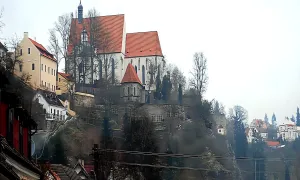
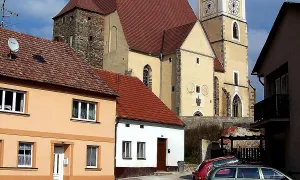
On the outside, the building is plastered. Five Gothic buttresses reinforce the presbytery. They are stepped twice and topped with gable roofs. Since 1958, the church has been a cultural monument.
Frequently asked questions
Can the monument be visited?
Religious buildings are usually open mainly during services; at other times a visit is normally arranged with the parish or the operator. We have not verified specific times.
Where is the monument?
Location: Kaplice, Jihočeský kraj. The map on this page shows the exact spot.
Why is the monument protected?
It is listed in the Central List of Cultural Monuments of the Czech Republic as a cultural monument (register no. 37073/3-1305).
Businesses nearby
Do you run a restaurant, accommodation, shop, museum, rental, wellness or other visitor service near this monument? Show yourself directly to the people heading to it — this is how they will see you in the app and on the web:
Events nearby
Zdroj akcí: otevřená data měst a obcí ČR (Národní katalog otevřených dat) a kalendář akcí Národního památkového ústavu.
Accommodation nearby
Trips and activities nearby
Guided tours, tickets and activities nearby from GetYourGuide
Affiliate link: if you buy from the partner, we may receive a commission. The price for you does not change.
Search tours and activities →Themed route
Thematic Walking Tour: Kaplice and Surroundings
1. Kostel svatého Petra a Pavla (Church of Saints Peter and Paul) - Type: Historical Church - Why Visit: This stunning Baroque church, designed by the renowned architect Kilian Ignaz Dientzenhofer, stands as a testament to the rich architectural heritage of the region. Its intricate façade and beautiful interior make it an essential stop for anyone interested in historical architecture.
2. Kaplický zámek (Chateau of Kaplice) - Type: Historical Chateau - Why Visit: Located just a short walk from the church, this chateau offers insights into the region's noble past. Its well-preserved gardens and elegant architecture provide a serene setting to appreciate the cultural history of Kaplice.
3. Kaplické náměstí (Kaplice Square) - Type: Historic Town Square - Why Visit: This charming square is the heart of Kaplice, surrounded by historic buildings that reflect the town's vibrant past. It's a perfect spot to relax and soak in the local atmosphere, perhaps enjoying a coffee at one of the nearby cafes.
4. Kaplická knihovna (Kaplice Library) - Type: Cultural Institution - Why Visit: A short stroll from the town square, this library is housed in a beautifully restored historic building. It offers visitors a glimpse into local literary culture and history, with collections that highlight regional authors and historical documents.
This tour provides a comprehensive exploration of Kaplice's cultural and architectural highlights within walking distance, ensuring an enriching experience for all who visit.
Seasonal recommendations
Spring: The spring season at the Church of Sts. Peter and Paul in Kaplice offers a unique blend of blooming nature and gentle light, which beautifully illuminates the church's historic architecture. As wildflowers begin to dot the surrounding landscape with vibrant colors, visitors can enjoy peaceful walks through the awakening countryside. During this time, it is advisable to dress in layers as temperatures can fluctuate between warm afternoons and cooler mornings. The spring period tends to have fewer tourists compared to summer, providing a more serene experience for those looking to explore without large crowds.
Summer: Summer at the Church of Sts. Peter and Paul is characterized by long daylight hours that enhance the church's intricate details with natural light. This season often sees an increase in visitors due to the pleasant weather and the area’s popularity among tourists. It is wise to arrive early in the morning to avoid larger crowds and make the most of your visit. Comfortable walking shoes and light clothing are recommended, as temperatures can be quite warm during this time. The lush greenery surrounding the church provides a picturesque backdrop for photographs.
Autumn: Autumn brings a stunning palette of reds, oranges, and yellows to the landscape around the Church of Sts. Peter and Paul in Kaplice. This season is ideal for those who appreciate the beauty of fall foliage, as it creates an enchanting atmosphere that complements the church's historic charm. The cooler weather makes it comfortable to explore both indoors and outdoors without overheating. Visitors should consider wearing warm layers as temperatures can drop significantly by late afternoon. Although autumn is less crowded than summer, it remains a popular time for those seeking a tranquil yet scenic visit.
Winter: Winter transforms the Church of Sts. Peter and Paul into a serene winter wonderland, with snow often blanketing the surrounding countryside. The church's architecture takes on an ethereal quality under the soft glow of artificial lighting, which is used to highlight its features during shorter daylight hours. It is important for visitors to dress warmly in layers and wear sturdy boots to navigate potentially icy paths. While the winter season sees a decrease in tourist numbers, it offers a peaceful experience with fewer crowds.
Visualizations and artistic views


The visualisations are generated by artificial intelligence and serve as inspiration.
Photos from the area
Real photos taken near the monument


Zdroj a licence jsou uvedeny u každého snímku.
Tips from visitors
No tips yet. Be the first!
Log in and add your tip.
Sources and literature
Photos: Dezidor / CC BY 3.0, rozlišení zvýšeno umělou inteligencí — Wikimedia Commons. The author and licence also appear when you hover over the image.
Faktickým podkladem tohoto textu byl článek na Wikipedii, jehož autory jsou přispěvatelé Wikipedie. Článek je dostupný pod licencí CC BY-SA 4.0.
Location on the map

Příběhy a pověsti
Legendy, pověsti a příběhy spjaté s touto památkou

Fotografie návštěvníků
Zatím žádné fotografie. Buďte první, kdo přidá fotografii z návštěvy!
Log in a přidejte svou fotografii nebo hodnoťte.
Za ověřenou návštěvu v aplikaci získáte víc bodů — poznáme podle GPS, že jste na místě.
Reviews and comments