



Letiště Kbely Other
Letiště Kbely is a military airport in the northeast part of Prague, specifically in the location Vysočany. It also partially interferes with Deep Bounty and Kbel. It was founded in 1918 as the first full airport in Czech territory after World War I. The 24th Air Traffic Base is currently based here.
Plane for construction was selected in November 1918. The first aircraft took off in December of the same year. Until 1937, when Prague-Ruzyni airport was opened, Kbels served as a centre for the development of Czechoslovak aviation. Since 1920, civil traffic has been under the direction of the director of Bedřich Trnka.
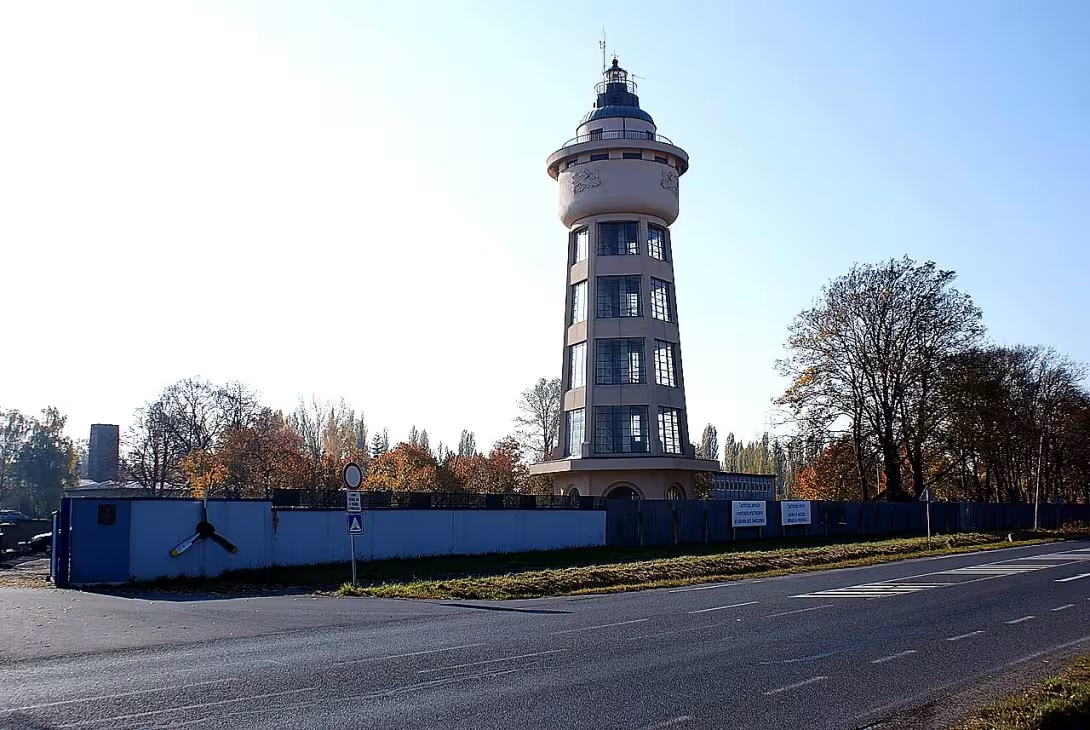
In the early days, the premises consisted of canvas hangars and several buildings. In the 1920s, architect Josef Gočár built three houses in national style. They served as a restaurant, technical and administrative building. Two of them were transferred to the Prague Zoo in Troy in the 1970s. After the 2002 flood, they were repaired and operational in 2011. In 1927, a water tower was established, which performed as an air lighthouse.
In 1929, the 6th bombing regiment settled here. During World War II, the airport was one of the first occupied buildings in Bohemia. The Nazis turned it into workshops and transport airports. The end of the war was in the hands of Luftwaffe. The airport was targeted by the U.S. 15th Air Force, the largest of which took place on 25 March 1945. After the war, fighters from the USSR, such as František Fajtl, came back from Britain. After subsequent reconstruction, the building turned into a military transport airport.
The airport was a place of major events. In April 1920, a post office was established. Between 1921 and 1931, President Tomáš Garrigue Masaryk visited here regularly. In 1923, on May 18 at 8:15 p.m., Radio Prague started broadcasting from the tent at the airport. It became the second civilian radio in Europe after the BBC. In 1933 there was the first big army air day with the first performance of group acrobats. In 1936, more than a quarter of a million spectators visited the air day.
Since July 1994, the airport has been based on the 6th Air Transport Base. It was renamed the 24th Air Force Air Force base, T. G. Masaryk, on 1 July 2003. The Ministry of Defence squadron is also responsible for transporting constitutional officials. The complex has been in operation since 1922 by the Military Technical Institute of Air and Air Defence and since 1968 by the Air Museum Kbela. The Letňany airport is nearby.
Letiště Kbely presents unique evidence of the development of Czech aviation and communications since the beginning of a separate state. It is a place with a rich history that is worth visiting because of its technical and historical importance.
Historical milestones
- 1918
- Selection of the plain for the construction of the airport.
- 1923
- The beginning of the permanent transmission of Radio Prague from the tent at the airport.
- 1933
- Doing the first big military flight day.
- 1968
- The foundation of the Kbela Air Museum.
Architectural development
In the beginning there were canvas hangars and several buildings. In the 1920s, Gočár's houses were built in a national style. In 1927, a water tower was built serving as an air beacon.
Historical events
November 1918: selection of territory for the construction of the airport. April 1920: establishment of post office. March 25, 1945: America's largest airport raid. 1 July 2003: renaming to the 24th Air Force Air Force base, T. G. Masaryk.
Points of interest
- Letiště Kbely was founded in 1918 as the first full airport in Czech territory after World War I. - The first planes took off in December 1918. - In 1923, Radio Prague began to broadcast from the tent at the airport, becoming the second civilian radio station in Europe after the BBC. In 1936, more than a quarter of a million spectators visited the air day. - Since July 1994, the airport has been based on the 24th Air Transport Base of T. G. Masaryk, which provides transportation of constitutional agents.
Guide
Show guide text
This text was created by artificial intelligence and has not been editorially reviewed. It may contain inaccuracies.
Welcome to Kbelych. Stop for a moment, take a breath and feel the space around you. You are standing in a place that is not just an airport, but a real cradle of Czech aviation. Take a look around you at this vast area in the Prague part Vysočany. You may only see peace and open space, but beneath your feet lies a history full of courage, technical progress and dreams of conquering the sky. It is a place where military discipline meets the civilian desire for knowledge and where the first chapters of our experience with flying were written.
Let's go back more than a century together. Imagine a year of eight hundred and eighteen. Europe has just shaken in its foundations after the end of the First World War and a new republic was emerging on the map. It was a question of survival and prestige for the young state to have its own full-fledged airport. That's when this planet was selected in Kbelych. It was not a random decision, but a strategic step to ensure the development of transport and the defence of the newly created territory. Even in December of the same year, when the first group of airplanes went up in the freezing winter air, it became clear that this place would be crucial. Letiště Kbely was created as the first real air node in our territory and became a symbol of modernity and independence.
Now pay attention to the surrounding architecture. Although the airport has been changing over the decades, in its basic layout and buildings, we still feel a trace of a period vision. The author of the projects was an important architect Josef Gočár, one of the largest figures of Czech modernity. When you look around, observe the purity of the lines and the functionality of the spaces. Gočár brought the spirit of his time into his proposals, where beauty combined practical use with aesthetic balance. See the facade of the buildings and see how these buildings naturally engage in the airport landscape. The architecture was not merely a cover, but it was intended to emit the confidence of a young state that was not afraid to try new materials and shapes.
Letiště Kbely, however, is not only about concrete and steel, but mainly about people. This place was visited and influenced by individuals whose names we know from history books and art galleries. Imagine Tomáš Garrigue Masaryk walking through here, the first president of the Republic to see a way to connect to the world in aviation. Feel also the trail of Bedřich Trnka, master of puppet animation, who sought inspiration for his creation in the aviation environment. And then there's the name of František Fajtl, a legendary flyer whose courage in the clouds has become a pass for generations of followers. Each brought a different dimension to the Kbels, from political leadership to artistic perspective to pure military bravery.
Now, let's move on to one of the most fascinating things that may not come up at first sight. Letiště Kbely was not only home to aircraft, but it also became the center of communication. In the year nine hundred twenty-three there was an event that changed the way we perceived information. It was from the tents located directly at the airport that Radio Prague started broadcasting. Imagine the contrast where engine noise mixed up with the first burst of radio waves. At that time, this broadcast station became the second civil radio company throughout Europe, right after the famous British radio corporation. At that time, the buckets were not only connecting the earth with the sky, but also people with current news from all over the world.
The history of this place continued for decades. In the year nine hundred and thirty-three there was the first big military air day, which was an example of the discipline and technical level of our troops. It was a time when aviation caused great admiration and fascination in people. Later, in the year nine hundred and sixty-eight, the Kbela Air Museum was established, which today serves as a guardian of memory. The museum keeps here machines that no longer fly, but whose presence reminds us of the long journey we have traveled since the first December flights of eight hundred and eighteenth.
Today Letiště Kbely is still an active place. The 24th Air Force Air Force base is based here, providing important tasks for the state and military. It's a fascinating connection between the past and the present. If you look at the modern machines that operate here today, remember the first wooden and canvas structures that took off here a century ago. It's continuity that gives this place unique energy.
Now that you know the basic story of this place, it invites you to explore again. Walk slowly, feel the atmosphere of space and try to imagine all the sounds that have been heard over the years, from the first engines to radio announcements to the thunder of modern jet machines. Let yourself be inspired by the courage of first pilots and visions of Josef Gočár. Letiště Kbely is an open book on Czech snow about flying, and you have just read its first chapter.
Thank you for spending this short trip to history with us. We wish you a pleasant continuation in discovering this special place. Goodbye and happy exploration.
Tips for visitors
The best time to visit Letiště Kbely is in the spring or autumn season when the weather is pleasant and fewer people. This time of year also offers a beautiful green landscape around the airport.
Public transport is also a good way to get there; details of routes and connections can be found in the online search engine.
When visiting you should take with you durable shoes or sports shoes because the terrain around the airport is mostly rural and can be impenetrable. Also remember the sun and water protective clothing.
For photography, Letiště Kbely offers several interesting perspectives, especially from the area of nearby airport buildings. The best light is in the morning or in the evening when the sun is not directly above your head.
In the vicinity of Letiště Kbely you can visit Letňany Airport. It is a place with the appearance of goblins and offers beautiful views of the landscape. For families with children it is suitable to walk along the surrounding paths where children can play or learn about nature.
Frequently asked questions
Can the monument be visited?
We have not verified whether this monument is accessible. Please ask the owner or operator, or the local municipal office.
Where is the monument?
Location: Vysočany, Hlavní město Praha. The map on this page shows the exact spot.
Why is the monument protected?
It is listed in the Central List of Cultural Monuments of the Czech Republic as a cultural monument (register no. 1499761531).
Businesses nearby
Do you run a restaurant, accommodation, shop, museum, rental, wellness or other visitor service near this monument? Show yourself directly to the people heading to it — this is how they will see you in the app and on the web:
Events nearby


Zdroj akcí: otevřená data měst a obcí ČR (Národní katalog otevřených dat) a kalendář akcí Národního památkového ústavu.
Nearby
Letiště Letňany s výskytem syslů.
Accommodation nearby
Trips and activities nearby
Guided tours, tickets and activities nearby from GetYourGuide
Affiliate link: if you buy from the partner, we may receive a commission. The price for you does not change.
Search tours and activities →Themed route
Thematic cruise route around Letiště Kbely and surroundings Vysočan
1. Airport Prague-Ruzyně - Type: Airport - Why is it worth a visit: We will start at the nearest large airport where you can explore modern infrastructure and perhaps enjoy a clear view from the airport park. It is the ideal place to start our route because it is relatively close to Letiště Kbely.
2. Airport Praha- Kbels - Type: Airport - Why is it worth a visit: The main objective of our route is this historic airport, which has a rich history and offers interesting exhibitions about the aviation past. It's a place for those interested in aviation technology and history.
3. Airport Letňany - Type: Airport - Why is it worth a visit: This airport is known for its natural environment where sylli occur. It is an ideal place for bird and nature lovers who want to see these interesting animals in their natural habitat.
4. Municipality of Vysočany - Type: City section - Why it is worth a visit: Visit this area for a look at modern architecture and explore local parks. Vysočany offers a quiet space to be disconnected after visiting airports.
This route will take you from the largest to smaller but equally interesting locations and end with a peaceful tour of the city area Vysočany.
Seasonal recommendations
Spring: In spring nature wakes up around the airport and the sun's rays are starting to illuminate the historic aircraft warmer. The atmosphere is fresh and full of new energy. I recommend you take several layers of clothing because the morning temperatures may still be low. It's the perfect time for photography with softer light and fewer people.
Summer: In the summer months it is very hot in the open areas and the sun shines the strongest. Days are long, but heat can be tiring. For the best experience I recommend you come right after opening to avoid the biggest crowds and the highest temperatures. Don't forget the hat and enough water.
Autumn: Autumn brings golden colors and morning fog to the Highlands, which give the machines nostalgic form. Light is low in this period and very interesting for visual perception. Get dressed in a wind-resistant jacket because there can be unpleasant draught in the open space. It's the best time for a quiet walk without a big crowd of visitors.
Winter: Winter makes the area very quiet and sometimes lonely, which creates a specific, serious charge. If snow falls, the monument looks very strange and looks spectacular. It is necessary to have very warm clothes and quality shoes. Consider that during this period the opening time may be shorter and the weather may be less predictable.
Visualizations and artistic views


The visualisations are generated by artificial intelligence and serve as inspiration.
Photos from the area
Real photos taken near the monument


Zdroj a licence jsou uvedeny u každého snímku.
Tips from visitors
No tips yet. Be the first!
Log in and add your tip.
Sources and literature
Photos: feťour / Public domain — Wikimedia Commons. The author and licence also appear when you hover over the image.
Faktickým podkladem tohoto textu byl článek na Wikipedii, jehož autory jsou přispěvatelé Wikipedie. Článek je dostupný pod licencí CC BY-SA 4.0.
Location on the map


Příběhy a pověsti
Legendy, pověsti a příběhy spjaté s touto památkou
Fotografie návštěvníků
Zatím žádné fotografie. Buďte první, kdo přidá fotografii z návštěvy!
Log in a přidejte svou fotografii nebo hodnoťte.
Za ověřenou návštěvu v aplikaci získáte víc bodů — poznáme podle GPS, že jste na místě.
Reviews and comments