






Svatyně Krista Krále Chapel
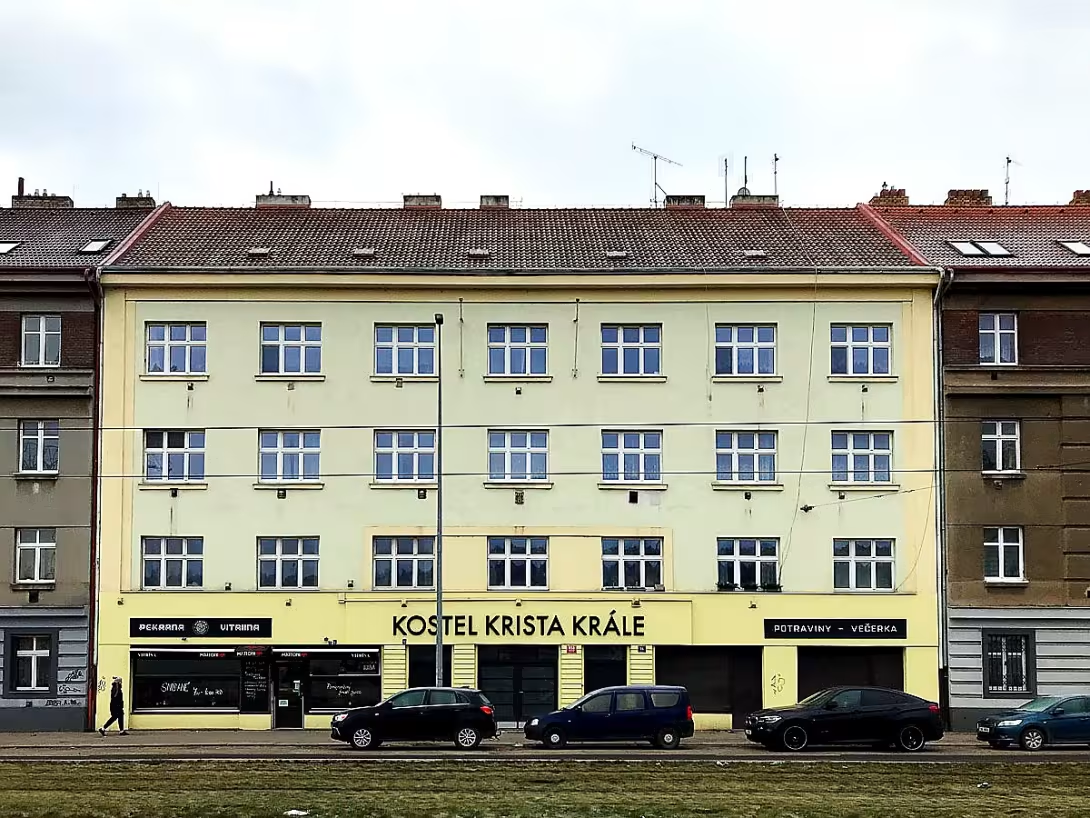
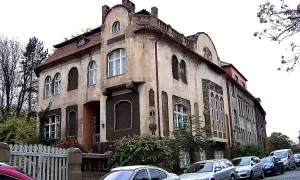
Church of Christ The King is masked in a pentagon block of tenement houses between the streets of Kolbenov, Spitálská, Zocorse and Hospital. From the outside it is revealed only by a large inscription above the entrance of the tenement house on the parcel no. 658. Although it was ordained in September 1930, it became a protected cultural monument only in October 2003. It belongs to the most extensive Czech temples dedicated to Jesus Christ the King - a feast which Pope Pius XI brought only in 1925.
The path to the church was long and full of obstacles. In 1923 the Church Association met, which set an ambitious goal: to build a new temple in the Highlands. The Dominican Order dedicated the land, but the city council refused the construction. As a compromise, the believers eventually got a less suitable place with a special condition - an apartment building must grow up in front of the church. The collector of the collection, Katecheta Arnešt Oliva, has set out to collect funds. Since 1919, three quarters of a million crowns have been selected from 6,000 small donors. In 1920 Pope Benedict XV. contributed 50,000 lire, and nine years later Msgre František Korčák contributed 150,000 crowns. The foundation stone was laid on October 6, 1929. The construction was carried out by Nekvasil according to the project by Bedřich Vrzal. Bishop Antonín Podlahou was consecrated by the church on September 7, 1930 - the same year the apartment building was completed.
Functional architecture embodies the simplicity of its time. The only ship ends with a rectangular priesthood and a turret. The interior is richly decorated with statues from sculptor Damian Peshan - not only the main figure of Christ the King, but also the statues of the saints Peter and Paul in presbytery. The statues of the saints of Anezka Česká, Jan Nepomucký, Antonín, Josef, Ludmila and Vojtěv are replaced in the ship; later the statues of St. Prokop and Vite were added. The cross road and the paintings of St. Wenceslas and the Mother of God for the side altars come from the painter Zickund Rudl. The special feature is ceramic nativity. The last opus of the organist Emanuel Štěpán Petr - his 351st organ - has been here since the consecration and is one of the most valuable components of the equipment.
During World War II, he was hit by raids on surrounding industrial objects; His walls became a temporary resting place for the bombing victims. Until 1941, the church was only a branch of the parish at St. Wenceslas's on Prosek. The substantial repairs were completed in 2009 - the original wiring from 1930 was replaced, the perimeter walls were repaired and new, stylish windows were fitted.
Although the Church of Christ the King rarely gets into the subconscious of tourism, it is worth a visit. It is a testament to how faith and community also overcome urban obstacles, and represents an extraordinary example of Czech functionalist sacral architecture. Handicap accessible is the passage through the tenement house.
Then and now
Drag the slider to compare how the landmark may have looked when it was built with the view today.
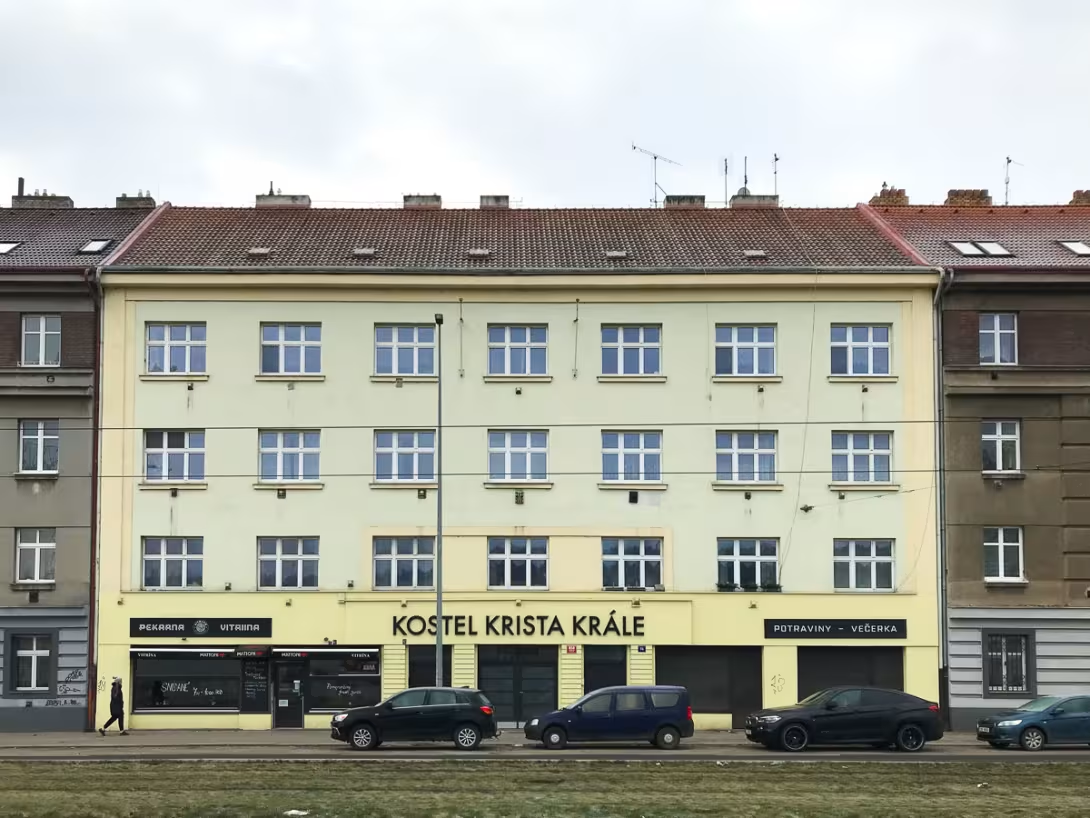

The historical appearance on the left is an AI-generated visualisation and serves as inspiration only.
Historical milestones
- 1923
- The foundation of the Church Association and the opening of the collection for the construction of the church.
- 1929
- Sale of the property subject to the construction of an apartment building in front of the church and laying of the base stone.
- 1930
- The completion of the construction and consecration of the church by Bishop Antonín Floor.
- 2003
- Registration of the church and surrounding areas into the list of cultural monuments.
Architectural development
A single-boat flat-ceiling building with a rectangular priesthood and a small tower, built from concrete and bricks. The facade is simple, with the inscription above the entrance (since 2023 as "Church of Christ the King"). The inner space is functionalized, with minimal decorative elements. There were extensive repairs in 2009, including replacement of electrical installations and windows.
Historical events
- 1919-1929
- The establishment of the Church Association and a ten-year collection for the construction of the church, including gifts from Pope Benedict XV. and a significant financial contribution from Msgre.
Owners
- 1923-1930 (construction period) and then to date (parish Praha-Vysočany, administered by excurrendo from Prosek)
Points of interest
- The church of Christ the King is hidden in a pentagon block of tenement houses and is revealed from the outside only by a large inscription above the entrance of the tenement house on plot 658.
- It was ordained in September 1930, but it became a protected cultural monument only in October 2003.
- The construction was created by a long collection, which contributed 6,000 small donors and also Pope Benedict XV. and Bishop František Kordát.
- The church is dedicated to the feast of Christ King, which was introduced by Pope Pius XI in 1925.
- In the interior there are statues of saints from Damian Pesan, paintings from Zickund Rudl and organ from Emanuel Stephen Peter, which are his 351st work.
Guide
This guide is narrated by a synthetic voice generated by artificial intelligence.
Show guide text
This text was created by artificial intelligence and has not been editorially reviewed. It may contain inaccuracies.
Welcome to the Highlands. Stop for a second and look around you. You probably feel like you're standing in the middle of an ordinary Prague neighborhood, surrounded by typical tenement houses that make up the rhythm of this street. You may be asking where in this urban rush is the monument you came to learn about in the guide. And that's where the whole magic of this place lies. You stand before the Holy Christ King, one of the most secret and fascinating corners of Prague's sacral architecture. It's a place that doesn't get discovered right away that requires the attention and curiosity of a visitor.
Let's go back more than a hundred years together to understand how this unusual place happened. It all started in 1923. That is when the Church Association was founded, which was intended to build a dignified temple in this part of Prague. The people around here felt the need for a spiritual sanctuary and began to collect resources to build a church. Imagine the atmosphere at that time, the enthusiasm of the believers and the patient assembly of each crown, so that the space dedicated to Christ the King can be created. This initiative was led by Katechet Arnošt Olivá, who was the main engine of the entire collection and believed that Vysočany deserved such space.
However, the path to implementation was not easy. The believers had to deal with the city council, and it was here that one of the most interesting aspects of this building was created. The city did not want to see only a religious building in this location, but it emphasized the development of housing and urbanization. The result was an unusual compromise. The land was sold in 1929, but with a very strict condition: an apartment building had to be built in front of the church. This agreement has fundamentally affected what the monument looks like today. The church was not built as a dominant building that controls the square or street, but was essentially integrated into a city building, thereby becoming a hidden jewel.
Now that you're standing in front of the building, feel its architectural character. Svatyně Krista Krále is a weak representative of functionalism. This style, which, at the time of its creation, promoted the password form followed by the function, manifests itself in the cleanliness of the lines and the absence of unnecessary ornaments. The project was taken up by the architect Bedřich Vrzal and the construction company was responsible for the actual implementation under the management of O. Neklasil. Look at the overall composition. The functionalist sacral architecture is quite rare in the Czech environment, because religious structures have often followed traditional historical styles. But here we see the courage to be modern and simple.
Notice how the building fits into the area. It is an architecture that is inconspicuous in the everyday life of the Vysočan people. Even if it's sober from the outside, the inner space is a completely different world. If you enter, pay attention to the decoration that is the work of the true masters of your field. The important sculptor Damian Pesan and painter Zikmund Rudl enriched the inner and outer spaces. Their art gives this functionalist vessel depth and spiritual dimension. It is a fascinating contrast between the tree, modern architecture and rich, sensitive artistic processing.
The history of this place includes the names of people you wouldn't be standing by this wall today without them. In addition to the mentioned Ernest Olive, we must not forget Msgre. František Kordač, whose generous gift greatly helped to complete the construction. The height of the whole process was September 1930, when the church was ceremonially consecrated by Bishop Antonín Podlaha. Imagine the day people first gathered here to celebrate the completion of their dream together, which lasted from the foundation of the society in 1923 to the final consecration.
Now I want to invite you to a little game of observation. Look around you and try to realize what a strange situation this shrine is in. The Church of Christ the King is basically hidden in a pentagon block of tenement houses. For a common passer-by who doesn't know where to look, the building is almost invisible. The only real clue that tells you that there is a sacral space behind the walls of ordinary houses is a big sign above the entrance of the tenement house on plot six hundred and fifty-eight. It's basically an architectural mystery in the middle of town. If you don't know where to look, you'll miss the shrine.
It is also fascinating to see how the perception of this building changed over the decades. Although it was consecrated in 1930 and was important to the local community from the outset, official recognition in the form of a list of cultural monuments came only much later. It was only in October 2003. It is a reminder that some values are visible to us immediately, while others require time to be fully appreciated and recognised as a necessary part of our heritage.
This chapel is not just a building of concrete and stone, it is a monument to human endurance and ability to find compromise. It is proof that faith and modern urbanism can exist side by side, even if it means that the church must give way to the spatial claim of an apartment building. It is this stealth that today gives her some intimacy and secrets that you will not find in other monumental temples.
Now that you know the story of this place, I suggest you explore it at your own pace. Feel the silence in the middle of the city noise. Go through the surrounding space, look again at the inconspicuous inscription above the entrance and think about how many other hidden stories are likely to be hidden on the streets of Prague's Highlands.
Thank you for accompanying me on this short journey to the hidden jewel of functionalism. I hope you are interested in Svatyně Krista Krále with its modesty and its history. I wish you a pleasant continuation in discovering the beauty of our city. Goodbye.
Tips for visitors
{'paragraph': 'The best time to visit the chapel of Christ the King in the Highlands is in the morning when it is quiet and you can enjoy a quiet atmosphere without crowds. It is ideal to visit it before or after the Holy Mass, which is held here regularly. The functionalist architecture of the chapel is best seen in sunny weather when its clean lines and modern details are displayed. In winter, the chapel offers a unique atmosphere thanks to its bright interior lit with sunlight through the windows.'}
{'paragraph': 'The chapel is available by car and public transport. If you arrive by car, it is recommended to find a parking lot near the apartment building as there is no specialised parking in the vicinity of the chapel. In the case of public transport, it is appropriate to make use of stops in the surrounding area which are well connected to the urban network. The current connections and routes can be found in the traffic search engine. It is recommended to come up with sufficient time because the chapel is located in an urban environment and it may be difficult to find an exact location.'}
{'paragraph': 'When visiting the chapel, wear comfortable clothes and shoes as it is a small building that is located between houses and has no large spaces. It may be cold in the interior, so you will bring a light sweater or a coat. It is also important to take a small notebook or notebook if you want to record your impressions or notes about architecture. If you are interested in photography, do not forget the mobile charger because the chapel may need longer time in the interior.'}
{'paragraph': 'Photography in the chapel is allowed, but it is advisable to respect other visitors and not light the interior with strong light. The best places for photos are windows that release pleasant light, and clean lines of facade chapel. The ideal time for photography is in the morning or afternoon when light is softer and creates pleasant shadows. In the interior avoid flashing of lightning in order not to endanger sensitive painting or decoration.'}
{'paragraph': 'Around the chapel of Christ the King there are several interesting places worth visiting during your trip. In 30 minutes you can reach the Prosecká parish garden, which offers a quiet environment and the possibility of relaxing in nature. The church of St. Wenceslas on Prosek is located nearby, which is another interesting historical building. For those who are interested in history, it is also a suitable choice of the Highlands cemetery, where there are graves of important personalities. These places are ideal for combining a visit to the chapel with other cultural experiences.'}
{'paragraph': 'Chapel of Christ the King is also suitable for families with children. Children can be intrigued by modern architecture and simple but impressive interior decoration. It may be interesting for children of older age to learn more about the history of the chapel and its importance in Czech religious life. In the vicinity of the chapel you can also find small parks or areas where children can have fun and relax. However, it is recommended to ensure that children are always under adult supervision as the chapel is in a densely built urban environment.'}
Frequently asked questions
Is Svatyně Krista Krále open to the public?
Yes, she's open to the public. It opens daily from 9: 00 a.m. to 5: 00 p.m.
How do I get to the place by car / public transport?
The location is well accessible by bus No. 91 from the centre of Prague. Parking is possible in the nearby area, but we recommend using the church parking.
How much is the entrance fee and is it paid on the spot?
Payment is only possible in cash.
Is the tour suitable for children and seniors?
Yes, the tour is also suitable for families with children and seniors. The space is accessible for wheelchair users.
How long does the tour take?
The tour takes approximately 30 minutes.
What are the opening times and booking is required?
It opens daily from 9: 00 a.m. to 5: 00 p.m. Reservation is not required, but we recommend you call the information line in advance.
What's interesting in the immediate vicinity?
There are other important historical monuments and churches in the immediate surroundings. We recommend visiting the nearby chapel of St. John Nepomuk.
For kids
Imagine going back to the past and suddenly you're in Roman times! This place looked so different than it is now. It was a desert, but not like ours today. There was a dense green vegetation and there was a river. And most importantly, there were people here who believed in the god Jupiter.
It was like a game of hiding, because King Augustus wanted to build a new city. And this is how our cities of the Prague Desert were created! But let us not cry, because it eventually became our beautiful and beautiful Prague Chateau.
Businesses nearby
Do you run a restaurant, accommodation, shop, museum, rental, wellness or other visitor service near this monument? Show yourself directly to the people heading to it — this is how they will see you in the app and on the web:
Events nearby

Zdroj akcí: otevřená data měst a obcí ČR (Národní katalog otevřených dat) a kalendář akcí Národního památkového ústavu.
Nearby
- In a 5 km radius there is a Prosecka parish garden, St. Wenceslas's church in Prosek and the Highlands cemetery. The surrounding area is urbanized with the predominance of residential buildings and industrial buildings.
Accommodation nearby
Trips and activities nearby
Guided tours, tickets and activities nearby from GetYourGuide
Affiliate link: if you buy from the partner, we may receive a commission. The price for you does not change.
Search tours and activities →Themed route
Thematic cruise route: Svatyně Krista Krále and surroundings
1.Svatyně Krista Krále (chapel) * Type: * Religious monument * Why is it worth a visit: * This chapel, located in the village Vysočany, is a unique architectural work with a rich history. It is famous for its impressionable sculptures and serves as a place of refuge for many visitors seeking peace and inspiration.
2. The Parish Garden of December * Type: * Garden, cultural monument * Why is it worth visiting: * This historic garden is a beautiful example of baroque garden art. Its carefully maintained flowering sectorial and diverse plants offer comfortable walks in a quiet atmosphere.
3. Church of St. Wenceslas on Prosek * Type: * Church, historical object * Why is it worth visiting: * This church is an important cultural monument with a rich history. Its architecture and interior represent an important contribution to the art and religious life of the region.
4. High Cemetery * Type: * cemetery, historical location * Why is it worth visiting: * The High Cemetery is instead of peaceful reflection with significant burial sites and monuments. It offers a view of the history of local people and their stories, which provides a deeper understanding of regional culture.
This route will guide you through quiet and culturally rich places around Svatyně Krista Krále, offering a combination of religious, historical and natural experiences.
Seasonal recommendations
Spring: During the spring season Svatyně Krista Krále is surrounded by flowering gardens that bring a colorful and vivid impression. The sun's rays illuminate the chapel in beautiful colors, creating a breathtaking atmosphere for photographs and peaceful moments of worship. Visiting may be slightly higher due to pleasant weather, so it is recommended to visit in the early afternoon time when the temperature is most advantageous. Good day to visit are usually days without forecast rain; clothes should be suitable for mild weather, with the possibility to add a warm piece in case of colder days.
Summer: Summer offers long and light days that highlight the architectural details of the chapel. Natural vegetation is in full power, providing a pleasant shade and a calm atmosphere. The number of visitors may increase in the main summer period, especially on Sundays or leisure days. It is recommended to visit early morning or late afternoon to avoid the hottest hours and crowds. Clothes should be light and light, with sun protection like a hat or a parasol.
Autumn: In autumn, Svatyně Krista Krále is surrounded by golden tree leaves, creating an idyllic and soothing environment. Sun rays are long and warm at the end of the day, which is the perfect time to visit. Attendance may be lower at this time, which allows for a calmer experience. Best to visit the chapel on Wednesday week or early afternoon. Clothes should be adapted to mild weather, with the possibility of adding a warm shirt or jacket on colder days.
Winter: Winter brings a calm and quiet atmosphere around Svatyně Krista Krále. The chapel is lit with warm lights, which creates a magical environment. The number of visitors usually decreases, allowing for more intimate experience. The best to visit the chapel at noon, when the light is best suited for photography and peaceful worship. Clothes should be warm, with emphasis on head and foot protection. It is also important to check the opening times of the monument, which can be shortened in the winter months.
Visualizations and artistic views


The visualisations are generated by artificial intelligence and serve as inspiration.
Photos from the area
Real photos taken near the monument

Zdroj a licence jsou uvedeny u každého snímku.
Tips from visitors
No tips yet. Be the first!
Log in and add your tip.
Sources and literature
Fotografie: LiborekSKS / CC0 — Wikimedia Commons. The author and licence also appear when you hover over the image.
Faktickým podkladem tohoto textu byl článek na Wikipedii, jehož autory jsou přispěvatelé Wikipedie. Článek je dostupný pod licencí CC BY-SA 4.0.
Location on the map


Příběhy a pověsti
Legendy, pověsti a příběhy spjaté s touto památkou
Fotografie návštěvníků
Zatím žádné fotografie. Buďte první, kdo přidá fotografii z návštěvy!
Přihlaste se a přidejte svou fotografii nebo hodnoťte.
Za ověřenou návštěvu v aplikaci získáte víc bodů — poznáme podle GPS, že jste na místě.
Reviews and comments