



Líčkov Castle
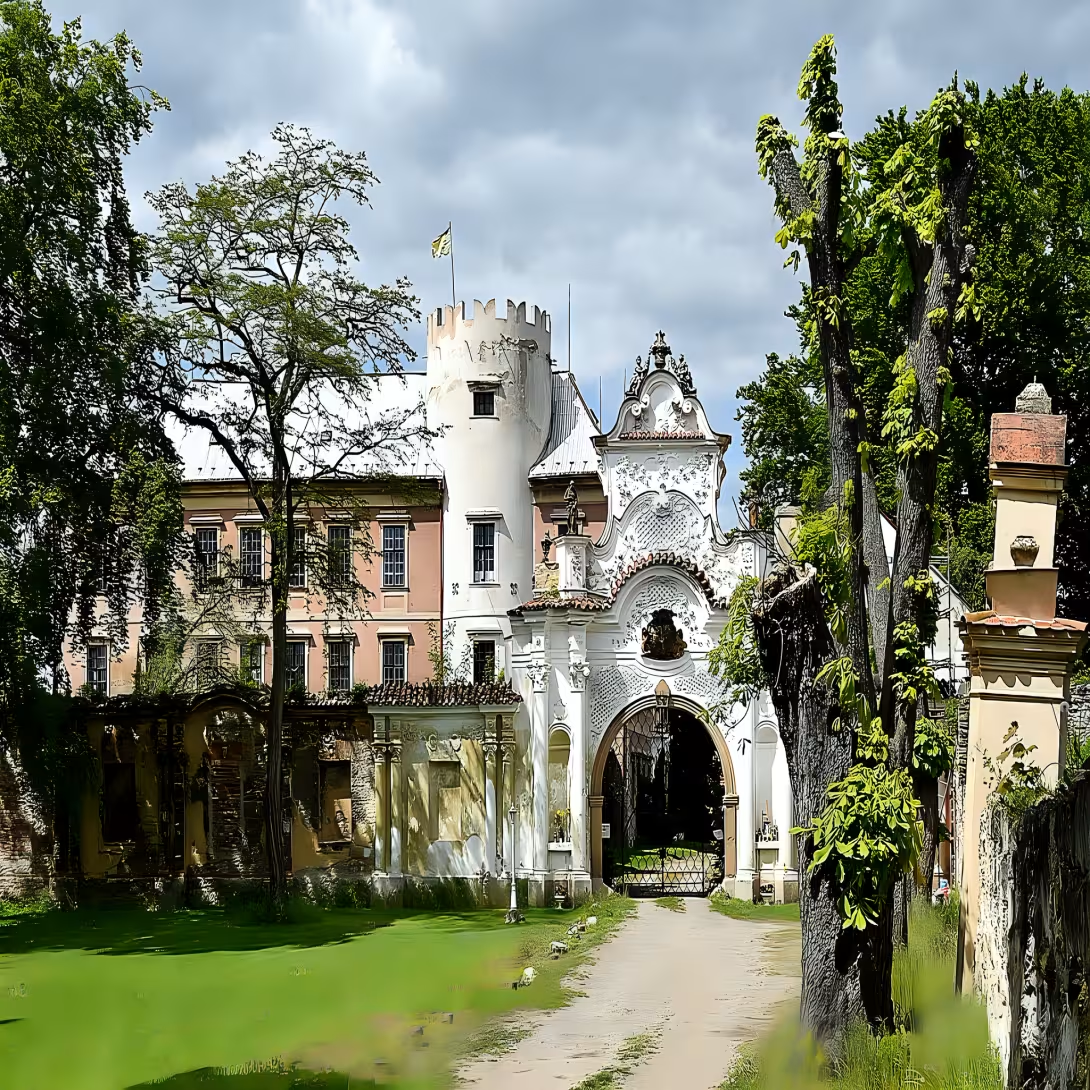
Líčkov Castle is located in the Ústecký kraj region of the Czech Republic, within the municipality of Líčkov. This historic site dates back to the 14th century when it was originally built as a Gothic fortress or small castle. Over the centuries, it underwent significant transformations, evolving into a Baroque-style chateau in the early 17th century and later acquiring Rococo elements in the late 18th century. The entire area is recognized as a cultural monument, featuring buildings, gates, walls, staircases, water bodies, and gardens that highlight its historical significance.
The castle's origins trace back to the 14th century during a period when Bohemia was part of the Holy Roman Empire. Its evolution reflects broader political and cultural developments in the region. Over time, ownership shifted from minor nobility to becoming a significant estate under various noble families.
Architecturally, Líčkov Castle began as a Gothic fortress before undergoing substantial modifications. In the early 17th century, Bohuslav Hrobčický transformed it into a Baroque chateau. Later, during Josef Vonibald z Ebenu's ownership in the late 18th century, Rococo elements were added. These changes reflect the evolving tastes and influences of its various owners.
Ownership of Líčkov Castle has seen dramatic shifts over the centuries. Initially held by minor nobility, it was later owned by the Lords of Ilburk and Vlčkové z Minic in the 15th century. The 16th century saw ownership transition to the Hasištejnská branch of Lobkoviců, followed by the Hrobčičtí z Hrobčic in the 17th century. Josef Vonibald z Ebenu acquired it in the 18th century, and in the 20th century, artist Oskar Brázda resided there until its confiscation by the state in 1948. The castle was restituted to descendants in 1992.
Key events at Líčkov Castle include Bohuslav Hrobčický's transformation of the site into a Baroque chateau in the 17th century and the acquisition of Rococo elements under Josef Vonibald z Ebenu in the 18th century. The castle also served as the residence and creative space for artist Oskar Brázda during the 20th century, adding to its cultural significance.
Today, Líčkov Castle is surrounded by picturesque landscapes typical of the Ústecký region, with nearby natural features and other historical sites within a five-kilometer radius. Despite being involved in protracted property disputes after restitution in 1992, it remains an important cultural monument. Visitors are drawn to its rich history, architectural evolution, and the legacy of its notable owners.
Líčkov Castle offers a unique glimpse into the past, showcasing centuries of architectural transformation and historical significance. Its storied past and beautiful surroundings make it a worthwhile destination for those interested in exploring Czech heritage.
Then and now
Drag the slider to compare how the landmark may have looked when it was built with the view today.
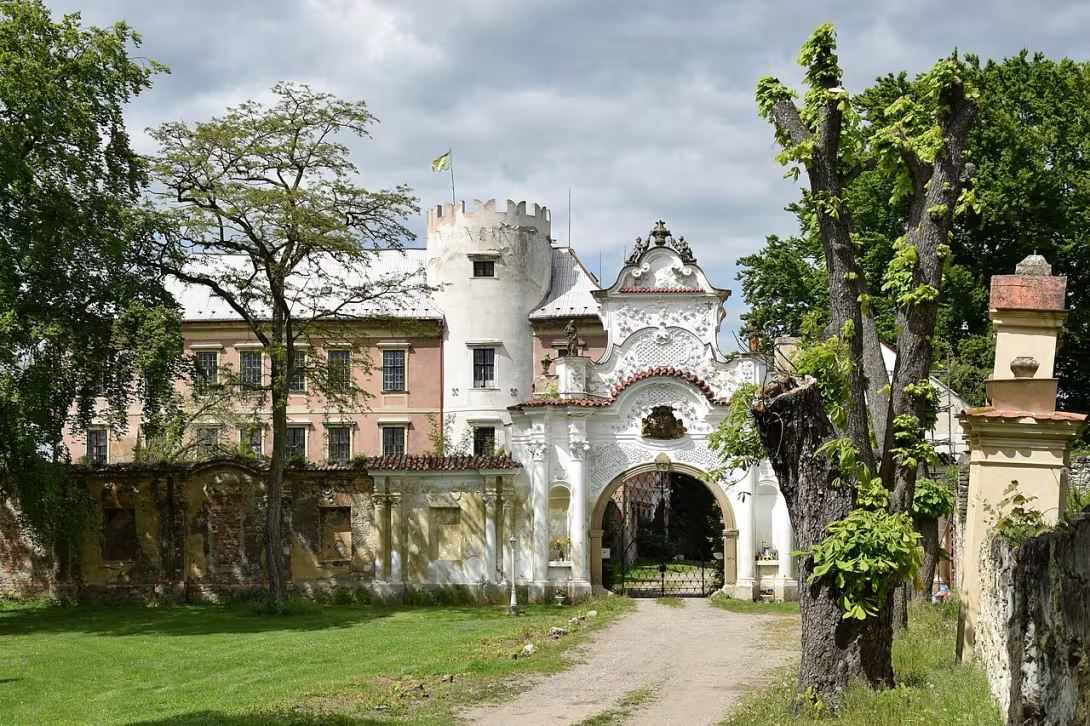

The historical appearance on the left is an AI-generated visualisation and serves as inspiration only.
Historical milestones
- 1400
- Origin as a Gothic fortress or small castle.
- c. 1600
- Transformation into a Baroque castle by Bohuslav Hrobčický.
- Late 18th century
- Addition of Rococo elements by Josef Vonibald von Eben.
- 1948
- Confiscation by the state after Oskar Brázda's stay.
- 1992
- Restitution to descendants of the original owners.
Architectural development
Líčkov Castle began as a Gothic fortress in the 14th century. It was later rebuilt into a Baroque chateau by Bohuslav Hrobčický in the early 17th century, incorporating Rococo elements during Josef Vonibald z Ebenu's ownership in the late 18th century.
Historical events
17th century: Bohuslav Hrobčický transformed it into a Baroque chateau.
18th century: Acquired Rococo elements under Josef Vonibald z Ebenu.
Owners
14th-century minor nobility
15th century: Lords of Ilburk and Vlčkové z Minic
16th century: Hasištejnská branch of Lobkoviců
17th century: Hrobčičtí z Hrobčic, Bohuslav Hrobčický
18th century: Josef Vonibald z Ebenu
20th century: Oskar Brázda (artist)
1948: Confiscated by the state
1992: Restituted to descendants
Points of interest
- Despite its initial construction as a Gothic fortress, Líčkov Castle's architectural evolution was heavily influenced by the personal tastes of its various owners, reflecting broader European stylistic trends over centuries.
- The castle served as a residence for artist Oskar Brázda in the 20th century, who contributed to its cultural significance through his creative works and presence there until the state confiscated it in 1948.
- Líčkov Castle's ownership history includes a notable transition from minor nobility to becoming part of significant noble estates, such as those held by the Lords of Ilburk and Vlčkové z Minic, highlighting its fluctuating importance over time.
- The castle has been involved in protracted property disputes following its restitution to descendants in 1992, illustrating ongoing challenges related to historical ownership and heritage preservation.
- Located within picturesque landscapes typical of the Ústecký region, Líčkov Castle is surrounded by natural features and other historical sites, making it a focal point for exploring Czech cultural history.
Guide
This guide is narrated by a synthetic voice generated by artificial intelligence.
Show guide text
This text was created by artificial intelligence and has not been editorially reviewed. It may contain inaccuracies.
Líčkov is a château in the Louny district. It stands on a promontory above the village of the same name, on the site of an older castle. As a cultural monument, the entire complex is protected: the château with other buildings, gates, walls, staircases, water features and the château garden.
The château's predecessor was a Gothic stronghold and later a castle. Its dominant feature used to be a round tower, which has partially survived. Líčkov is first mentioned as a castle after 1453. However, historian Tomáš Durdík dated its origins to the fourteenth century, because it was a classic bergfried-type castle, typical for that period. The chronicler Václav Hájek z Libočan even claimed that the castle was founded in 766. The first credible account, however, dates from 1342, when the noble residence in Líčkov belonged to the Church of All Saints on Prague Castle.
In 1359, Jan z Líčkova, originally a merchant from Cheb, resided here. After him, the castle was owned by Těma z Koldic and his son Václav. Around 1397, Henzlin Schadernicht purchased Líčkov. The castle apparently fell into disuse, because in the spring of 1406, Vlášek z Kladna, the castellan in Kadaň, became its lord. He was followed by Rydkéř z Polenska, who quarrelled with the parish priest of Liběšice over tithes until 1411.
After that, the castle was held by the lords of Ilburka. Vilém z Ilburka sold it to Jan Vlček z Minic. The estate then included the villages of Líčkov, Třeskonice, Minice, Okořín, Soběchleby, Blšany and the now-vanished village of Háj. After Jan, his brother Václav inherited Líčkov.
Václav's sons died without heirs, and so the property passed to their sister Magdalena. She married Mikuláš Třetí Hasištejnský z Lobkovic. The Hasištejnský Lobkovicové family then held the castle for most of the sixteenth century. Václav Hasištejnský z Lobkovic bequeathed it shortly before his death in 1520 to his three-year-old son Bohuslav Felix. He later became a capable administrator, grew wealthy, significantly expanded the estate and made Líčkov his main residence.
After the Lobkovicové, the castle was acquired by the Hrobčičtí z Hrobčic family. Bohuslav Hrobčický converted it into a Baroque château at the beginning of the seventeenth century. The château gained its present appearance with Rococo elements in the second half of the eighteenth century, when it belonged to Josef Vonibalda z Ebenu.
In the twentieth century, the painter Oskar Brázda lived and worked at the château. In 1948, the château was confiscated from him, and his heirs reclaimed it through restitution in 1992. After several years when the château was open to the public, it became the subject of protracted property disputes and was closed to the public.
Frequently asked questions
Can the monument be visited?
Some buildings of this kind are open for guided tours, others serve another purpose or are privately owned. We have not verified whether and when this monument is open – please ask the operator.
What are the opening hours and admission?
We have not verified the opening hours or admission. Current information is published by the operator.
Where is the monument?
Location: Líčkov č.p. 1, Liběšice, Ústecký kraj. The map on this page shows the exact spot.
Why is the monument protected?
It is listed in the Central List of Cultural Monuments of the Czech Republic as a cultural monument (register no. 42829/5-1248).
Businesses nearby
Do you run a restaurant, accommodation, shop, museum, rental, wellness or other visitor service near this monument? Show yourself directly to the people heading to it — this is how they will see you in the app and on the web:
Events nearby

Zdroj akcí: otevřená data měst a obcí ČR (Národní katalog otevřených dat) a kalendář akcí Národního památkového ústavu.
Nearby
Líčkov Castle is surrounded by picturesque landscapes typical of the Ústecký region. Nearby natural features and other historical sites within a 5 km radius include traditional Czech villages and possibly remnants of medieval structures.
Accommodation nearby
Themed route
Thematic Tour Itinerary: Líčkov Castle and Surroundings
1. Líčkov Castle - Type: Historical Castle - Why Visit: Nestled in the picturesque landscapes of the Ústecký region, Líčkov Castle offers a glimpse into medieval architecture and history. Visitors can explore its well-preserved structures, including towers and courtyards, providing insight into life during the castle's prime.
2. Traditional Czech Villages - Type: Cultural Sites - Why Visit: Located within a 5 km radius of Líčkov Castle, these villages showcase traditional Czech architecture and rural lifestyle. They offer an authentic experience with their charming cottages, local customs, and possibly remnants of medieval structures that add to the historical tapestry of the region.
3. Medieval Structure Remnants - Type: Historical Ruins - Why Visit: Scattered around Líčkov Castle are remnants of medieval structures that provide a tangible connection to the past. These sites offer an intriguing exploration opportunity for history enthusiasts, allowing them to piece together stories from centuries ago.
This itinerary provides a balanced mix of historical and cultural experiences, all within close proximity to Líčkov Castle, ensuring a comprehensive journey through time in this enchanting part of the Ústecký region.
Seasonal recommendations
Spring: Visiting Líčkov Castle during spring offers a unique experience as the surrounding landscape bursts into life with vibrant colors. The blooming flora creates an enchanting atmosphere, making it ideal for photography and nature walks. This season is characterized by milder temperatures, but visitors should still be prepared for occasional rain showers. To fully enjoy the castle's beauty, consider bringing a light jacket or umbrella. While spring can attract some tourists eager to experience the blossoms, weekdays are generally less crowded, allowing for a more peaceful exploration of this historical site.
Summer: Summer at Líčkov Castle is marked by long daylight hours and warm weather, making it perfect for outdoor activities and exploring the castle's grounds. The lush greenery and full bloom of flowers provide a picturesque backdrop that enhances the historic charm of the area. However, summer also brings larger crowds, so arriving early in the day can help avoid the busiest times. Comfortable walking shoes and light clothing are recommended to stay cool during your visit. Additionally, bringing water is essential as you explore the expansive grounds under the sun.
Autumn: Autumn transforms Líčkov Castle into a stunning tapestry of reds, oranges, and yellows, offering a magical backdrop for visitors. The cooler temperatures make it an ideal time for leisurely strolls through the castle's gardens, which are adorned with fallen leaves. This season tends to have fewer tourists, allowing for a more intimate experience. While the weather can be unpredictable, layering clothing is advisable to adapt to changing conditions throughout the day. Autumn's serene atmosphere provides a perfect setting for those looking to enjoy the castle without the hustle and bustle of peak tourist seasons.
Winter: Winter at Líčkov Castle presents a unique charm with its snow-covered grounds and frosty air, creating a picturesque winter wonderland. The shorter daylight hours mean visiting earlier in the day is advisable to make the most of your time. Visitors should dress warmly in layers, as temperatures can be quite low, and bring sturdy boots for navigating potentially icy paths. While some areas may have limited access due to weather conditions, the castle itself remains open, offering a quiet and reflective experience away from the typical winter crowds. Winter's tranquil atmosphere is perfect for those seeking a peaceful retreat into history amidst the beauty of Ústecký kraj's snowy landscape.
Visualizations and artistic views


The visualisations are generated by artificial intelligence and serve as inspiration.
Photos from the area
Real photos taken near the monument


Zdroj a licence jsou uvedeny u každého snímku.
Tips from visitors
No tips yet. Be the first!
Log in and add your tip.
Sources and literature
Photos: Petr Kinšt / CC BY 4.0, rozlišení zvýšeno umělou inteligencí — Wikimedia Commons. The author and licence also appear when you hover over the image.
Faktickým podkladem tohoto textu byl článek na Wikipedii, jehož autory jsou přispěvatelé Wikipedie. Článek je dostupný pod licencí CC BY-SA 4.0.
Location on the map

Příběhy a pověsti
Legendy, pověsti a příběhy spjaté s touto památkou
Fotografie návštěvníků
Zatím žádné fotografie. Buďte první, kdo přidá fotografii z návštěvy!
Log in a přidejte svou fotografii nebo hodnoťte.
Za ověřenou návštěvu v aplikaci získáte víc bodů — poznáme podle GPS, že jste na místě.
Reviews and comments