






Lipová 424 Umgebinde house
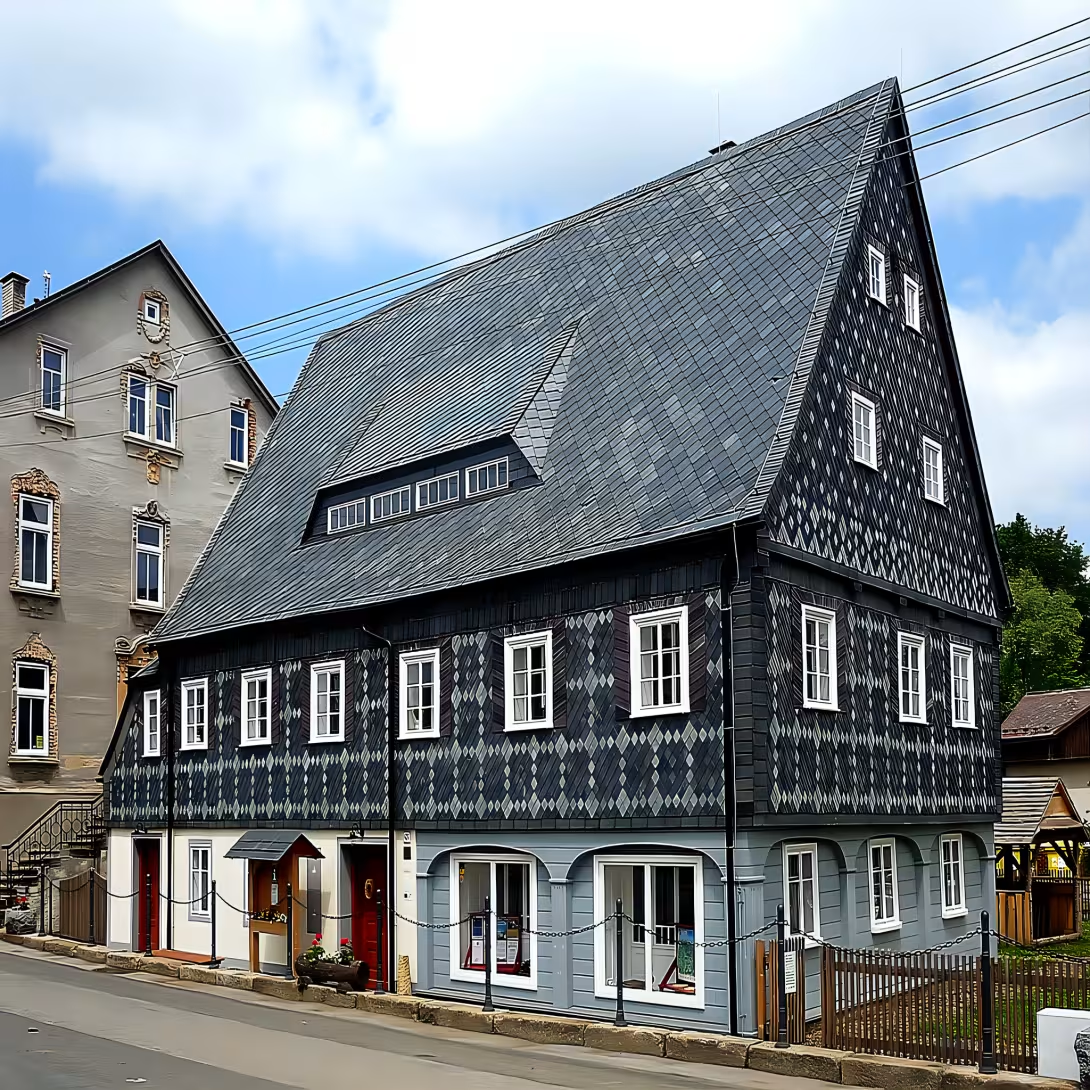
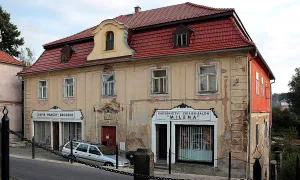
Lipová 424 is a museum and information center in Lipová, constructed between 1723 and 1727. It is among the oldest preserved *podstávkový dům* structures in Northern Bohemia, representing a unique form of regional Baroque folk architecture.
Local builder Zacharias Hoffmann (1678–1754) erected the house. He primarily worked for the Salm-Reifferscheidt family, the owners of the Lipová estate. Dendrochronological dating and land registry research confirm the building was constructed between 1723 and 1727, using fir and spruce felled between 1714 and 1723.
The structure has a rectangular footprint and no cellar. The ground floor comprises timbered walls on the right and brickwork on the left. The first floor is half-timbered; some sections remain unplastered following the latest reconstruction to showcase the original framework. Originally shingled, the high saddle roof was replaced with slate in the late 19th century. During this time, slate cladding was also added to the gables. A long dormer, known as a *štika*, was installed in 2004. The exterior plaster is ochre, while the wooden cladding and bases are painted grey to reflect the original colors.
For most of its history, the building served as a residence. Located in a river floodplain, high groundwater levels damaged the structure, necessitating the replacement of the base around 1775 and the ground floor timbering by the turn of the century. In the late 19th century, the left side of the ground floor was converted to brick. During the early 20th century, the ground floor was adapted for commercial use—including a hawk shop and a barber—which required the installation of display windows in the timbered walls.
The building was officially declared a cultural monument in 1958. However, poorly executed modifications in the late 20th century and a lack of maintenance caused the structure to deteriorate. In 2002, the Společnost pro trvale udržitelný rozvoj Šluknovska purchased the property to preserve and restore it. A comprehensive reconstruction occurred between 2010 and 2013, costing nearly 17 million crowns and largely funded by European Union grants. Shortly before completion, the house was hit by a flood in June 2013.
The museum opened to the public on September 27, 2013. The ground floor now serves as a museum and information center, while the first floor and attic—which includes a lecture hall—are used for social gatherings and local organizations.
This monument preserves the architectural heritage of the Šluknov region and illustrates the evolution of local building techniques. It is a significant site for those interested in Northern Bohemian folk architecture and remains open to visitors.
Historical milestones
- 1723-1727
- Construction of the house by Zacharias Hoffmann.
- 1958
- The building was declared a cultural monument.
- 2002
- Purchase by the Society for Sustainable Development of the Šluknov Region.
- 2013
- Completion of reconstruction and opening to the public.
Architectural development
Originally a timbered house, the base was replaced around 1775 due to high groundwater. In the second half of the 19th century, the left part of the ground floor was replaced with brick and the roof was covered with slate. The first floor remains half-timbered, and a dormer known as 'štika' was added in 2004.
Historical events
Declared a cultural monument in 1958; underwent a major reconstruction between 2010 and 2013; officially opened to the public on September 27, 2013.
Owners
Built by Zacharias Hoffmann; later owned by various residents; purchased in 2002 by Společnost pro trvale udržitelný rozvoj Šluknovska.
Points of interest
– The Lipová 424 museum and information center is among the oldest preserved *podstávkový dům* structures in Northern Bohemia.
– The building was constructed between 1723 and 1727, using fir and spruce felled between 1714 and 1723.
– The structure has a rectangular footprint and no cellar, with timbered walls on the right and brickwork on the left on the ground floor.
– The high saddle roof was originally shingled but replaced with slate in the late 19th century, and a long dormer (known as a *štika*) was installed in 2004.
Guide
Show guide text
This text was created by artificial intelligence and has not been editorially reviewed. It may contain inaccuracies.
Welcome to Lipová. As you stand here, take a moment to simply breathe and absorb the atmosphere of this historic setting. You are standing directly in front of a true survivor of time, the Podstávkový dům No. 424. It is not merely a building; it is a living piece of history that has watched the world change around it for nearly three centuries. As you look at the structure before you, try to look past the modern world and imagine the landscape of Northern Bohemia as it appeared hundreds of years ago. The weight of the past is palpable here, held within the very walls and beams that form this remarkable house. This is a place where the craftsmanship of the past meets the preservation efforts of the present, and you are about to embark on a journey through its storied existence.
To understand what you are seeing, we must travel back to the early 18th century. Imagine the year 1723. The air is different, the pace of life is slower, and the materials used to build a home come directly from the surrounding forests and earth. It was during this period, between 1723 and 1727, that this house was brought to life. The man responsible for this architectural feat was a local builder named Zacharias Hoffmann. He was not just a laborer, but a master of his craft, someone who understood the unique needs of this region and the materials it provided. Through his vision and skill, he created a structure that would not only serve as a home but would eventually become one of the oldest and most significant examples of its kind in all of Northern Bohemia. When you look at the house now, you are looking at the direct legacy of Zacharias Hoffmann, a man whose work has outlasted generations.
Now, let us turn our attention to the architecture itself, because there is so much to observe if you look closely. This building is a rare and exquisite example of a podstávkový dům. As you examine the exterior, notice the fascinating way the different materials interact with one another. This is not a simple, uniform construction. Instead, you are seeing a sophisticated combination of elements. Notice the strength of the timbered walls and how they integrate with the solidity of the brickwork. This marriage of wood and brick was a hallmark of regional folk architecture, providing both the flexibility of timber and the enduring stability of masonry. As your eyes move upward, pay close attention to the upper floor. Here, the style shifts into a half-timbered design, creating a visual rhythm that is both beautiful and structurally ingenious. This layering of materials tells a story of local ingenuity, showing how builders like Hoffmann utilized every resource available to create something that was both functional and aesthetically striking. Every joint, every beam, and every brick was placed with intention, designed to withstand the elements of Northern Bohemia for centuries to come.
The history of this house is not just a story of its construction, but a story of its survival and its rebirth. For much of its life, this was a private residence, a place of daily living and local history. However, its architectural importance was so profound that in 1958, it was officially recognized and declared a cultural monument. This was a turning point, ensuring that the house would be protected for future generations. Yet, protection requires more than just a title; it requires care and resources. For many years, the house waited for its next chapter. That chapter began in 2002, when the building was purchased by the Society for Sustainable Development of the Šluknov Region. Their mission was to ensure that this piece of heritage did not just exist, but thrived. This led to a period of dedicated, careful work, culminating in the completion of a major reconstruction in 2013. When the doors finally opened to the public that year, the house was transformed from a silent monument into a vibrant museum and information center, ready to share its secrets with visitors like you.
As you continue to observe the textures and the heavy timbers of the structure, I want to share a fascinating detail that adds an even deeper layer of history to what you see. There is a secret hidden within the very bones of this house. When we think of a building being constructed, we often think of the materials being gathered at the start of the project. But for the Podstávkový dům No. 424, the story begins much earlier. The fir and spruce wood used to construct this house was not harvested in 1723. Instead, these trees were felled between 1714 and 1723. This means that before the first foundation was even laid, before Zacharias Hoffmann even began his work, the wood that would eventually form the heart of this home was already being prepared. There is something almost poetic about it—the forest was providing the essence of this house long before the house even existed. When you look at those beams, you are looking at wood that has been part of the story of this region for even longer than the building itself.
As you prepare to move forward and explore more of what this site has to offer, remember that you are walking through a carefully preserved piece of the past. The museum and information center housed within these walls are here to guide you deeper into the history of Lipová and the unique traditions of Northern Bohemia. Whether you are interested in the technical mastery of the local builders or the social history of the people who lived here, there is much to discover. We invite you to take your time, to wander, and to let the history of the Podstávkový dům No. 424 speak to you. Thank you for joining us on this brief walk through time, and please, enjoy the rest of your visit to this remarkable landmark.
Tips for visitors
The best time to visit Lipová 424 is during the spring and autumn seasons, when the weather is mild and sunny. This allows you to fully appreciate the museum's unique architecture and surroundings.
Parking is available near the museum, with designated spots for visitors. You can also use public transportation, such as buses or trains, which stop nearby.
When visiting Lipová 424, be sure to bring a camera to capture the stunning views of the surrounding countryside. The best photography spots are around the museum's exterior and in the adjacent park.
If you're planning to visit other attractions within a 30-minute radius, consider exploring the charming town of Lipová itself, which offers a range of cultural and historical experiences.
Families with children can enjoy interactive exhibits and educational programs at the museum. Be sure to check the museum's website for specific details on family-friendly activities.
Businesses nearby
Do you run a restaurant, accommodation, shop, museum, rental, wellness or other visitor service near this monument? Show yourself directly to the people heading to it — this is how they will see you in the app and on the web:
Accommodation nearby
Themed route
1. Lipová 424 Entrance (Arrival point): Start your visit at the main entrance to get oriented and enter the museum premises.
2. Main Exhibition (Museum exhibit): Explore the primary collection to discover the history and artifacts housed within the building.
3. Museum Courtyard (Outdoor area): Take a break in the courtyard to admire the architecture and the atmosphere of the site.
4. Museum Park (Green area): Conclude your tour with a relaxing walk through the surrounding greenery of the museum grounds.
Seasonal recommendations
Seasonal Recommendations for Visiting a Historical Landmark.
Landmark: Lipová 424 (museum), Lipová,
Condition: excellent
For each season (spring, summer, autumn, winter) write a paragraph:
- What's specific (lighting, nature, atmosphere). - Practical tips (crowds, suitable clothing, best time).
RULES OF ACCURACY: - EACH season must have A UNIQUE, specific content - never copy the same sentences into more seasons. - DON'T MENTION specific festivals, fairs, pilgrimages or holidays by name - if you don't know any from the source, write only generally ("in the advent season", "in the main summer season"). Pay attention to logic: St. Catherine is in November, Christmas markets are in December, flower markets don't belong to winter. - Write sensible tips corresponding to the season (warm clothing and shorter opening hours in winter, earlier arrival due to crowds in summer). Max 500 words. One paragraph for each season.
Here's the output:
Spring
In the spring, Lipová 424 museum is surrounded by blooming nature, with fresh greenery and vibrant colors. The atmosphere is lively, with a sense of renewal in the air. Practical tips: plan your visit early in the morning to avoid crowds, wear comfortable shoes for walking around the historic site, and don't forget your camera to capture the beautiful scenery.
Summer
During the summer season, Lipová 424 museum is bustling with tourists and locals alike. The warm weather and long days create a lively atmosphere, perfect for outdoor activities. Practical tips: arrive early to beat the crowds, wear light and breathable clothing, and take breaks in the shade to avoid the heat.
Autumn
In the autumn, Lipová 424 museum takes on a cozy atmosphere, with the changing leaves creating a warm glow. The air is crisp and cool, making it perfect for taking a leisurely stroll around the historic site. Practical tips: dress warmly, as the evenings can be chilly, and consider visiting during the week to avoid weekend crowds.
Winter
In the winter, Lipová 424 museum takes on a magical atmosphere, with twinkling lights and festive decorations. The cold weather creates a cozy atmosphere inside the museum, making it perfect for a warm and educational visit. Practical tips: dress warmly and wear comfortable shoes, as you'll be spending most of your time indoors, and consider visiting during the week to avoid weekend crowds.
Visualizations and artistic views

The visualisations are generated by artificial intelligence and serve as inspiration.
Photos from the area
Real photos taken near the monument


Zdroj a licence jsou uvedeny u každého snímku.
Tips from visitors
No tips yet. Be the first!
Log in and add your tip.
Sources and literature
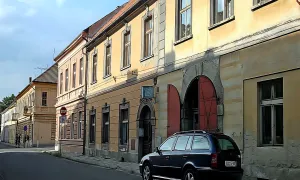
Fotografie: SchiDD / CC BY-SA 4.0, rozlišení zvýšeno umělou inteligencí — Wikimedia Commons. The author and licence also appear when you hover over the image.
Faktickým podkladem tohoto textu byl článek na Wikipedii, jehož autory jsou přispěvatelé Wikipedie. Článek je dostupný pod licencí CC BY-SA 4.0.
Location on the map

Příběhy a pověsti
Legendy, pověsti a příběhy spjaté s touto památkou
Fotografie návštěvníků
Zatím žádné fotografie. Buďte první, kdo přidá fotografii z návštěvy!
Přihlaste se a přidejte svou fotografii nebo hodnoťte.
Za ověřenou návštěvu v aplikaci získáte víc bodů — poznáme podle GPS, že jste na místě.
Reviews and comments