



Městské opevnění s Valdickou bránou Town walls
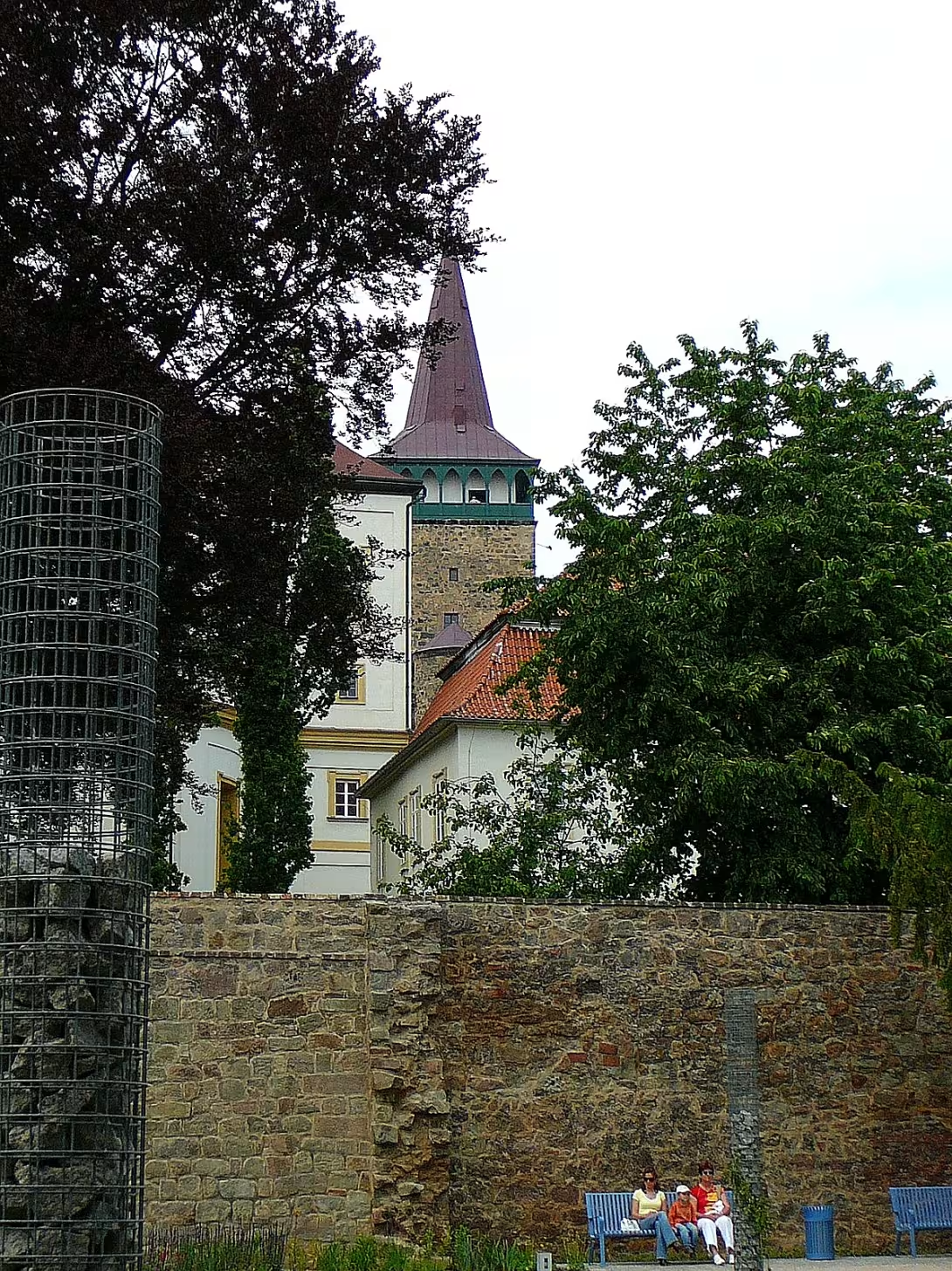
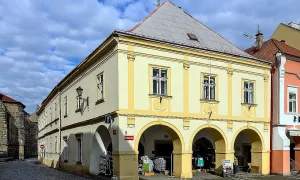
Městské opevnění s Valdickou bránou in the village Staré Město is a historical monument to the rich past of Jicin and his defence systems. This complex, built in the early 14th century, includes a stone wall with bastions, three gates and two gates. Today, only the Valdic Gate and various fragments of walls in urban streets have been preserved from the entire system. The whole is registered as a cultural monument of the Czech Republic.
The creation of the fortifications was linked to the flowering of Czech cities and the need to protect them in the time of medieval urbanism. Originally, it relied on wooden bastion built on stakes, which was a common practice at the time. The first written references to the city walls come from the 15th century, but the exact date of their creation remains uncertain. It can be inferred, however, that the first building took place at the same time as the fortification of the church of St. Jacob the Elder between 1432 and 1439.
The architecture of the fortifications evolved over time. The original wooden structures were replaced by stone walls over 120 cm wide and above 5 metres high. A park wall was later built on the north and east side of the city, which led around the yard in several streets. The whole system was designed for maximum defense, with key firing sites and irregular baskets.
The history of fortifications is interwoven with dramatic events. In the middle of the 16th century, the city was ravaged by large fires, which subsequently triggered the need to restore and modernise defence. The main stone wall was completed before 1568. Later, early Baroque walls were built, which survived south of the Valdic Gate towards the castle garden and southeast bastion.
The key moments in the history of fortifications were its gradual modernization and reconstruction. The Valdic Gate, the only one preserved from three gates, has undergone several modifications. The urban moat over six metres deep was permanently flooded with lower water, affecting its effectiveness as a defensive element.
Today, the city fortification with the Valdic Gate represents an important cultural monument. The remains of the walls and baskets are spread out in the streets of Old Town; Some of them remained hidden under plaster or additional attachments. The current state of the monument is indicative of long-term development and adaptation of defence systems to new needs and technologies.
Visiting this historic complex offers a unique view of the past of Jicin. The preserved fragments of the fortifications allow a glimpse into the life and defensive strategies of the medieval city. Městské opevnění s Valdickou bránou is not only an architectural unique but also a witness to the history that has been preserved in stone and marvel for centuries.
Historical milestones
- 1432-1439
- Fortification of the church of St. Jacob the Elder.
- 1568
- Complete the main stone wall.
- 1684
- Drafting plans of the walls before the beginning of the seminar.
Architectural development
The original fortification from the 14th century with grafted bastions was replaced by a stone wall over 120 cm wide and a height over 5 metres. On the north and east side, the park walls were later built. In later times, early Baroque walls were built.
Historical events
In the mid-16th century, the city was ravaged by major fires, which led to the restoration of fortifications. Before 1568, the main stone wall was completed.
Points of interest
- Original wooden bastion built on stakes replaced stone walls with a width of over 120 cm and a height of over 5 metres. - A city ditch over six meters deep was permanently flooded with lower water, affecting its effectiveness as a defense element. - Some fragments of walls and baskets have remained hidden for centuries under plaster or additional ports in the streets of Old Town. - The Valdic Gate is the only preserved of the three original gates that the complex included.
Guide
Show guide text
This text was created by artificial intelligence and has not been editorially reviewed. It may contain inaccuracies.
Welcome to the historic heart of Jicin. Right now, you're facing one of the most important symbols of this city, the Valdic Gate, which itself represents a living link between the rich past and today. Stop for a moment and feel the atmosphere of this place. There's an old town around you, and you're touching a line that once determined who could enter the city and who had to stay outside. This gate was not just a passage, it was part of a huge, complex system that protected the lives and property of the people for centuries.
Let's go back together in time deep into the past to understand how it all began. This whole city fortification didn't start with stone, it started with wood. At the beginning of the 14th century, the first security features began to be built here. Imagine a town back then that wasn't as strong as it is today. The original defense system was much lighter and less durable. The city then surrounded six wooden baskets, but they were very specific in their construction. They were built on stakes, which was a method at the time to ensure stability in difficult terrain. Three gates and two smaller goals were added to these baskets, which formed a network of passages for merchants and residents. At that time, the defense was more about speed and the town being clearly defined.
Over time, however, the city's needs have changed and the threats have become more serious. They had to prepare for a greater strain and therefore there was a fundamental change. In the mid-fifteenth century, namely between 1432 and 1439, attention turned to the protection of spiritual centres, which was reflected in the fortification of the church of St. Jacob the Elder. That was a clear signal that the city had to be stronger. But the real break didn't happen until the 16th century. That's when it was decided wood wasn't enough anymore. The city was fortified by a massive stone wall and supplemented with so-called park walls, which had space around the city to expand and strengthen even more. It was in 1568 that the main stone fortification was completed, which thanks to today's remains we can at least partially bow down to.
Now pay attention to what's right in front of you. Although most of the original system had long since died, the Valdic Gate still stands as a witness to the ancient power. Even if you think you can only see part of the whole, try to reconstruct the whole mass in your imagination. Imagine stone walls that were over an inch wide. It's not just an ordinary wall, it's a monumental barrier. And her height? Over five meters of pure stone, which had to reflect the efforts of generations of builders. Now, when you look at the fragments of the walls that you can see in the surrounding streets, you realize that every stone part is just a small fragment of that huge, impenetrable line that once surrounded the entire city. These remnants in the streets are not just the beauty, they are the bones of old Jicin, which still hold his historical face.
But in order to fully understand the importance of this place, we also need to look at the people who left their mark. These measures were not random; they were the result of political and power excites and ambitions of large families. In the history of this place, Trčkové z Lípy, who were extremely influential in the region and whose administration of the city shaped his fate, plays a crucial role. And of course we cannot forget the character whose name resonates in the whole Czech countries - Albrecht of Valdštejn. His presence and influence on the city were so strong that even though the walls changed over time, his legacy remains alive in the architecture and structure of the city. The whole complex, from wooden baskets to stone walls, is now recognised as a valuable cultural monument because it tells the story of survival and constant adaptation to the world.
And now I want to invite you to think about something that you can't really see at first sight, but that fundamentally affected how the city worked. Think about what was once under your feet. The urban moat surrounding the walls was not just an ordinary dug-up channel. It had a depth of over 20 feet and its most important element was water. But it wasn't water that was just poured in, it was water that was permanently flooded in the ditch. That was a fascinating yet complicated defensive property. While the flooded moat made it difficult for the enemy to access the walls, it also posed a constant challenge to the administration and maintenance of the entire system. This water was part of the life rhythm of the city, an invisible but powerful element that influenced everything from defense to the very stability of the surrounding buildings.
If you go on now, try to look at the city with different eyes. Don't just think of these walls as stone structures, but as a clue to human efforts, to seek security and to the constant movement of time. In 1684, new wall plans were even drawn up to prepare for new times and to build a seminar, which shows how the role of the walls changed from purely defensive to part of wider urban planning.
Now I won't hold you any longer. The city invites you to explore again. Walk the streets where you can still see the fragments of those old walls, and try to find your way to the other hidden corners of the old town. Every stone you see here has a story. Thank you for joining me on this short journey through time. Enjoy the rest of your walk in this wonderful city. Goodbye.
Tips for visitors
The best time to visit the city fortification with the Valdic Gate is in the spring or autumn season when temperatures are pleasant and vegetation offers a beautiful view. Moreover, cultural events associated with the historical monument often take place during these months.
Check current connections and traffic options at the time of planning the visit.
In the proposed visit, bring your shoes suitable for walking on an uneven surface, as parts of the fortifications are in ruins. Also remember the protective sunglasses and enough drinking connection, especially in the summer months.
Photography here is great thanks to the historical environment. The best light offers morning hours or late afternoons when the sun is not directly above your head. Try to reach higher points for panoramic views and capture details of the Valdic Gate.
In the surroundings you can visit Castle Garden, which offers beautiful walks between flower orchards. Another interesting thing is the church of St. Ignatius and Jesuit College, where you can learn more about the history of the area.
Frequently asked questions
Can the monument be visited?
This is a structure in a public space that can usually be seen from outside free of charge. We have not verified that this particular one is freely accessible.
Where is the monument?
Location: Staré Město, Královéhradecký kraj. The map on this page shows the exact spot.
Why is the monument protected?
It is listed in the Central List of Cultural Monuments of the Czech Republic as a cultural monument (register no. 1000142414).
Businesses nearby
Do you run a restaurant, accommodation, shop, museum, rental, wellness or other visitor service near this monument? Show yourself directly to the people heading to it — this is how they will see you in the app and on the web:
Nearby
Castle Garden, St. Ignatius Church, Jesuit College.
Accommodation nearby
Themed route
Thematic cruise route: Urban fortification with Valdic Gate
1. Urban fortification with Valdic Gate (walls) - Type: Historical landmark - Why is it worth a visit: This part of the city walls is an important example of historical defense, which shows the rich past of Old Town. Visit it to see the ancient architecture and enjoy a quiet moment in a picturesque environment.
2. Castle Garden - Type: Garden - Why is it worth a visit: This beautiful garden offers pleasant walks between flowering plants and cozy corners. It is an ideal place to relax after exploring the walls where you can enjoy peace and nature.
3. Church of St. Ignatius - Type: Religious object - Why is it worth a visit: The church is an architectural pearl with rich history and artistic elements. Its interior surprises you with elegant design and spiritual atmosphere, which still affects the local community.
4. Jesuit College - Type: Historical buildings - Why is it worth a visit: This college is an important historical and cultural centre, which was once the seat of education. Visit her to discover her history and to see beautiful interiors that reflect spiritual traditions.
This route offers a view of the cultural wealth of Old Town through its historical and architectural monuments.
Seasonal recommendations
Spring brings to the old walls the tides of fresh green and the blooming of plants that tear between stone ruins. The lighting is delicate in this period, creating ideal conditions for capturing the awakening nature. We recommend wearing layered clothes because the morning cold quickly turns into afternoon heat. The roads are not as crowded as in the season, so morning walks in peace are the most appreciated.
In the summer months, the walls are filled with intense sun, which highlights the structure of the old stone. The atmosphere is alive, but the heat in the open areas of the ruins can be unpleasant. For the best experience come early in the morning to avoid the biggest crowds and burning midday heat. Don't forget enough water and headgear because the shadows between the walls can be minimal at noon.
Autumn turns the walls into a melancholy place surrounded by golden colors of fallen leaves. The morning fog often settles in the depths of ruins, which gives the memory a mysterious atmosphere. It is advisable to prepare fixed and waterproof shoes because moisture and leaves can make the roads slippery. The best time to visit is in the afternoon when the low sun beautifully highlights the shadows and colors of the surrounding countryside.
Winter reveals the raw beauty of stone remains that can be covered with frost or snow. The atmosphere is quiet and lonely, which is ideal for those who seek peace without any excitement. Due to the short days and the cold, plan to visit around noon so you don't have a shadow. The necessity is very warm and wind-resistant clothes, because the wind can be very strong in the open space between the walls.
Visualizations and artistic views


The visualisations are generated by artificial intelligence and serve as inspiration.
Photos from the area
Real photos taken near the monument


Zdroj a licence jsou uvedeny u každého snímku.
Tips from visitors
No tips yet. Be the first!
Log in and add your tip.
Sources and literature
Photos: J. Bajer / CC BY 3.0 — Wikimedia Commons. The author and licence also appear when you hover over the image.
Faktickým podkladem tohoto textu byl článek na Wikipedii, jehož autory jsou přispěvatelé Wikipedie. Článek je dostupný pod licencí CC BY-SA 4.0.
Location on the map


Příběhy a pověsti
Legendy, pověsti a příběhy spjaté s touto památkou

Fotografie návštěvníků
Zatím žádné fotografie. Buďte první, kdo přidá fotografii z návštěvy!
Log in a přidejte svou fotografii nebo hodnoťte.
Za ověřenou návštěvu v aplikaci získáte víc bodů — poznáme podle GPS, že jste na místě.
Reviews and comments