



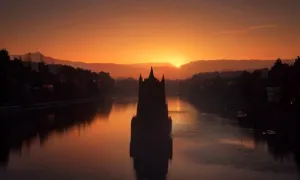
most Dr. Edvarda Beneše Bridge
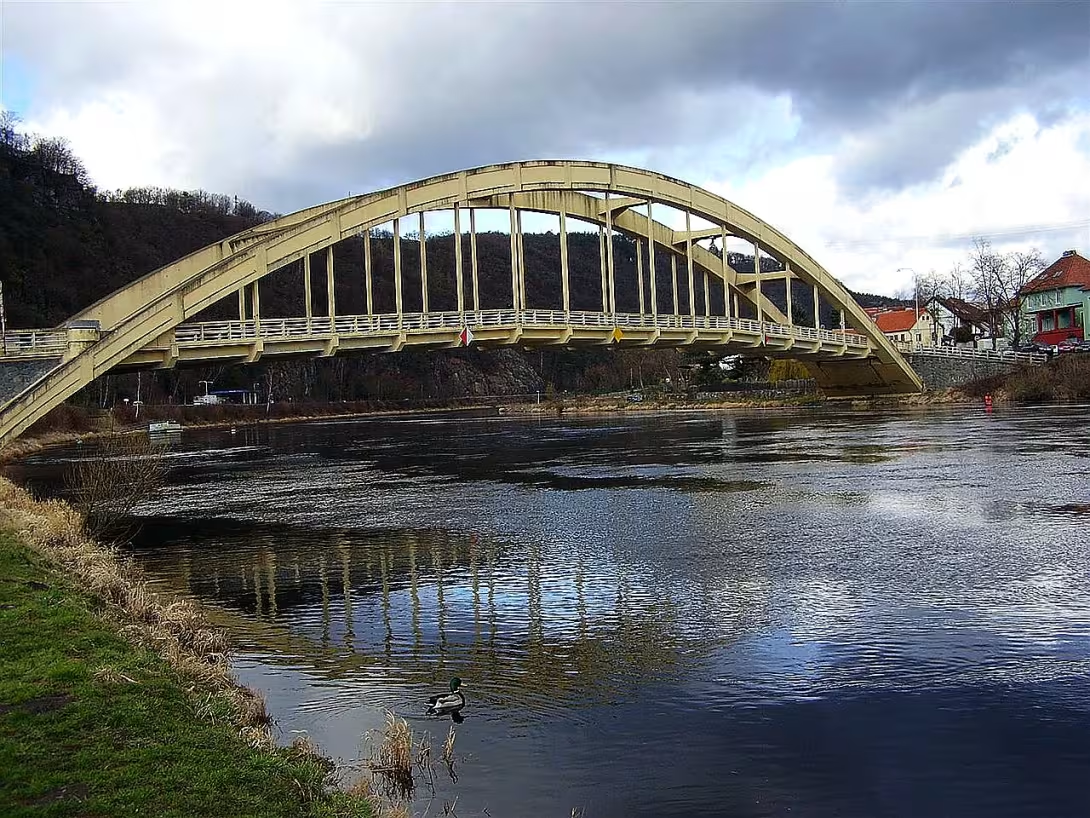
The Dr. Edvard Beneš Bridge in Štěchovice, also known as the Štěchovický most, is a notable architectural feat spanning the Vltava River near Prague. Built between 1937 and 1939 by Ing. J. Kindl's firm under Miloslav Klement's design, it features two hollow concrete arches with a span of 114 meters. This innovative structure was the first reinforced concrete bridge in Czechoslovakia to exceed 100 meters in span. Named after Dr. Edvard Beneš in 1946, it holds historical significance for its engineering prowess and reflection of Czech history.
Construction began in August 1937 and concluded by 1939, during a period of political tension as Czechoslovakia faced threats from Nazi Germany. Despite these challenges, the bridge emerged as a symbol of technological advancement. Klement's design included two hollow arches with a span of 114 meters and an arch-to-deck height of 12 meters, showcasing innovative engineering techniques.
Architecturally, the bridge is constructed using reinforced concrete, marking a significant advancement in Czechoslovakian engineering during the late 1930s. Designed by Miloslav Klement and built by Ing. J. Kindl's firm, it exemplifies modernist architectural principles while serving practical purposes. Over the years, it has undergone several repairs to maintain its structural integrity, including major ones in 1995 and extensive reconstruction from 2024 to 2025 due to deterioration.
Throughout its history, the Dr. Edvard Beneš Bridge has witnessed significant events. During World War II, despite Nazi plans for demolition, it survived unscathed. In 2002, it withstood a major flood without damage, further cementing its reputation for durability and resilience. Named after Dr. Edvard Beneš in 1946, the bridge reflects his importance in Czech history. By the end of 1965, it was declared a cultural monument, recognizing its historical and architectural significance.
Today, the Dr. Edvard Beneš Bridge connects Brunšov and Štěchovice over the Vltava River near Prague. Despite undergoing extensive reconstruction from 2024 to 2025 due to structural issues, it remains accessible and continues as a vital regional link. Its historical significance and architectural innovation make it noteworthy for visitors interested in engineering history and Czech cultural heritage.
The Dr. Edvard Beneš Bridge stands not only as an example of early 20th-century engineering but also as a testament to resilience through turbulent times. Its survival during World War II and subsequent floods highlights its robust construction and enduring legacy. Visitors are invited to explore this remarkable structure, appreciating both its historical context and architectural ingenuity.
Then and now
Drag the slider to compare how the landmark may have looked when it was built with the view today.
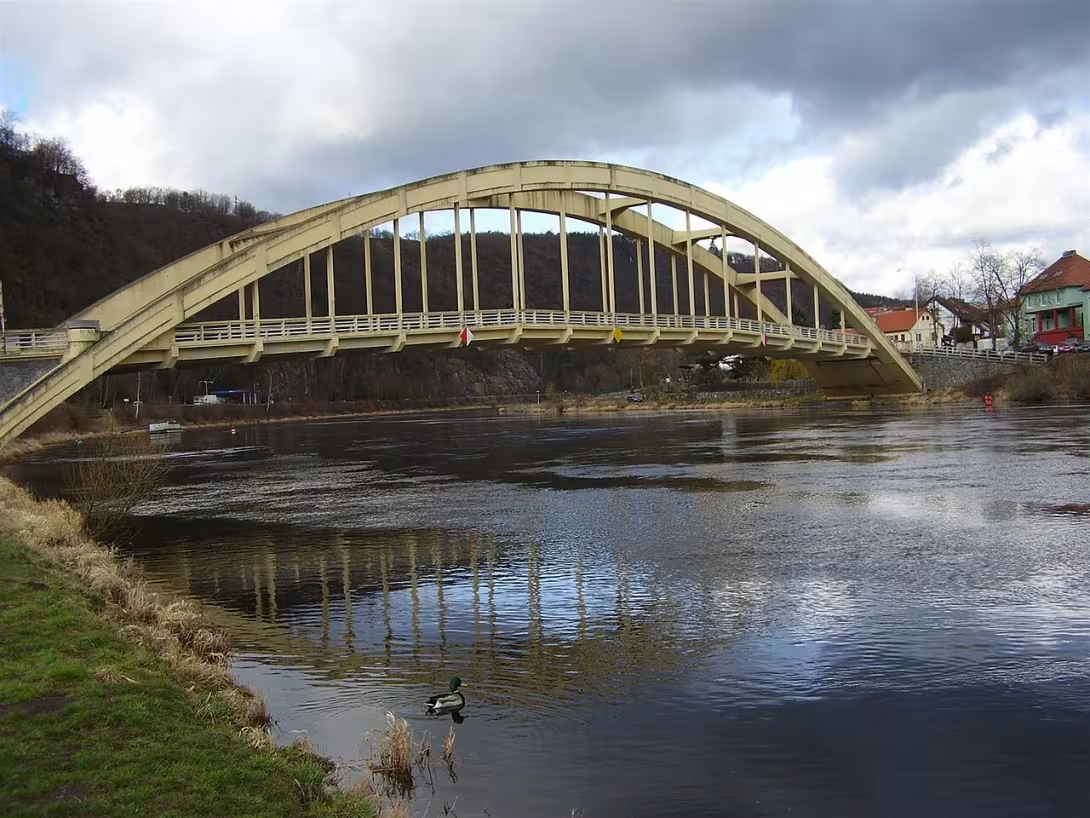
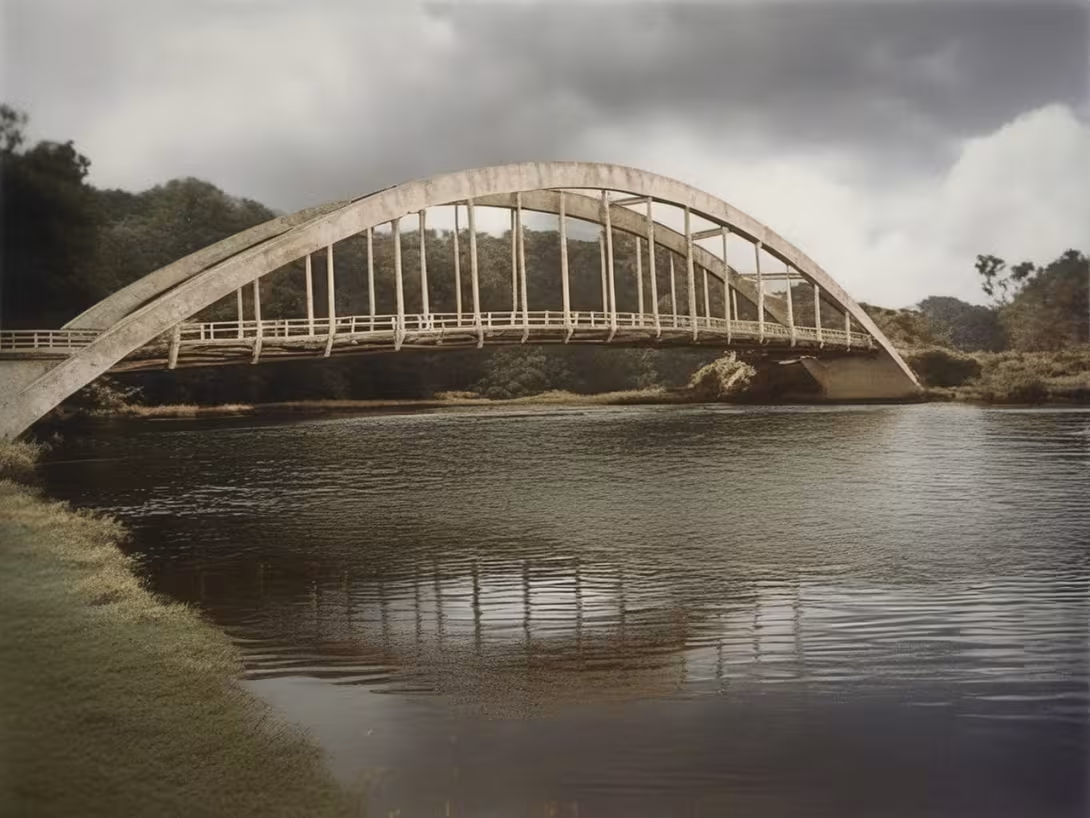
The historical appearance on the left is an AI-generated visualisation and serves as inspiration only.
Historical milestones
- 1939
- Completion of construction.
- 1946
- Bridge named after Dr. Edvard Beneš.
- 1965
- Declared a cultural monument.
Architectural development
The bridge was constructed using reinforced concrete, featuring two hollow arches with a span of 114 meters and an arch-to-deck height of 12 meters. Designed by Miloslav Klement and built by Ing. J. Kindl's firm, it represented a significant advancement in Czechoslovakian engineering during the late 1930s. The structure has undergone several repairs, including major ones in 1995 and extensive reconstruction from 2024 to 2025 due to its deteriorating condition.
Historical events
Construction began in August 1937 and completed in 1939.
Named 'most Dr. Edvarda Beneše' in 1946.
Declared a cultural monument at the end of 1965.
Points of interest
- The Dr. Edvard Beneš Bridge was constructed during a period of political tension as Czechoslovakia faced threats from Nazi Germany, yet it emerged unscathed when many other structures were demolished or damaged during World War II.
- Despite its innovative design and construction techniques in the late 1930s, the bridge required significant repairs over the years; notably, major maintenance occurred in 1995 and an extensive reconstruction was carried out between 2024 and 2025 due to structural deterioration.
- In 2002, the bridge demonstrated remarkable resilience by withstanding a major flood without sustaining damage, further cementing its reputation as a durable and robust structure.
- The bridge's design included two hollow arches with a span of 114 meters and an arch-to-deck height of 12 meters, showcasing Miloslav Klement’s pioneering use of reinforced concrete in Czechoslovakian engineering at the time.
- Named after Dr. Edvard Beneš in 1946, the bridge reflects his importance in Czech history, especially considering that it was declared a cultural monument by the end of 1965 due to its historical and architectural significance.
Guide
This guide is narrated by a synthetic voice generated by artificial intelligence.
Show guide text
This text was created by artificial intelligence and has not been editorially reviewed. It may contain inaccuracies.
Welcome to the Dr. Edvard Beneš Bridge, a remarkable testament to architectural innovation and historical resilience nestled in Štěchovice near Prague. As you stand here on this bridge, take a moment to appreciate its elegant design as it gracefully spans the Vltava River. The air carries whispers of history from the time when this structure was conceived—a period marked by political tension and looming threats.
Constructed between 1937 and 1939, this bridge is an embodiment of Czechoslovakia's spirit during challenging times. Designed by Miloslav Klement and brought to life under the expertise of Ing. J. Kindl, it stands as a symbol of both ingenuity and endurance. Its two hollow concrete arches, spanning an impressive 114 meters, were groundbreaking for their time, making this bridge the first in Czechoslovakia to feature such a design.
As you gaze at these arches, notice how they curve gracefully above you, creating a harmonious blend of strength and elegance. The concrete is robust yet refined, reflecting the careful craftsmanship that went into its construction. It’s fascinating to consider how this structure emerged unscathed during World War II when many other buildings suffered damage or destruction.
In 1946, in recognition of his contributions as a statesman, the bridge was named after Dr. Edvard Beneš, who played a pivotal role in Czechoslovakia's history. Just over two decades later, in 1965, it was declared a cultural monument, cementing its place not only in the landscape but also in the heart of national heritage.
One intriguing aspect of this bridge is how it withstood the turbulent times surrounding World War II. While many structures were demolished or damaged during that era, the Dr. Edvard Beneš Bridge remained intact—a silent witness to history's upheavals and a testament to its own resilience.
As you continue your journey across this historic bridge, let yourself be drawn into its story—feel the weight of history beneath your feet and the enduring legacy it represents. We invite you to explore further, perhaps taking in the surrounding landscape or learning more about the figures who shaped this remarkable piece of architecture.
Thank you for joining us on this exploration of the Dr. Edvard Beneš Bridge. May your visit inspire a deeper appreciation for both its history and beauty. Safe travels as you continue your journey through Štěchovice and beyond!
Tips for visitors
The best time to visit the Dr. Edvard Beneš Bridge is during late spring or early autumn when the weather is pleasant, and the natural landscapes around the Vltava River are particularly vibrant. During these months, you can enjoy clear skies and comfortable temperatures, making it ideal for walking along the riverbanks or exploring nearby areas without the summer crowds. Additionally, visiting outside of peak tourist season allows for a more relaxed experience while appreciating the architectural beauty of the bridge and its surroundings.
Edvard Beneš Bridge can be limited due to its proximity to urban development in Štěchovice. Always verify current transport options and schedules through an online search or transportation apps.
When planning your visit to the Dr. Edvard Beneš Bridge, consider bringing comfortable walking shoes as you may want to explore the surrounding natural landscapes along the Vltava River. A camera is also recommended for capturing the scenic views of the bridge against the backdrop of Prague's skyline and the river's serene waters. Additionally, carrying a light jacket or sweater can be useful due to variable weather conditions, even in warmer months.
For photography enthusiasts, some of the best spots around the Dr. Edvard Beneš Bridge include locations along the riverbanks where you can capture the bridge with reflections on the water during sunrise or sunset for optimal lighting. The golden hours provide soft light that enhances the architectural features and natural beauty of the area. Exploring different angles from both sides of the Vltava River will also offer diverse perspectives of this historic structure.
Nearby, within a 30-minute drive or ride, you can visit Brunšov, which offers picturesque views and opportunities for leisurely walks along its charming streets. The proximity to Prague allows visitors to explore more extensive cultural sites in the city if time permits. For families with children, these areas provide a mix of natural beauty and accessible urban attractions, making it an enjoyable outing for all ages.
Frequently asked questions
Can the monument be visited?
This is a structure in a public space that can usually be seen from outside free of charge. We have not verified that this particular one is freely accessible. According to the heritage register restoration is under way, so access may be restricted.
Where is the monument?
Location: Štěchovice, Středočeský kraj. The map on this page shows the exact spot.
Why is the monument protected?
It is listed in the Central List of Cultural Monuments of the Czech Republic as a cultural monument (register no. 28618/2-2317).
Businesses nearby
Do you run a restaurant, accommodation, shop, museum, rental, wellness or other visitor service near this monument? Show yourself directly to the people heading to it — this is how they will see you in the app and on the web:
Nearby
Located near Prague, the Dr. Edvard Beneš Bridge connects Brunšov and Štěchovice over the Vltava River. The area is characterized by its proximity to urban development while retaining natural riverine landscapes.
Accommodation nearby
Trips and activities nearby
Guided tours, tickets and activities nearby from GetYourGuide
Affiliate link: if you buy from the partner, we may receive a commission. The price for you does not change.
Search tours and activities →Themed route
Thematic Walking Tour: The Dr. Edvard Beneš Bridge and Surroundings
1. Dr. Edvard Beneš Bridge (Most)
Type: Architectural Landmark
Why Visit: As a modern engineering marvel, the Dr. Edvard Beneš Bridge is not only an essential link between Brunšov and Štěchovice over the Vltava River but also offers stunning views of Prague's skyline and the river itself. Its design reflects contemporary architectural trends while harmonizing with the natural landscape.
2. Vltava Riverbanks
Type: Natural Landscape
Why Visit: Explore the scenic riverbanks along the Vltava near the bridge, where urban development meets nature. This area provides a tranquil setting for walking or picnicking, offering picturesque views of the flowing river and opportunities to observe local wildlife.
3. Brunšov
Type: Residential Area
Why Visit: Located just across from Štěchovice, Brunšov offers charming residential streets that reflect the architectural styles of the region. A walk through this area provides insights into local life and culture while enjoying the serene atmosphere away from city bustle.
4. Štěchovice Village Center
Type: Cultural Hub
Why Visit: The village center in Štěchovice is a perfect place to experience traditional Czech culture. Wander through its quaint streets, visit local shops, and enjoy the unique atmosphere of this historic area that beautifully blends past and present.
5. Štěchovice Brewery
Type: Cultural Attraction
Why Visit: Conclude your tour with a visit to the Štěchovice Brewery, renowned for its traditional brewing methods and rich history. Enjoy a tasting session of their famous beers while learning about the brewery's role in the local community and its contribution to Czech brewing traditions.
This thematic walking tour offers a blend of architectural admiration, natural beauty, cultural insights, and local flavors, providing an enriching experience close to Prague’s vibrant heart.
Seasonal recommendations
Spring: The spring season at the Dr. Edvard Beneš Bridge offers a unique experience as nature awakens, with blooming flowers and budding trees creating a picturesque backdrop for your visit. This period is characterized by mild weather and longer daylight hours, making it ideal for leisurely exploration of the bridge's surroundings in Střechovice. As the area begins to attract more visitors drawn by its natural beauty, you might encounter moderate crowds, especially on weekends. To fully enjoy this season, consider wearing layers that can be adjusted with fluctuating temperatures and plan your visit during weekdays or early mornings for a quieter experience.
Summer: Summer is the peak season for visiting the Dr. Edvard Beneš Bridge, marked by vibrant sunlight and warm weather that enhances the charm of this historical site. The lush greenery surrounding the bridge provides a perfect setting for outdoor activities such as picnics or photography. With an increase in tourist traffic during this time, especially on sunny days, it's advisable to arrive early in the morning to avoid large crowds. Comfortable footwear and light clothing are recommended to cope with the heat, along with sun protection like hats and sunscreen.
Autumn: Autumn at the Dr. Edvard Beneš Bridge is a feast for the senses, as the landscape transforms into a palette of warm colors with golden leaves creating a stunning visual effect. The cooler temperatures make it an ideal time for walking or cycling around the area without the summer crowds. As daylight begins to shorten, taking advantage of the morning light can enhance your experience. Wearing layers is advisable due to fluctuating temperatures, and carrying a light jacket might be necessary as evenings get chillier.
Winter: Winter brings a serene and quiet atmosphere to the Dr. Edvard Beneš Bridge, with snow often adding a magical touch to its historic architecture. The colder months mean fewer visitors, providing an opportunity for a more intimate exploration of the site. However, this also means that some facilities might have reduced hours or be closed, so checking ahead is recommended. Dress warmly in layers and wear sturdy boots to navigate potentially slippery paths. Visiting during daylight hours maximizes your time at the bridge while ensuring safety on its surfaces.
Visualizations and artistic views


The visualisations are generated by artificial intelligence and serve as inspiration.
Photos from the area
Real photos taken near the monument


Zdroj a licence jsou uvedeny u každého snímku.
Tips from visitors
No tips yet. Be the first!
Log in and add your tip.
Sources and literature
Photos: Honza Groh / CC BY 3.0 — Wikimedia Commons. The author and licence also appear when you hover over the image.
Faktickým podkladem tohoto textu byl článek na Wikipedii, jehož autory jsou přispěvatelé Wikipedie. Článek je dostupný pod licencí CC BY-SA 4.0.
Location on the map





Příběhy a pověsti
Legendy, pověsti a příběhy spjaté s touto památkou
Fotografie návštěvníků
Zatím žádné fotografie. Buďte první, kdo přidá fotografii z návštěvy!
Log in a přidejte svou fotografii nebo hodnoťte.
Za ověřenou návštěvu v aplikaci získáte víc bodů — poznáme podle GPS, že jste na místě.
Reviews and comments