






most silnice II/298 přes Ředický potok Road bridge
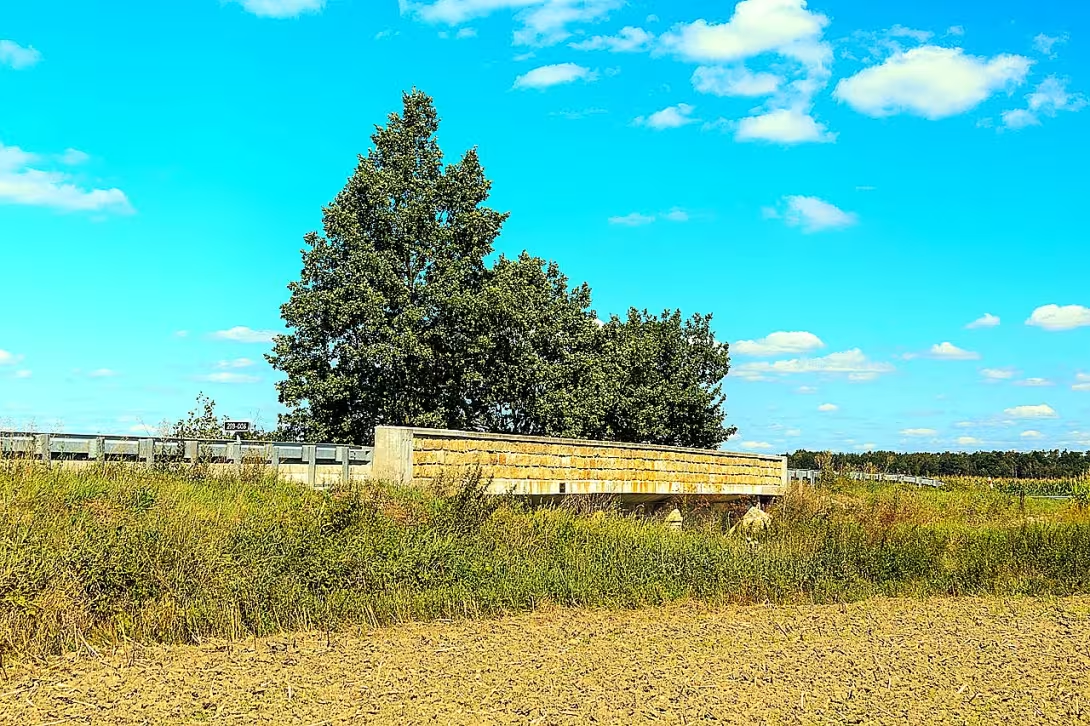
The road bridge on Most silnice II/298, spanning the Ředický potok between Sezemice and Rokytno in Pardubice district, is a stone structure from 1834. It is a protected cultural monument that embodies traditional functional stone bridge design from the mid-19th century.
Completed in 1834, the bridge was built during Austria's efforts to improve regional infrastructure for economic growth. This initiative led to the construction of durable stone bridges across Bohemia, ensuring reliable transport regardless of weather conditions.
The structure is composed of sandstone blocks and features three segmental arches. The central arch contains a concrete bed for the Ředický potok, while the outer arches serve as overflows to manage floodwaters. The pillars have semi-cylindrical bodies and dome-shaped tops. A sandstone parapet rises slightly above the asphalt road surface, finished with a concrete slab. The bridge embankment slopes are reinforced with sandstone blocks.
The bridge is officially recognized as a cultural monument and listed in the National Heritage Institute catalog under registry number ÚSKP 30732/6-5167.
A notable detail of the bridge is its construction year, 1834, carved into the right pillar. Although the bridge has maintained its original form, it underwent reconstruction in 2015.
Today, the bridge remains functional and situated in a rural landscape between Sezemice and Rokytno. It serves as a concrete example of 19th-century engineering and infrastructure.
This monument showcases the durability and utility of early 19th-century stone construction. It is a worthwhile visit for those interested in regional transport history.
Then and now
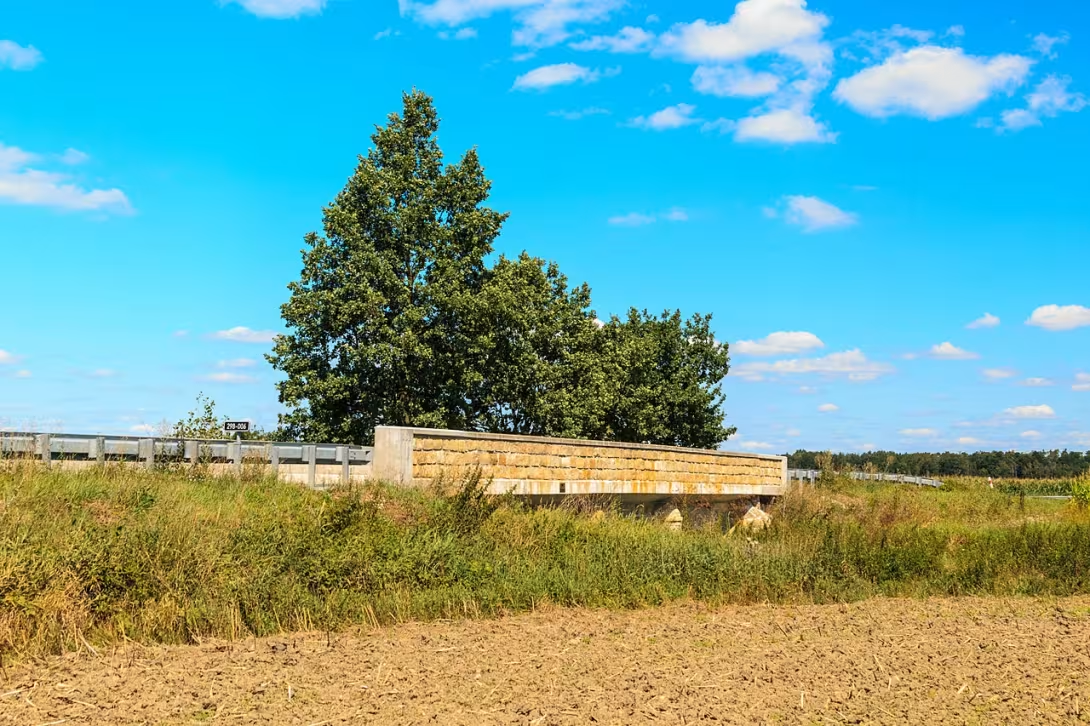
Drag the slider to compare how the landmark may have looked when it was built with the view today.
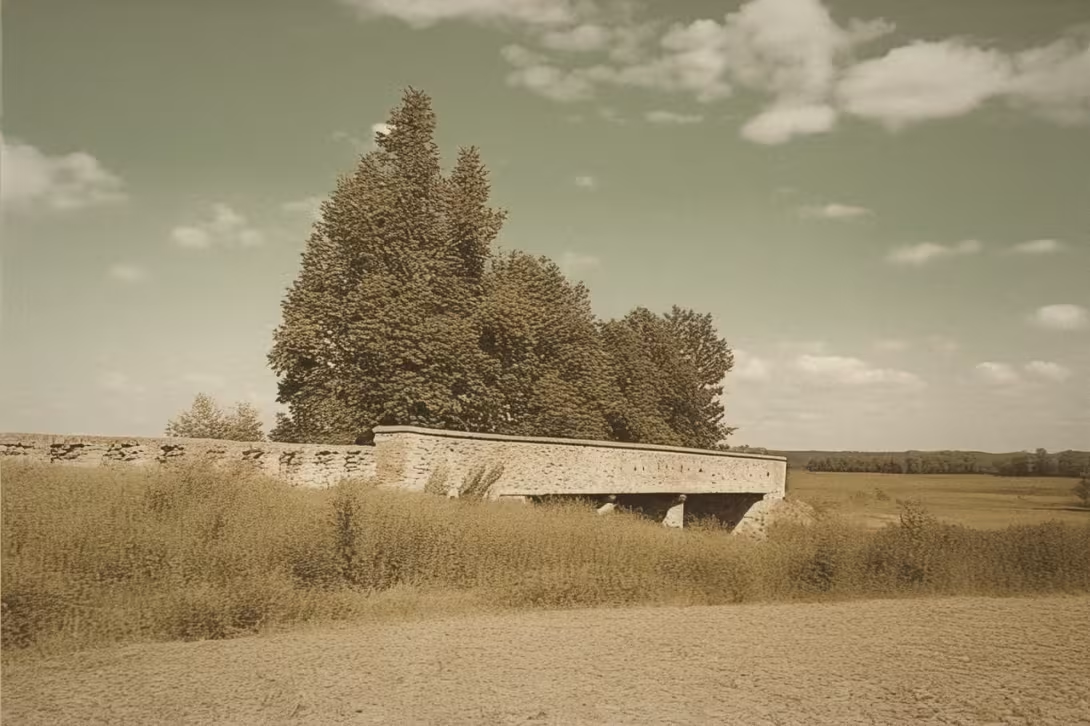
The historical appearance on the left is an AI-generated visualisation and serves as inspiration only.
Historical milestones
- 1834
- Construction of the stone bridge across Ředický potok
- 2015
- Reconstruction of the bridge
Architectural development
The bridge is constructed from sandstone blocks featuring three segmental arches. The central arch contains a concrete bed for the Ředický potok, while the outer arches serve as overflows for floodwaters. The pillars have semi-cylindrical bodies with dome-shaped tops, and the embankments are also reinforced with sandstone blocks.
Historical events
1834: Construction of the stone bridge. 2015: The bridge underwent a reconstruction.
Points of interest
– The road bridge was completed in 1834 and is a stone structure that embodies traditional functional stone bridge design from the mid-19th century.
– The bridge features three segmental arches, with the central arch containing a concrete bed for the Ředický potok and the outer arches serving as overflows to manage floodwaters.
– A notable detail of the bridge is its construction year, 1834, carved into the right pillar.
– Although the bridge has maintained its original form, it underwent reconstruction in 2015.
Guide
Show guide text
This text was created by artificial intelligence and has not been editorially reviewed. It may contain inaccuracies.
Welcome. Please, take a moment to settle in and look around you. You are standing before a quiet but significant piece of engineering history, a structure that has silently witnessed the passage of time and the evolution of travel in this region. Right here, crossing the Ředický potok, is the stone road bridge on road II/298. At first glance, it may seem like a simple crossing, but as you look closer, you will realize that you are facing a preserved example of mid-19th century functional design. This bridge is not just a way to get from one side of the water to the other; it is a cultural monument, a testament to the craftsmanship of a bygone era.
Let us step back in time to the year 1834. Imagine the landscape of the Pardubice district nearly two centuries ago. The world was moving at a different pace, and the connection between villages was a matter of vital importance for trade, communication, and daily survival. It was in this year that this bridge was completed, specifically designed to link the villages of Sezemice and Rokytno. In the early 1800s, building a reliable stone bridge was a major investment and a feat of local engineering. While the names of the specific architects or master builders have been lost to history, their legacy remains etched in the very stone you see before you. They didn't build this for vanity or ornament; they built it for endurance. They wanted a structure that could withstand the seasonal whims of the Ředický potok and the weight of heavy carts and livestock moving between the settlements.
Now, I invite you to turn your attention to the architecture of the bridge. As you look at the structure, notice the material. The bridge is constructed from sturdy sandstone blocks. Sandstone was a preferred material for such works because of its availability and its ability to be shaped, yet it remains incredibly resilient when handled correctly. Please, take a closer look at the underside and the sides of the bridge. You will notice that the bridge is characterized by three segmental arches. A segmental arch is a curve that is less than a full semi-circle, which allows the bridge to remain relatively low while still providing great strength and stability. These three arches distribute the weight of the road and the traffic above them down into the foundations, allowing the water of the Ředický potok to flow freely beneath.
Observe the way the sandstone blocks are fitted together. There is a rhythmic quality to the masonry, a repetition of form that speaks to the disciplined work of the stonemasons of 1834. This is what we call traditional functional design. In the mid-19th century, the goal was efficiency and longevity. There are no unnecessary flourishes here, no elaborate carvings or decorative pillars. The beauty of this bridge lies in its honesty—its form follows its function perfectly. The strength of the stone and the geometry of the arches are the only decorations it needs.
As you stand here, it is interesting to think about the countless stories this bridge could tell if the stones could speak. While we don't have records of specific historical figures who crossed this exact spot, think of the thousands of ordinary people who have passed over these arches. Think of the farmers bringing their produce to market, the postal carriages carrying news from distant cities, and the generations of residents from Sezemice and Rokytno who used this path to visit family or conduct business. For nearly two hundred years, this bridge has been a constant in a changing world. It survived the transition from horse-drawn carriages to the first motorized vehicles, and it continues to serve its purpose today on road II/298.
However, time and the elements eventually take their toll on even the strongest sandstone. To ensure that this monument would survive for another two centuries, a significant reconstruction took place in 2015. This was not a project to change the bridge, but rather to save it. The goal of the reconstruction was to preserve the original character and the historic silhouette of the three segmental arches while updating the structural integrity to meet modern safety standards. It is thanks to this careful intervention that you can stand here today and see the bridge almost exactly as it appeared when it was first opened in 1834. It is a delicate balance between preserving the past and making it functional for the present.
One of the most fascinating aspects of this monument is its status as a protected cultural monument. It might seem surprising that a small road bridge is granted such a title, but it is precisely its simplicity and authenticity that make it valuable. In an age of concrete and steel, a hand-built stone bridge is a rarity. It represents a moment in human history when we worked in harmony with natural materials, using gravity and geometry to conquer the landscape. The mystery of the unknown architects actually adds to the charm of the place; it reminds us that much of our infrastructure was built by anonymous craftsmen whose only reward was the knowledge that their work would last for generations.
As you prepare to move on, I encourage you to take a final walk across the bridge. Feel the transition from the modern road surface to the historic stone supports beneath you. Listen to the sound of the Ředický potok flowing under the arches. Take a moment to appreciate the silence and the stability of the sandstone. This bridge is more than just a crossing; it is a physical link between the year 1834 and the present day, a bridge not only across a stream but across time itself.
Thank you for stopping to appreciate this hidden gem of the Pardubice district. Whether you are continuing your journey toward Sezemice or heading toward Rokytno, carry with you the image of these three sandstone arches. We hope this brief encounter with the past has added a new layer of meaning to your travels. Please enjoy the rest of your exploration of the surrounding landscape. Safe travels.
Tips for visitors
Best time to visit this stone road bridge is during the spring and autumn when the surrounding landscape is lush and green. The mild weather also makes it ideal for photography.
Parking is available along the roadside, but be mindful of the rural landscape and avoid blocking any farm entrances or fields. Public transportation options are limited in this area, so consider bringing a car or using ride-sharing services.
When visiting the bridge, bring comfortable walking shoes and clothing suitable for the season. Don't forget your camera to capture the stunning views of the Ředický potok.
For photography enthusiasts, the best spots to capture the bridge are from the north side, where you can frame it with the surrounding hills. The late afternoon sunlight also creates a beautiful golden glow.
If you're looking for something to do nearby, head to Sezemice and explore its charming town center within a 30-minute walk or drive. Rokytno is another nearby village worth visiting.
Businesses nearby
Do you run a restaurant, accommodation, shop, museum, rental, wellness or other visitor service near this monument? Show yourself directly to the people heading to it — this is how they will see you in the app and on the web:
Nearby
The bridge is situated in the rural landscape between Sezemice and Rokytno in the Pardubice region.
Accommodation nearby
Themed route
Route: Sezemice to Rokytno Countryside Tour
Stop 1: Sezemice Village Type: Rural village Why visit: Experience the charm of a traditional Czech village, with its quaint houses and picturesque streets.
Stop 2: Rokytno Village Type: Rural village Why visit: Visit this charming village, known for its beautiful church and historic architecture.
Stop 3: Ředický Potok Bridge Type: Historic bridge Why visit: Cross the iconic bridge over Ředický potok and take in the stunning views of the surrounding countryside.
This route takes you through the picturesque rural landscape between Sezemice and Rokytno, showcasing the charm of traditional Czech villages and historic landmarks.
Seasonal recommendations
Spring
As you visit the historic landmark, most II/298 over Ředický potok, you'll be greeted by the gentle warmth of spring. The sunlight casts a golden glow on the surroundings, and the lush greenery starts to bloom. Take advantage of the mild weather with comfortable clothing and shoes suitable for walking.
Practical tips: Arrive early to avoid crowds, and dress in layers as the temperature can fluctuate. The best time to visit is during the morning or late afternoon when the sun isn't too harsh.
Summer
In the summer, the historic landmark takes on a lively atmosphere, with lush greenery and vibrant flowers surrounding the most. The warm sunshine makes it an ideal spot for a leisurely stroll. Be prepared for larger crowds and plan your visit accordingly.
Practical tips: Consider arriving early to beat the heat and avoid peak hours. Wear comfortable clothing, sunscreen, and a hat to protect yourself from the sun. The best time to visit is during the morning or late afternoon when the sun isn't too intense.
Autumn
As autumn sets in, the historic landmark takes on a cozy atmosphere, with the golden hues of changing leaves adding warmth to the surroundings. The crisp air carries the scent of ripe fruits and woodsmoke, making it an ideal time for a relaxing visit. Be prepared for cooler temperatures and dress accordingly.
Practical tips: Arrive early to avoid crowds, and bundle up in layers as the temperature can drop quickly. The best time to visit is during the morning or late afternoon when the sun isn't too harsh.
Winter
In the winter, the historic landmark takes on a serene atmosphere, with snowflakes gently falling onto the surroundings. The cold air carries the scent of woodsmoke and hot chocolate, making it an ideal time for a cozy visit. Be prepared for shorter opening hours and dress warmly to combat the chill.
Practical tips: Arrive early to avoid crowds, and bundle up in layers as the temperature can drop significantly. The best time to visit is during the morning or late afternoon when the sun isn't too harsh.
Visualizations and artistic views


The visualisations are generated by artificial intelligence and serve as inspiration.
Photos from the area
Real photos taken near the monument

Zdroj a licence jsou uvedeny u každého snímku.
Tips from visitors
No tips yet. Be the first!
Log in and add your tip.
Sources and literature
Fotografie: Petr1888 / CC BY-SA 4.0 — Wikimedia Commons. The author and licence also appear when you hover over the image.
Faktickým podkladem tohoto textu byl článek na Wikipedii, jehož autory jsou přispěvatelé Wikipedie. Článek je dostupný pod licencí CC BY-SA 4.0.
Location on the map
More monuments – Pardubický kraj
Show all in the region

Příběhy a pověsti
Legendy, pověsti a příběhy spjaté s touto památkou

Fotografie návštěvníků
Zatím žádné fotografie. Buďte první, kdo přidá fotografii z návštěvy!
Přihlaste se a přidejte svou fotografii nebo hodnoťte.
Za ověřenou návštěvu v aplikaci získáte víc bodů — poznáme podle GPS, že jste na místě.
Reviews and comments