



Mukov Hillfort
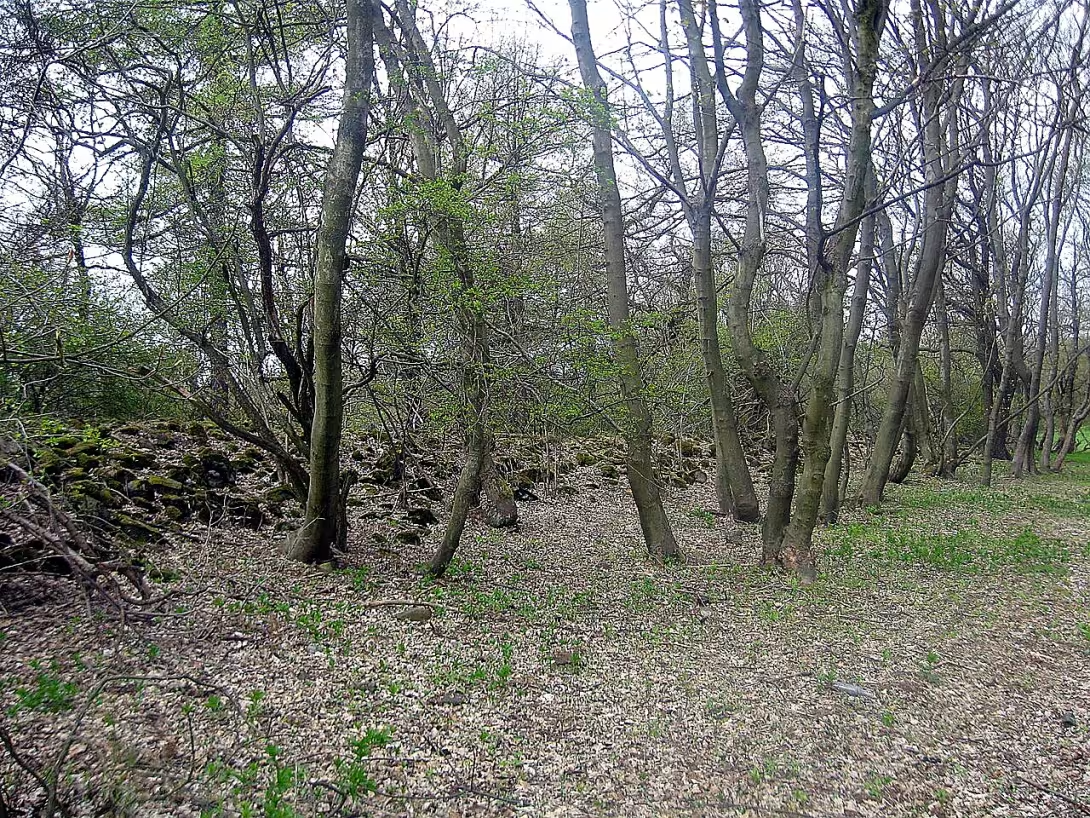
Mukov is a prehistoric fortification located in the Teplice District of the Czech Republic, atop the basalt hill known as Hradišťany. This site features two concentric stone ramparts enclosing areas of approximately 3.5 hectares each and has been protected as a cultural monument since 1964. Its significance is enhanced by its inclusion in the natural reserve Hradišťanská louka, highlighting both historical and botanical importance. Mukov likely served as a sacred precinct rather than a permanently inhabited settlement during its active periods.
The origins of Mukov trace back to the Neolithic and Bronze Age eras, evidenced by archaeological findings such as stone axes from the Neolithic period and bronze tools from the transition between the middle and younger Bronze Ages. These artifacts suggest early human activity focused on metallurgy and possibly ritualistic practices rather than permanent habitation. The site's historical context aligns with broader developments in Central Europe during these periods, where advancements in agriculture and metalworking facilitated complex societal structures.
Architecturally, Mukov consists of two dry-stone ramparts that define its structure. The inner area, known as the acropolis, was once enclosed by walls approximately three meters thick and two meters high, though erosion and modern disturbances have reduced these dimensions over time. The layout suggests a ceremonial or ritualistic purpose rather than residential use, with no definitive evidence supporting ancient gates; instead, openings likely resulted from recent disruptions.
Throughout its history, Mukov has not been associated with specific owners or dramatic changes in administration. Its significance lies primarily in its archaeological and cultural value as a site of early human activity. Key events at the site include the discovery of Neolithic stone axes and Bronze Age artifacts, which provide insights into the technological and cultural practices of its inhabitants.
Today, Mukov is accessible via a red-marked tourist trail from Třebívlice to Milešovka, offering visitors a glimpse into prehistoric life in Central Europe. The surrounding landscape, characterized by basalt hills and lush meadows, adds to its natural beauty. Visitors are drawn not only to the historical significance of Mukov but also to its botanical importance as part of the Hradišťanská louka reserve.
Mukov stands as a testament to early human ingenuity and cultural practices in Central Europe. Its preservation allows for an appreciation of both its archaeological value and natural beauty, making it a worthwhile destination for those interested in history and nature alike. Visitors are invited to explore this remarkable site and reflect on the ancient lives that once thrived here.
Then and now
Drag the slider to compare how the landmark may have looked when it was built with the view today.
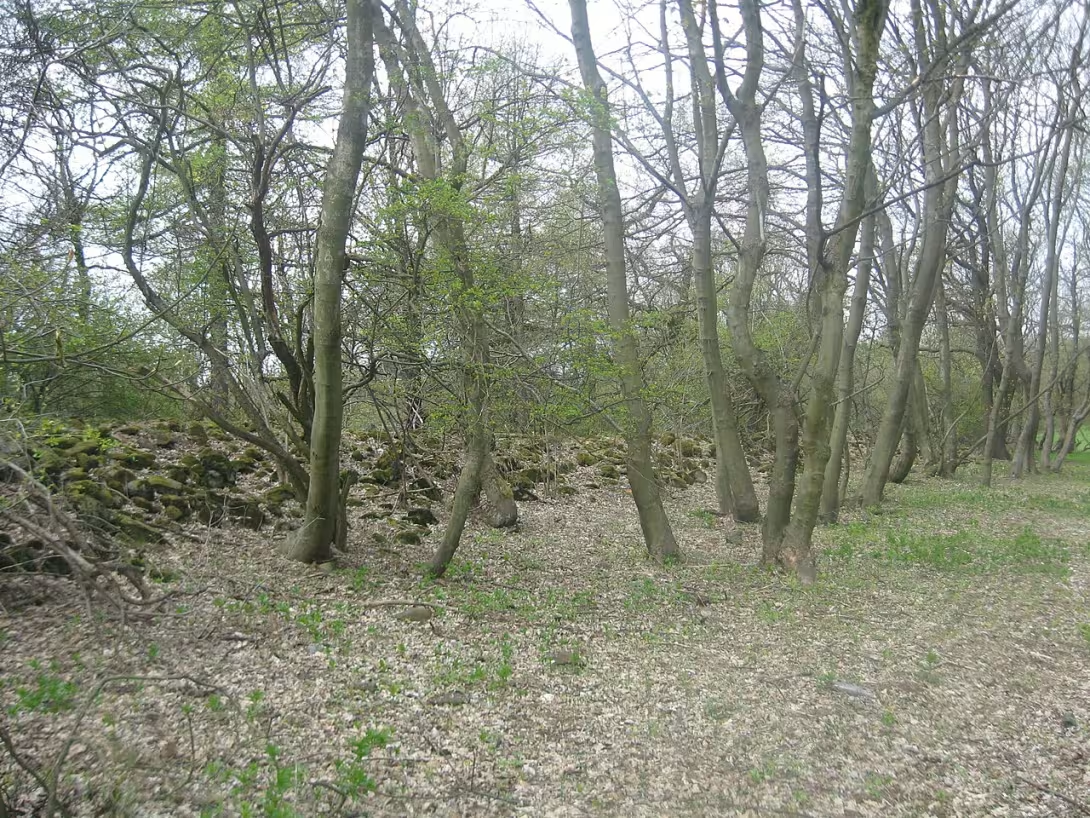

The historical appearance on the left is an AI-generated visualisation and serves as inspiration only.
Historical milestones
- Neolithic period
- The discovery of stone axes indicates early human activity.
- Transition between the Middle and Late Bronze Age
- The finding of bronze tools shows progress in metalworking.
- 1964
- Mukov was declared a cultural monument.
Architectural development
The fortification consists of two dry-stone ramparts, with the inner area known as the acropolis. The walls, originally about three meters thick and two meters high, have been reduced over time due to erosion and modern disturbances. The site's layout suggests it was not intended for permanent habitation but rather served ceremonial or ritual purposes.
Historical events
Discovery of Neolithic stone axes and Bronze Age artifacts indicating early human activity on the site.
Designation as a cultural monument in 1964.
Points of interest
- Mukov is a prehistoric fortification located atop the basalt hill known as Hradišťany in the Teplice District of the Czech Republic. - The site features two concentric stone ramparts enclosing areas of approximately 3.5 hectares each and has been protected as a cultural monument since 1964. - Mukov likely served as a sacred precinct rather than a permanently inhabited settlement, with archaeological findings such as Neolithic stone axes and Bronze Age tools suggesting early human activity focused on metallurgy and possibly ritualistic practices. - The site's historical context aligns with broader developments in Central Europe during the Neolithic and Bronze Age eras, where advancements in agriculture and metalworking facilitated complex societal structures. - Today, Mukov is accessible via a red-marked tourist trail from Třebívlice to Milešovka, offering visitors insights into prehistoric life and its botanical importance as part of the Hradišťanská louka reserve.
Guide
This guide is narrated by a synthetic voice generated by artificial intelligence.
Show guide text
This text was created by artificial intelligence and has not been editorially reviewed. It may contain inaccuracies.
Mukov is a prehistoric hillfort in the Teplice district. It lies on the summit of a basalt hill called Hradišťany, approximately two and a half kilometers east of the village of Mukov. Since nineteen sixty-four it has been protected as a cultural monument. Most of its area also has great botanical value, and therefore it is at the same time a nature reserve called Hradišťanská louka.
The distant past of the place is documented by archaeological finds. Archaeologists discovered two stone axes from the younger Stone Age and bronze axes from the transition between the Middle and Late Bronze Age. Pottery fragments were also found, made by people of the Knovíz culture. The hillfort was probably not permanently settled. It likely served as a sacred precinct and could have been connected with metal processing.
Two stone ramparts divide the space of the hillfort into two parts. The total area of both precincts is given as approximately three and a half hectares. The inner part, called the acropolis, occupied the summit plateau covered with meadow. The outer fortification surrounded it from three sides, with only the south remaining open.
The ramparts visible today are remains of fortifications made of stones laid dry, that is without mortar. The fortifications were roughly three meters thick and about two meters high. Older literature, however, stated a height of up to fifteen meters.
There are several gaps in the ramparts, which were formerly considered to be entrance gates. However, these are probably more recent disturbances. The original entrance apparently led from the southeast directly into the acropolis. Entry into the outer fortification was then through a gate in the northeastern part of the inner rampart. The acropolis gate was later damaged by the construction of a shelter for shepherds.
Tips for visitors
The best time to visit Mukov is during late spring or early autumn when the weather is mild, making it ideal for exploring the ruins without extreme temperatures. These seasons also offer beautiful natural scenery with lush meadows and blooming wildflowers around the basalt hills, enhancing your experience. Additionally, visiting outside of peak summer months can help avoid larger crowds, allowing for a more peaceful exploration.
Public transport options are also viable; however, it's recommended to check current schedules and routes in advance using an online search tool or local transportation resources. The trail itself is well-maintained and suitable for most visitors.
When visiting Mukov, consider bringing comfortable walking shoes as the terrain can be uneven due to natural erosion around the basalt hills. A hat, sunscreen, and water are advisable, especially during warmer months. Additionally, a camera or smartphone with a good zoom lens is recommended to capture the stunning views of the surrounding landscape.
For photography enthusiasts, early morning or late afternoon provides the best light for capturing the ruins against the backdrop of the basalt hills and meadows. The eastern side offers particularly striking sunrise shots, while the western side is ideal for sunset lighting. Be mindful of your surroundings to ensure safety when taking photos near the edges.
Nearby attractions within a 30-minute walk include the scenic views from Milešovka, which offer panoramic vistas of the region's natural beauty. This makes it an excellent spot for families with children who enjoy nature walks and exploring open landscapes. The area is also great for picnics or short hikes, making it a perfect complement to your visit to Mukov.
Frequently asked questions
Can the monument be visited?
This is an archaeological site. Often there is little to see on the ground and the land may be private. We have not verified access.
Where is the monument?
Location: Mukov, Ústecký kraj. The map on this page shows the exact spot.
Why is the monument protected?
It is listed in the Central List of Cultural Monuments of the Czech Republic as a cultural monument (register no. 1000155487).
Businesses nearby
Do you run a restaurant, accommodation, shop, museum, rental, wellness or other visitor service near this monument? Show yourself directly to the people heading to it — this is how they will see you in the app and on the web:
Nearby
Mukov is accessible via a red-marked tourist trail from Třebívlice to Milešovka. The surrounding landscape includes basalt hills and lush meadows, contributing to its natural beauty.
Accommodation nearby
Trips and activities nearby
Guided tours, tickets and activities nearby from GetYourGuide
Affiliate link: if you buy from the partner, we may receive a commission. The price for you does not change.
Search tours and activities →Themed route
Mukov Hradiště and Surroundings Hike
1. Mukov Hradiště Type: Archaeological Site This medieval hillfort is a significant historical site, offering a glimpse into the region's past. Explore the remains of the fort and its surroundings, which provide a unique insight into the lives of ancient inhabitants.
2. Milešovka Type: Mountain Approx. 1 km from Mukov Hradiště This hill offers a panoramic view of the surrounding landscape. On a clear day, you can see the distant landscape of the Ústí nad Labem region.
3. Basalt Hills Type: Geological Formation Approx. 0.5 km from Mukov Hradiště The basalt hills surrounding Mukov are a result of volcanic activity. Take a short walk to observe the unique geological formations and enjoy the scenic views.
4. Lush Meadows Type: Natural Attraction Approx. 0.2 km from Mukov Hradiště The meadows surrounding Mukov Hradiště are a haven for nature lovers. Take a leisurely walk and enjoy the beauty of the local flora and fauna.
Seasonal recommendations
Jaro
In the spring, Mukov is surrounded by green trees and blooming plants, creating a pleasant atmosphere. The specific feature of this season is also the spring lighting, where sunlight filters through the trees and creates interesting shadows. If you wish to visit Mukov in the spring, we recommend going during the first months of the season when there are not yet too many tourists. The best time for a visit is in April or May, when the weather is pleasant and nature is in full bloom.
Summer
The main summer season is an ideal time to visit Mukov. In summer, the weather is sunny and warm, allowing for comfortable strolls around the site. The specific feature of this season is also the summer lighting, which creates long shadows and a pleasant atmosphere. If you want to avoid crowds, we recommend visiting Mukov in the early morning or late afternoon when there are fewer people. Don't forget to bring enough water and food, as the offerings nearby are limited.
Autumn
The autumn season is ideal for visiting Mukov if you wish to see the site in tranquility. The specific feature of this time is the autumn lighting, which creates pleasant shadows and atmosphere. Plants are in full greenery and trees are covered with leaves, creating a beautiful view. If you want to visit Mukov during the autumn season, we recommend going in September or October when the weather is still pleasant and nature is in full bloom. Don't forget to bring warm clothing, as the weather can be chilly.
Winter
The winter season is the best time to visit Mukov if you want to see the site in silence. The specific feature of this season is the winter lighting, which creates long shadows and a pleasant atmosphere. Plants are covered with snow and trees are leafless, creating a beautiful view. If you wish to visit Mukov during the winter season, we recommend going in December or January when the weather is coldest. Don't forget to bring warm clothing and boots so your feet don't get cold.
Visualizations and artistic views


The visualisations are generated by artificial intelligence and serve as inspiration.
Photos from the area
Real photos taken near the monument


Zdroj a licence jsou uvedeny u každého snímku.
Tips from visitors
No tips yet. Be the first!
Log in and add your tip.
Sources and literature
Photos: Gortyna / CC BY-SA 4.0 — Wikimedia Commons. The author and licence also appear when you hover over the image.
Faktickým podkladem tohoto textu byl článek na Wikipedii, jehož autory jsou přispěvatelé Wikipedie. Článek je dostupný pod licencí CC BY-SA 4.0.
Location on the map

Příběhy a pověsti
Legendy, pověsti a příběhy spjaté s touto památkou

Fotografie návštěvníků
Zatím žádné fotografie. Buďte první, kdo přidá fotografii z návštěvy!
Log in a přidejte svou fotografii nebo hodnoťte.
Za ověřenou návštěvu v aplikaci získáte víc bodů — poznáme podle GPS, že jste na místě.
Reviews and comments