






Na Rovinách Hillfort
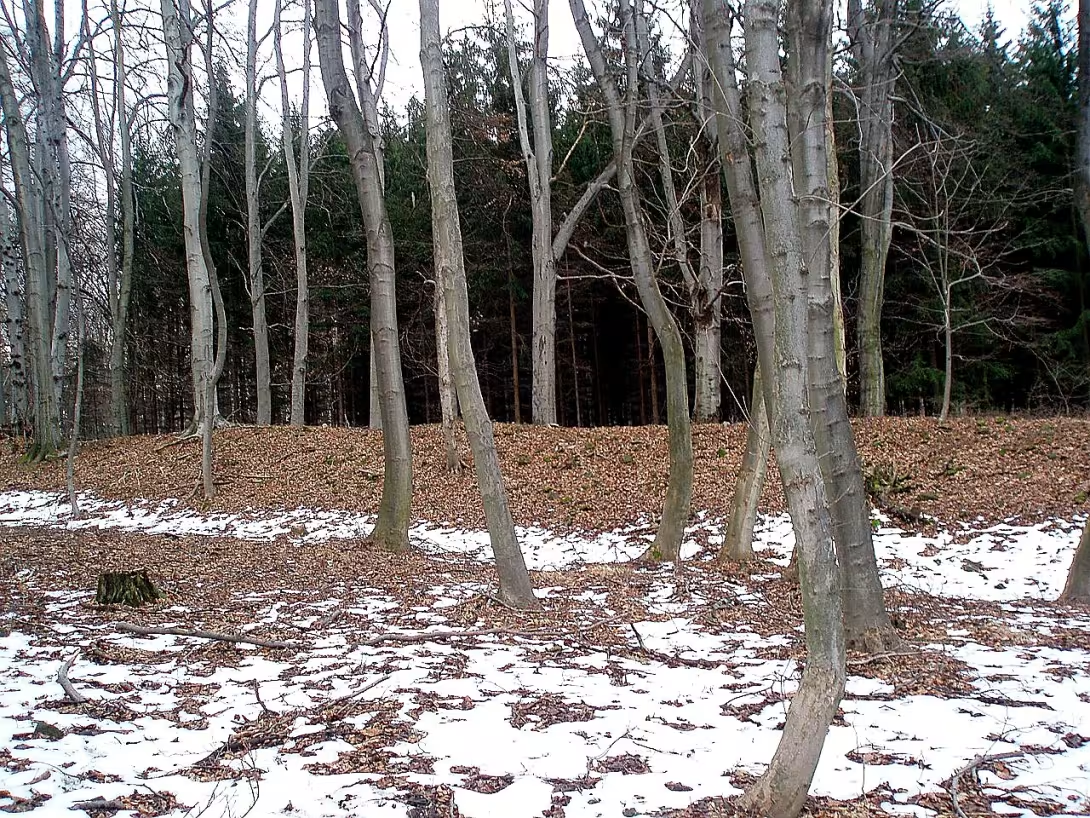
Na Rovinách is located a prehistoric castle from the time of the Halštats, about 2.5 km west of the village Domoušice in the district of Louny in Ústecký kraj. This monument is located on the sharp edge of the Džbán plain at 500-510 metres above sea level and protects itself as a cultural monument.
The existence of the castle is confirmed by the findings of ceramic shards, which show its use from the late period of the Halštátský to the early dobę Latenská. A fraction of the stone axe from the late Stone Age was discovered here in 1969.
The castle has a rectangular shape and its strategic position on the edge with slopes exceeding the surrounding terrain by 80 metres was used. It was originally fortified from all sides, but the side parts were subsequently disturbed by stone mining. The fortification was preserved only on the front and part of the southeast side, where it is two to fourteen metres below the edge of the platform.
On the accessible southwest side, two fortification lines protected the fort. The outer wall, which the archaeological survey confirmed, was 6 metres thick and built from opus panels. In front of her, there was a ditch five metres wide and a deep 1.6 metres. The second line of fortifications was about 30 metres from the first and consisted of a trench five metres wide and a deep two metres with partially cut-out walls in the rock. Behind him was a wall six metres wide and a height of two metres. The north side closed a cross wall without a ditch.
The yellow marked tourist route from Kounov leads to the castle Na Rovinách to the Mutìjovice station, which orbits its southern edge. The blue-marked route from Jimlín passes directly through the castle area and leads further to the Hradic Hradiv after the ruins of Castle Právna.
This site is an important witness to the prehistoric settlement in the region of Lounia. The visit offers the possibility to observe the remains of ancient fortifications in natural terrain.
Historical milestones
- end 8th - beginning of 5th century B.C. l.
- The existence of the castle is confirmed by ceramic shards from the period of the Hallatites.
- Late Stone Time
- A fraction of the stone axe was found, indicating the settlement of this area already in the late Stone Age.
- 1969
- The archaeological survey confirmed the existence of the castle and its fortification.
Architectural development
The fortification consisted of several lines, including the outer wall of opposites and deep moats. The second line contained a five-metre wide moat with vertical walls and a subsequent wall. The northern part of the castle closed a cross wall without a ditch.
Points of interest
- It's an ancient fortress from the time of the Hallatians, which is located on the edge of the Jaban Plain. In 1969, a fraction of the stone axe from the late Stone Age was discovered here. - The fort has a rectangular shape and its slopes exceed the surrounding terrain by 80 metres. - There were two fortifications on the southwest side of the fort, including the wall of the opposites. - The north side of the fort closed a cross wall without a ditch.
Guide
Show guide text
This text was created by artificial intelligence and has not been editorially reviewed. It may contain inaccuracies.
Welcome to the place where time stopped and where the country touches history in its purest form. You're standing in front of the Na Rovinách archaeological site. Before you take the next step, stop for a moment and feel the surrounding space. Look around you and feel the atmosphere of this place. You are on the edge of the Jaban Plain, in a place that dominates the surrounding area by its location. Do you feel the sense of openness and the security that this place offers? This landscape, which you are now observing, is not just an ordinary part of the country. It is a place that has witnessed for thousands of years human efforts, security and efforts to create a home in a difficult natural environment.
Let's go back deep into the past together to understand why this place is so special. This location is not just a random point on the map. It's a fortress that tells the story of human endurance. The main existence of this fortified place dates back to the period of the Hallatians, which means that people lived here and built their forts approximately between the end of the eighth century and the beginning of the fifth century before our present sign. Imagine the distance in time. It is a period when the world was changing, when the foundations of our later cultures were forming. But their story didn't start here until then. In archaeological works, something has been discovered that brings us back to the dark ages of mankind. A fraction of the stone axe was found which came from the late Stone Age. This gives us clear proof that people have inhabited this area in the oldest times, much before the great and complex walls began to build here. This area has been important to them since the beginning, perhaps because of its strategic position or because of the wealth that nature offered.
Now pay attention to what you see right in front of you and what is hidden in the terrain itself. If you look around the entire area, you will notice that this castle is very specific, rectangular. This shape was not random. It was the result of a premeditated plan of people who wanted to make the best use of the natural shape of this curve. The fort was originally fortified from all sides to provide protection for all who lived inside. Look at the slopes surrounding you. Notice how sharply the terrain rises from the surrounding landscape. These slopes exceed the surrounding terrain by 80 metres. This height superiority was a key element of defense. Anyone who would try to attack this place had to overcome not only time and distance, but also this steep and challenging climbing terrain.
If you look more closely at the footprints in the ground, try looking for remains of ancient engineering. The archaeological surveys that were taking place here revealed traces of two lines of fortification. That means protection wasn't just easy, it was layered. They had moats and mounds that formed an impenetrable barrier. In the field you can also see the remnants of the wall, which was made of flat panels of an opposable stone. This substance you see in the past was a very important building material for the people of this place. Even though all we see today are fragments and clues, try to imagine the monumental nature these walls once had to affect anyone who looked at them from below.
You may now be asking who the people who lived here were. Even if we don't know their names, even if we don't know their faces or their voices, their presence here is felt in every find. They were builders who were able to create a solid and organized home from hard land and stone. They were people who had to work together to build this vast and complex fortification. Every piece of pottery the archaeologists found here is like a broken letter from the past. These ceramic containers tell us about their daily lives, how they prepared food, how they kept water and how they tried to organize their world within these walls. Even though we have no record of their personalities, their legacy is here in every stone.
However, there is also one interesting thing that could make you think. It's the fascinating connection between the ancient past and modern science. Imagine the year one thousand nine hundred sixty-nine. That was the year that scientists began rediscovering this place and confirming its true meaning. Thanks to their work and careful research, we now know that what may seem like ordinary hills and remains of stone is actually proof of the existence of a highly organized society. The stone axe from the late Stone Age they found here is the key to the unknown world. It's a reminder of how long people have been using this particular place and how deep our roots are in this landscape.
Now I'm not gonna hold you back any longer. I suggest you continue your walk and try to find further traces of this ancient history in the eyes of nature. Look at the slopes, see the atmosphere of this place and try to imagine what this castle looked like at the time of its greatest glory, when its walls stood firm and intact and when its rectangular shape clearly dominated the whole surrounding area. Let yourself be carried away by the feeling that you are standing right now in a place where human efforts are colliding with the relentless movement of time. Thank you for choosing to visit Na Rovinách and devote your time to this place. We wish you a pleasant continuation in discovering the beauty and mystery of this beautiful landscape.
Tips for visitors
The best time to visit is the spring or autumn season, when the weather is mild and the views from the Jaban plain are brightest.
You can reach the location by car to the village Domoušice where you can find a place to stop. The location is also available by public transport; Please check the current connection in the traffic controller.
For a comfortable walk on the sharp edge, take firm shoes and plenty of drinking water.
For photography we recommend to use the morning or evening light, which will highlight beautifully the rectangular shape of the castle and surrounding landscape.
In the vicinity you can take a tour of the ruins of the castle Truth or the castle grounds. It is advisable for families with children to prepare a short chat about the ancient times when the primordial castle was established, which can increase the visit.
Businesses nearby
Do you run a restaurant, accommodation, shop, museum, rental, wellness or other visitor service near this monument? Show yourself directly to the people heading to it — this is how they will see you in the app and on the web:
Events nearby

Zdroj akcí: otevřená data měst a obcí ČR (Národní katalog otevřených dat) a kalendář akcí Národního památkového ústavu.
Nearby
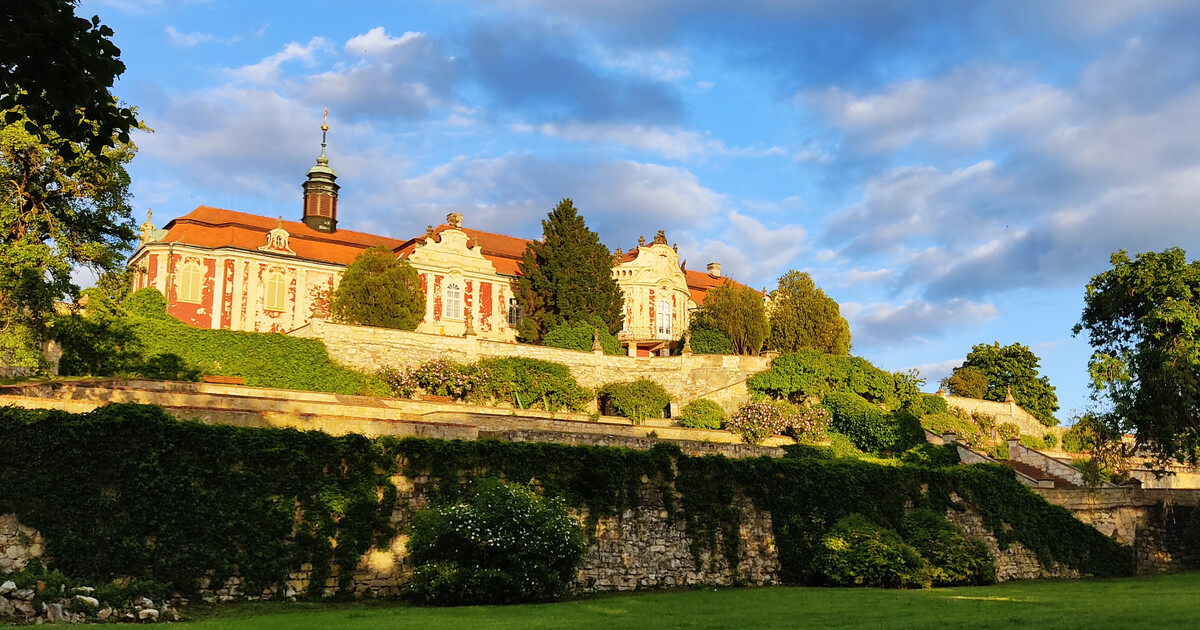
V blízkosti se nachází zřícenina hradu Pravda, hradiště Výrov a obec Domoušice. Oblast je protkána turistickými trasami, včetně modré trasy z Jimlína.
Accommodation nearby
Themed route
1. Jimlin (starting point): Here begins the blue tourist route leading to the surroundings. 2. Hradiště JENÁV (ancient fortification): Interesting place for the knowledge of ancient settlements. 3. Na Rovinách (archaeological sites): The main destination of a trip with unique findings from the past. 4. Castle Truth (ruins of the castle): Fascinating remains of the building with beautiful views. 5. Municipality of Domoušice (municipality): A place to rest and finish the journey.
Seasonal recommendations
Spring: In the spring period, the archaeological site Na Rovinách in Domoušice is revived by flowers and new leaves, which gives the place a lively atmosphere. The sun's rays illuminate the ancient remains with more pleasant angles, making them even more fascinating. It is advisable to visit in the first half of the day as it can be a warm and sunny day attractive to other tourists. It is recommended to wear clothes suitable for mild weather, such as sweaters or light jackets to protect against colder mornings or evenings.
Summer: Summer in Domoušice offers long days and warm sunlight, which highlights the beauty of archaeological finds. Nature is in peak bloom, creating an attractive environment for family trips. Summer is the most popular time to visit, so it is recommended to come early in the morning to avoid flooding the crowd of travelers. It's good to have an umbrella and an umbrella for unpredictable weather. Clothes should be light, light and sun-proof.
Autumn: In autumn, Na Rovinách is transformed into a quiet place with a colourful leaf of trees that gives the place a unique atmosphere. The sunlight is more pleasant and the temperature is more reminiscent of moderation, which creates ideal conditions for a peaceful walk on archaeological remains. This season there are fewer visitors, so it is recommended to visit at any time of the day. Clothes should be mild with the possibility to add layers to protect against colder weather.
Winter: Winter visit Na Rovinách offers a quiet and quiet atmosphere where the place is covered with snow or freezing air. Sunshine in winter days illuminates archeological structures with more breathtaking colors and shadows, adding a mystical mood. Winter is the least period for visiting, so it is recommended to visit in the first half of the day when the open times are longer. It is necessary to carry warm clothes, wind and snow protection such as jacket and gloves, although the visit will be calmer.
Visualizations and artistic views


The visualisations are generated by artificial intelligence and serve as inspiration.
Photos from the area
Real photos taken near the monument


Zdroj a licence jsou uvedeny u každého snímku.
Tips from visitors
No tips yet. Be the first!
Log in and add your tip.
Sources and literature
Photos: Gortyna / Public domain — Wikimedia Commons. The author and licence also appear when you hover over the image.
Faktickým podkladem tohoto textu byl článek na Wikipedii, jehož autory jsou přispěvatelé Wikipedie. Článek je dostupný pod licencí CC BY-SA 4.0.
Location on the map
Příběhy a pověsti
Legendy, pověsti a příběhy spjaté s touto památkou

Fotografie návštěvníků
Zatím žádné fotografie. Buďte první, kdo přidá fotografii z návštěvy!
Log in a přidejte svou fotografii nebo hodnoťte.
Za ověřenou návštěvu v aplikaci získáte víc bodů — poznáme podle GPS, že jste na místě.
Reviews and comments