



Němcova vila Villa
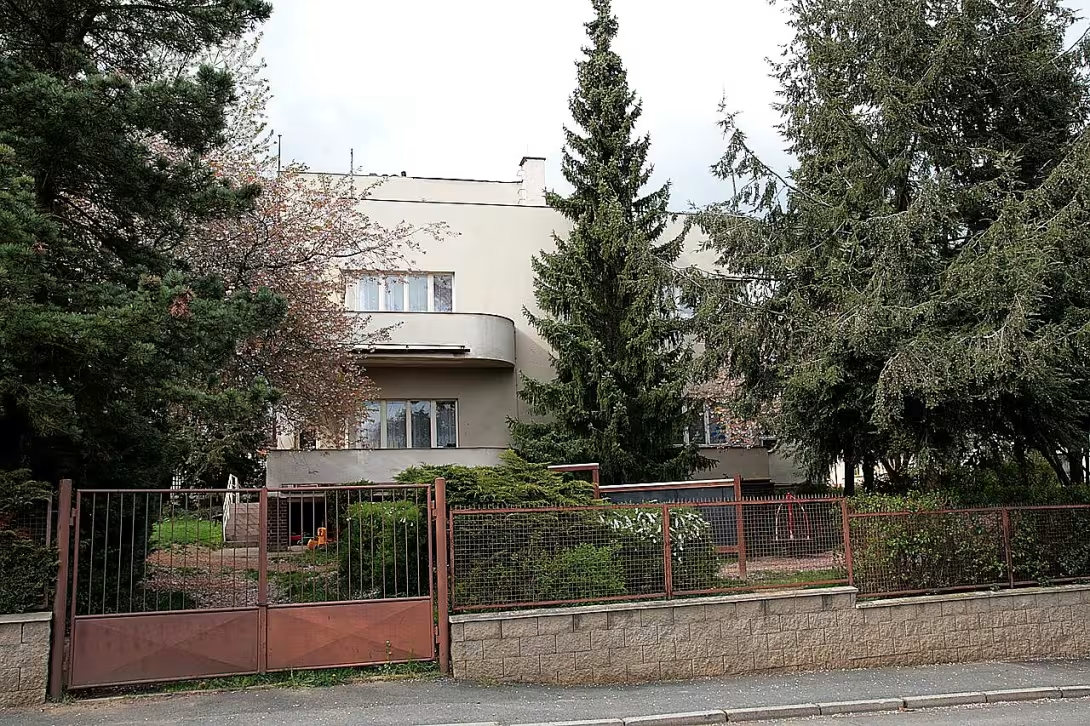
Němcova vila is a historically protected functionalist residential building from 1936 located in Domazlice. The building was built according to the design of architect Josef Novák as a family house with a doctor's office for Rudolf Nemce. To this day, it is paying attention to its preserved exterior appearance, including specific architectural details.
This object is an important example of modern functionalist architecture. It was created in the mid-1930s, when Czechoslovakia faced the maturing effects of the Great Depression and rising tensions in Europe due to the rise of Nazi Germany. In the field of architecture at that time, a wave of modern functionalism culminated in the country. He emphasized the purity of the form, hygiene and effectiveness of the construction. Project documentation of the house was approved and the building was allowed in 1935, the villa itself grew in 1936. The design was created by architect Josef Novák together with builder Karl Nědek and construction company Karl Pičman.
The building consists of several blocks and has a flat roof. The windows are erratic, which corresponds to the interior function of the house. Two round windows and two balconies with a round corner feature the facade. While the exterior was preserved in its original form, except for a small extension, the interior space had undergone partial adaptations. A more significant reconstruction was carried out in part of the office, while the residential area preserved its original floors, built-in cabinets and the amount of original windows and doors including fittings. The central staircase hall also takes the original form.
The first owner and user of the villa was the doctor Rudolf Němec since its completion in 1936. After his death in 1978, the building was sold to the city of Domazlice. In the following period, the inner spaces served as a nursery and later there was a kindergarten. Since 2024, the villa has been protected as a cultural monument. Apart from the house itself, there is also a adjacent garden and original fencing.
The key moments in the history of the building are 1935, when project documentation was created and construction was allowed. A year later, construction was completed for the first owner of Rudolf the German. The important milestone was 1978. Then after the owner's death, the property was transferred to the town of Domažlice and was adapted for the operation of the nursery and nursery school. The year 2024, when the villa became a cultural monument, was an important day for future protection of the building.
Currently, the house is owned by Domazlice and is temporarily without use. Since the exterior has been preserved in almost original condition including unique facade details, it represents a valuable trace of interwar building culture. When visiting Domažlic and their historical centre with the archway, Chode Castle or surrounding nature of the Czech Forest, it is worth paying attention to this functionalist splendour.
Then and now
Drag the slider to compare how the landmark may have looked when it was built with the view today.
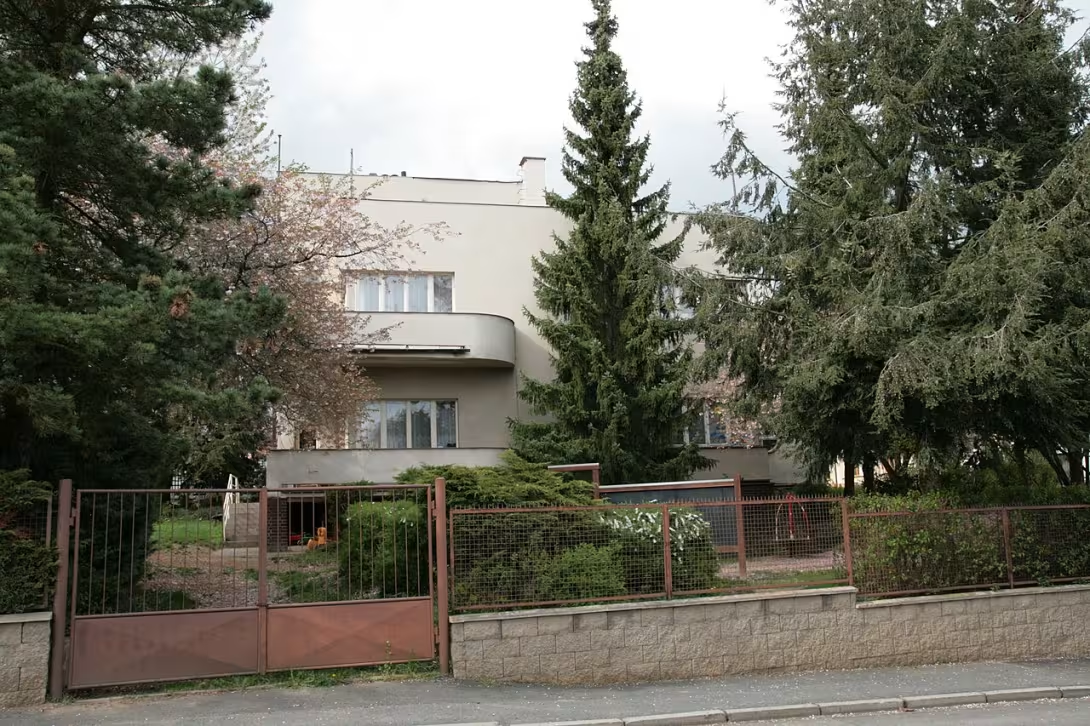

The historical appearance on the left is an AI-generated visualisation and serves as inspiration only.
Historical milestones
- 1935
- Project creation and building permit.
- 1936
- Finishing the construction of a functionalist villa for Dr. Rudolf the German.
- 1978
- Sale of the building to the town of Domažlice and subsequent establishment of the nursery and nursery school.
- 2024
- The villa has become a protected cultural monument including garden and fencing.
Architectural development
The object consists of several blocks with flat roof and irregularly placed windows according to internal function. The exterior has been preserved in almost original form except for a small extension, while the interior has undergone partial adaptations. A part of the office went through a more distinctive reconstruction, while the residential part kept its original floors, built-in cabinets, windows and doors including fittings.
Historical events
In 1935 the project documentation was approved and the building was allowed. In 1936 the villa was built for the doctor Rudolf the German. In 1978, after the owner's death, the building was sold to the city and subsequently adapted for the operation of the nursery and nursery school. In 2024 the villa was declared a cultural monument.
Owners
Rudolf Němec (1936 to 1978), City of Domazlice (from 1978 to today).
Points of interest
- The building was built in 1936 according to the design of architect Josef Novák as a family house with a doctor's office for Rudolf Nemce. - The exterior of the house was preserved in its original form, including specific architectural details such as two circular windows and two balconies with round corners. - The interior residential area has preserved the original floors, built-in cabinets, the amount of original windows and doors including fittings and a central staircase hall. - After the first owner's death in 1978, the building was sold to the city of Domazlice and the inner spaces served as a nursery and later as a kindergarten. - Since 2024, the villa has been protected as a cultural monument, with an adjacent garden and original fencing in addition to the house.
Guide
Show guide text
This text was created by artificial intelligence and has not been editorially reviewed. It may contain inaccuracies.
Welcome to Týnské Suburb, where you are now in front of a unique monument that tells interesting chapters from the past. You're standing in front of a German villa, a functional house with flat roofs and distinctive architectural elements that will attack you immediately.
This house was designed in 1935 and built in the following year. Architect Josef Novák, along with Karl German and Karl Pichman, created this functionalist residence for Dr. Rudolf Germans. The original concept was focused on the combination of family space with the practice, which is typical of the functional architecture of the time.
Look up and notice two round windows and two balconies with a round standard. These elements are still visible today and contribute to a unique view of this place. Although a small extension has appeared over the years, the rest of the building has preserved its original character.
Rudolf Němec was a key figure in this villa. As a doctor, he not only created a home here, but also a practice where he could provide care to the people of Domažlic. His contribution to the community is an integral part of the history of this place.
The interesting thing is that until 1978 the villa remained a family home. It was then sold to the city of Domazlice and converted into a nursery and nursery school. This new purpose shows how historic buildings can change and become important for current generations.
We will now invite you to explore this place again. A walk around the garden and fencing allows you to enjoy the beauty surrounding this historic object. We hope you like visitors, and perhaps you will decide to explore other attractions of Domazlic.
Thank you for your attention and wishes for a relaxing walk.
Tips for visitors
The best time to visit the German villa is during the summer months when the days are long and sunny. This period offers ideal conditions for exploring historical monuments and surrounding nature of the Czech Forest.
For those who prefer public transport, buses or trams may be used; specific connections and times can be found in the current schedule.
When visiting, bring a sun protection suit, warm clothes for a colder noon and pants or shoes suitable for walking. Don't forget to also have water and breakfast if you plan to spend the whole day in the area.
Photography of the German villa is best taken in the morning or evening, when light is softer and shadows are doing better. The best places for photos are the garden in front of the house and surrounding meadows overlooking the Domažlická podlož.
In the vicinity of the German Villa you can visit the historical centre Domazlic with its picturesque arch, which is ideal for a short walk. For people interested in history, the castle offers interesting information and views of the surrounding landscape. Families with children can enjoy the nature of the Czech Forest, where it is possible to have a picnic or explore different paths.
Frequently asked questions
Can the monument be visited?
This is a residential or farm building, not a museum with opening hours. Please view it from public space and respect the owners' privacy. We have no information about access to the interior.
Where is the monument?
Location: Týnské Předměstí, Plzeňský kraj. The map on this page shows the exact spot.
Why is the monument protected?
It is listed in the Central List of Cultural Monuments of the Czech Republic as a cultural monument (register no. 2000008615).
Businesses nearby
Do you run a restaurant, accommodation, shop, museum, rental, wellness or other visitor service near this monument? Show yourself directly to the people heading to it — this is how they will see you in the app and on the web:
Events nearby

Zdroj akcí: otevřená data měst a obcí ČR (Národní katalog otevřených dat) a kalendář akcí Národního památkového ústavu.
Nearby
Domažlice a jejich historické centrum s malebným podloubím, chodský hrad a okolní příroda Českého lesa.
Accommodation nearby
Themed route
Thematic cruise route: Němcova vila and the surroundings of Domazlic
1.Němcova vila (villa) The main aim of our route is to visit the German villa, which boasts elegant architecture and historical significance. It is an ideal place for those who like beautifully preserved building monuments.
2. Historic Centre Domažlic (Historical Centre) After visiting the villa, move to the historic city centre where you will enjoy a view of the picturesque archway. This area is full of life and offers the opportunity to explore local markets and restaurants.
3. Chode Castle (Castle) The next goal will be Chodská Castle, which is located near Domažlic. Its history and panoramic views of the surrounding countryside make this castle a necessary stop for every traveler.
4. Nature of the Czech Forest (nature) The final point of the route is the beautiful nature of the Czech Forest, where you can enjoy quiet walks and admire wild flora and fauna. This place offers an escape to calm and natural beauty.
This route will allow you to explore not only the Germans' villa, but also the rich cultural and natural resources surrounding Domažlic.
Seasonal recommendations
Spring: In spring the Němcova vila is decorated with flowering gardens that turn into a magnificent flower web. The sun rays illuminate the architectural elements of the villa and its surroundings in fine colours, which contributes to a delicious atmosphere. Visitors can enjoy a quiet day without excessive crowds. We recommend to visit slowly and with everything needed for a short noon, such as protective sunglasses and light clothing that adapts to variable weather. The best time to visit is usually in the early afternoon when the temperature is most pleasant.
Summer: In summer Němcova vila gains life thanks to long-term sunlight and gardens full of flowering plants. The atmosphere is charged with summer sounds and warm air, which is reflected in the perception of historical space. Despite the attraction, the villa can be very visited in the main summer season, so it is advisable to arrive early in the morning or later in the evening in order to avoid pushing. Do not forget the protective sun cream and light clothing that will help you adapt to the warm conditions today.
Autumn: In autumn months, Němcova vila offers a mild and calm atmosphere when leaves fall from trees and prepare the country for winter. Sunshine days are still common, allowing a beautiful understanding of architecture in warm light. Visiting is usually lower than in the summer, so you can fully immerse yourself in the historical environment without disturbing irritation. We recommend wearing mild clothes and perhaps even blankets for cold days where a pleasant contrast can be created between warm light and cold ground.
Winter: In winter months, Němcova vila offers a quiet and slightly magical atmosphere when snow covers its surroundings in brighter days or when the country opens up new views in shady places. Visiting is usually very low, which allows you to enjoy peace and solitude. It is advisable to come visit with warm clothes and perhaps with protective pockets for hands and feet, because winter cold can be felt. The opening times of the sights may be shortened this season, so it is good to check the current times before visiting.
Visualizations and artistic views


The visualisations are generated by artificial intelligence and serve as inspiration.
Photos from the area
Real photos taken near the monument

Zdroj a licence jsou uvedeny u každého snímku.
Tips from visitors
No tips yet. Be the first!
Log in and add your tip.
Sources and literature
Photos: Martin Strachoň / CC BY-SA 4.0 — Wikimedia Commons. The author and licence also appear when you hover over the image.
Faktickým podkladem tohoto textu byl článek na Wikipedii, jehož autory jsou přispěvatelé Wikipedie. Článek je dostupný pod licencí CC BY-SA 4.0.
Location on the map
More monuments – Týnské Předměstí
Show all in the municipality


Příběhy a pověsti
Legendy, pověsti a příběhy spjaté s touto památkou
Fotografie návštěvníků
Zatím žádné fotografie. Buďte první, kdo přidá fotografii z návštěvy!
Log in a přidejte svou fotografii nebo hodnoťte.
Za ověřenou návštěvu v aplikaci získáte víc bodů — poznáme podle GPS, že jste na místě.
Reviews and comments