



Niessnerova vila se zahradou Villa
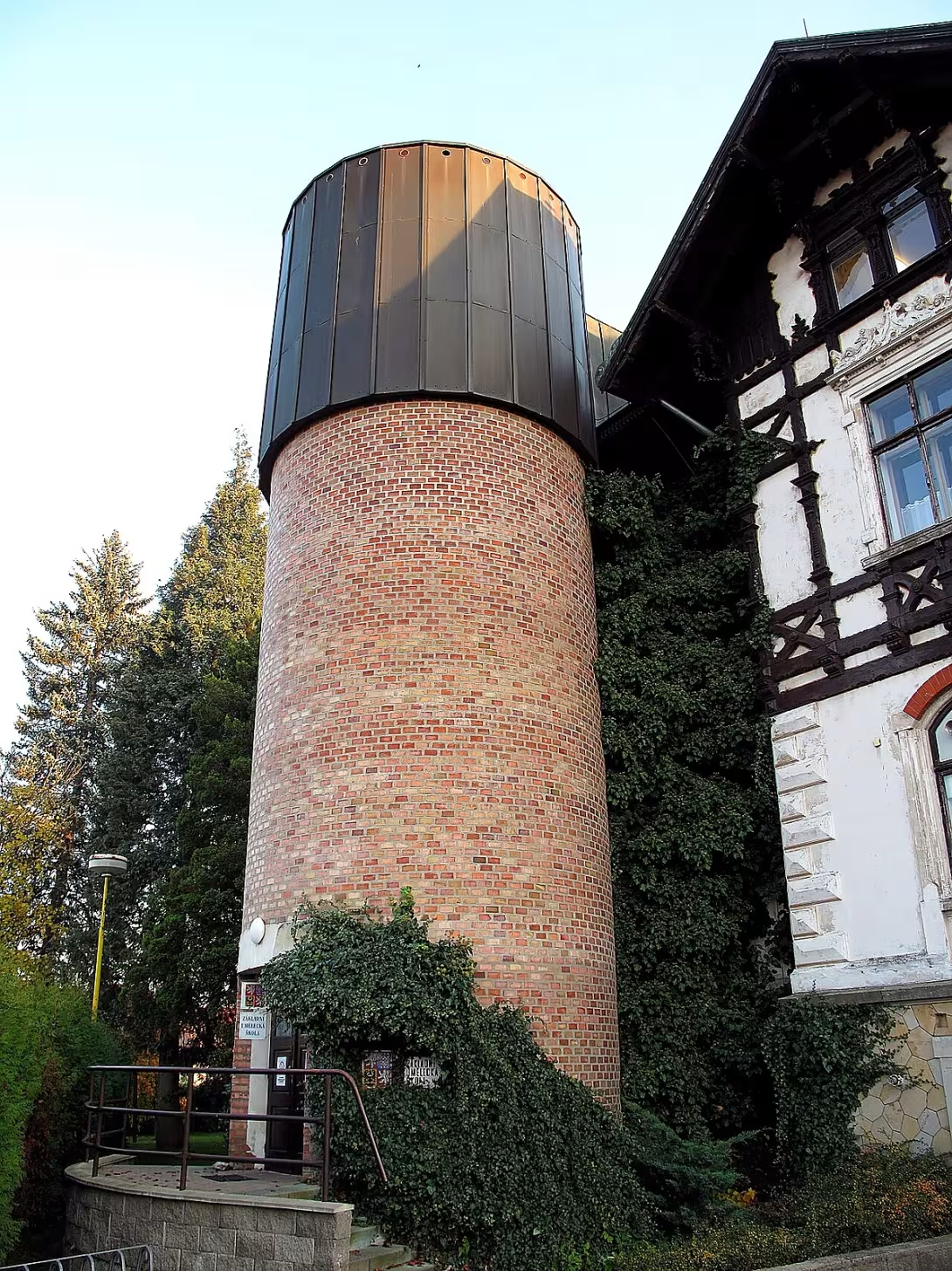
Niessner Villa in Cvikov is a representative historical building from the beginning of the 20th century. It excels with richly sophisticated wooden elements and Art Nouveau interior. Since 2024, the building, including an adjacent park garden with original fencing, is protected as a cultural monument.
The villa was built between 1901 and 1902 for the manufacturer Josef Niessner, owner of the local weaving plant. At that time, Czech countries experienced the boom of industrial architecture, when the designs often combined historical elements with modern business needs. The author of the project is probably Wilhelm Czech or Anton Möller, the construction was carried out by Otto Hillebranda.
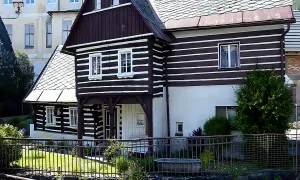
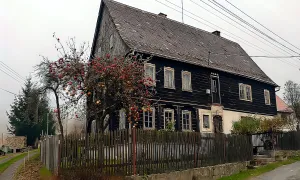
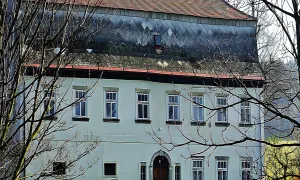
The building has a rectangular plan, two floors and a saddle roof, originally covered with slate. The architecture bears the influence of the Alpine style known as the Swiss. In the south facade there is a preset Porticus with a staircase on the ground floor, in the floors there is a risalite with balcony and shield. The most significant element of the facade is the richly carved wooden details, such as false digs or beam dials. The interior is tuned into Art Nouveau style and the building has until today preserved its original windows, doors, stained glass and fittings.
After the collapse of Niessner's weaving house in the 1930s, the villa was abandoned and gradually decayed. In 1917 it went through enlargement when a two-garage with separate apartment and greenhouse added to it. The building was adapted between 1983 and 1993, during which space for cinema and puppet theatre was to be created. However, the only truly realized adjustment from this time is the brutal tubular staircase with brick tiles, attached to the north facade of the house.
In 2026 the villa served the needs of the elementary art school and was located in the office. The building is located near the Lusatian mountains, offering possibilities for hiking.
Niessner's villa represents a valuable proof of industrial architecture in the early 20th century and its conservation highlights the importance of local cultural heritage. Visiting this place offers an opportunity to explore the contrast between the historical style of the building and later architectural interventions.
Historical milestones
- 1901
- Construction of the villa.
- 1917
- Two-garage extension with separate apartment and greenhouse.
- 2024
- The villa was declared a cultural monument.
Architectural development
The original building from 1901- 1902 was gradually supplemented with garages and greenhouse. In the 1980s, a brutal staircase tube with brick tiles was added to the northern facade. The building has a rectangular floor plan and a saddle roof, with the facade decorated with false levelling.
Historical events
In 1917 the villa was extended by a double garage and greenhouse. In the 1930s, the villa was abandoned after the collapse of Niessner's weaving plant. Between 1983 and 1993, there was a failed adaptation to cinema and theatre.
Owners
Josef Niessner (investor), subsequently moved to the administration of the city or state as part of the adaptation.
Points of interest
- The building excels with richly sophisticated wooden elements and Art Nouveau interior. - The architecture of the building bears the influence of Alpine style, which is known as the Swiss. - Since two thousand twenty-four, the villa, including the garden and the original fence, has been protected as a cultural monument. - In the year one thousand nine hundred and seventeen a two-garage with separate apartment and greenhouse was added to the villa. - The only actual modification made from the years 83 to 90 is the brutal tube staircase with brick tiles.
Guide
Show guide text
This text was created by artificial intelligence and has not been editorially reviewed. It may contain inaccuracies.
Welcome to Cvikov, a place where history combines itself with the beauty of architecture. Right now, you're standing in front of one of the most significant buildings in the neighborhood known as Niessner's villa. Stop for a moment, take a breath and just feel the general impression that radiates from the building. In front of you is a representative house that immediately lures attention to its appearance. It's a place where the desire for luxury meets the love of nature and peace. Look at the whole building and the garden surrounding it. Can you feel the atmosphere of the beginning of the last century? It is precisely the time when houses began to be built in our landscapes that were not just meant to be a shelter, but to tell the story of the success, taste and social status of their owner.
Let us now go back in time more than a hundred years. It is the year of a thousand and nine hundred and one, and it is this year that the construction of this house begins. The villa wasn't built for any ordinary man. Its builder was Josef Niessner, a successful manufacturer. At that time, industry in our region was in full bloom and people like Mr Niessner formed a new layer of rich citizens who wanted to turn their wealth into something lasting and aesthetically valuable. The villa was to be a family residence, which would also serve as a representative area for guests and business partners. So imagine Josef Niessner overseeing the progress of work during construction times and planning how his home will look to reflect his personality and status in Cvikov.
Now pay attention to the architecture itself. Look carefully at the front of the building. What you see is a historic building, but with a very specific touch. Notice those characteristic elements that resemble mountain cottages from the Alps. This style is known as Swiss. At that time, this architecture was very popular precisely because it brought a sense of countryside, clean air and well-being into the urban environment. The main element to look at now is the richly sophisticated wooden details on the facade. These wooden decorative elements make the villa light and make it very elegant. It is a precise craftsmanship that was meant to give the impression of cosy and noble at the same time.
This unique look was not a result of chance, but a result of the collaboration of two talented architects. They were called Wilhelm Czech and Anton Möller. They were the ones who managed to combine the functionality of the house with the beautiful alpine influences you see today. If we could enter, you'd see that elegance doesn't end at the door. The interior of the villa is tuned into Art Nouveau style. The Art Nouveau was at the height of modernity at that time, bringing organic shapes, smooth lines and inspiration to nature. So imagine that you are moving from the external Swiss style to an inner world full of Art Nouveau details. It is a fascinating contrast which shows how much the owner of the villa was open to the trends at that time and how high the demands of beauty he had.
Now, if you look around the villa, notice that the building is not lonely in space. It's surrounded by a beautiful park garden. The garden was not only an accessory, but an integral part of the whole concept of housing. It was an oasis of peace in the middle of town. Note also the original fencing that still surrounds this space. The fence is not only a line between private and public, but it is also an architectural element that complements the overall appearance of the villa. Everything here was designed to form one harmonious whole.
However, the history of the villa did not stop in the year one thousand nine hundred and one. As time shifted, the needs of the family and the environment changed. Let's move 15 years forward to the year one thousand nine hundred and seventeen. This year there was a significant expansion of the complex. A double garage was added to the villa, which was not just a space for cars, but had a separate apartment built in. At that time, cars were still new and a symbol of the highest luxury, so the garage was an extremely modern feature at that time. At the same time, a greenhouse was added this year. Imagine the beautiful plants they grew in it, and how this greenhouse supplemented the park garden, bringing exotic tones to it even in colder months.
You may be wondering why this villa is so important today. For years it was part of the landscape Cvikova, but its true value was fully recognised in the latest time. Just in the year two thousand twenty-four, Niessner's villa, including its garden and the original fence, was officially declared a cultural monument. This is a very important step. It means the state has acknowledged that this building has an irreplaceable value for our history and architecture. Thanks to this status, the villa will be protected from extinction or inappropriate changes, so that future generations can admire the work of architects Wilhelm Czech and Anton Möller and remember the era of the manufacturer Josef Niessner.
Now try to imagine how many stories happened in these walls. How many business meetings took place in Art Nouveau rooms, how many walks took place along the paths of the park garden and how excited it was in the year one thousand nine hundred seventeen when the first car entered the new garage. This villa is like an open book about ambition, taste and life of people at the turn of the century. It is a testimony of a time when progress was believed, but at the same time inspiration was sought in nature and tradition.
Now I'm leaving you to look at the details we've discussed together. I suggest you go around the villa from the outside and watch from different angles as the impact of light changes on the wooden elements of the facade. Feel the silence of the garden and imagine what peace there must have been over a century ago. Look at the details of the fence and try to imagine what the greenhouse looked like in full bloom.
Thank you for accompanying me on this short journey through the history of Niessner's villa. I hope you're interested in this building and that you found a piece of beauty and peace in it. Now you can continue to discover the beauty of Cvikova. I wish you a pleasant walk and many other fascinating experiences. Goodbye.
Tips for visitors
The best time to visit is late spring or early autumn, when the garden is full of flowers or plays colors, which underlines the historical atmosphere of the villa. At these times the weather is ideal for walking around the Lusatian Mountains.
You can reach Cvikova by car and public transport. Check the current public transport connections in the Internet connection search engine.
For a visit, pack comfortable shoes suitable for movement in the garden and in the terrain of the Lusatian Mountains. If you plan to photograph, the best light for capturing alpine elements and facade details is during the morning or in the evening when the sun creates interesting shadows.
Lusatian Mountains are located in the surroundings of the villa, which are a great destination for hiking and exploring natural beauties. You can take trips to the surrounding countryside, which offers many paths for active relaxation in nature.
For families with children, the garden of the villa is a pleasant place to relax. Children will appreciate the garden area and the proximity of the Lusatian mountains, where easy walks are possible for family trips.
Frequently asked questions
Can the monument be visited?
This is a residential or farm building, not a museum with opening hours. Please view it from public space and respect the owners' privacy. We have no information about access to the interior.
Where is the monument?
Location: Cvikov. The map on this page shows the exact spot.
Why is the monument protected?
It is listed in the Central List of Cultural Monuments of the Czech Republic as a cultural monument (register no. 2000007976).
Businesses nearby
Do you run a restaurant, accommodation, shop, museum, rental, wellness or other visitor service near this monument? Show yourself directly to the people heading to it — this is how they will see you in the app and on the web:
Events nearby
Zdroj akcí: otevřená data měst a obcí ČR (Národní katalog otevřených dat) a kalendář akcí Národního památkového ústavu.
Nearby
Vila se nachází ve Cvikově, v blízkosti Lužických hor, které nabízejí bohaté možnosti pro turistiku a poznávání přírodních krás.
Accommodation nearby
Trips and activities nearby
Guided tours, tickets and activities nearby from GetYourGuide
Affiliate link: if you buy from the partner, we may receive a commission. The price for you does not change.
Search tours and activities →Themed route
1. Niessner Villa (Type: Building) - Look at this interesting building unit. 2. Garden near the villa (Type: Area) - Take a walk in this space and enjoy your peace. 3. Lusatian Mountains (Type: Natural area) - Discover the beauties of nature and try the hiking trails.
Seasonal recommendations
In spring the villa comes to life along with the flowering garden. The first flowers and fresh greenery create an optimistic atmosphere, while the mild spring light highlights the details of the facade. We recommend to dress in layered clothes because the weather is usually variable. It is best to visit the memory in the morning when the air is the cleanest.
The summer season brings full bloom of vegetation and intense colors in the park. The sun lights up interiors and exteriors clearly, which is ideal for photography. Expect more visitors in the main summer season, so come first thing in the morning to avoid clusters. Choose light, breathable clothes and don't forget the sun protection.
Autumn in Cvikov is a period of golden leaves and fine mists, which provide a mysterious and calm mood for villas. The evening light is soft and warm, which complements the historical character of the building beautifully. Due to the moisture in the garden we recommend waterproof shoes. The ideal time for a walk is late afternoon.
In winter the monument is quiet and majestic, especially if it is covered by a layer of snow. The contrast of the white landscape and the maintained house creates a strict but elegant atmosphere. It is necessary to wear very warm clothes and tight shoes. Pay attention to the shorter opening times that are common during this period.
Visualizations and artistic views

The visualisations are generated by artificial intelligence and serve as inspiration.
Photos from the area
Real photos taken near the monument


Zdroj a licence jsou uvedeny u každého snímku.
Tips from visitors
No tips yet. Be the first!
Log in and add your tip.
Sources and literature
Photos: Juandev / CC BY-SA 4.0 — Wikimedia Commons. The author and licence also appear when you hover over the image.
Faktickým podkladem tohoto textu byl článek na Wikipedii, jehož autory jsou přispěvatelé Wikipedie. Článek je dostupný pod licencí CC BY-SA 4.0.
Location on the map
Příběhy a pověsti
Legendy, pověsti a příběhy spjaté s touto památkou
Fotografie návštěvníků
Zatím žádné fotografie. Buďte první, kdo přidá fotografii z návštěvy!
Log in a přidejte svou fotografii nebo hodnoťte.
Za ověřenou návštěvu v aplikaci získáte víc bodů — poznáme podle GPS, že jste na místě.
Reviews and comments