






Obelisk se sochami Monument
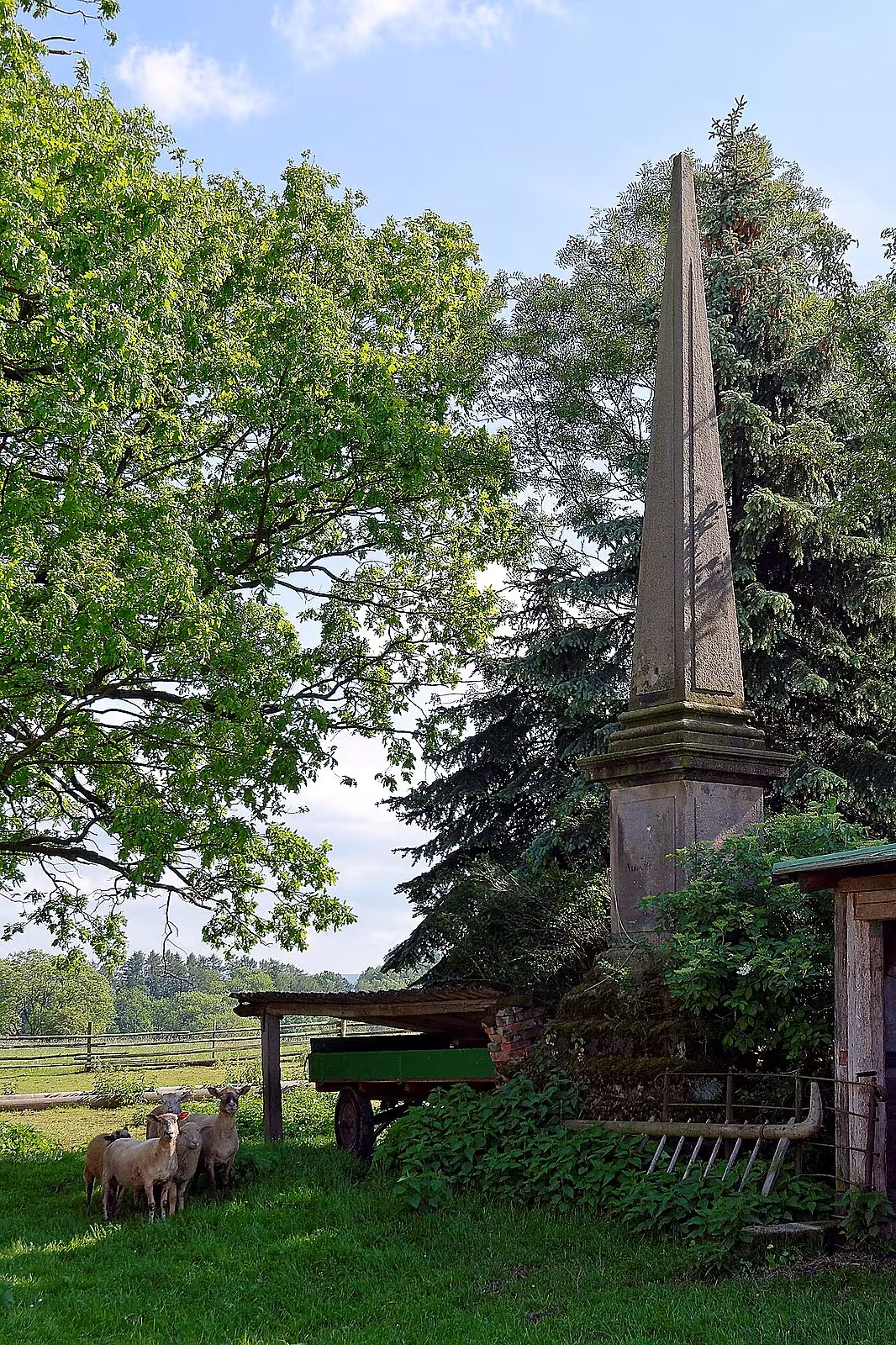
Obelisk se sochami, located in the garden behind the settlement no. 6 in the Broumian part of Rožmitál (Náhod district), is a classical monument built by Anton Knittell at the beginning of the nineteenth century, namely in 1806 or perhaps later, in 1826. This monument is a special reminder of the four seasons that once decorated statues that were preserved until the 1930s. Its historical value lies in the fact that it represents the classical artistic sense of the time and is connected with the personality of Antonín Knittell, who founded this monument.
The Obelisk was built at the time of the Napoleon wars, when the Czech countries belonged to the Habsburg monarchy. This historical context influenced cultural and artistic directions, including the classicism that was reflected in architecture and sculpture of the time. Anton Knittel, whose name is associated with this monument, was probably inspired by classical ideals in the creation of this work.
The architecture of the obelisk with sculptures is characterized by its form of a pillar that once decorated statues symbolizing four seasons. These statues were carved and stood around the main pillar, which provided a commemorative visual dimension. Although these statues have not been preserved until today, their existence was recorded by Antonín Cechner in 1930, which confirms the original artistic conception of the monument.
The ownership and administration of the obelisk is linked to its founder Anton Knittell. After the creation, the memorial remained a part of the Knittell family's property and history. Records of its existence and location have been maintained within local historical catalogues, which ensure its protection and care.
Key events include not only the position of obelisk in the early nineteenth century, but also the recording of statues around it in 1930. These events highlight the long-term cultural and historical importance of the monument for the local area.
Today, the obelisk is maintained as an important historical monument in the Náchod district, the Hradec Králové Region. Despite the loss of original statues, it still represents an interesting object for visitors and historians who are interested in classical art works and local history. Its location in the Broumov boiler, near the Broumov walls and the historic town of Broumov, adds a visit to another cultural context.
Obelisk is a reminder of the past, which reflects the artistic sense and personal interest of Antonín Knittell. Its historical value is that it captures the classical taste of the times and represents part of the cultural heritage of the region of Broumovska. For visitors this monument is not only a visual record of the past, but also a call to explore and appreciate the historical and cultural values of the local surroundings.
Then and now
Drag the slider to compare how the landmark may have looked when it was built with the view today.
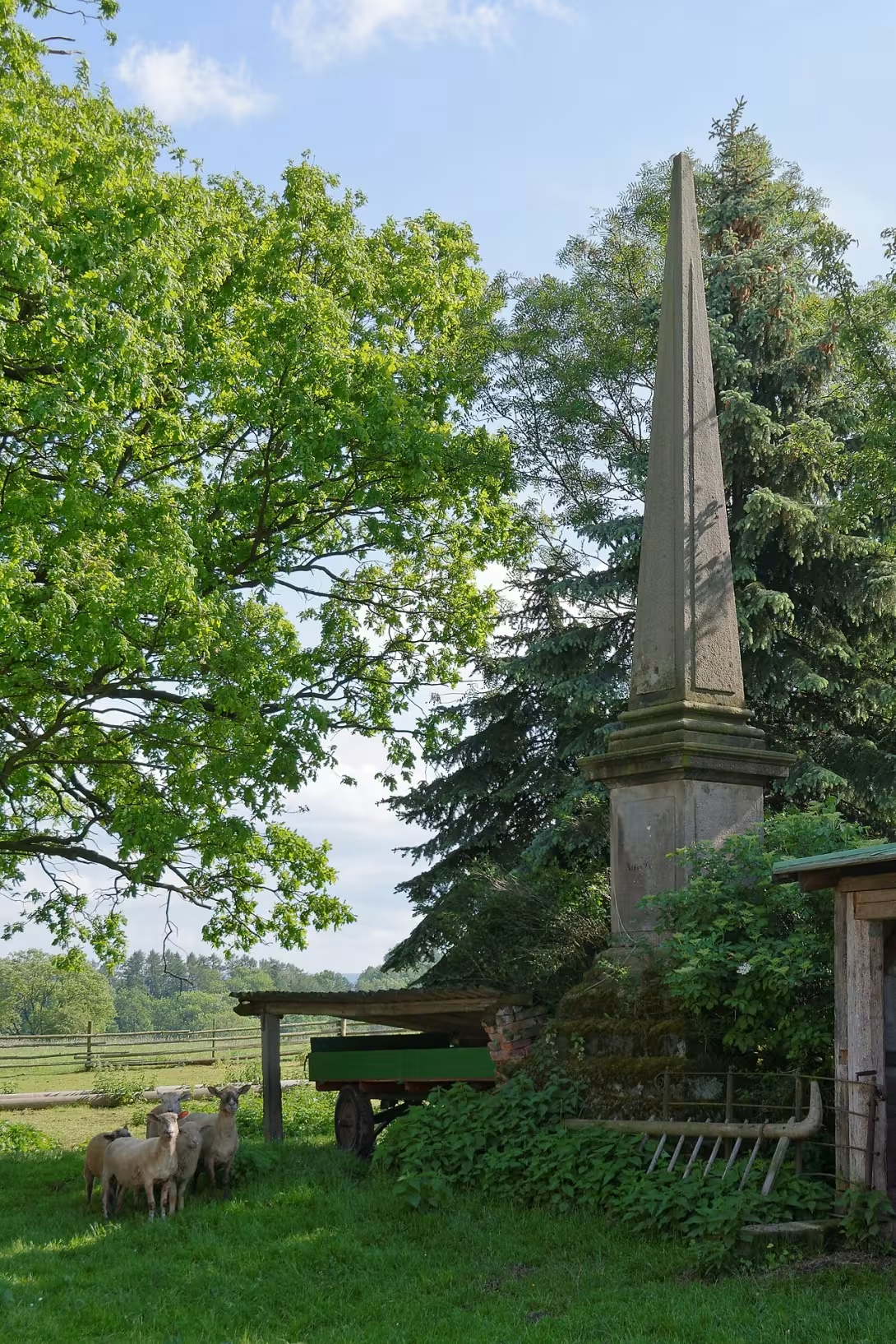
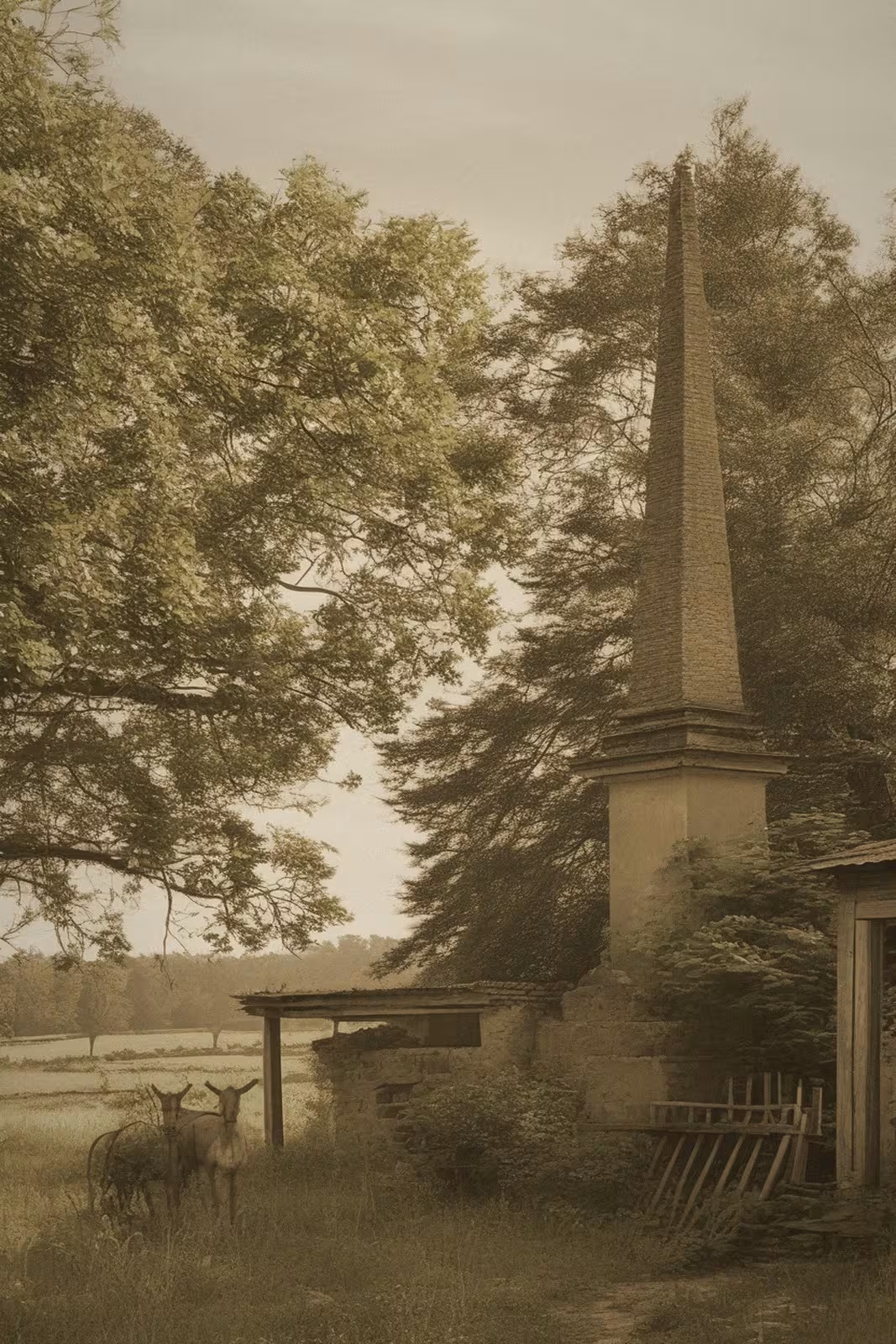
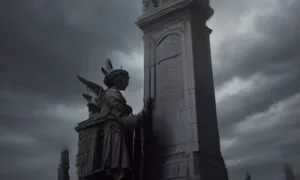
The historical appearance on the left is an AI-generated visualisation and serves as inspiration only.
Historical milestones
- 1806
- The status of the Classicist obelisk by Anton Knittell.
- 1930
- A record of existing statues by Antonín Cechner.
Architectural development
The work takes the form of an obelisk supplemented in the past by sculptures which represent four seasons. According to historical records, these carved statues stood around the main pillar. It originated in the classical spirit of the early nineteenth century.
Historical events
In 1806 or 1826 he built an obelisk. In 1930, Cechner documented the existence of statues around the obelisk.
Owners
Anton Knittel
Points of interest
- Obelisk se sochami is a classic monument built by Anton Knightello in the early nineteenth century, namely in 1806 or perhaps later, in 1826. - This monument is a special reminder of the four seasons that once decorated sculptures, which were preserved until the 1930s. - The architecture of the obelisk is characterized by its shape of a pillar which once decorated statues symbolizing four seasons. These statues were carved and stood around the main pillar. - The existence of original statues was recorded by Antonín Cechner in 1930, confirming the original artistic concept of the monument. - Obelisk is maintained as an important historical monument in the district of Náchod, Králové Hradec region and is still an interesting object for visitors and historians.
Guide
Show guide text
This text was created by artificial intelligence and has not been editorially reviewed. It may contain inaccuracies.
Welcome to this lovely place in the broum part of Rožmitál. You're standing right now in front of a historical monument, which is an obelisk with statues. The view you have will take you to another time and allow you to perceive the genius locator of this forgotten corner of our landscape. In front of you is a classic obelisk that forms the central element of this area. You are in the garden behind the estate number descriptive six, where this remarkable work quietly tells its story associated with the history of this region.
Let's look deeper into the past and see how this monument actually came into being. The birth of this monument is connected to Anton Knittell's person. He had this obelisk built. Historical sources and records vary slightly in the exact year, giving the place a light touch of mystery. As a year of origin, the year of the eighth year is most often mentioned, but some sources speak only about the year of the eighth year of the sixth year. Whether it was built at the very beginning of the nineteenth century or two decades later, it carries a powerful handprint of its creator, whose name, although somewhat backfired over the centuries, has persisted.
Now pay attention to the architecture itself and the details you have right in front of you. The obelisk is turned off to the top and represents an example of classical creation. When you look at it carefully, notice its clean shapes and its overall composition. You might think the monument is a little lonely today. And that is the correct observation that brings us to a fascinating historical fact. There used to be carved statues around the obelisk. These sculptures were not merely decoration, but they had a deeper symbolic meaning. They represented four seasons. Spring, summer, autumn and winter once surrounded this pillar and formed a united whole with it. We know this very well because of historical records, as Antonín Cechner recorded the existence of these statues in the 1930s. Today, the statues are no longer standing, but imagination will help you to remember them as they guard this quiet corner of the garden.
The key person associated with this place is undoubtedly the mentioned Anton Knittel. His life has not been preserved as much as we might like, but his legacy here stands firmly anchored in the form of this monument. Imagine him standing here at the beginning of the nineteenth century planning to enrich space behind the estate. He was a man who wanted to leave a mark, create something lasting that would speak to the next generation. And he totally succeeded. Together with him we must also remember Antonín Cechner, who, decades later, documented the state of the monument with his attentive eye and thus saved the form of four seasons for the future, because without his inscription, we would not have known of the ancient presence of statues.
The interesting thing that resonates most in this place is this contrast between the past and the present. Obelisk se sochami was intended as a special reminder of the four seasons. The cycle of the year, the transformation of nature, the birth, the bloom, the decline and sleep - it was all imprinted into this space. When you look around, you realize that nature is still playing its main role here. The garden is transformed with every season, just as the builder once intended, and as the lost carved statues symbolized. Thus, the obelisk continues to fulfil its hidden purpose and quietly links the human work to the eternal during the natural laws.
I hope this stop has been rewarding for you and the atmosphere of the old days has breathed upon you. When you continue your journey with Rožmitál, let your thoughts flow for a while and try to perceive the traces of history at every step. Thank you for your attention and I wish you a wonderful rest of the day on your next discovery. Goodbye.
Tips for visitors
Best time to visit obelisk with statues in Rožmitále is in the morning or late afternoon when the sunlight ideally highlights the details of historical sculpture placed in the garden behind the estate number descriptive 6. Parking and transport are possible in the village Rožmitál, where you can reach by car or local transport; Check the current connection in the search engine. Take your shoes with you on the way, because the surrounding terrain in the garden and the Broum basin can be uneven, and also drinking water. For shooting, choose a side light that will perfectly draw the sculptures of the obelisk, with the best shots taken from the accessible path around the estate. In the vicinity within 30 minutes from the site you can admire the historical folk architecture in Rožmitále, visit the Broumov walls or explore the historical town of Broumov. Families with children will appreciate the peaceful countryside and a light walk associated with the discovery of local historical attractions in nature.
Businesses nearby
Do you run a restaurant, accommodation, shop, museum, rental, wellness or other visitor service near this monument? Show yourself directly to the people heading to it — this is how they will see you in the app and on the web:
Nearby
The surrounding landscape of the Broumov boiler, historical folk architecture in Rožmitále, proximity to Broumov walls and historical town Broumov.
Accommodation nearby
Themed route
Rožmitál Type: Historical folk architecture Why is it worth a visit: The village offers examples of traditional folk architecture in a picturesque landscape you can admire while walking through the village.
2. Obelisk se sochami (monument) Type: Main objective Why is it worth a visit: This important monument represents the dominant place and reminds of the history of the region set in the captivating environment of the Broum basin.
3. Broum walls Type: Ambient landscape and natural formations Why is it worth a visit: Rock masses in the immediate vicinity attract trips to nature and offer unique views of the surrounding countryside.
4.Broum 0ZX Type: Historical city Why is it worth a visit: A city with rich history and monuments forms the natural center of the whole region and complements the sightseeing route perfectly.
Seasonal recommendations
Spring in Rožmitále brings awakening nature, where the surrounding green and the first blooming onion form a very photogenic contrast with the stone structure of the monument with figural decoration. The lighting is clear and clean due to the longer day, with the morning sun beautifully modulating the details of the statues. From the point of view of practical advice, it is advisable to start in the morning when the area is almost empty. Since spring weather is usually variable and often a cool wind blows from nearby forests, put on layered clothes and solid shoes that can handle possible spring moisture in the surrounding terrain.
Summer offers a completely different atmosphere, which affects the main tourist season and lush surrounding vegetation, which partly places the monument in the deep shadow of old trees. The specific feature of this period is sharp noon light, therefore it is best for visiting and shooting if necessary early in the morning or late in the evening when the sun falls below and gives the statues softer tones. In summer count on a higher tourist visit, so for a quiet tour choose the morning hours. Light breathable clothes, sun-proof headgear and a bottle with a drink are recommended because there is little natural shelter around the monument from direct sunlight.
Autumn transforms Rožmitál into a gallery of colours, where decaying leaves and misty wounds provide an obelisk with statues of melancholy and noble atmosphere. The light is dampened all day long, often permeated by a fine herpes, creating ideal conditions for nostalgic lovers without disturbing sharp shadows. The crowds of people are very thin this time of year, so you will enjoy the memory in complete peace. The practical board mainly concerns footwear and clothing, as autumn fog and falling leaves make the surface slippery; A waterproof jacket, a warm sweater and tight shoes are essential.
Winter brings deep peace and quiet into the historical space, which often amplifies the snow cover covering the base and the statues themselves. Lighting is specific because the day is very short and the low sun throws long shadows; At dusk, the place becomes mysterious. In Advent time and weekends, a little more people come for a walk, but overall this is the most peaceful period of the year. The necessity is a thorough winter dress including a hat, gloves and warm snowballs, because the area around the monument is badly heated and the cold wind blows in the freezing days.
Visualizations and artistic views


The visualisations are generated by artificial intelligence and serve as inspiration.
Photos from the area
Real photos taken near the monument


Zdroj a licence jsou uvedeny u každého snímku.
Tips from visitors
No tips yet. Be the first!
Log in and add your tip.
Sources and literature
Fotografie: gampe / CC BY-SA 3.0 — Wikimedia Commons. The author and licence also appear when you hover over the image.
Faktickým podkladem tohoto textu byl článek na Wikipedii, jehož autory jsou přispěvatelé Wikipedie. Článek je dostupný pod licencí CC BY-SA 4.0.
Location on the map
More monuments – Rožmitál
Show all in the municipality
Příběhy a pověsti
Legendy, pověsti a příběhy spjaté s touto památkou
Fotografie návštěvníků
Zatím žádné fotografie. Buďte první, kdo přidá fotografii z návštěvy!
Přihlaste se a přidejte svou fotografii nebo hodnoťte.
Za ověřenou návštěvu v aplikaci získáte víc bodů — poznáme podle GPS, že jste na místě.
Reviews and comments