






Obytná kolonie tažíren trub Building complex
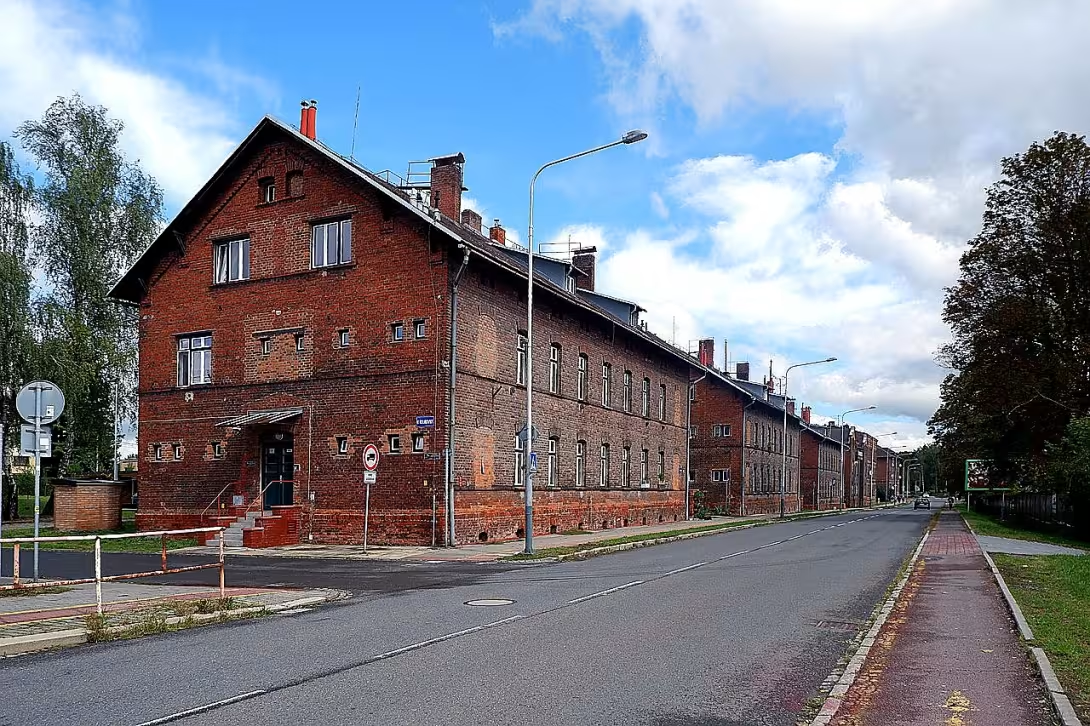
Obytná kolonie tažíren trub consists of a set of houses and villas in Bílovecká street in SvinovA (Ostrava-town district). The complex was created in 1893- 1912 for employees of the local rourovna. In 2008 it was declared a cultural monument of the Czech Republic. The building is an important part of the industrial heritage of the area. Its architecture reflects the needs of the then working population and the character of local development.
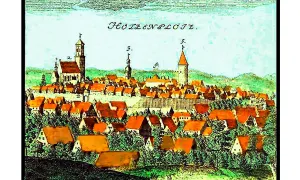
The foundation of the colony is linked to the construction of a seamless pipe factory built by the Berlin Oskar Hulschinsky railway station in 1892. In 1893- 1912, a building along Bílovecká Street was built for the workers of the Rourovna, which stretched from the railway station towards the centre of the village.
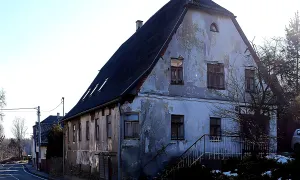
The central point of the file is Villa No. 117. It was built in 1892-1893 by the pig builder Franz Beier according to the Paul Gaerte project in the style of the Nordic Neo-Renaissance. It is a stand-alone two-storey building made of a concrete wall with a saddle roof and halves on the shield facades. The street facade is divided by a central shallow risalite with a triangular shield. It is decorated with wooden wings, stucco volutes and frontons above the windows. The shield is further supplemented by carved roof beams. The windows are wooden, quad caste with parapet ledge. In the southwest corner there was a wooden winter garden, demolished in the second half of the 1990s. The main entrance is in the south shield facade. The interior of the house is two-way, the floors are connected by two-arm cast iron staircase in the back of the building.
Other houses in the colony have different characteristics, but most of them are made of solid masonry. The buildings no. 118 / 24 and 123 / 22 are two-storey with a saddle roof and nine window axes, the outermost ones being walled up. They have wooden two-winged caste windows and segmental enchantments in the cellars. House No. 115 was designed by architect Josef Vysloužil. It is a three-storey building with a wall roof and corner and central staircase risalite. There's a stone staircase upstairs.
House No. 138 from 1909 is a double-storey house with a saddle roof and two counter skylights. The street facade has nine window axes with wooden double wing castrated windows. The three-storey house no. 155 has a saddle roof and nine window axes, with the fifth window walled up on the ground floor. The rear facade is divided by corner and centre risalite with small windows; There's a steel staircase to the floors. The house No. 256 of 1907 was originally one-storey. Later, it was supplemented with soil superstructure and corner risalts with shield attachments.
The property owners are the Statutory City of Ostrava, the City District of Svinov and the owners of the villa no. 117. In 2011, the Ministry of Culture rejected requests from the city and the district to abolish the monument protection. In the years 2012- 2016, the selected buildings were modernised. It included the replacement of windows, doors and skylights, also repairs of electrical installations and heating. In 2016, in the non-residential area of the house No. 138, the maid's office of the City Police of Ostrava was established.
The set represents an authentic example of industrial architecture at the end of the 19th and early 20th century, linked to the expansion of heavy industry in the region. The monument offers insight into the social background of the workers at the time. It is advisable to see it while walking Svinov.
Historical milestones
- 1892
- Position of the seamless pipe factory Oskar Hulschinski
- 1893-1912
- Implementation of the construction of a worker's colony for the workers of the pipe plant
- 2008
- Declaration of the Colony by the Ministry of Culture of the Czech Republic for Cultural Heritage
- 2016
- Establishment of a maid of the City Police of Ostrava in the house No. 138
Architectural development
The ensemble includes various types of buildings, from three-storey houses from a concrete masonry to a villa in the style of Nordic neo-Renaissance. From 2012 to 2016, windows, doors, roofs and power lines were modernised at selected houses.
Historical events
1892: Construction of the seamless pipe plant; 1893- 1912: Construction of a worker's colony; 2008: Declaration for cultural monument of the Czech Republic; 2011: Refusal of the request for cancellation of the monument protection.
Owners
Statutory City of Ostrava, City District Svinov and owners of Villa No. 117
Points of interest
- Obytná kolonie tažíren trub was built for employees of the local router in 1893- 1912. - In 2008 the complex was declared a cultural monument of the Czech Republic. - The central point of the ensemble is Villa No. 117, built in the style of Nordic Neo-Renaissance in 1892-1893. - In 2011, the Ministry of Culture rejected requests to abolish monument protection for colony objects. - Modernisation of selected buildings took place in the years 2012- 2016, including replacement of windows and repair of electrical installations.
Guide
Show guide text
This text was created by artificial intelligence and has not been editorially reviewed. It may contain inaccuracies.
Welcome to a unique location in Svinov, where history and architecture form a harmonious symphony. You are standing in front of a residential colony of tugs that boasts its rich past background and artistic expression. In front of you is a collection of residential houses and villas built for the employees of the local router, which are now witnessing the rich history of this site.
Let's dive into the origin of this fascinating complex. In 1892 Oskar Hulschinsky built the first stone essential for future development: the seamless pipe factory. This company was a key impetus for subsequent construction activities which spread out from 1893 to 1912. The focus was on the creation of a worker's colony where the workers of the pipeline could live in appropriate conditions close to their workplace.
The architecture of this site is a real pearl for the eyes. Look up at the facade and notice the elegant lines that characterize the whole set. The central point is Villa No. 117, built in the style of Nordic neo-Renaissance between 1892 and 1893. This architectural treasure was designed by a group of talented architects: Paul Gaerte, Franz Beier and Josef Vybožil. Their cooperation has created a harmonious complex that has so far been preserved with a rich history.
The key stories associated with this site are of course Oskar Hulschinsky. Its initiative to build a pipe factory not only revived the local economy, but also laid the foundations for the comprehensive development of residential areas. In 2008 this ensemble was recognised as a cultural monument of the Czech Republic, which is a testament to its historical and architectural value.
The interesting thing about this location is that in 2016, in house no. 138, a maid of the City Police of Ostrava was set up. This new section of history adds another layer to the already rich past background of the colony.
Now that you've learned of its origin and meaning, you could walk around the houses in a relaxed fashion and notice the details that represent the daily lives of employees from the past. Think of the historical figures that once inhabited these places and how their days were shaped by the environment around them.
The nearby Svinova neighbourhood is also an invitation to further explore, where you can discover other historical monuments and natural beauty. I hope your visiting day here was full of new knowledge and inspiration. Thank you for your attention, and I hope you will return to exploring this rich cultural heritage.
Tips for visitors
For the best experience we recommend a visit in late afternoon, when soft light beautifully highlights architectural details of historical villas and houses.
Transportation to the place is very available thanks to the proximity of railway station Svinov. You can use public transport and your own car; Check the current connection and parking possibilities in the transport applications before travelling.
For a walk we recommend taking comfortable shoes suitable for movement in the city building. If you are interested in photography, focus on facades of buildings built between 1893 and 1912.
For the best photos, search for angles that capture the entire street perspective and rhythm of residential houses, especially during the golden hour.
Families with children can appreciate the calm atmosphere of these historic streets that offer an interesting view of life in the past. The railway station Svinov is nearby and serves as a good guide point.
Businesses nearby
Do you run a restaurant, accommodation, shop, museum, rental, wellness or other visitor service near this monument? Show yourself directly to the people heading to it — this is how they will see you in the app and on the web:
Nearby
Railway Station Svinov
Accommodation nearby
Themed route
Travel Route from the Homeless Colony Tážíny Tráb in Svinov
1.Obytná kolonie tažíren trub * Type: Historical landmark * This residential colony is a unique example of a wooden tractor estate from the beginning of the 20th century, which was created for railway rail workers. It is a rare example of architecture at the time and offers visitors a view of the history of the workers' environment.
2. Railway Station Svinov * Type: Historical site * The railway station is an important stop on Olomouc-Opava railway, which played a key role in the transport connection of the region. Explore the historical architecture of the station building and imagine the days when the railway was the main way to travel.
3. Adjoining parks around the station * Type: Green space * The parks around the station offer a quiet area to relax and a beautiful opportunity for relaxation. Ideal place for a picnic or walk where you can enjoy the natural environment near historical monuments.
4. Track and rail route * Type: Technical Heritage * A walk along the ancient railway route offers visitors a view of the technical history and architecture of railway lines. Instead of this trip it is suitable for those interested in transport infrastructure and its development.
5. Historical buildings around the station area * Type: Architectural monuments * In the vicinity of the railway station there is a historical building that testifies to the rich past of the local community. These buildings are a reminder of the earlier life and development of the municipality Svinov.
This route offers a combination of historical, technical and green attractions, which together form a rich story about the local heritage and its development.
Seasonal recommendations
Spring brings to the colony the awakening of nature and fresh greenery in gardens between houses. Soft spring light highlights facade detail and creates an optimistic atmosphere. We recommend wearing layered clothes because the weather is variable, and set off in the morning when the air is the cleanest.
In the summer months they dominate the plains of rich color and dense shade of trees. The sun hits hard on brick walls, creating contrast shadows ideal for photography. Due to higher temperatures and more visitors, it is best to come first thing in the morning in light, breathtaking clothes and not to forget enough fluids.
Autumn covers Svinov with golden leaves and frequent fog, which give the whole area a melancholy and mysterious touch. The atmosphere is quieter and the colors of the surroundings match the red brick of the building. It is practical to choose waterproof shoes and lighter jacket, the best time to visit is late afternoon during the setting sun.
Winter will turn colonial architecture into a contrasting image, especially if snow hits, which highlights home geometry. There is silence and a specific calm typical of the cold season. It is necessary to wear warm thermal clothes and plan a walk earlier as the days are short and darkness comes very quickly.
Visualizations and artistic views

The visualisations are generated by artificial intelligence and serve as inspiration.
Photos from the area
Real photos taken near the monument


Zdroj a licence jsou uvedeny u každého snímku.
Tips from visitors
No tips yet. Be the first!
Log in and add your tip.
Sources and literature
Fotografie: Kamil Czaiński / CC BY-SA 4.0 — Wikimedia Commons. The author and licence also appear when you hover over the image.
Faktickým podkladem tohoto textu byl článek na Wikipedii, jehož autory jsou přispěvatelé Wikipedie. Článek je dostupný pod licencí CC BY-SA 4.0.
Location on the map
Příběhy a pověsti
Legendy, pověsti a příběhy spjaté s touto památkou
Fotografie návštěvníků
Zatím žádné fotografie. Buďte první, kdo přidá fotografii z návštěvy!
Přihlaste se a přidejte svou fotografii nebo hodnoťte.
Za ověřenou návštěvu v aplikaci získáte víc bodů — poznáme podle GPS, že jste na místě.
Reviews and comments