






Okresní hospodářská záložna Hradec Králové Tenement house
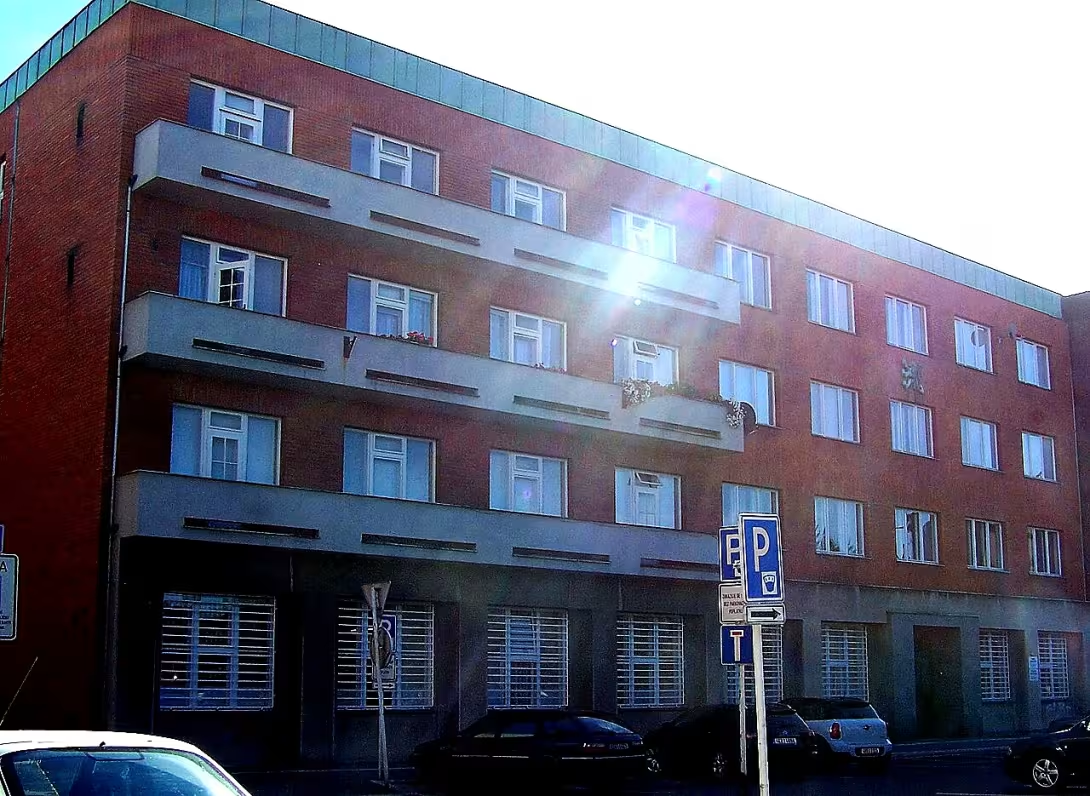
The district economic reserve in Hradec Kralove is an architectural monument that boasts unique history and design. It was created in the early 1930s as part of the development of urban development during the period of the first republic, when the style of functionalism was promoted. This building is located on the Square of Liberators and together with the building of the Czechoslovak National Bank forms a significant eastern front of this historic place. Its architect was Jan Rejchl, who tried to create a unified unit with the adjacent object, although his design for the backup shows a clear evolution in style.
The history of the District Economic Reserve begins in 1932 when Jan Rejchl obtained a contract for its project. The construction was carried out in 1932-33 and was carried out by the construction company of his brother Václav Rejchl Jr.. Originally, the building served as a seat of the economic reserve, where there were also apartments for employees. After World War II, there were changes in land use, which were adapted to the dental centre. In 1990, the Regional Economic Reserve was declared a cultural monument, confirming its importance as an example of the modern architecture of the first republic.
The Regional Economic Reserve is the leader of functionalism. Unlike traditional classical elements, such as Pilasters and Lizens, the building focuses on horizontal elements such as balconies and horizontal bars in windows. The facade is composed of solid bricks arranged in belts both vertically and horizontally. The main facade oriented to the square is decorated with a large copper state emblem with a Czech lion and the whole building is closed with a full metal atics. The asymmetric location of entrances and balconies is also interesting, which contrasts with the symmetry of the neighbouring bank.
The building has a three-story rectangular plan with a flat roof. On the ground floor there was a hall and offices, while on the floors there were apartments for employees. The northern facade is decorated with a conspicuous staircase risalite with a long window over the entire height of the building, which gives the object a characteristic character.
Today, the District Economic Reserve stands as a witness to the architectural art of the first republic and is an important cultural monument. Its history and design attract not only experts on architecture, but also the general public interested in the history of Hradec Králové. The tour of this building offers a view of the past and allows you to appreciate the innovative approach of architect Jan Rejchl to create urban spaces.
The district economic reserve is not only a monument but also an inspiration for those who want to know the history and architecture of Hradec Králové. Her visit offers a unique view of the time when the city developed in line with the modern principles of functionalism.
Then and now
Drag the slider to compare how the landmark may have looked when it was built with the view today.
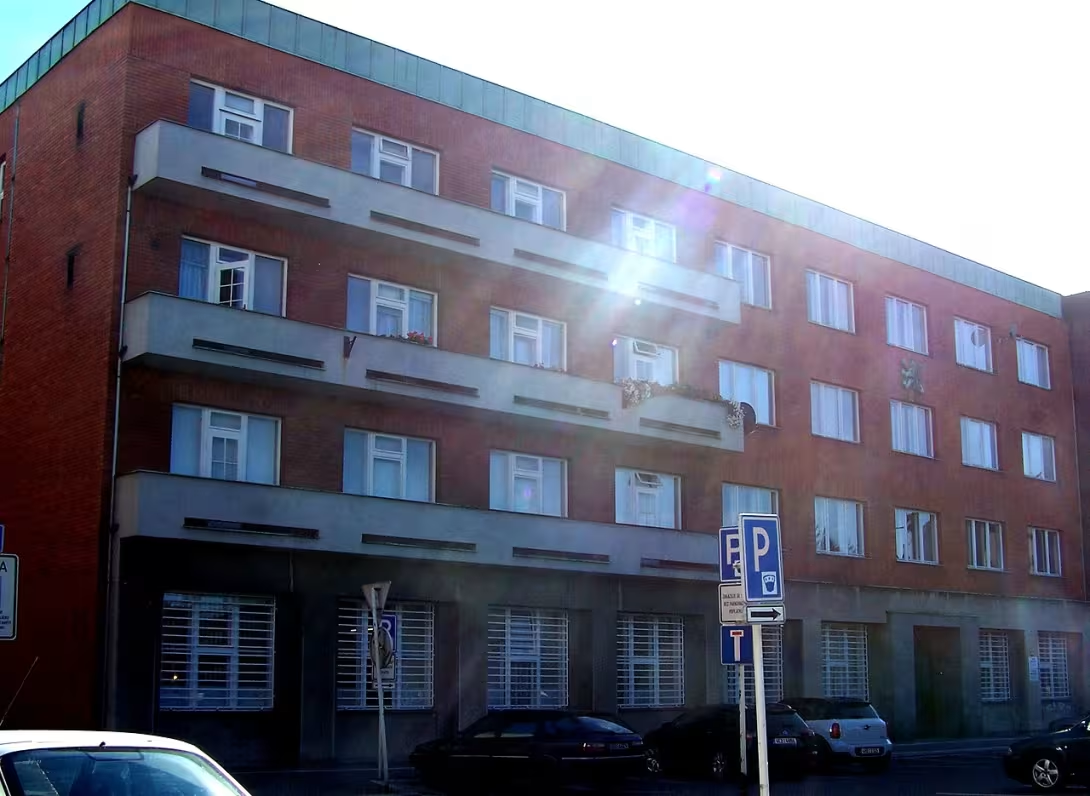
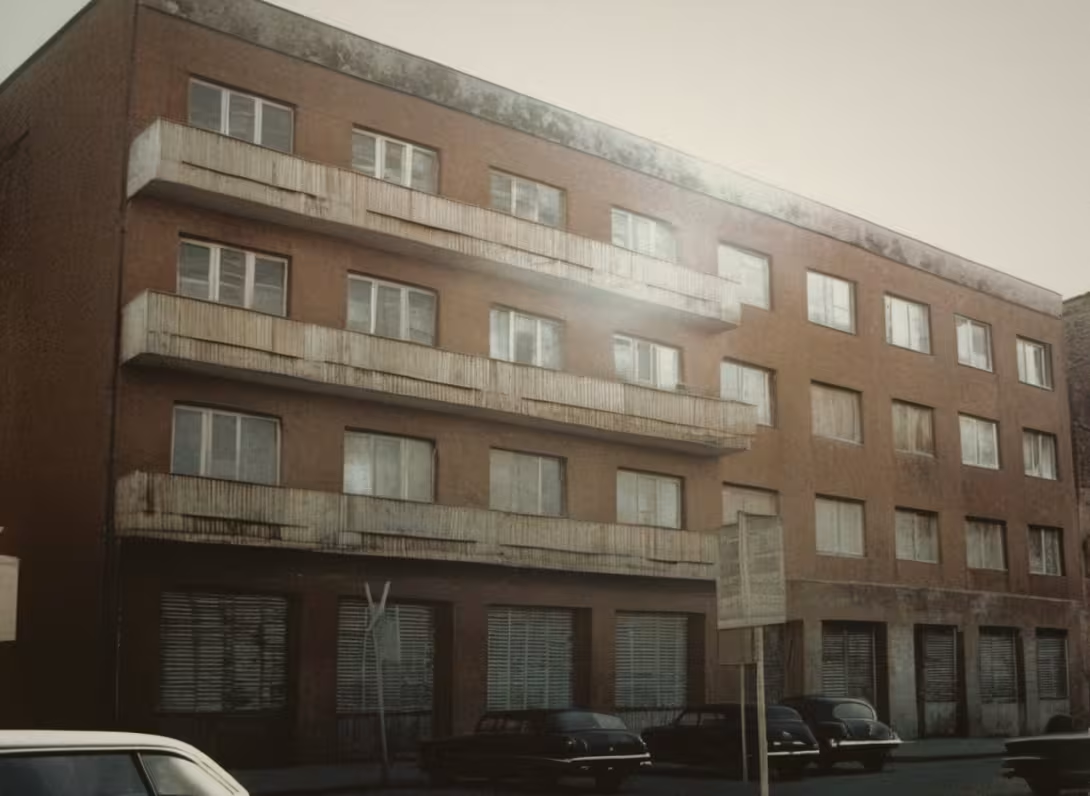
The historical appearance on the left is an AI-generated visualisation and serves as inspiration only.
Historical milestones
- 1932
- Obtaining a project contract by architect Jan Reychlem
- 1932-1933
- Building construction
- 1948
- Adaptation of ground areas to dental centres
- 1990
- Declaration of the building for a cultural monument
Architectural development
The building has a three-storey, rectangular plan and is completed with a full metal aetika. The facade is made up of bricks arranged in horizontal and vertical bands. Architecture focuses on horizontal elements such as balconies and bars in windows.
Historical events
1932- 1933: Implementation of the construction according to the Jan Rejchl project; 1948: Adaptation of ground areas to dental centres; 1990: Declaration of the building for a cultural monument.
Points of interest
- Regional economic reserve in Hradec Kralove is an architectural monument with unique history and design. - It originated in the early 1930s as part of the development of urban development in the period of the first republic, when the style of functionalism was promoted. - The architect was Jan Rejchl, who tried to create a unified whole with the neighbouring Object of the Czechoslovak National Bank. The building is a leader of functionalism and has an asymmetric location of entrances and balconies, which contrasts with the symmetry of a neighbouring bank. - In 1990, the Regional Economic Reserve was declared a cultural monument.
Guide
Show guide text
This text was created by artificial intelligence and has not been editorially reviewed. It may contain inaccuracies.
Welcome to the heart of Hradec Kralove. You are standing in front of a building that is a silent but very tangible witness to one of the most important epoch of our history. In front of your eyes is the County Economic Reserve. Before we take a deeper look at its significance, stop for a moment and feel the atmosphere of this place. You are located in the Liberator Square, in an area that is a symbol of urban development and modern thinking. Imagine what this square looked like almost a century ago when the new faces of the city you know today began to be born in it.
Let us return together to the time when our country formed as a modern, democratic state of the first republic. It was a period of great optimism, growth and constant search for a new way of life. In this context, in the early 1930s, this building began to be born. In the year one thousand nine hundred thirty-two, architect Jan Rejchl was awarded a contract for this crucial project. At the time, it was not just about building another building for banking services, but about creating a symbol of stability and modern progress. The construction took place in the years of a thousand nine hundred thirty-two and a thousand nine hundred thirty-three and became a solid part of the urban development within a short time.
Now pay attention to the very form of the building that now surrounds you. What you see is pure and unmistakable functionalism. This architectural style at the time was a complete revolution. If you look at the facade, you will notice that you will not find unnecessary decorative elements here that have no practical purpose. In fact, functionalism comes from the simple but profound idea that the form must follow the function. Every line, every window and every detail has a clear reason why it's here right now. Architect Jan Rejchl tried to create a space that is logical, clean and yet extremely dignified. Feel this rhythm and order that the building brings to the whole square.
Notice how this structure fits into a larger urban complex. The County Economic Reserve is not just serving itself. Together with the building of the Czechoslovak National Bank, the eastern front is the Square of Liberators. It is like an architectural dialogue between two neighbors who share the same spirit of the time and common goal - to create a representative and modern face of Hradec Kralove. This building wasn't just a dead object, it was a living part of a city that was meant to serve people.
Here we come to one of the most interesting layers of the history of this place. Originally, this building played a very specific and dual role. On the one hand, it was the seat of a back-up office, a place where important financial operations took place, which fuelled the local economy. On the other hand, however, the building did not serve only as an office. In its premises were built apartments designed directly for the employees of the backup office. Imagine the contrast - there is a serious world of money and bank transactions on the ground floor, while there is a normal, private life for the people who provided these services on the upper floors. It was a very modern concept of connecting working and living space, which was typical of the dynamic city of the first republic.
However, the history of this construction was not just about banking and housing. As time changed, the needs of society changed. After World War II, namely in the year one thousand nine hundred forty eight, there was a significant adaptation. The ground floor areas that previously served the bank's clients were transformed into a completely different purpose - a dental centre was created here. Although the function of the building has changed radically, its architectural character has remained preserved. This ability to adapt to new times and new needs is one of the evidence of its excellent design and sophisticated design.
You may now wonder how people look at this modern construction in later years. That is where its greatest value lies. The building underwent many political and social upheavals, but its beauty and importance remained unquestionable. This was confirmed in the year one thousand nine hundred ninety, when this important building was officially declared a cultural monument. This recognition is not only about the protection of walls and windows, but about the recognition of Jan Rejchl's entire architectural work and the recognition of the history that this building carries in itself.
If you look around now, you realize you're facing something much bigger than just a walled building. You're standing before the symbol of an era that believed in division, order and modern lifestyle. Every detail that you are now observing is part of this great story about the growth of the city and the effort of man to create an environment that is functional, beautiful and lasting.
I hope that this view of the District Economic Reserve has helped you better understand its importance and beauty. The Liberators Square has many other secrets and interesting details waiting for you. I suggest you continue your walk and pay attention to other buildings in the area that together form a unique mosaic of this city. Thank you for your time travel and read what your guide will offer next. We wish you a pleasant rest of the tour.
Tips for visitors
For the best experience of architecture we recommend a visit during bright days, when light best highlights clean lines of functionalist design. You can reach the monument by public transport and by car; Please check the current traffic connections and parking options in digital maps or search engines.
It is worth taking a mobile phone or camera with you during the tour. The best light for shooting the facade and details of the building is during today's hours, when the falling light underlines the geometric shapes of Jan Rejchl's work.
In the immediate vicinity you can take a tour of the surroundings such as the Square of Liberators or the former Czechoslovak National Bank building. These objects form an interesting whole within the urban architecture.
For families with children it is advisable to combine walking around with visiting nearby urban areas. We recommend to find out in advance the actual availability and possibilities of movement in this part of the city.
Businesses nearby
Do you run a restaurant, accommodation, shop, museum, rental, wellness or other visitor service near this monument? Show yourself directly to the people heading to it — this is how they will see you in the app and on the web:
Nearby
Square of Liberators, building of the Czechoslovak National Bank.
Accommodation nearby
Themed route
Thematic cruise route in Hradec Králové
1.Okresní hospodářská záložna Hradec Králové - Type: Historical building - Why is it worth a visit: This historic building is an important architectural monument that attracts attention with its classical design. It is an ideal place for those interested in the history of local financial institutions and architecture of the 19th century.
2. Liberators Square - Type: Historical Square - Why is it worth a visit: The Square of Liberators is the heart of Hradec Králové and offers a beautiful view of historical architecture. It is an ideal place to relax, walk or explore local culture and history.
3. National Bank of Czechoslovakia building - Type: Historical building - Why is it worth a visit: This elegant building is an important architectural monument that attracts attention with its historical significance. It is an ideal place for those interested in the history of banking and classical architecture.
This route offers a view of the most important historical and architectural monuments in the centre of Hradec Králové, which allows a deep understanding of local culture and history.
Seasonal recommendations
Spring: In the spring season, the Okresní hospodářská záložna Hradec Králové opens in full glory, when flowering shrubs and trees add freshness and colour to the atmosphere. The sun rays illuminating the historical facade increase its beauty, which is the perfect time to visit. Spring brings mild temperatures, but due to the morning frosts it is advisable to dress in layered clothes. The best time to visit is in the afternoon when the sun heats up and the crowd is less.
Summer: The summer months bring long days of light that illuminate the historical architectural complex in the best possible light. This season there are usually more visitors, which can affect the atmosphere of the place. It is recommended to arrive early in the morning or later in the evening to avoid peak hours. Early arrival is also advantageous for shooting without hanging crowds. Clothes should be light and light, with sun protection.
Autumn: In the autumn period, Okresní hospodářská záložna Hradec Králové offers a unique view in the living colours of leaves that color the surrounding nature. Sunshine days are still frequent and sweetly warm, which is ideal for visiting. However, the moisture may increase rapidly, so that suitable clothing could be laminated clothing with moisture protection. The best time to visit is in the afternoon, when the sun illuminates architecture and nature has become colorful.
Winter: Winter moons bring a quiet atmosphere around the Hradec Králové Regional Economic Reserve, when the historical complex is lit by cold light. It is advisable to prepare for low temperatures and the possibility of snow or ice cream, so it is important to carry warm clothes. Opening hours may be shorter, which means it is advisable to come early in the morning. An earlier visit also allows you to enjoy peace and quiet without crowd.
Visualizations and artistic views


The visualisations are generated by artificial intelligence and serve as inspiration.
Photos from the area
Real photos taken near the monument

Zdroj a licence jsou uvedeny u každého snímku.
Tips from visitors
No tips yet. Be the first!
Log in and add your tip.
Sources and literature
Fotografie: Kixx / CC BY-SA 3.0 — Wikimedia Commons. The author and licence also appear when you hover over the image.
Faktickým podkladem tohoto textu byl článek na Wikipedii, jehož autory jsou přispěvatelé Wikipedie. Článek je dostupný pod licencí CC BY-SA 4.0.
Location on the map
More monuments – Hradec Králové
Show all in the municipality
Příběhy a pověsti
Legendy, pověsti a příběhy spjaté s touto památkou
Fotografie návštěvníků
Zatím žádné fotografie. Buďte první, kdo přidá fotografii z návštěvy!
Přihlaste se a přidejte svou fotografii nebo hodnoťte.
Za ověřenou návštěvu v aplikaci získáte víc bodů — poznáme podle GPS, že jste na místě.
Reviews and comments