






Olověná štola Other
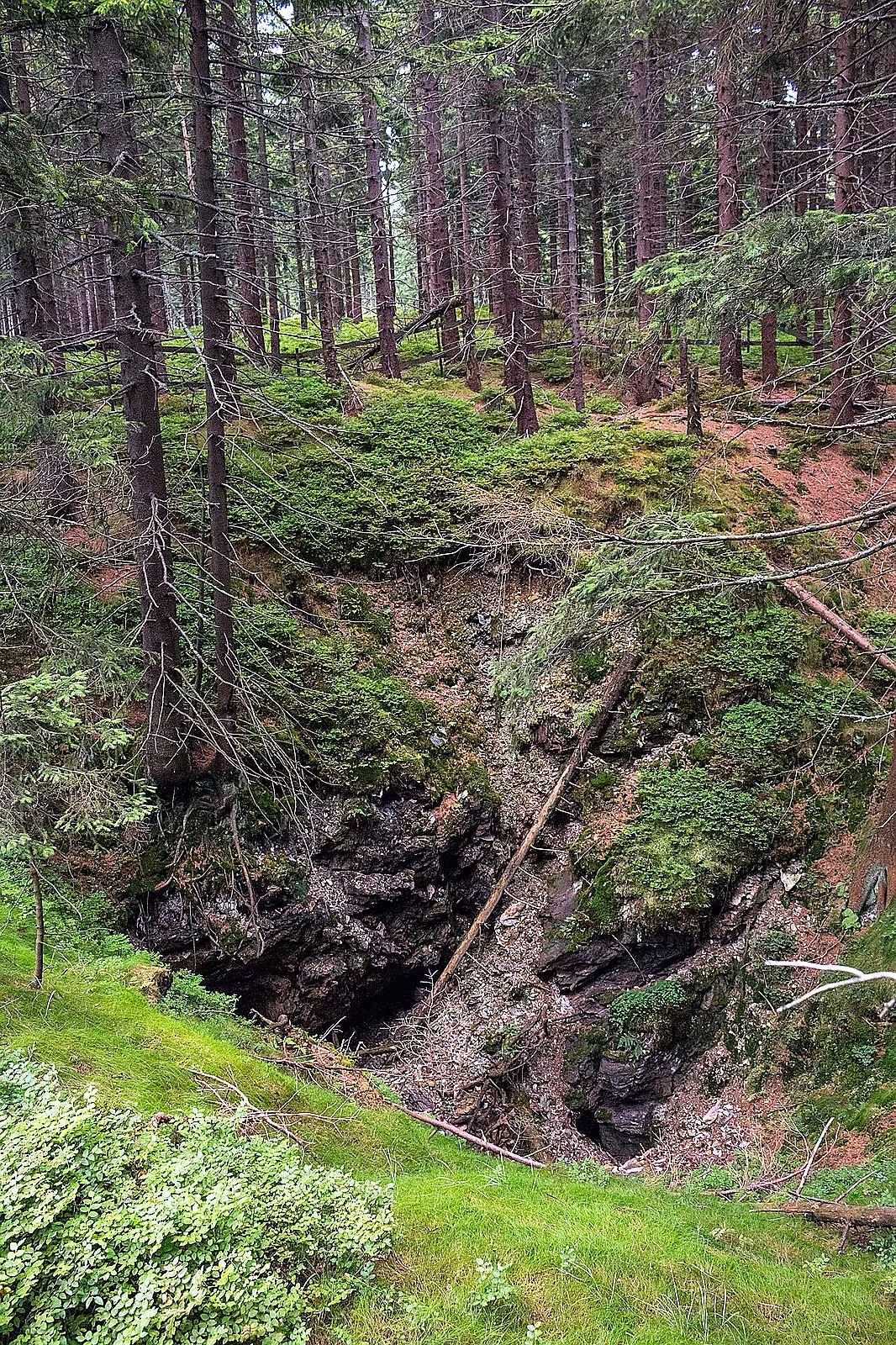
Olověná štola is an important montanistic technical monument of medieval origin on the southeast slope of the Cross Hill in the Upper Valley of Jeseník district. Includes preserved estuaries, piles, mining pits with boulders, sinks and underground spaces with examples of hand mowing. It is located in the forests of the state enterprise Forests of the Czech Republic, it is part of the Zlatohorské miners' trail and was declared a cultural monument of the Czech Republic in 1994.
This medieval mine was referred to as Hatschwatsch in the sixteenth to seventeenth centuries in historical sources. He was in the vicinity of the most important ore area of the Old Mountain. During the period of medieval creation and early modern times, ore mining and mining of precious and base metals developed dynamically in Czech countries and Europe, leading to the establishment of major mining areas in mountain areas.
The architecture of the underground work contains a hand-cut, zigzag of trapezoidal profile that leads to the main conquest. Two ventilation chambers are part of the underground. The second chamber shows a hand-cut rectangular profile and behind it is a smaller space with chopped years 1768 and 1833. The corridor further leads to a smaller mining chamber with the rest of the wooden field and 10 to 12 meters deep. From there, the modern break of the old corridor continues in a semi-circular profile to a large cave of the main conquest. A parallel corridor with a semicircular profile probably dating back to the eighteenth century leads between the second chimney and the short corridor at the valley. The total length of accessible corridors is approximately 200 metres.
The forest of the Czech Republic is the owner of the land and forests in which the monument is located. Among the historical figures associated with this mine are the latest miner J. Höniger. He left behind a period of 1883 with the initials HA. J is the author of the only map where the mine is recorded.
Key events and attractions are connected with archaeological findings in the accessible part of the corridor where historical wooden wheels, ceramics and buckets were discovered. The mining activity in the 1960s was inaccessible to the main mining chamber. In 1994 the stol became a cultural monument of the Czech Republic, but in 1997 the flood caused a cave-in and the mine became inaccessible. Subsequently, in 2004, the estuary was secured by a grid portal.
Today, Olověná štola is an inaccessible technical monument, whose secure mouth with a grate can be seen when visiting the village of Horní Údolí and the Cross Hill within the Zlatohora mining teaching trail. The tour of this location offers a direct view of the preserved remains of historic mining activity in the field and reminds of the ancient tradition of mining in the region.
Historical milestones
- 1768
- This year's number chopped up in a smaller chamber behind the second ventilation chimney.
- 1833
- Another historical year documented in the underground chamber.
- 1883
- The last miner J Höniger left in the mine carved year with initials HAJ.
- 1994
- Declaration by the cultural monument of the Czech Republic.
- 1997
- Covering the mine as a result of flooding.
- 2004
- Security through a portal with a grate.
Architectural development
The mine contains a hand-cut zigzag of trapezoidal profile that leads to the main conquest. The underground includes two ventilation chambers and smaller chambers with chopped-up years. In the accessible part, the remains of the wooden field and digging were preserved.
Historical events
In 1994 the stol was declared a cultural monument of the Czech Republic. In 1997, the flood caused a cave-in and the mine became inaccessible. In 2004 the estuary was secured by a portal with a grate.
Owners
Forests of the Czech Republic
Points of interest
- In the sixteenth to seventeenth century, this medieval mine in historical sources was referred to as Hatschwatsch. - In the underground there is a smaller space with chopped-up years 1768 and 1833. - The last miner, J. Höniger, left behind a period of 1883 with the initials HA. J is the author of the only map where the mine is recorded. - Historical wooden wheels, ceramics and buckets were discovered in the accessible part of the corridor. - In 1994 the stol became a cultural monument of the Czech Republic, but in 1997 there was a flood.
Guide
Show guide text
This text was created by artificial intelligence and has not been editorially reviewed. It may contain inaccuracies.
Welcome to the Upper Valley. Stop for a moment, take a breath and feel the silence of this place. You are standing on the southeast slope of the Cross Hill, in a place that looks at first sight like an ordinary part of the landscape, but beneath your feet and before your eyes is a fascinating history of human work and endurance. In front of you, you see the Lead Hole, which is a significant technical monument associated with ore mining. Look carefully at what surrounds you. You see in front of you the estuary of the estuary, which today is secured by a portal with a grate. This grate was placed here in the year two thousand and four to protect the entrance and ensure the safety of all who come here. Around this entrance, you'll notice various features in the field. There are piles and mining pits with supporting forces, which are actually piles of extracted stone and remnants that the miners dragged from the depths of the earth. If you look around, you might notice some of the sinkholes that are a silent testimony to what's happening deep beneath the surface.
This monument is not just an ordinary tunnel in the mountain. It's a place where nature meets human ambition. Olověná štola has its roots in the Middle Ages. Centuries ago, people discovered valuable ores and decided to dig deep into the rock for them. In the sixteenth to seventeenth centuries, this mine was referred to in historical records as Hatschwatsch. Imagine those times when there was no modern lighting or machines, just the strength of human muscles and simple tools. People here worked in a semi-cloud, led only by the light of oil lamps, and with every stroke of pickling they tried to obtain lead, which was very valuable at the time. This activity shaped the entire landscape of the Upper Valley and left traces of it that we see today.
Now pay attention to the details surrounding you. Even if we can't enter deep into the inner space, try to imagine what the inner device looked like. Underground spaces are characterized by examples of manual cutting of the corridor. This means that every inch of the wall that makes up these corridors has been cut out by hand, struck by a blow, in a hard rock. It's an incredible performance when you realize how many hours and days of work it took to create these paths to the depths of the top. Note how naturally the entrance to the dike is inserted into the slope of the Cross Hill. The whole complex, from mouth to pile to pit, forms one big technical unit that tells us the story of how it used to be extracted.
When we think about this place, we can't forget the people who spent most of their lives here. Every miner left a trail, but one of them is mentioned by name in the history of this place. It was Jan Höniger. Imagine him as the last guardian of this mine. He was the last miner who worked in these premises. In a thousand eight hundred eighty-three, shortly before the mining finally stopped, he left his signature in the mine. He cut into the wall for a thousand eight hundred eighty-three and his initials HAJ It's a very personal gesture, as if he wanted to tell future generations that he was here, that he worked here and that this place was a part of his life. Jan Höniger was not only the last worker, but also the author of the only map that exists and describes the internal arrangements of this mine. Thanks to him, today we know what roads went below the surface and where the individual chambers were located.
There is also some mystery and melancholy associated with this place. There is a smaller chamber underground that served as a time archive. A thousand seven hundred sixty-eight were cut after the second air chimney. A little further, in another underground chamber, we'll find another historical record from the year one thousand eight hundred thirty-three. These chopped numbers are like reports from the past that tell us that the mine was active at these times and that people perceived the need to record their time in stone. It is fascinating to think that these years have remained in darkness for centuries, hidden from the eyes of the world.
Unfortunately, the history of this place is not just about success and work. Nature sometimes reminds itself of its power. In a thousand and nine hundred and ninety-seven, a tragic event occurred. Large floods, which devastated many areas, also affected Horní Údolí. As a result of these destructive waters, the mine was rolled over. What has been cut out with such effort over hundreds of years has in a short time been overthrown by the earth and the rubble. This event concluded direct access to many areas previously known to the miners. Yet the value of this place has not disappeared. In the year one thousand nine hundred ninety-four, shortly before this disaster, Olověná štola was officially declared a cultural monument of the Czech Republic. This means that the state has recognised its irreplaceable importance for our history and technological development.
When you stand before this portal today, feel the contrast between the silent forest and the stormy history that took place here. From one side you see calm nature, from the other side you feel the presence of thousands of hours of hard physical work. Try to think about how Jan Höniger must have felt when in the year a thousand eight hundred and eighty-three he was chopping his initials into the wall, perhaps knowing that he was the last to do so.
Now you are invited to look around in peace. Take a look around the mouth, see the layout of the hatches and feel the atmosphere of this place. Although the grate separates us from the inner corridors, the spirits of former miners are still present here in every stone and in every draught. Olověná štola reminds us that our current comfort is based on the hard work of people from the past.
Thank you for spending a moment with us at this fascinating monument. We hope that you have felt respect for the people who worked here and that you are interested in this short trip to history. Now you can continue to explore the surroundings of the Upper Valley and discover other hidden corners of this beautiful landscape. We wish you a pleasant continuation of your journey and goodbye.
Tips for visitors
Best time to visit The lead stalls are transparent during spring months or autumn when the forest is on the slopes of the Cross Hill and offers the best views of the terrain remains without lush vegetation. For transport use the road to the village Horní Údolí, from where you will walk to the technical monument; We recommend leaving the car in a suitable weaning place in the village and respecting the instructions of the state enterprise Forests of the Czech Republic. Be sure to bring firm shoes to uneven terrain, warm clothes, because it is colder in the vicinity of old mining works, and a reliable flashlight to explore the surroundings of the estuary of the estuary and sinks. For shooting, choose the morning or late afternoon hours, where the side light will highlight the old piles, mining pits and bends on the southeast slope. In the vicinity within 30 minutes of walking or driving, you can visit the Povertown Hill itself, go through the Zlatohora mining trail or explore the picturesque surrounding forests around the Upper Valley.
Businesses nearby
Do you run a restaurant, accommodation, shop, museum, rental, wellness or other visitor service near this monument? Show yourself directly to the people heading to it — this is how they will see you in the app and on the web:
Nearby
Příční vrch, Zlatohorská hornická naučná stezka, obec Horní Údolí a okolní lesy státního podniku Lesy České republiky.
Accommodation nearby
Themed route
Olověná štola Type: Mining monument Why is it worth a visit: This historic mine shows a rich history of lead mining in the region. Visitors can explore underground spaces and learn about mining techniques for centuries.
Golden Mountain Mining Educational Path Type: Educational Path Why is it worth visiting: The trail connects the main destination with the surrounding forests and offers educational panels about mining heritage. It is ideal for slow walks that allow you to understand the connection between individual mining objects.
Municipality of Horní Údolí Type: village core Why is worth a visit: The village forms a quiet background for the trip and offers a view of the typical architecture of the region. Here you can relax and draw your strength before continuing to nature.
Crosstop Type: Natural point of view Why is it worth a visit: The hill provides a wide view of the surrounding countryside and forests. It's a great place to photograph and admire the natural beauty that surrounds the upper territory.
Forests of state enterprise Forests of the Czech Republic Type: Forest Why is it worth visiting: Extensive forest areas offer the possibility of active relaxation and wildlife observation. Walking between trees allows relaxation and contact with nature in a quiet environment.
Seasonal recommendations
Spring in Upper The valley at the lead chute brings out the awakening nature, when the melting snow in the surrounding forests is powered by streams and the water inside the underground is dripping heavily from the ceilings. The atmosphere is raw and mysterious, supported by the sounds of falling drops and foggy hares that roll over the valley. The day is slowly extending, but the sun's rays are not yet strong enough to warm up the dark corners. Due to the emergency condition of the object, move carefully here. Visitors should count on a minimum crowd of tourists, which ensures a quiet atmosphere for exploring. Put on waterproof solid shoes with a deep sample for muddy terrain and a warm waterproof jacket because the temperatures inside the rock are very low. The ideal time for arrival is around noon, when outdoor temperatures reach daily maximum.
The summer months around the old mine offer a welcome shelter from the burning heat, as there is a constant cold year round underground. Nature spills all shades of green and forest roads are fully passable, which attracts a little more curiosity than ever in the year. The sunlight penetrating through the treetops creates interesting shadow patterns on the access path, but inside there is absolute darkness, to which the eyes get used only slowly. As this is a dangerous location with poor statics, take caution and do not step behind provisional barriers. Although it is the main tourist season, do not expect large crowds. Take with you fixed shoes, a strong sweatshirt or a light winter jacket and a reliable flashlight with spare batteries. The best time to visit is early morning when the air is freshest and the surrounding forests smell of resin.
Autumn turns the mountain ridge into a colorful palette of colors from yellow to dark red, and falling leaves reveal the old remains of the mining that were hidden in summer in the bushes. The atmosphere is melancholy, often accompanied by morning fog and silence, which only breaks the rustling of the fallen leaves under the feet. But raw weather and humidity require vigilance, as rocks can slide dangerously on the path and in the crash underground. You will meet only the absolute minimum of determined pilgrims, so you will enjoy complete privacy. The base of the equipment is wind-resistant clothing, several layers of warm linen and gloves, because metal parts of the equipment are cold in their hands. The best time for the expedition is the morning between 10:00 and 12:00, when possible fog breaks sometimes and the faint rays of the sun appear.
Winter in this forgotten mining area is ruled with full effect, there is a layer of snow everywhere, and the entrance to the glistening ice icicles are often decorated. The atmosphere is quiet, fairytale, but also not negotiable, as frost penetrates into all corners and in an emergency-secured space threatens to create dangerous ice crusts. The daylight disappears very quickly, which strongly limits the time for safe movement in the wild. There's no sign of mass tourism. You can meet a local forester. For this season, it is absolutely necessary to have high-quality thermal linens, feather jacket, glass caps, solid winter shoes and shoe plugs due to icy trails. Go on your journey in the morning to make a safe return to civilization before the early dawn is announced.
Visualizations and artistic views

The visualisations are generated by artificial intelligence and serve as inspiration.
Tips from visitors
No tips yet. Be the first!
Log in and add your tip.
Sources and literature
Photos: Von Mundburg / CC BY-SA 4.0 — Wikimedia Commons. The author and licence also appear when you hover over the image.
Faktickým podkladem tohoto textu byl článek na Wikipedii, jehož autory jsou přispěvatelé Wikipedie. Článek je dostupný pod licencí CC BY-SA 4.0.
Location on the map
Příběhy a pověsti
Legendy, pověsti a příběhy spjaté s touto památkou

Fotografie návštěvníků
Zatím žádné fotografie. Buďte první, kdo přidá fotografii z návštěvy!
Log in a přidejte svou fotografii nebo hodnoťte.
Za ověřenou návštěvu v aplikaci získáte víc bodů — poznáme podle GPS, že jste na místě.
Reviews and comments