



Palác Generali Building
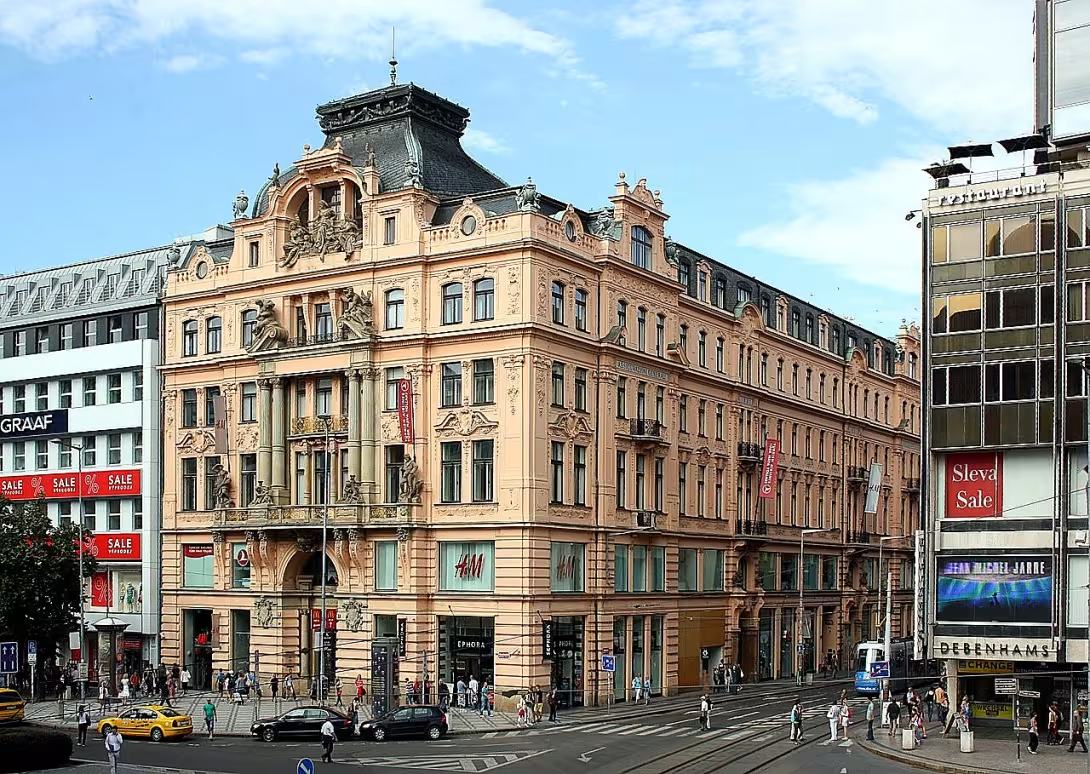
Palác Generali, originally the Assicurazioni Generali insurance company's palace, is a five-storey building in Prague, which boasts architectural beauty in the style of the Paris Art Nouveau with elements of novobarok. It is located in a challenging location of Wenceslas Square and Jindřiš Street in Prague 1, which makes it one of the important elements of Prague's city face. Its history dates back to the mid-19th century and is associated with the development of insurance companies, architectural changes and cultural significance.
The foundation of the palace was related to the need to upgrade and increase the space for the Prague branch of the Assicurazioni Generali insurance company. The original building, named at the Emperor's for the owner of the imperial speedster, was built and served as the seat of the insurance company in 1831. In the mid-1990s it became too small for the needs of the company and was demolished, leading to the creation of a new palace. The construction took place between 1895 and 1896 under the supervision of architect Friedrich Ohmann, who collaborated with Osvald Polívka on details of interiors. This project was part of a broader trend in Europe towards modern architectural styles such as Art Nouveau, reflecting the intense industrialisation and urbanisation of the period.
The architecture of the Generali Palace is characterized by its combination of Paris Art Nouveau and Neo-Baroque elements. The main facade towards Wenceslas Square is decorated with sculptures from artists such as Stanislav Suchard, Chenek Vosmík and Bohuslav Schnirch. The side facade in Jindřišská Street brings an eclectic blend of neo-Baroque style. The palace was designed as a three-way building with a passage connecting three commercial and rental houses, which contributed to its functionality and aesthetic attractiveness.
History of ownership of the palace Generali is linked to Assicurazione Generali and Moldova Generali. In 1907- 1908 Franz Kafka worked here, which adds cultural value to the object. During their existence, other interesting events took place in the palace, such as the connection with the neighbouring new building of the glass palace Prague no. 834 / I in 1928, which allowed the expansion of its functionality.
Palác Generali witnessed many changes and adaptations. In the 1950s, the rebuilding of the dome took place and in the 1960s part of the space became a Polish cultural centre, while the main office space was occupied by the Office of Patents and inventions. In 1969, the shop of French delicacies Paris- Prague, which worked until 2010, was adapted. Despite these changes, the palace remains an important monument today, even though its condition is considered neglected.
Today Palác Generali is located in one of the most famous places in Prague - Wenceslas Square. Its historical and architectural values make the object attractive to visitors who want to know the rich history of Prague. Despite neglect, the palace is still an important element of the city's face and evidence of architectural development in the late 19th century. Visiting the Palace Generali offers an opportunity to appreciate its history, architecture and cultural importance, which is why it is worth visiting.
Then and now
Drag the slider to compare how the landmark may have looked when it was built with the view today.
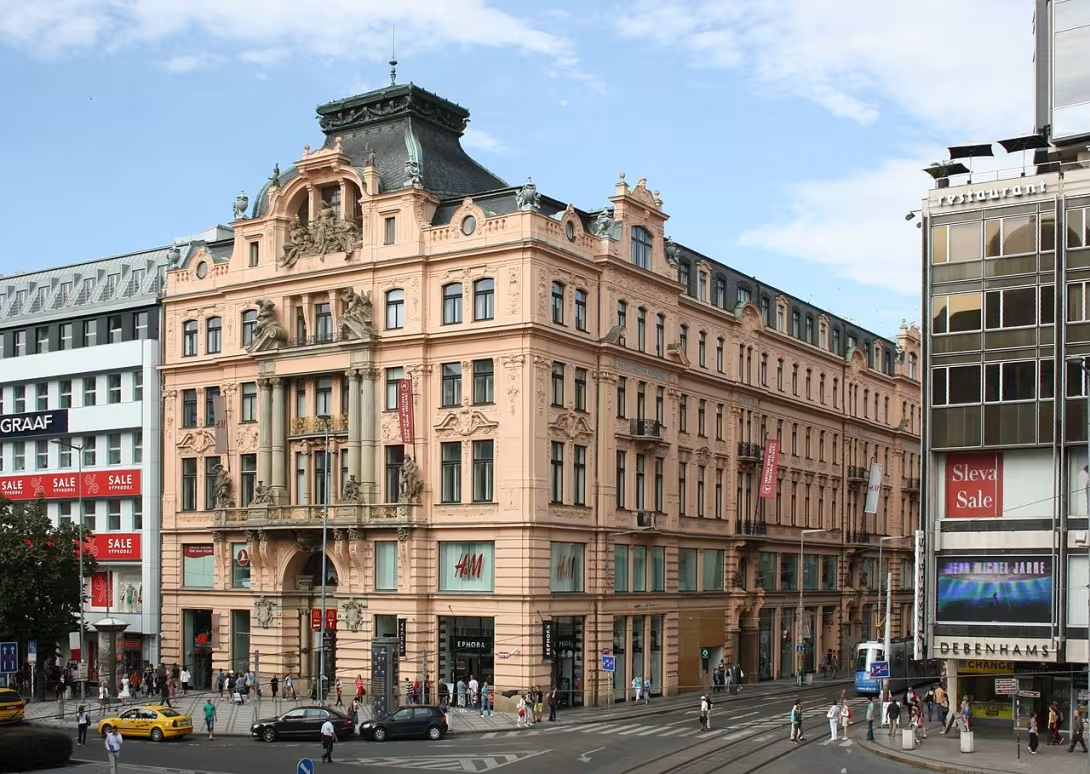

The historical appearance on the left is an AI-generated visualisation and serves as inspiration only.
Historical milestones
- 1897
- Opening of the palace.
- 1908
- Franz Kafka has left his post in the palace.
Architectural development
The palace was designed by the architect Friedrich Ohmann and built under his supervision in 1897-1898. It included three commercial and rental houses connected by passages. During the years, adaptation took place, for example for the Polish Cultural Centre in the 1960s.
Historical events
- 1907-1908
- Franz Kafka worked at the Prague branch.
- 1928
- Connection of the palace with the adjacent new building of the glass palace Prague no. 834 / I.
Owners
- 1831
- 1897-1898
Points of interest
- Palác Generali was originally the palace of the Assicurazioni Generali insurance company and is a five-story building in the style of the Paris Art Nouveau with elements of the New Baroque. - It is located on Wenceslas Square and Jindřišská Street in Prague 1, which makes its location important for Prague's city face. - Its construction took place between 1895 and 1896 under the supervision of architect Friedrich Ohmann, who collaborated with Osvald Polívka on details of interiors. - The main facade of the palace is decorated with sculptor elements from artists such as Stanislav Succharda, Chenek Vosmík and Bohuslav Schnirch. - During the years 1907-1908 Franz Kafka worked here, which adds cultural value.
Guide
Show guide text
This text was created by artificial intelligence and has not been editorially reviewed. It may contain inaccuracies.
Welcome to the heart of our beautiful Prague, where history meets the daily rush of the modern city. Stop for a second, take a deep breath, and forget the surrounding noise. Right now, you're standing in front of a building that is the real jewel of the Prague Center. The Palác Generali stands before you. Look at him as a whole. It is a massive, five-storey object that dominates the corner of Wenceslas Square and Jindřiš Street by its location. Feel its size and how naturally it fills the space in this highly valued place of the city. It's a building that's not just supposed to be a practical space, but it's supposed to emit strength, stability and incredible elegance.
Let us now return together in time more than a hundred years back, to the end of the nineteenth century. At that time Prague had a huge boom and the city began to change into a modern metropolis. It was in this spirit that the construction of this palace began in the year one thousand eight hundred ninety-seven. It was not an ordinary house of business, but the seat of an important Italian insurance company. At the time, insurance companies wanted their buildings to be credible and rich, because they were supposed to make clients feel safe and prosperous. Therefore, the project was entrusted to the experienced hands of the architects Friedrich Ohmann and Osvald Polívka. These two creators were able to combine the needs of modern business with the highest aesthetic demands of their time. Their joint work created an object that made a fundamental contribution to how we now perceive Prague's urban face from this part.
Now pay attention to the architecture itself. Look up and observe the building line. Palác Generali is a fascinating example of the style we call the Paris Art Nouveau. Art Nouveau was a symbol of innovation, ease and inspiration in nature at the time. If you look at the details of the facade, you will see how this style manifests itself in subtlety and in a certain rhythm of the entire object. But the architects didn't stay in one direction. Note that the elements of the new Baroque are mixed here. Novobaroko brings to the building a sense of monumental, noble and certain drama that is typical of the older European palaces. It is this combination of Art Nouveau elegance and baroque power that makes this house a unique work. See how the building spreads on the corner, how fluently it passes from one street to another, and how its five floors create a harmonious whole that does not seem cumbersome, but rather noble.
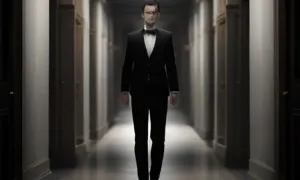
When you stand in front of this facade, try to imagine that thousands of people have worked in these areas in the past. And it is here that brings us one of the most important stories associated with this place. Imagine a young, a little insecure man in a suit coming into his offices every day in this palace. He was Franz Kafka, one of the world's most famous writers. Kafka spent a significant part of his working life here. For him, this palace was a place of daily routine, administrative tasks and official order. Imagine the contrast between the monumental, rich architecture of the palace and the inner world of Kafka, which was full of doubt, anxiety and deep existential questions. Kafka worked here until a thousand and nine hundred and eight, when he left his post in the palace. It is fascinating to think that the person who so masterfully described the alienation of an individual from the system and bureaucracy in his books was part of the system in these very areas. Perhaps it was the strict structure of the insurance company and the grandeur of the building that influenced the way he perceived the world and wrote his famous novels.
Now I want to impress you with one interesting thing that may not be visible at first sight, but gives the building a deeper meaning. Palác Generali was not just an ordinary office building, it was a symbol of the international connection between Prague and Europe. The fact that the Italian insurance company was based in such a luxurious style showed that Prague was at that time a cosmopolitan city, where capital and modern architectural trends flow from the best European centres, such as Paris. The whole object was designed to make it clear that there are institutions with great power and stability. It is such a quiet message from the past that tells us how ambitious Prague was at the turn of the century. The mystery is how many secret meetings, trade agreements, or personal dramas have taken place in these five floors behind those windows that you now see before you.
If you look at this corner palace again, do you see more than just the old house? Do you see a clash of two architectural worlds, an Art Nouveau and a neo-Baroque? Can you feel the traces of Franz Kafka and hear the echoes of the late nineteenth century? Palác Generali proves that architecture is not only about stones and plaster, but about the people who lived there, worked and made history. It is part of the identity of our city, which reminds us that even in the center of modern activity we can find peaceful points that tell stories from the past.
I hope this short trip to history has helped you to better perceive the beauty and importance of this place. Palác Generali now sends you to discover the secrets of the streets of Prague. I suggest you now slowly walk around the building and watch from different angles how her appearance changes depending on where you're looking at her. Notice how beautifully it fits into the rhythm of Wenceslas Square and how it creates a gate to Henry Street.
Thank you for your attention and I wish you a wonderful continuation in your Prague survey. Let your curiosity guide you and look for details that others overlook. See you next time.
Tips for visitors
The best time to visit the Palace Generali is usually in the early afternoon when there are fewer people and the light is ideal for photography. This moment also offers an opportunity to see the architecture of the palace in the light of the sun, which highlights its elegant line.
Wenceslas Square, where the palace is located, is well accessible by buses and trams.
When planning a visit, take with you sunglasses and protective clothing, especially in summer. Thanks to its location in Wenceslas Square, the palace and its surroundings can be very illuminated. Photography is best from the street where you can capture the overall view and details of architecture.
In the vicinity of the Palace of Generali there is Wenceslas Square, which offers various attractions such as the National Theatre or the Museum of the Capital City of Prague. These places can be easily visited during one trip and are ideal for those who want to explore the history and culture of Prague.
For families with children, Palác Generali is an interesting place because of its architectural appearance. Children can also enjoy a walk around Wenceslas Square, where there are various statues and monuments. In addition, it is possible to visit the Prague City Museum, which offers interactive exhibitions for children.
Frequently asked questions
Can the monument be visited?
Some buildings of this kind are open for guided tours, others serve another purpose or are privately owned. We have not verified whether and when this monument is open – please ask the operator.
What are the opening hours and admission?
We have not verified the opening hours or admission. Current information is published by the operator.
Where is the monument?
Location: Praha 1, Hlavní město Praha. The map on this page shows the exact spot.
Why is the monument protected?
It is listed in the Central List of Cultural Monuments of the Czech Republic as a cultural monument (register no. 1000152025).
Businesses nearby
Do you run a restaurant, accommodation, shop, museum, rental, wellness or other visitor service near this monument? Show yourself directly to the people heading to it — this is how they will see you in the app and on the web:
Events nearby
Zdroj akcí: otevřená data měst a obcí ČR (Národní katalog otevřených dat) a kalendář akcí Národního památkového ústavu.
Nearby
V okolí se nachází Václavské náměstí, jedno z nejznámějších míst v Praze.
Další historickou památkou je novostavba proskleného paláce Praha čp. 834/I.
Accommodation nearby
Trips and activities nearby
Guided tours, tickets and activities nearby from GetYourGuide
Affiliate link: if you buy from the partner, we may receive a commission. The price for you does not change.
Search tours and activities →Themed route
Thematic cruise route: Palác Generali and Wenceslas Square
1. Palác Generali (Palace) - Type: historical palace - Why is it worth a visit: This Baroque palace, built in 1723 for Count František Antonín Špork, is one of the most beautiful architectural monuments in Wenceslas Square. It is known for its rich interior and historical significance as the headquarters of Generali, one of Europe's oldest insurance companies.
2. Wenceslas Square (square) - Type: public square - Why is it worth a visit: This central town is the most famous and most important square in Prague. It is known for its history, where important events of Czech history took place, such as state celebrations or protests for democracy. The square is also home to a statue of T.G.Masaryk and a rich architectural mixture.
3. New construction of glass palace Prague No. 834 / I (new construction) - Type: modern building - Why is it worth a visit: This newly built building is an example of modern architecture in the heart of the historical centre. Its unique design and transparent facades contradict the surrounding older monuments, which makes Wenceslas Square an even more interesting place for curious people.
This route will guide you through the history and modernity of Prague, showing the rich culture and architectural development of this central area.
Seasonal recommendations
Spring: In spring the Palác Generali will turn into a flowering oasis where green trees and shrubs will be decorated with the first flowers. The sun rays illuminate the architectural details of the palace more elegantly than otherwise in the year, which contributes to a unique atmosphere. For a visit it is advisable to take a walk in the morning time in order to use mild temperatures and milder crowds. It is recommended to wear clothes suitable for variable spring weather - light coat or coat.
Summer: Summer brings long, sunny days when Palác Generali becomes an ideal place to relax in green squares. The atmosphere is revived by warm light and activity outside. The best time to visit is in the early afternoon to avoid the hottest hours and intense sun. We recommend light clothing, protective cosmectics against UV radiation and plenty of drinking water.
Autumn: In autumn, trees and shrubs in the vicinity of the Palace Generali have beautiful colours ranging from yellow to pink. The sun rays illuminate the architecture of the palace in warm light, which contributes to a comfortable and peaceful atmosphere. It's a good morning time to visit, when the crowds aren't increasing. It is recommended to wear warmer clothes for colder temperatures and possible rain.
Winter: In winter Palác Generali brings a calm atmosphere, when architecture is lit by evening lights. Freezing weather creates a unique view of the palace and its surroundings. The best time to visit is late afternoon, when temperatures are starting to cool.
Visualizations and artistic views


The visualisations are generated by artificial intelligence and serve as inspiration.
Photos from the area
Real photos taken near the monument


Zdroj a licence jsou uvedeny u každého snímku.
Tips from visitors
No tips yet. Be the first!
Log in and add your tip.
Sources and literature
Photos: Jaroslav Zastoupil - Gampe / CC BY 3.0 — Wikimedia Commons. The author and licence also appear when you hover over the image.
Faktickým podkladem tohoto textu byl článek na Wikipedii, jehož autory jsou přispěvatelé Wikipedie. Článek je dostupný pod licencí CC BY-SA 4.0.
Location on the map
Příběhy a pověsti
Legendy, pověsti a příběhy spjaté s touto památkou
Fotografie návštěvníků
Zatím žádné fotografie. Buďte první, kdo přidá fotografii z návštěvy!
Log in a přidejte svou fotografii nebo hodnoťte.
Za ověřenou návštěvu v aplikaci získáte víc bodů — poznáme podle GPS, že jste na místě.
Reviews and comments