






U Kamenného beránka House
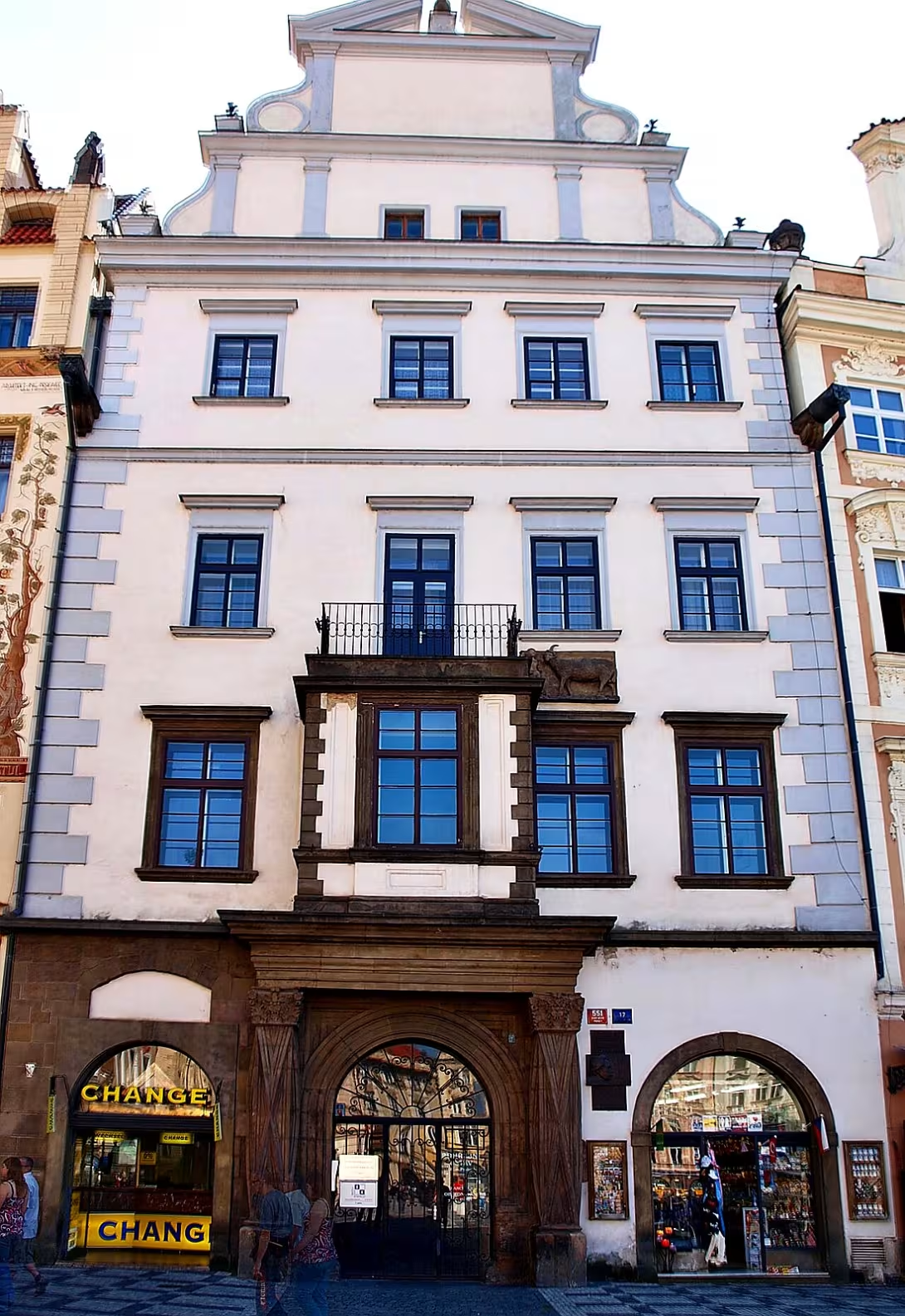
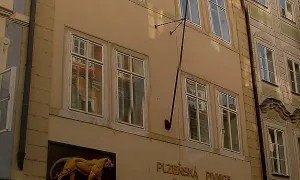
U Kamenného beránka, also known as Lékárna U Bílého jednorožce or Dům u Bílého jednorožce, is a historic building on Staroměstské náměstí in Prague 1. Originally constructed during the Romanesque period, it has undergone numerous renovations over the centuries and holds cultural significance. The structure features a Renaissance portal from around 1520 and was expanded with an additional floor in the early 17th century. Its rich history includes hosting a literary salon frequented by prominent figures such as Franz Kafka and Albert Einstein.
The origins of U Kamenného beránka trace back to the Romanesque period when Prague was a key center in Bohemia. Although specific details about its initial construction are limited, some historians suggest it is among the oldest buildings in Prague due to its Romanesque foundations. By the Renaissance era, with the addition of a notable portal around 1520, Prague experienced cultural flourishing under Habsburg rule, reflecting broader European architectural trends.
Architecturally, U Kamenného beránka began as a Romanesque structure and evolved over time with significant additions such as the Renaissance portal from circa 1520. In the early 17th century, it was elevated by an additional floor, contributing to its distinctive appearance today. The building suffered damage during a fire in May 1945 but underwent complete interior reconstruction afterward, preserving its historical essence while adapting to modern needs.
Throughout its history, U Kamenného beránka has seen various owners and hosted significant cultural events. In the early 17th century, it was owned by Václav Šťastný Pětipeský, a director of the Czech Kingdom. Later, Max Fanta, an inventor known for creating the "Fantova miska," became a notable owner in the late 19th to early 20th centuries. The building gained cultural prominence when Berta Fantová hosted a literary salon in the early 20th century, attracting intellectuals and artists such as Franz Kafka, Max Brod, Franz Werfel, Samuel Hugo Bergmann, Rudolf Steiner, Christian von Ehrenfels, and Albert Einstein, who played duets with Otýlie Nagelová between 1911-1912.
Key events at U Kamenného beránka include its elevation by an additional floor in the early 17th century and visits from Albert Einstein during 1911-1912. The building's original name, U Kamenného beránka, derived from a heraldic symbol featuring a ram, was used until the end of the 18th century before it became known as Lékárna U Bílého jednorožce due to an error related to its heraldic emblem.
Today, U Kamenného beránka remains a cultural landmark in Prague. Although it no longer hosts a literary salon or operates as a specialized bookstore for sci-fi and fantasy literature, its historical significance continues to draw visitors interested in the rich tapestry of Prague's past. The building is easily accessible on Staroměstské náměstí, near other notable sites such as Nakladatelství Štorch with Mikoláše Alše's sgraffito and nearby structures like U Bílého jednorožce (Trčkovský) and U Zlatého jednorožce. Its storied past, architectural evolution, and association with prominent historical figures make it a worthwhile visit for anyone exploring Prague's cultural heritage.
U Kamenného beránka stands as a testament to the enduring legacy of Prague's architectural and cultural history. Visitors are invited to explore this historic site, where each corner tells a story of artistic innovation and intellectual exchange that has shaped the city over centuries.
Then and now
Drag the slider to compare how the landmark may have looked when it was built with the view today.
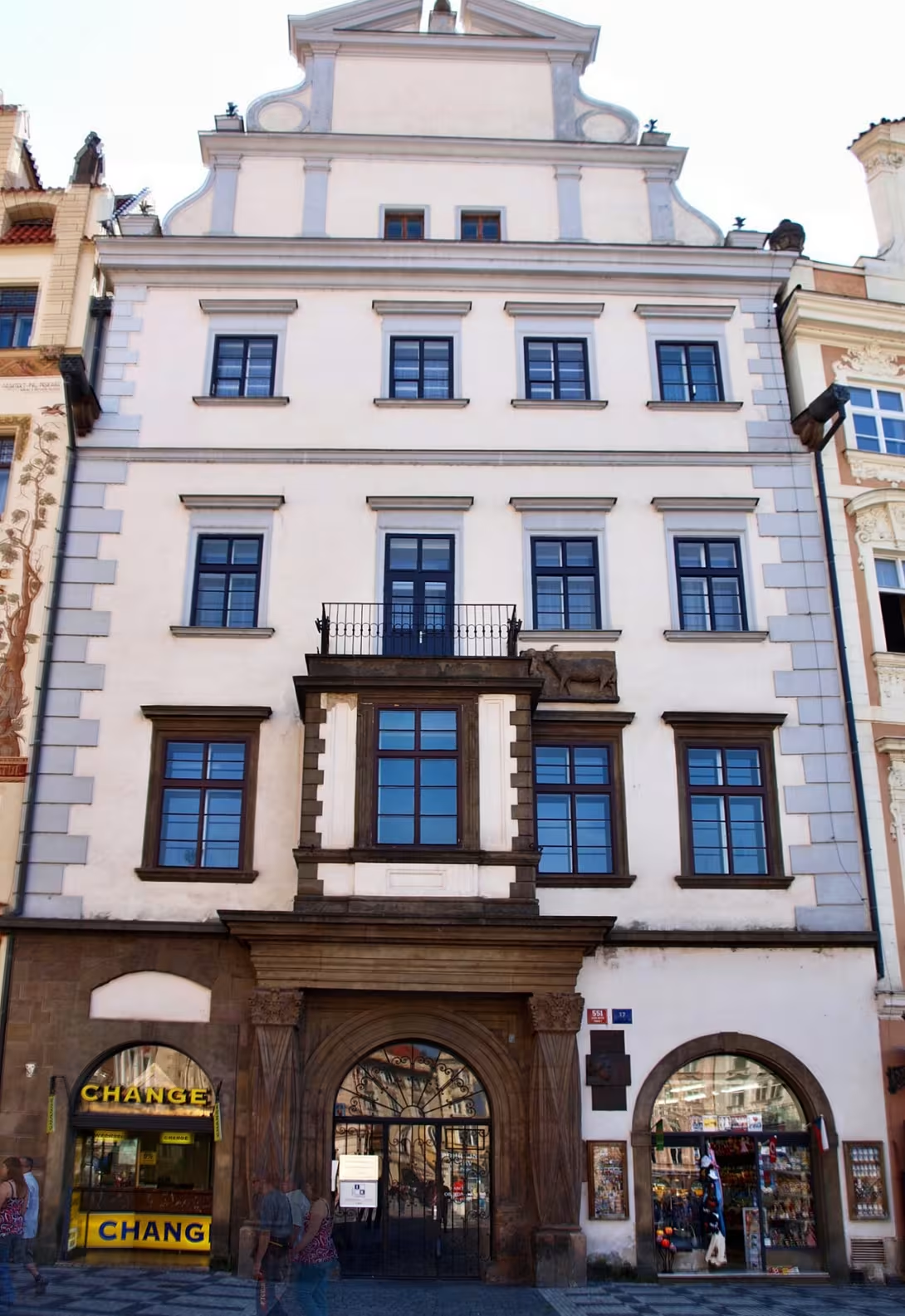
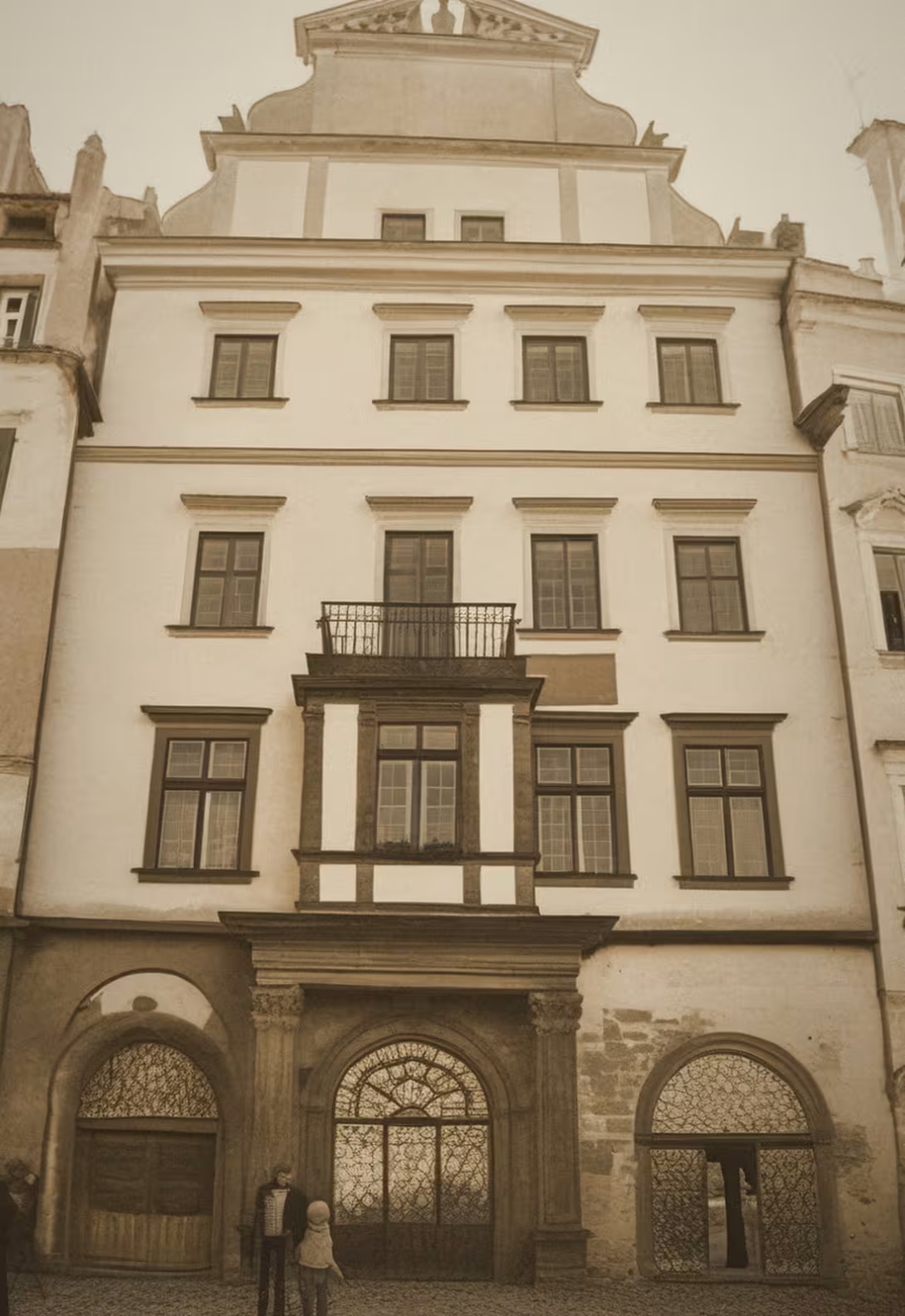
The historical appearance on the left is an AI-generated visualisation and serves as inspiration only.
Historical milestones
- 1452
- The name U Kamenného beránka is documented.
- 1911-1912
- Albert Einstein visited and played duets with Otýlie Nagelová.
Architectural development
U Kamenného beránka has a rich architectural history, beginning as a Romanesque structure. It features a Renaissance portal from around 1520 and was expanded with an additional floor in the early 17th century. The building suffered damage during a fire in May 1945 but underwent complete interior reconstruction afterward.
Historical events
The building was elevated by an additional floor in the early 17th century.
Albert Einstein visited and played duets with Otýlie Nagelová between 1911-1912.
Owners
Václav Šťastný Pětipeský (early 17th century)
Max Fanta (late 19th to early 20th century)
Points of interest
- The building's name, U Kamenného beránka, originated from a heraldic symbol featuring a ram and was used until the end of the 18th century before being mistakenly renamed to Lékárna U Bílého jednorožce due to an error related to its emblem.
- The literary salon hosted by Berta Fantová in the early 20th century made the building a cultural hub, attracting renowned intellectuals and artists like Franz Kafka, Albert Einstein, and Rudolf Steiner, who engaged in musical duets with Otýlie Nagelová between 1911-1912.
- Max Fanta, an inventor known for creating the "Fantova miska," was one of the notable owners of U Kamenného beránka during the late 19th to early 20th centuries, adding a layer of innovation history to its cultural significance.
- Despite suffering damage from a fire in May 1945, U Kamenného beránka underwent complete interior reconstruction, preserving its historical essence while adapting it for modern use, showcasing resilience and continuity through Prague's turbulent history.
- Originally constructed during the Romanesque period, U Kamenného beránka is considered among the oldest buildings in Prague due to its foundational architecture, reflecting the city’s medieval past amidst its evolving urban landscape.
Guide
This guide is narrated by a synthetic voice generated by artificial intelligence.
Show guide text
This text was created by artificial intelligence and has not been editorially reviewed. It may contain inaccuracies.
Welcome to a journey through time and history as you stand before the U Kamenného beránka, or as it's known today, Lékárna U Bílého jednorožce, located on Prague's iconic Staroměstské náměstí. This historic building is more than just a structure; it's a portal to stories and legends that have unfolded over centuries.
As you gaze upon the façade, notice how its walls whisper tales of transformation from a Romanesque origin to the Renaissance splendor marked by its portal dating back to around 1520. The building has gracefully carried an additional floor since the early 17th century, showcasing the architectural evolution it has witnessed over time.
The story of U Kamenného beránka began in 1452 when it was first documented under this name. Its identity is deeply intertwined with Prague's history and culture, having been a silent witness to the city's vibrant past. Imagine walking through its doors centuries ago, entering an era where each stone has a story.
In 1911-1912, this very place hosted Albert Einstein, who played duets with Otýlie Nagelová, adding a layer of intellectual and cultural significance to its history. The building was not just a home but a hub for some of the most influential figures in literature and philosophy, including Václav Šťastný Pětipeský, Max Fanta, Berta Fantová, Franz Kafka, Max Brod, Franz Werfel, Samuel Hugo Bergmann, Rudolf Steiner, Christian von Ehrenfels, among others. Each of these individuals left an indelible mark on the fabric of this historic site.
Now, let's delve into a fascinating aspect of its history—the origin of its name. The building was originally named U Kamenného beránka due to a heraldic symbol featuring a ram. However, by the end of the 18th century, an error led to it being mistakenly renamed Lékárna U Bílého jednorožce (Pharmacy of the White Unicorn) because of its emblem. This mix-up adds a layer of mystery and intrigue to its already rich history.
As you stand here, soaking in the atmosphere and architectural beauty, remember that this building is more than just bricks and mortar; it's a testament to Prague's enduring legacy as a cradle of culture, intellect, and artistry. We invite you to explore further, delve deeper into its stories, and let your imagination wander through the corridors of time.
Thank you for joining us on this journey through history. May your exploration continue beyond these walls, discovering more secrets and stories that Prague has to offer. Farewell, until we meet again in another chapter of our city's fascinating narrative.
Tips for visitors
The best time to visit U Kamenného beránka is during the late spring or early autumn months, when the weather is pleasant for walking around Staroměstské náměstí and exploring nearby attractions without the summer crowds. Visiting in these seasons allows you to enjoy the historical architecture with clear skies and comfortable temperatures. Additionally, the lighting conditions are ideal for photography during this time of day.
Transportation to U Kamenného beránka is convenient by both public transport and car.
When visiting U Kamenného beránka, it is recommended to bring comfortable walking shoes as you will likely explore other nearby attractions on foot. A camera or smartphone for capturing photos of the historic architecture and sgraffito works by Mikoláš Alš is also a good idea. Additionally, consider bringing a small umbrella or raincoat in case of unexpected weather changes.
For photography enthusiasts, some of the best spots around U Kamenného beránka include the front-facing view from Staroměstské náměstí to capture Mikoláš Alš's sgraffito of Saint Wenceslas. Early morning or late afternoon light provides a soft glow on the historic facades, making for excellent photo opportunities. Nearby buildings like U Bílého jednorožce and U Zlatého jednorožce also offer interesting architectural details to photograph.
In the vicinity of U Kamenného beránka, within about 30 minutes walking distance, you can visit Nakladatelství Štorch to explore its historical significance. Additionally, exploring other nearby landmarks such as U Bílého jednorožce and U Zlatého jednorožce offers a deeper appreciation of the area’s rich architectural heritage. These sites provide further insights into Prague's history and are perfect for extending your exploration beyond just one location.
Frequently asked questions
Can the monument be visited?
This is a residential or farm building, not a museum with opening hours. Please view it from public space and respect the owners' privacy. We have no information about access to the interior.
Where is the monument?
Location: Praha 1, Hlavní město Praha. The map on this page shows the exact spot.
Why is the monument protected?
It is listed in the Central List of Cultural Monuments of the Czech Republic as a cultural monument (register no. 1000150630).
Businesses nearby
Do you run a restaurant, accommodation, shop, museum, rental, wellness or other visitor service near this monument? Show yourself directly to the people heading to it — this is how they will see you in the app and on the web:
Events nearby

Zdroj akcí: otevřená data měst a obcí ČR (Národní katalog otevřených dat) a kalendář akcí Národního památkového ústavu.
Nearby
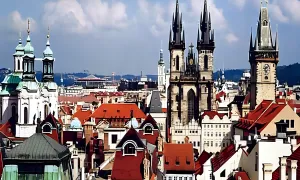
Located on Staroměstské náměstí, U Kamenného beránka is near Nakladatelství Štorch with Mikoláše Alše's sgraffito of Saint Wenceslas. Another building named U Bílého jednorožce (Trčkovský) and U Zlatého jednorožce are also nearby.
Accommodation nearby
Trips and activities nearby
Guided tours, tickets and activities nearby from GetYourGuide
Affiliate link: if you buy from the partner, we may receive a commission. The price for you does not change.
Search tours and activities →Themed route
Thematic Walking Tour: Staroměstské náměstí and its Surroundings
1. U Kamenného beránka (Dům) - Type: Historic House - Why Visit: Begin your journey at this charming historic house located on the vibrant Staroměstské náměstí, known for its picturesque architecture and rich history in Prague's Old Town. This building serves as a gateway to exploring the cultural heritage of the area.
2. Nakladatelství Štorch with Mikoláše Alše's Sgraffito - Type: Artwork - Why Visit: Just a short walk from U Kamenného beránka, visit Nakladatelství Štorch to admire the stunning sgraffito of Saint Wenceslas by renowned Czech artist Mikoláš Alš. This artwork is celebrated for its intricate detail and vibrant colors, offering insight into local artistic traditions.
3. U Bílého jednorožce (Trčkovský) - Type: Historic Building - Why Visit: Continue your tour to U Bílého jednorožce, an architectural gem with a rich history dating back to the 16th century. This building is notable for its unique design and historical significance in Prague's urban landscape.
4. U Zlatého jednorožce - Type: Historic Building - Why Visit: Conclude your tour at U Zlatého jednorožce, another historic structure that adds to the architectural diversity of Staroměstské náměstí. Its name and design reflect the cultural heritage of Prague's Old Town, making it a fitting end to this thematic exploration.
This walking tour offers a compact yet enriching experience of some of the most historically significant buildings in Prague 1, providing insights into their architectural beauty and historical importance.
Seasonal recommendations
Spring: Visiting U Kamenného beránka during spring offers a refreshing experience as the city awakens with vibrant blooms and lush greenery, creating an enchanting atmosphere around this historic site. The soft light of early mornings or late afternoons enhances the charm of the architecture, making it ideal for photography enthusiasts. Visitors can enjoy relatively mild weather, but it's wise to carry layers since temperatures can fluctuate. Spring is a pleasant time to explore without the summer crowds, allowing for a more intimate experience with Prague’s rich history.
Summer: Summer at U Kamenného beránka brings long daylight hours and warm sunshine, perfect for leisurely strolls through the historic streets of Prague 1. The lively atmosphere is complemented by bustling cafés and outdoor terraces where visitors can relax after exploring. However, this peak tourist season means larger crowds, so it's advisable to arrive early in the day to avoid long lines at popular attractions. Light, breathable clothing and comfortable walking shoes are recommended to comfortably navigate the city.
Autumn: Autumn offers a magical setting for visiting U Kamenného beránka, with Prague’s skyline painted in warm hues of red, orange, and yellow. The cooler temperatures make it an ideal time to explore without the summer heat, while the softer light creates a cozy ambiance perfect for capturing stunning photographs. As the leaves fall, the city takes on a quieter charm, though some popular spots may still attract visitors. Layered clothing is recommended to accommodate fluctuating weather conditions.
Winter: Winter transforms U Kamenného beránka into a picturesque scene with snow-dusted rooftops and festive lights adorning the streets of Prague 1. The colder months bring shorter days, so planning your visit around daylight hours is essential. Inside, the historic interiors offer warmth and shelter from the chill outside. It's important to dress warmly in layers, including hats, gloves, and scarves, as temperatures can drop significantly. Despite potential icy conditions, winter offers a unique charm with fewer tourists, allowing for a more serene exploration of Prague’s heritage.
Visualizations and artistic views


The visualisations are generated by artificial intelligence and serve as inspiration.
Photos from the area
Real photos taken near the monument


Zdroj a licence jsou uvedeny u každého snímku.
View from the area
This animation was generated by artificial intelligence from a real photograph of the surroundings. The motion and details are not real footage of the location.
Tips from visitors
No tips yet. Be the first!
Log in and add your tip.
Sources and literature
Photos: VitVit / CC BY-SA 4.0 — Wikimedia Commons. The author and licence also appear when you hover over the image.
Faktickým podkladem tohoto textu byl článek na Wikipedii, jehož autory jsou přispěvatelé Wikipedie. Článek je dostupný pod licencí CC BY-SA 4.0.
Location on the map
Příběhy a pověsti
Legendy, pověsti a příběhy spjaté s touto památkou
Fotografie návštěvníků
Zatím žádné fotografie. Buďte první, kdo přidá fotografii z návštěvy!
Log in a přidejte svou fotografii nebo hodnoťte.
Za ověřenou návštěvu v aplikaci získáte víc bodů — poznáme podle GPS, že jste na místě.
Reviews and comments