






palác Morava Palace
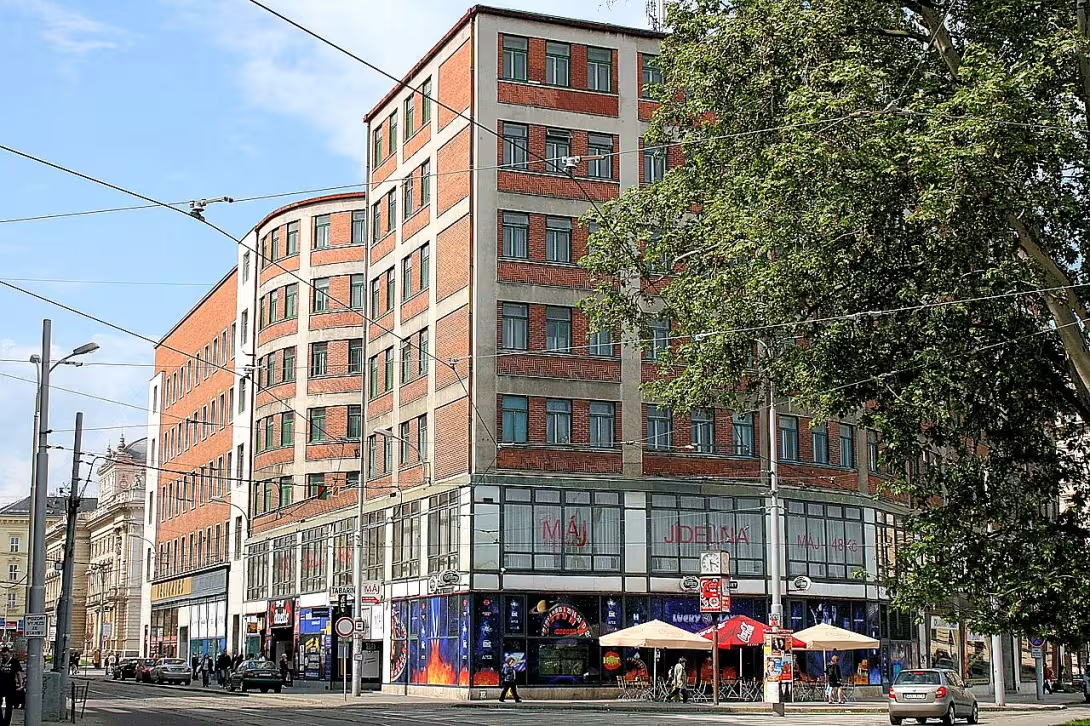
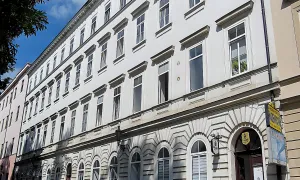
Palác Morava stands as a testament to architectural innovation in Brno, Czech Republic, reflecting the dynamic urban development of the late 1920s. Located at the historic 'ring' between Malinovského náměstí and Divadelní and Benešová streets, this prominent ensemble was designed by Ernst Wiesner and completed in two phases: an older section in 1929 with six floors and a newer part in 1936 comprising four floors. The building is notable for its distinctive facades featuring undressed decorative bricks and travertine-clad towers, embodying the secessionist style prevalent during that era.
The origin of Palác Morava dates back to 1926 when Hermine Stiassni initiated a design competition intended for a hotel on the site. The project attracted world-renowned architects like Peter Behrens and Jacobus Oud, alongside local talent. However, it was Ernst Wiesner's design that ultimately prevailed. Construction began in 1928 under his direction, with the building later sold to Moravská zemská životní pojišťovna (Moravian Provincial Life Insurance Company). The complex faced challenges such as a difficult ground plan and geologically poor sub-soil, which Wiesner overcame by collaborating with structural engineer Jaroslav Valenta.
Architecturally, Palác Morava is distinguished by its innovative use of materials and design elements. The contrast between reinforced concrete and raw brickwork is particularly striking. The building's lower levels housed commercial spaces, including a basement cinema named Kapitol and a bar, while the first floor featured a coffee lounge with a large terrace added in the late 1930s. This terrace was later removed due to wartime damage. Wiesner's design incorporated natural lighting solutions through a central skylight and glass pavilion, enhancing the residential apartments located on the upper floors.
Ownership of Palác Morava transitioned from Hermine Stiassni to the Moravian Provincial Life Insurance Company in 1928, marking a significant change in its administrative history. The building's design competition and subsequent construction reflect broader trends in Czechoslovakia during the late 1920s, where modernist styles were increasingly blended with traditional elements.
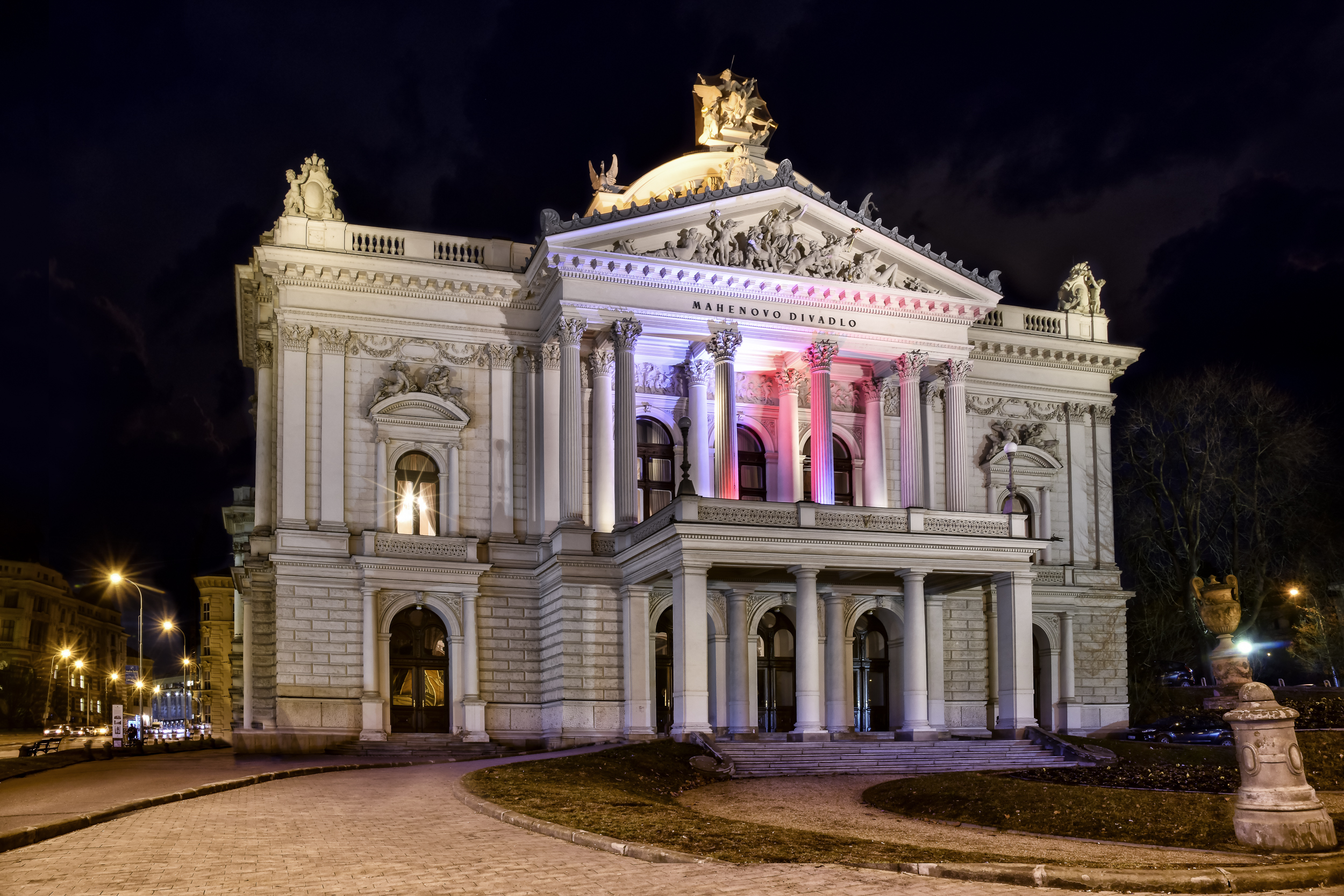
Today, Palác Morava remains an integral part of Brno's architectural heritage, protected as a cultural monument of the Czech Republic. Its unique blend of secessionist style and innovative design continues to attract visitors interested in architecture and history. The building is surrounded by tram tracks forming a loop, with notable nearby sites such as Mahenovo divadlo (Mahen Theatre), adding to its appeal as a destination for those exploring Brno's cultural landscape.
Palác Morava stands not only as an architectural marvel but also as a symbol of the innovative spirit that characterized Czechoslovakia in the early 20th century. Its preservation allows visitors to appreciate the historical and artistic significance of this remarkable building, making it a must-visit site for anyone interested in exploring Brno's rich cultural heritage.
Then and now
Drag the slider to compare how the landmark may have looked when it was built with the view today.
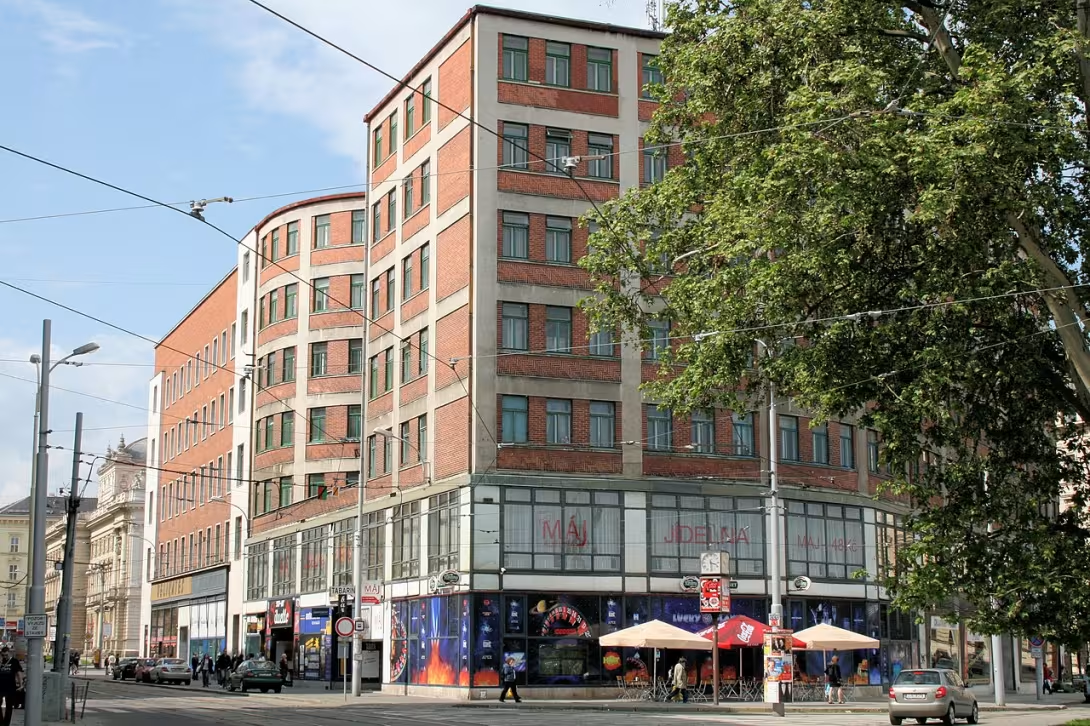
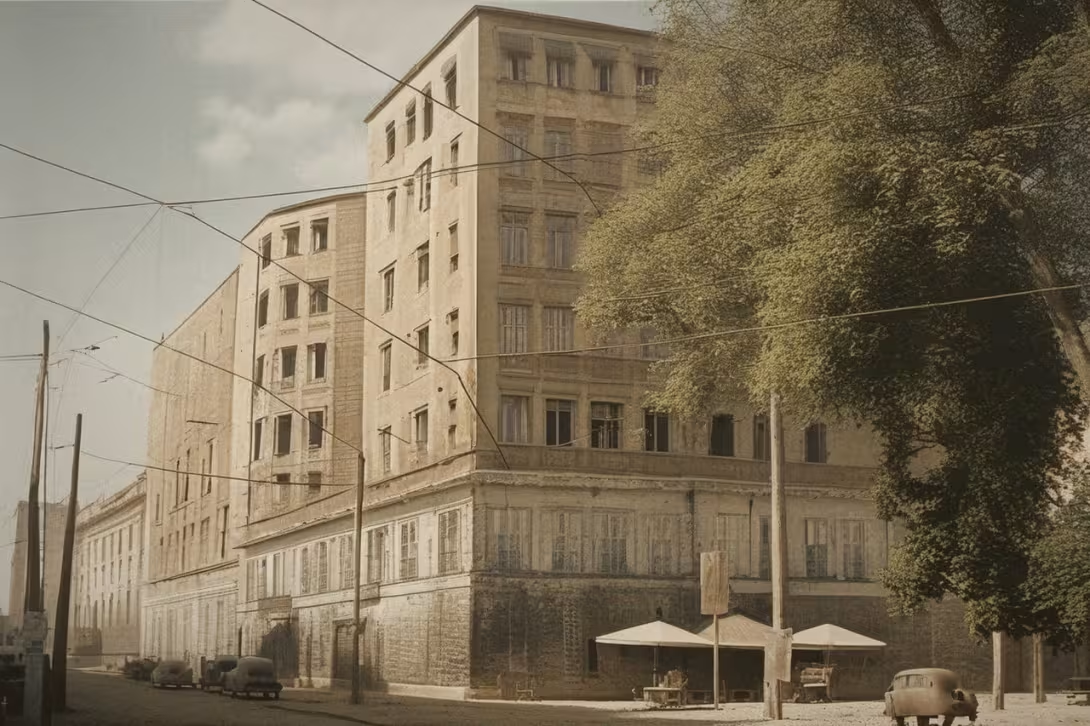
The historical appearance on the left is an AI-generated visualisation and serves as inspiration only.
Historical milestones
- 1929
- Completion of the older section of the building with six floors.
- 1936
- Construction of the newer part of the building with four floors.
Architectural development
The complex consists of two main parts: an older section built in 1929 with six floors and a newer part from 1936 with four floors. The facades are adorned with undressed decorative bricks, while the towers feature travertine cladding. Wiesner's design incorporated innovative lighting solutions through a central skylight and glass pavilion.
Historical events
In 1926, Hermine Stiassni initiated a design competition for the site, originally intended for a hotel.
By 1928, construction began under Ernst Wiesner's winning design, which was later sold to Moravská zemská životní pojišťovna.
Owners
Originally owned by Hermine Stiassni in 1928, who sold it to Moravská zemská životní pojišťovna (Moravian Provincial Life Insurance Company).
Points of interest
- The design competition for Palác Morava's site in 1926 attracted world-renowned architects such as Peter Behrens and Jacobus Oud, highlighting the international interest in Brno’s architectural development during that period.
- Despite challenges with a difficult ground plan and geologically poor sub-soil, Ernst Wiesner collaborated with structural engineer Jaroslav Valenta to successfully complete the construction of Palác Morava, showcasing innovative engineering solutions for its time.
- The lower levels of Palác Morava originally featured commercial spaces including a basement cinema named Kapitol and a bar, reflecting the building's multifunctional use during the late 1920s and early 1930s in Brno.
- A large terrace added to the first floor in the late 1930s was later removed due to wartime damage, illustrating how historical events impacted architectural features of Palác Morava over time.
- The central skylight and glass pavilion designed by Ernst Wiesner provided natural lighting solutions for the residential apartments on the upper floors, demonstrating a blend of functionality and aesthetic appeal in the building's design.
Guide
This guide is narrated by a synthetic voice generated by artificial intelligence.
Show guide text
This text was created by artificial intelligence and has not been editorially reviewed. It may contain inaccuracies.
Welcome to the heart of Brno, where history and modernity blend seamlessly before your eyes. You stand before the Palác Morava, a striking architectural ensemble that has been a prominent feature since its completion in the late 1920s. As you take in the surroundings, notice how this building stands proudly on the historic 'ring' between Malinovského náměstí and Divadelní and Benešová streets.
Let's delve into the origins of this magnificent structure. The Palác Morava was conceived as a commercial and rental property, designed by the renowned architect Ernst Wiesner. Its construction began with an older section completed in 1929, featuring six floors, followed by a newer part added in 1936 with four additional floors.
As you look at the building now, take note of its distinctive facades characterized by undressed decorative bricks and travertine-clad towers. These elements contribute to the unique architectural language that defines this site. The design competition for this location in 1926 attracted global attention, drawing entries from world-renowned architects like Peter Behrens and Jacobus Oud, which speaks volumes about Brno’s architectural significance during that period.
Behind this grand structure are fascinating stories and personalities. Hermine Stiassni and Alfred Stiassni played pivotal roles in bringing this vision to life, overcoming challenges such as a difficult ground plan and geologically poor conditions. Their determination and innovative spirit helped shape the Palác Morava into what you see today.
Now, let's ponder an intriguing aspect of its history: despite these construction challenges, the building stands as a testament to architectural ambition and resilience. It’s a reminder of how creativity can triumph over adversity.
As we conclude this brief exploration, I invite you to continue your journey through Brno, discovering more hidden gems that tell their own stories. Thank you for visiting Palác Morava, where every brick holds a tale waiting to be discovered. Safe travels as you uncover the layers of history in this vibrant city!
Tips for visitors
The best time to visit Palác Morava is during the late spring or early fall when the weather is pleasant, allowing for a comfortable stroll around the surrounding tram loop and nearby attractions like Mahen Theatre. The lighting during these seasons enhances the architectural beauty of the building, making it ideal for photography enthusiasts.
Parking near Palác Morava can be challenging due to its central location in Brno-město. It's advisable to use public transportation or park at a distance and walk. Trams form a loop around the area, providing convenient access. Check current routes online to find the best option for your visit.
When visiting Palác Morava, consider bringing comfortable walking shoes as you'll likely explore nearby streets and attractions like Mahen Theatre. A camera is recommended to capture the stunning architecture of the palatial ensemble, especially during golden hours when natural light accentuates its features.
For photography enthusiasts, the best spots are around the perimeter of Palác Morava where tram tracks form a loop. The soft morning or late afternoon light provides excellent conditions for capturing the building's intricate details. Additionally, exploring nearby streets can offer unique perspectives and compositions.
Nearby attractions within 30 minutes include Mahen Theatre, known for its cultural significance in Brno. Families with children might enjoy visiting this theatre, which often hosts performances suitable for all ages. Exploring the surrounding streets also offers opportunities to discover local shops and cafes.
Businesses nearby
Do you run a restaurant, accommodation, shop, museum, rental, wellness or other visitor service near this monument? Show yourself directly to the people heading to it — this is how they will see you in the app and on the web:
Events nearby





Zdroj akcí: otevřená data měst a obcí ČR (Národní katalog otevřených dat) a kalendář akcí Národního památkového ústavu.
Nearby
Palác Morava is surrounded by tram tracks forming a loop, with notable nearby sites including Mahenovo divadlo (Mahen Theatre) and various streets of cultural significance.
Accommodation nearby
Trips and activities nearby
Guided tours, tickets and activities nearby from GetYourGuide
Affiliate link: if you buy from the partner, we may receive a commission. The price for you does not change.
Search tours and activities →Themed route
Thematic Walking Tour: The Moravian Palace and Its Cultural Surroundings
1. Moravian Palace (Palác Morava) - Type: Baroque palace - Why Visit: Begin your journey at the heart of Brno's historical center, where the grandeur of the Moravian Palace stands as a testament to Baroque architecture. This iconic building served as the seat of the Margraves of Moravia and now houses the regional government offices. Its stunning façade and rich history make it an essential starting point for exploring Brno’s cultural heritage.
2. Mahen Theatre (Mahenovo divadlo) - Type: Historic theatre - Why Visit: A short walk from the Moravian Palace, Mahen Theatre is renowned as one of the oldest continuously operating theatres in Europe. Established in 1882, it offers a glimpse into Brno's vibrant performing arts scene and architectural elegance with its Art Nouveau design. The theatre continues to host an array of performances, making it a cultural hub worth exploring.
3. Tram Loop Area - Type: Urban landscape - Why Visit: As you meander through the streets surrounding the Moravian Palace, take in the unique urban feature where tram tracks form a loop around the area. This distinctive layout not only highlights Brno's efficient public transport system but also provides an intriguing perspective on how modern infrastructure intertwines with historical sites.
4. Cultural Streets - Type: Urban streetscape - Why Visit: The streets encircling the Moravian Palace and Mahen Theatre are steeped in cultural significance, each lined with architectural gems that reflect Brno's rich history. Walking these streets offers a chance to appreciate the blend of historical and contemporary architecture, as well as local shops and cafes that contribute to the vibrant atmosphere of this part of Brno.
This thematic tour encapsulates the essence of Brno’s historic center, offering insights into its architectural beauty and cultural vibrancy through key landmarks and their surrounding urban landscape.
Seasonal recommendations
Spring: Visiting the Morava Palace during spring offers a delightful experience as nature awakens around Brno-město, with blooming flowers and lush greenery creating a picturesque backdrop for your exploration of this historic site. The mild weather allows for comfortable strolls through its gardens, which are particularly enchanting in the soft light of late afternoon. This season tends to attract fewer visitors than summer, making it an ideal time to enjoy the palace without large crowds. It's advisable to wear layers, as temperatures can vary; a light jacket is recommended for cooler mornings and evenings.
Summer: Summer at Morava Palace brings vibrant energy with longer daylight hours enhancing your visit through well-lit pathways and gardens in full bloom. The atmosphere is lively, often drawing larger groups of tourists eager to explore Brno-město's cultural offerings during this peak season. To avoid the midday heat and crowds, consider arriving early in the morning or later in the afternoon. Comfortable walking shoes and light clothing are essential for navigating the palace grounds comfortably, while sunglasses and sunscreen will help protect you from the strong summer sun.
Autumn: The autumn months at Morava Palace present a stunning display of colors as the foliage turns fiery hues, offering a magical setting that enhances the historical charm of this site. Cooler temperatures make it an ideal time for leisurely walks through the palace gardens, which are transformed into a mosaic of reds, oranges, and yellows. Although fewer tourists visit compared to summer, some local festivals may increase foot traffic, so checking event schedules in advance is wise. Layered clothing will help you stay comfortable as temperatures can drop significantly by evening.
Winter: Winter at Morava Palace offers a serene and atmospheric experience, with the historic site often bathed in soft, ethereal light from snowfall or frosty mornings. The gardens are quiet and peaceful, providing a stark yet beautiful contrast to their lively summer state. However, shorter daylight hours mean that visiting earlier in the day is advisable to make the most of your time. Winter weather can be unpredictable, so dressing warmly with layers, including a heavy coat and thermal wear, is essential. Additionally, some areas may have limited access or reduced opening times during this season, so checking ahead for any operational changes is recommended.
Visualizations and artistic views


The visualisations are generated by artificial intelligence and serve as inspiration.
Photos from the area
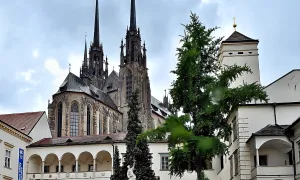
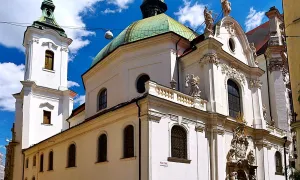
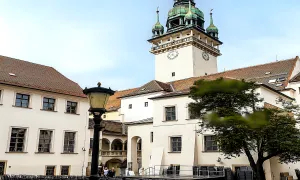
Real photos taken near the monument


Zdroj a licence jsou uvedeny u každého snímku.
Atmosphere of the place
This atmospheric visualisation of the place and period was generated by artificial intelligence. It is not real footage of the location.
Tips from visitors
No tips yet. Be the first!
Log in and add your tip.
Sources and literature
Photos: Martin Strachoň / CC BY-SA 3.0 — Wikimedia Commons. The author and licence also appear when you hover over the image.
Faktickým podkladem tohoto textu byl článek na Wikipedii, jehož autory jsou přispěvatelé Wikipedie. Článek je dostupný pod licencí CC BY-SA 4.0.
Location on the map
Příběhy a pověsti
Legendy, pověsti a příběhy spjaté s touto památkou
Fotografie návštěvníků
Zatím žádné fotografie. Buďte první, kdo přidá fotografii z návštěvy!
Log in a přidejte svou fotografii nebo hodnoťte.
Za ověřenou návštěvu v aplikaci získáte víc bodů — poznáme podle GPS, že jste na místě.
Reviews and comments