






Palác šlechtičen Palace
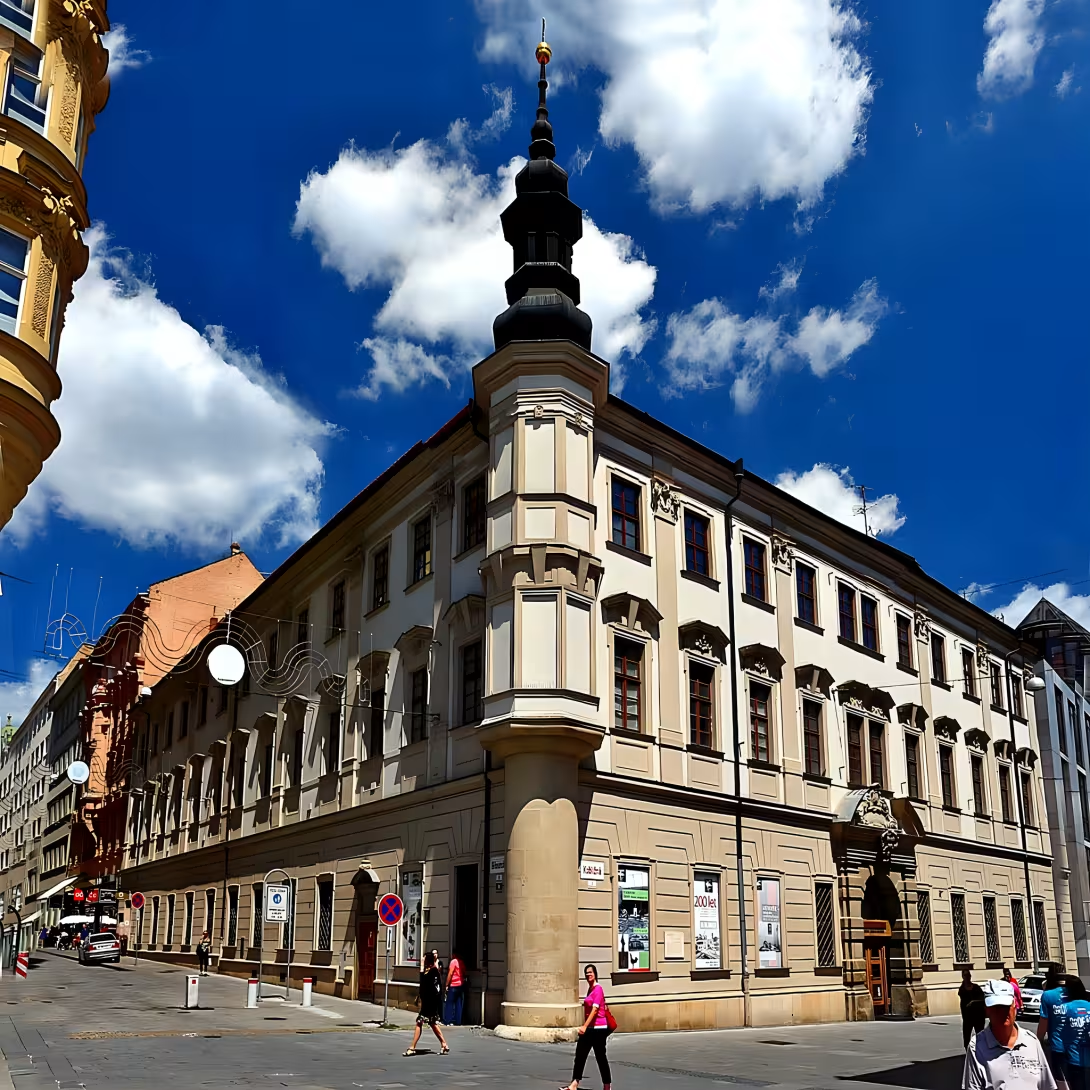
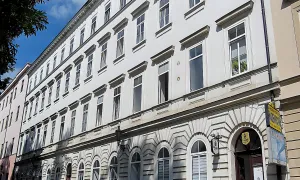
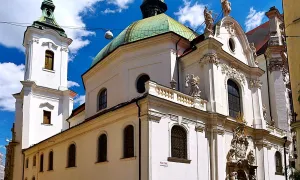
Palác šlechtičen is a Baroque palace located at Náměstí Svobody, the heart of Brno. Established in 1654 by widow countess Jana Františka Priska Magnisová, it was originally intended to educate orphaned noble and bourgeois girls. Today, this historical monument serves as an exhibition building for the Moravian Museum, housing the Ethnographic Institute of MZM and hosting various cultural events.
The origins of Palác šlechtičen date back to 1654 when Jana Františka Priska Magnisová founded Ústav Obětování Panny Marie. This institution aimed to provide education for orphaned girls from noble and bourgeois families. The construction of the palace itself, designed by architect Jan Křtitel Erna between 1674 and 1679, marked a significant development in its history. Situated at the northeastern corner of Brno's Náměstí Svobody, it was strategically placed to serve its educational purpose.
Architecturally, Palác šlechtičen began as a single-story Baroque townhouse with an impressive portal facing Kobližná Street. In 1790-1791, the palace underwent significant expansion under V. J. Eitelberger's direction, adding another floor and connecting it to the neighboring Althanský palác. The interior features a preserved late-Baroque chapel adorned with frescoes by Josef Stern from 1756. Additionally, sculptures by Ondřej Schweigl and his father Antonín Schweigl are part of its artistic heritage.
Throughout its history, Palác šlechtičen has seen various owners and administrators. Initially founded by Jana Františka Priska Magnisová, it later came under the management of Moravské zemské muzeum in the mid-20th century. This transition marked a shift from its original educational purpose to serving cultural and exhibition needs.
Key events in the palace's history include its survival after World War II when nearby Althanský palác was demolished due to bombing damage. The Moravské zemské muzeum successfully preserved Palác šlechtičen for cultural use, thanks to a comprehensive restoration project led by architect Bohuslav Fuchs starting in 1957. By 1961, the palace opened its doors to the public with an ethnographic exhibition titled "Lid v pěti generacích," which ran until 1999.
Today, Palác šlechtičen stands as a testament to Brno's rich cultural heritage. It is accessible to visitors who can explore exhibitions such as "Loutkářské umění" and "Tradiční kultura na Moravě v zrcadle času." The palace also hosts lectures, concerts, and other public events, making it a vibrant center for cultural engagement. Its historical significance and architectural beauty make Palác šlechtičen a must-visit destination for anyone interested in the history and culture of Brno.
Palác šlechtičen continues to be an invaluable asset to Brno's cultural landscape. Its preservation allows visitors to connect with the city's past while enjoying contemporary exhibitions and events. A visit to this historic site offers a unique opportunity to appreciate both its architectural grandeur and its role in preserving regional heritage.
Then and now
Drag the slider to compare how the landmark may have looked when it was built with the view today.
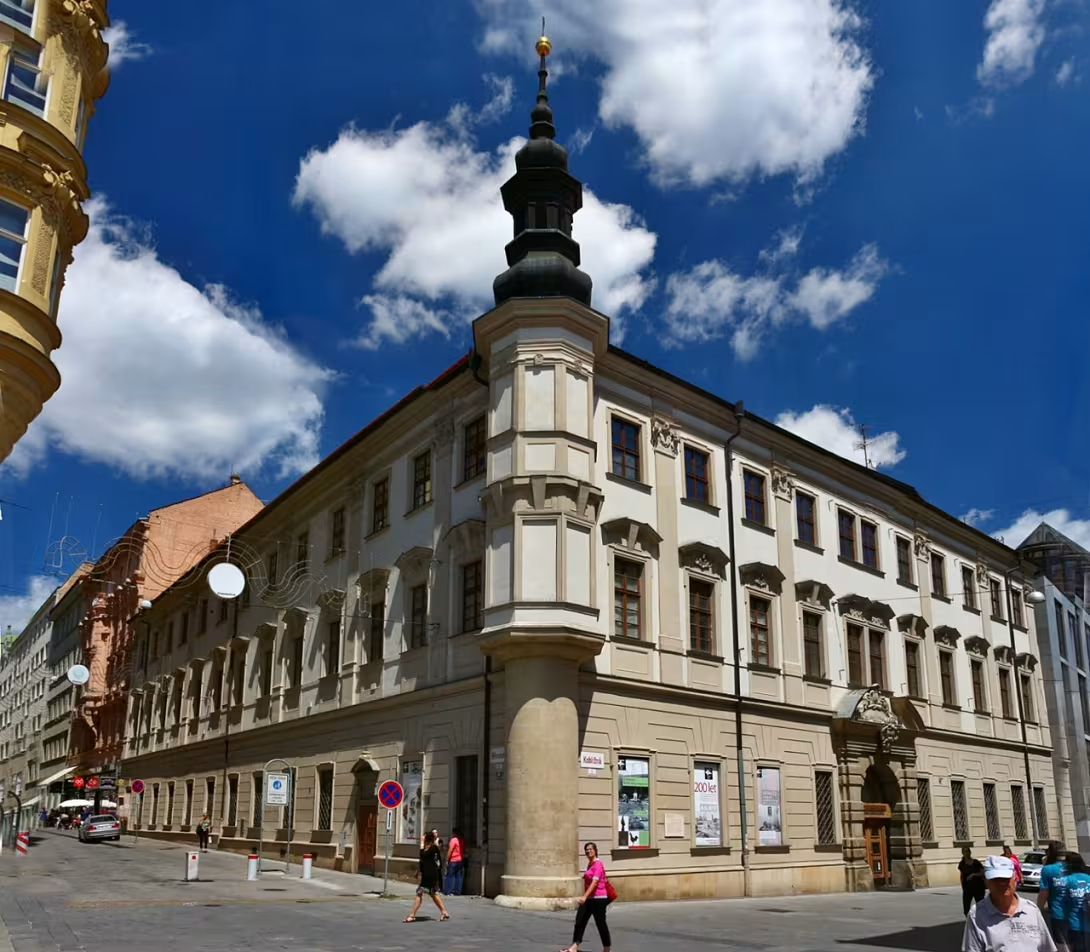
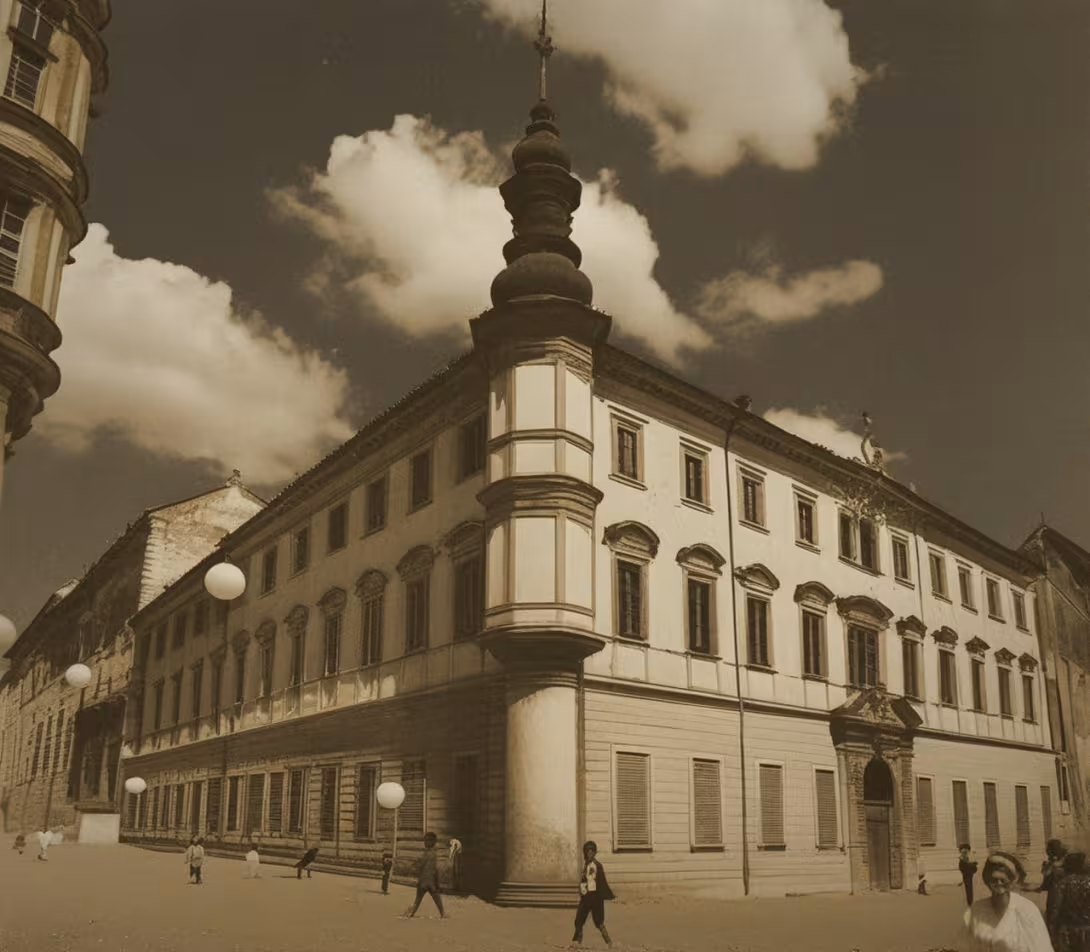
The historical appearance on the left is an AI-generated visualisation and serves as inspiration only.
Historical milestones
- 1654
- Establishment of Ústav Obětování Panny Marie by Jana Františka Priska Magnisová.
- 1679
- Completion of the original palace construction by Jan Křtitel Erna.
- 1791
- Expansion and connection to Althanský palác completed.
Architectural development
The palace was initially built as a single-story baroque townhouse with a prominent portal facing Kobližná Street. In the late 18th century, it was expanded to include an additional floor and connected to the neighboring Althanský palác. The interior features a preserved late-baroque chapel with frescoes by Josef Stern from 1756. Significant restoration efforts in the mid-20th century ensured its preservation for cultural purposes.
Historical events
Construction completed between 1674 and 1679.
Expanded and connected to Althanský palác in 1790–1791.
Survived potential demolition post-WWII, restored for cultural use by Moravské zemské muzeum.
Owners
Founded by Jana Františka Priska Magnisová in 1654
Managed by Moravské zemské muzeum since mid-20th century
Points of interest
- The palace was originally founded as an institution called Ústav Obětování Panny Marie, which translates to "Institute of the Virgin Mary's Devotion," highlighting its religious and educational mission for orphaned girls.
- In 1790-1791, Palác šlechtičen underwent a significant expansion that not only added another floor but also connected it physically with the neighboring Althanský palác, creating an architectural link between two historic buildings.
- The interior of the palace features a late-Baroque chapel adorned with frescoes by Josef Stern from 1756, offering visitors a glimpse into the artistic and religious influences of the period.
- Sculptures within the palace are works by Ondřej Schweigl and his father Antonín Schweigl, showcasing the craftsmanship and artistic legacy that contribute to the cultural heritage preserved in Palác šlechtičen.
- Despite being located near a site heavily damaged during World War II bombings, Palác šlechtičen survived largely intact due to successful preservation efforts led by architect Bohuslav Fuchs starting in 1957, ensuring its continued use for cultural and educational purposes.
Guide
This guide is narrated by a synthetic voice generated by artificial intelligence.
Show guide text
This text was created by artificial intelligence and has not been editorially reviewed. It may contain inaccuracies.
The Palace of Noblewomen, also called the Institute of Noblewomen or School of the Virgin Mary, stands in the northeastern corner of Brno's Freedom Square, at the corner of Kobližná and Běhounská streets. Today it belongs to the exhibition buildings of the Moravian Land Museum and houses its Ethnographic Institute.
Its story begins in 1654. At that time, the widowed Countess Jana Františka Priska Magnisová founded an institute for the education of girls from noble families, called the Institute of the Offering of the Virgin Mary. Between 1674 and 1679, Brno builder Jan Křtitel Erna built a one-story building for it in the spirit of a Baroque city palace. He faced it toward Kobližná Street with a distinctive portal featuring rustication. In 1680, Bishop Karel the Second of Liechtenstein-Kastelcorn permitted mass to be held in the palace chapel.
At the end of the eighteenth century, in 1790 and 1791, Eitelberger expanded the palace. He raised the building by an additional story and connected it to the neighboring Althan Palace. Inside, a Marian chapel has been preserved with late Baroque frescoes by Josef Stern from 1756. On the altars were once works by sculptor Ondřej Schweigl and his father Antonín. From the older Schweigl, a sculpture of the repenting Saint Mary Magdalene at a confession chair remains in the chapel. At that time, the palace served as a charitable institution where neglected girls of both noble and bourgeois origin were educated.
The turning point came with the American air raid on Brno in 1944. The neighboring Althan Palace was damaged so severely that it was demolished after 1948. The same fate threatened the Palace of Noblewomen. In the nineteen fifties, however, it was successfully saved for cultural purposes and the Moravian Land Museum acquired it for use. Architect Bohuslav Fuchs prepared an ambitious reconstruction project. He adapted the building to the museum's needs while respecting its original historical appearance. Work began in 1957 and in 1961 the ethnographic exhibition "People in Five Generations" opened. With minor modifications, it lasted until autumn 1999.
Another reconstruction took place between 2000 and 2002. After that, smaller and more extensive temporary exhibitions were held there. Following the most recent renovation, the exhibitions "Puppet Theater Art" and "Traditional Culture in Moravia in the Mirror of Time" were ceremonially opened in April 2022. The Baroque chapel is also part of them. The building further houses a Children's Museum and a Methodological Center for Museum Education.
For a long time, there was consideration of expanding the palace on the site of the bombed Althan Palace. However, the city ultimately gave the vacant plot to Komerční Bank, which built its building there in the nineteen nineties.
Frequently asked questions
Can the monument be visited?
Yes. We verified the opening hours or admission on the official website (12. 10. 2026); you will find them in the visitor information on this page. Please double-check with the operator before you travel.
What are the opening hours and admission?
Details verified on the official website (12. 10. 2026) are listed in the visitor information on this page. Official website: https://www.mzm.cz/palac-slechticen
Where is the monument?
Location: Kobližná 116/1, Brno-město, Brno, Jihomoravský kraj. The map on this page shows the exact spot.
Why is the monument protected?
It is listed in the Central List of Cultural Monuments of the Czech Republic as a cultural monument (register no. 16848/7-82).
Businesses nearby
Do you run a restaurant, accommodation, shop, museum, rental, wellness or other visitor service near this monument? Show yourself directly to the people heading to it — this is how they will see you in the app and on the web:
Events nearby


Zdroj akcí: otevřená data měst a obcí ČR (Národní katalog otevřených dat) a kalendář akcí Národního památkového ústavu.
Nearby
Palác šlechtičen is situated in the central area of Brno, near Náměstí Svobody. The surrounding landscape includes other historical buildings such as the Althanský palác site, now occupied by a modern bank building.
Accommodation nearby
Trips and activities nearby
Guided tours, tickets and activities nearby from GetYourGuide
Affiliate link: if you buy from the partner, we may receive a commission. The price for you does not change.
Search tours and activities →Themed route
Thematic Walking Tour: The Ladies' Court and Its Historical Surroundings
Welcome to a journey through the heart of Brno, where history and architecture intertwine in the central area near Náměstí Svobody. This tour will guide you through significant sites that tell stories of the past while offering insights into the city's cultural heritage.
1. Palác šlechtičen (Ladies' Court) - Type: Historical Palace - Why Visit: Begin your exploration at Palác šlechtičen, a stunning example of Baroque architecture that once served as a noble residence. This palace is renowned for its intricate design and historical significance, offering visitors a glimpse into the opulent lifestyle of Brno's aristocracy.
2. Náměstí Svobody (Freedom Square) - Type: Public Square - Why Visit: Just a short walk from Palác šlechtičen is Náměstí Svobody, an expansive square that serves as the cultural and social heart of Brno. The square's history dates back to medieval times, and it has been a witness to numerous historical events, making it a perfect spot for reflection on the city’s past.
3. Althanský palác site - Type: Historical Site - Why Visit: Adjacent to Náměstí Svobody lies the Althanský palác site, which now houses a modern bank building. This location is significant for its historical roots as part of Brno's aristocratic residences and offers an interesting contrast between past and present architectural styles.
This tour provides a concise yet enriching experience through some of Brno’s most historically significant sites, all within walking distance from each other. Enjoy your journey into the city's rich heritage!
Seasonal recommendations
Jaro: In the spring season, Palác šlechtičen transforms into a haven full of life and greenery as flowering shrubs and trees add colors and fragrance to the surroundings. Sunlight highlights the architectural details of the palace in the best light, making it an ideal spot for photography. Visitors can expect slightly higher attendance due to the appeal of spring days and beautiful weather, so it is recommended to visit early in the morning or later in the evening. Light clothing with the option to add a jacket or coat for cooler afternoon hours is advisable.
Léto: During summer, Palác šlechtičen offers visitors an exciting experience with long daylight hours that allow full exploration of its historic interiors and surrounding park. Hot summer weather can attract larger crowds, especially during peak tourist months. It is recommended to visit early in the morning or later in the evening to avoid peak times and enhance the atmosphere for tours. Warm clothing with sun-protective hats and plenty of drinking water are essential for a comfortable visitor experience.
Podzim: In autumn, Palác šlechtičen offers a unique atmosphere where changing leaf colors blend with the historical appearance of the palace. Short and sunny autumn days illuminate architectural elements in a different light, providing beautiful opportunities for photography. Attendance is typically lower than during summer, meaning fewer crowds and more comfortable tours. Visitors should come prepared with warm clothing as autumn weather can change quickly, and consider visiting at various times throughout the day to capture the best lighting.
Zima: In winter months, Palác šlechtičen offers a tranquil atmosphere often enhanced by snow cover that adds a romantic touch to its historic appearance. Lighting may be adjusted to highlight architectural beauty in cool light, making it an ideal spot for quiet and intimate tours. Opening hours may be shorter due to winter conditions, so it is important to check current times before visiting. Visitors should come with warm clothing and appropriate footwear for cold surfaces while enjoying the peaceful autumn or winter visits.
Visualizations and artistic views


The visualisations are generated by artificial intelligence and serve as inspiration.
Photos from the area
Real photos taken near the monument

Zdroj a licence jsou uvedeny u každého snímku.
Tips from visitors
No tips yet. Be the first!
Log in and add your tip.
Sources and literature
Photos: VitVit / CC BY-SA 4.0, rozlišení zvýšeno umělou inteligencí — Wikimedia Commons. The author and licence also appear when you hover over the image.
Faktickým podkladem tohoto textu byl článek na Wikipedii, jehož autory jsou přispěvatelé Wikipedie. Článek je dostupný pod licencí CC BY-SA 4.0.
Location on the map
Příběhy a pověsti
Legendy, pověsti a příběhy spjaté s touto památkou
Fotografie návštěvníků
Zatím žádné fotografie. Buďte první, kdo přidá fotografii z návštěvy!
Log in a přidejte svou fotografii nebo hodnoťte.
Za ověřenou návštěvu v aplikaci získáte víc bodů — poznáme podle GPS, že jste na místě.
Reviews and comments