






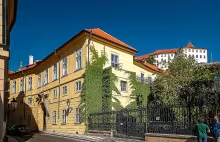
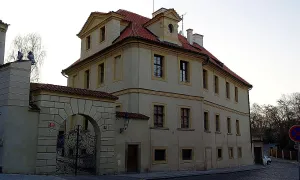
Pálffyho Palace in Prague's Malá Strana district stands as a testament to architectural evolution and cultural significance over centuries. Originally constructed between 1714 and 1716 for Count Jan Josef of Valdštejn, this baroque building with classical modifications has served various roles throughout its history. Today, it is primarily used by the Prague Conservatory and recognized as a cultural monument since 1964.
The origins of Pálffyho Palace are rooted in early 18th-century Bohemia, part of the Habsburg Monarchy during a period marked by baroque architectural flourishing. The palace was commissioned by Count Jan Josef of Valdštejn, who acquired two existing medieval houses on the site and had them transformed into a unified structure under architect František Maxmilián Kaňka. This transformation reflected the era's penchant for grandeur and artistic expression.
Architecturally, Pálffyho Palace began as a baroque edifice but underwent significant modifications over time. In the late 18th century, Ignác Palliardi led renovations that introduced classical elements to the building’s façade, attic, and roof, with Jan Klement Zobel and J. Fleischinger contributing to these efforts. The mid-19th century saw further changes under Josef Liebel, who added pseudorococo details such as stucco work and mirrored wall panels, enhancing the palace's aesthetic appeal.
Ownership of Pálffyho Palace has shifted through notable historical figures and families. After its initial construction for Count Jan Josef of Valdštejn, it passed to the Fürstenbergs in 1731, with Karel Egon I. of Fürstenberg hosting gatherings of prominent Czech scholars there. The palace later came under Maxmilián Egón Fürstenberg's ownership, who continued its architectural evolution. In 1883, Eduard Pálffy z Erdödu acquired the property, and in 1902, he sold it to the Czech state for use as a state archive until 1946.
Throughout its history, Pálffyho Palace has witnessed various key events and transformations. Its architectural modifications reflect broader cultural shifts, while its role as a state archive underscores its importance in preserving historical documents. The palace's rich ownership lineage adds layers to its historical narrative, connecting it to influential figures across centuries.
Today, Pálffyho Palace remains an accessible site of cultural heritage within the historic Malá Strana district. Its proximity to landmarks like Valdštejn Square and Prague Castle enhances its appeal as a destination for visitors interested in exploring Prague's architectural and historical landscape. The palace's current use by the Prague Conservatory highlights its ongoing contribution to the arts, making it a vibrant part of the city's cultural fabric.
Pálffyho Palace is not just an architectural marvel but also a living testament to Prague's dynamic history. Its blend of baroque origins and classical modifications offers a unique glimpse into the past while continuing to serve as a hub for artistic endeavors. Visitors are invited to explore this remarkable site, where history and culture converge in one of Prague’s most storied neighborhoods.
Historical milestones
- 1714
- Pálffyho Palace construction began.
- 1716
- Construction of Pálffyho Palace completed.
- 1731
- Palace ownership transferred to the Fürstenbergs.
- kolem 1780
- Renovations by Ignác Palliardi introduced classical elements.
- 1964
- Palace recognized as a cultural monument.
Architectural development
The palace was originally built as a baroque structure and later underwent classical modifications. Notable changes include the late 18th-century renovations by Ignác Palliardi, continued by Jan Klement Zobel and J. Fleischinger, and mid-19th-century pseudorococo updates under Josef Liebel. These transformations reflect evolving architectural styles over time.
Historical events
Construction completed in 1716 under the direction of František Maxmilián Kaňka.
Declared a cultural monument in 1964.
Owners
Jan Josef z Valdštejna (1709-1716)
Fürstenberkové (1731)
Maxmilián Egón Fürstenberg (1822-1873)
Eduard Pálffy z Erdödu (1883-1902)
Czech state (from 1902)
Points of interest
- The Pálffyho Palace's transformation from two medieval houses into a unified baroque structure reflects the architectural ambition of early 18th-century Bohemia, showcasing František Maxmilián Kaňka's ability to merge historical elements with contemporary styles. - During its time under the ownership of Karel Egon I. of Fürstenberg, Pálffyho Palace was a hub for intellectual gatherings, hosting prominent Czech scholars and contributing significantly to cultural discourse in Bohemia.
Guide
Show guide text
Welcome to the historic Pálffyho palác in Prague's charming Malá Strana district. As you stand here, take a moment to absorb the grandeur of this baroque masterpiece with its classical modifications. The palace’s façade exudes an air of elegance and history that invites exploration.
The story of this magnificent building began between 1714 and 1716 when it was constructed for Count Jan Josef of Valdštejn. Originally, two medieval houses stood on this site before they were transformed into a unified structure, reflecting the architectural ambition prevalent in early 18th-century Bohemia. This transformation showcases František Maxmilián Kaňka's skillful blend of historical elements with contemporary styles.
As you take it all in, notice the two courtyards and the adjoining garden that add to the palace’s grandeur. The architecture is a testament to its rich history, having undergone significant renovations over the centuries. Around 1780, Ignác Palliardi introduced classical elements during these renovations, further enhancing its aesthetic appeal.
Throughout its storied past, Pálffyho palác has been home to notable figures such as Karel Egon I. z Fürstenbergu and Maxmilián Egón Fürstenberg. The palace was transferred into the hands of the Fürstenbergs in 1731, marking a new chapter in its history.
One fascinating aspect of this palace is how it mirrors the architectural evolution from baroque to classical styles. This transformation reflects not only the changing tastes but also the innovative spirit of architects like Josef Liebel and Eduard Pálffy z Erdödu, who contributed to its later renovations.
As you continue your journey through history here at Pálffyho palác, allow yourself to be captivated by the stories embedded within these walls. Each corner holds a whisper from the past, inviting you to delve deeper into its legacy.
We invite you to explore further and discover more about this remarkable site. Thank you for joining us on this journey through time at Pálffyho palác. Enjoy your visit!
Tips for visitors
The best time to visit Pálffyho palác is during the late spring or early fall when the weather is pleasant, making it ideal for exploring both the palace and its surrounding areas. During these seasons, you can enjoy the beautiful gardens without the crowds of summer tourists or the chill of winter. Additionally, visiting in the morning ensures softer lighting for photography and a more tranquil experience before the area becomes busier.
Transportation to Pálffyho palác is convenient by both car and public transport. If driving, there are parking options available in nearby areas, though it's advisable to check current availability as spaces can be limited due to its central location. For those using public transport, the palace is accessible via several tram lines that stop near Valdštejn Square. It’s recommended to verify the latest routes and schedules through a local transit app or website.
When visiting Pálffyho palác, it's wise to bring comfortable walking shoes as you'll likely want to explore both the interior of the palace and its surroundings on foot. A camera is also recommended for capturing the stunning architecture and views of Prague Castle from the area. Since weather can be unpredictable, consider bringing a light jacket or umbrella.
Photography enthusiasts will find several spots around Pálffyho palác ideal for capturing both the building itself and panoramic views of Prague. The best lighting conditions are typically in the early morning or late afternoon when the sunlight is softer. For interior shots, natural light filtering through windows can create beautiful effects, so plan your visit accordingly.
Nearby attractions within a 30-minute walk include Valdštejn Square, which offers stunning views of Prague Castle and its surrounding gardens. The area also features several historic churches and charming streets perfect for leisurely strolls. Families with children will appreciate the nearby playgrounds and the opportunity to explore Malá Strana’s quaint shops and cafes.
Businesses nearby
Nearby
The palace is situated in Prague's historic Malá Strana district, near landmarks such as Valdštejn Square and close to Prague Castle. The area is rich with cultural heritage sites and offers picturesque views of the city.
Accommodation nearby
Trips and activities nearby
Guided tours, tickets and activities nearby from GetYourGuide
Search tours and activities →Themed route
Tematická výletní trasa: Historická a kulturní zázraky Malé Strany
1. Pálffyho palác - *Typ*: Palác - *Proč stojí za návštěvu*: Pálffyho palác je jedním z nejzajímavějších barokových architektonických děl v Praze. Vystavěný na počátku 18. století, sloužil jako sídlo šlechtické rodiny Pálffyů a nyní hostí Švédsko-norské kulturní centrum. Jeho bohatě zdobené interiéry a historie ho činí nezbytným prozkoumat.
2. Valdštejnovo náměstí - *Typ*: Náměstí - *Proč stojí za návštěvu*: Toto malé, ale působivé náměstí je známé svým barokním charakterem a krásnou Valdštejnskou fontánou. Je to místo plné klidu v srdci Malé Strany, kde můžete užít si pohled na okolní historické budovy a případně si odpočinout.
3. Kostel svatého Mikuláše - *Typ*: Kostel - *Proč stojí za návštěvu*: Nacházející se na Valdštejně, tento barokní kostel je známý svou vysokou varhanní klenbou a bohatou interiérovou dekorací. Je to jedno z nejvýznamnějších náboženských staveb na Malé Straně, které přitahuje jak místní, tak turisty.
4. Kostel svaté Anny - *Typ*: Kostel - *Proč stojí za návštěvu*: Tento barokní kostel je nejvyšší stavbou na Malé Straně a nabízí jedinečné výhledy na Prahu. Jeho historie sahá do 17. století, kdy byl postaven jako důkaz vděčnosti za osvobození od morové epidemie.
5. Pražský hrad (z okna Pálffyho palác) - *Typ*: Hrad - *Proč stojí za návštěvu*: I když není přístupný pro vstup, z okna nebo balkonu Pálffyho paláce si můžete užít jedinečné pohledy na Pražský hrad. Toto místo nabízí panoramatické výhledy na historickou část města a je ideálním způsobem, jak spojit návštěvu paláce s přehlédnutím jiných kulturních památek.
Tato trasa nabídne cestovatelům hluboký pohled do historie a kultury Prahy z nejlepší perspektivy, vše na jednom místě.
Seasonal recommendations
Jaro: In the spring season, Pálffyho palác in Prague is a radiant place thanks to the light streaming through its windows and illuminating the baroque ceiling paintings. The greenery of newly sprouting shrubs on Malá Strana adds vibrancy to the atmosphere. Visitors can expect moderate crowds as it's not yet the peak summer season. It's advisable to dress warmly for chilly mornings and evenings, while cotton clothing is ideal for warmer afternoons. The best time to visit is in the afternoon when the sun reaches its zenith and lights up the palace.
Léto: Summer brings long days of light that highlight the architectural details of Pálffyho palác. The greenery of Malá Strana is at its peak, offering relief from the heat. During the main summer season, larger crowds may appear, so it's recommended to visit early in the morning or later in the evening when the palace is less crowded. Wear light clothing and carry water to stay hydrated during warm days. The views of Prague are most beautiful in sunny weather, so take advantage of quiet moments for photography.
Podzim: Autumn offers Pálffyho palác in an atmosphere of golden and red hues as leaves fall along the paths of Malá Strana. The sunlight is less intense, providing gentle illumination for exploring the palace. Visitors can expect smaller crowds compared to summer and opportunities for a relaxed exploration. It's advisable to wear layered clothing as temperatures can vary throughout the day. The best time to visit is in the afternoon when the sun lights up the palace and surrounding green spaces offer beautiful autumnal scenes.
Zima: Winter brings Pálffyho palác in stunning light with icy rays reflecting off windows and adorning the interior. Malá Strana offers a magical atmosphere with snow-covered alleyways and twinkling lights during the Advent season. Visitors can expect smaller crowds as some tourists avoid the cold. It's essential to wear warm clothing and shoes with good grip due to snow and frost. The palace's opening hours are often shorter, so make sure to visit early to fully enjoy the experience. Evening visits can be celebrated with twinkling lights and an atmosphere that naturally aligns with the Advent spirit.
Visualizations and artistic views

Vizualizace jsou generovány umělou inteligencí a slouží jako inspirace.


Tips from visitors
No tips yet. Be the first!
Log in and add your tip.


Reviews and comments