






Císařský špitál svatého Antonína a svaté Alžběty Almshouse
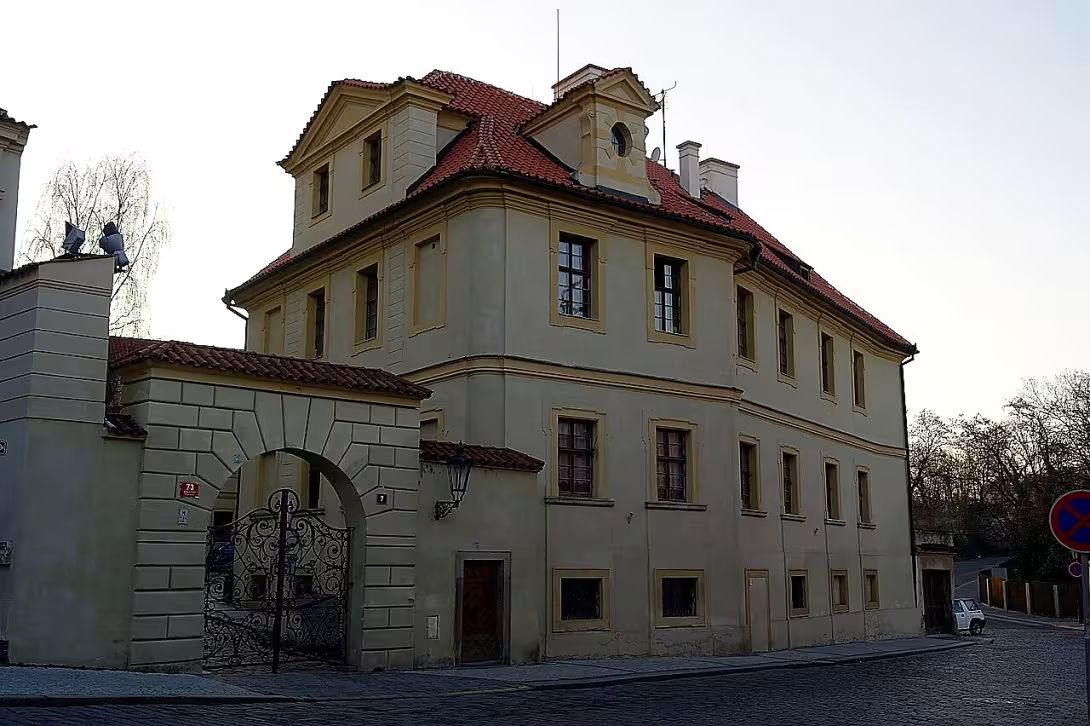
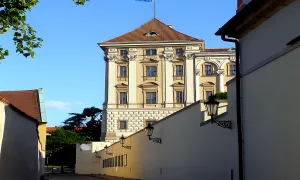
The Emperor's Hospital of Saint Anthony and Saint Elizabeth is a historical monument in Prague's Hradčany district. Known for its baroque architecture and rich history dating back to the late medieval period, it was founded around 1374 as a hospital for the poor. Over time, it merged with a nearby convent of the Poor Clares and transformed into the baroque complex seen today. The central feature is a monumental chapel dedicated to Saint Anthony, designed by architect Kilián Ignác Dientzenhofer.
The origins trace back to 1374 when it was established as a hospital for the poor in Prague. It later merged with a neighboring convent of the Poor Clares, reflecting medieval Bohemia's dynamic social and religious landscape. During this period, Prague was an important cultural and political center, influencing such institutions' development and significance. The transformation into its current baroque form occurred under Dientzenhofer's guidance.
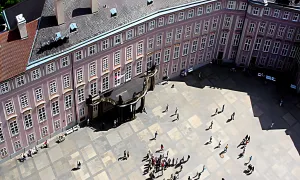
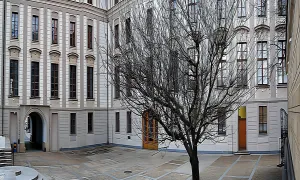
Architecturally, the hospital is characterized by elaborate designs typical of the baroque era. It features a central chapel dedicated to Saint Anthony within a three-winged layout. This design reflects broader European trends towards ornate architectural expressions during the baroque period. The site includes a courtyard enclosed by walls and an octagonal roofed structure housing a well, adding historical charm.
Throughout its history, the hospital has experienced significant changes in ownership and administration. Initially serving as a medieval hospital, it later integrated with the convent of the Poor Clares, illustrating shifts in religious and social functions over time. The transformation into its current baroque form under Dientzenhofer marked another pivotal change, aligning the site with contemporary architectural trends.
The hospital is near the military church of Saint John of Nepomuk, adding to its historical context within Prague's Hradčany district. This proximity highlights the interconnectedness of religious and social institutions in the area during different periods. Notable features include a courtyard enclosed by walls with a portico and side entrance, along with an octagonal roofed structure housing a well.
Today, it is recognized as a cultural monument, protected since 1969. Visitors can explore its baroque architecture and appreciate its historical significance within Prague's urban landscape. The hospital offers insights into the city's past, making it a worthwhile destination for those interested in history and architecture.
The Emperor's Hospital of Saint Anthony and Saint Elizabeth stands as a remarkable example of baroque architecture and historical evolution. Its rich history and architectural beauty make it an essential visit for anyone exploring Prague's Hradčany district, offering insights into the city's cultural and religious heritage.
Then and now
Drag the slider to compare how the landmark may have looked when it was built with the view today.
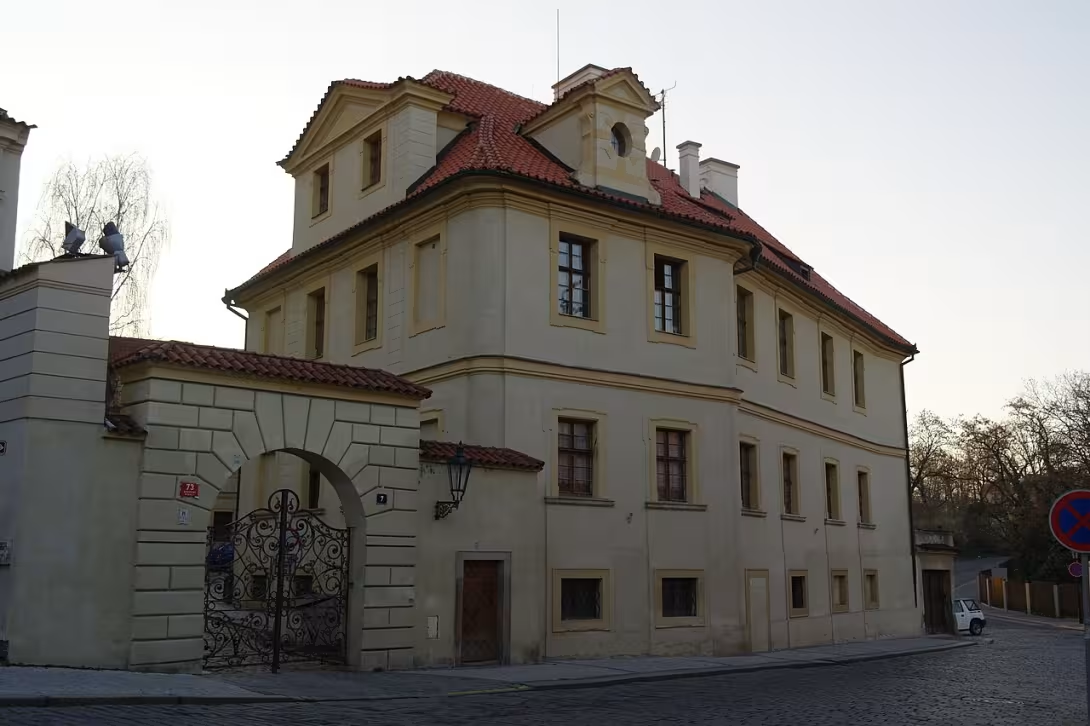
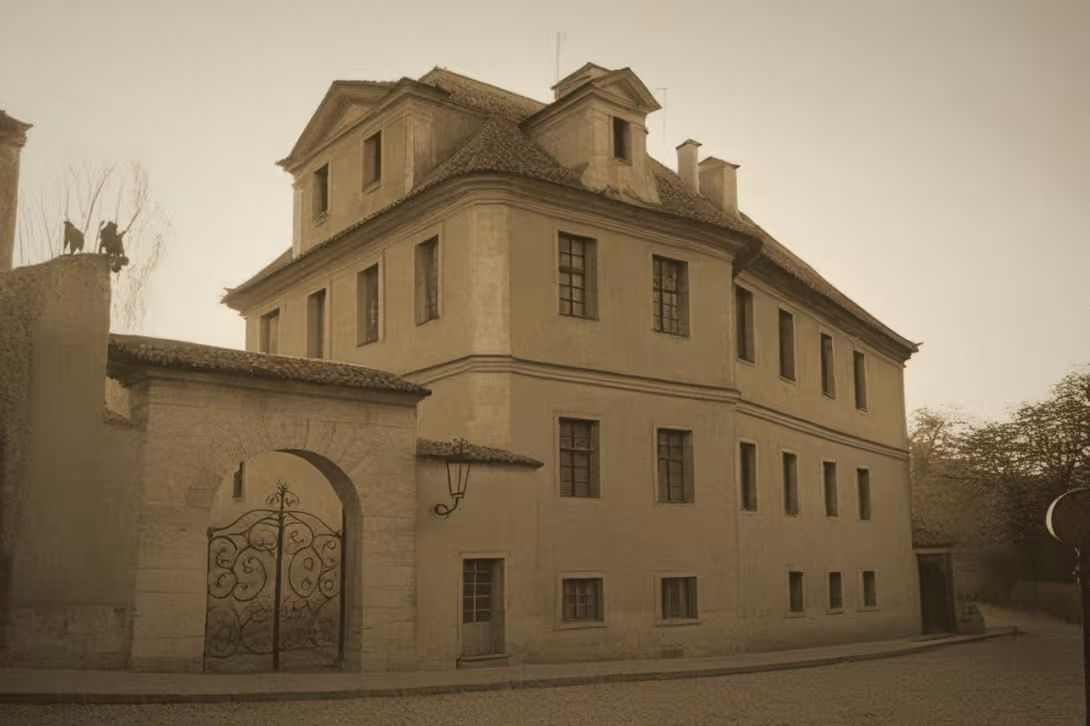
The historical appearance on the left is an AI-generated visualisation and serves as inspiration only.
Historical milestones
- 1374
- Establishment of a hospital for the poor in Prague
- 17th century
- Transformation into a Baroque complex under Dientzenhofer's direction
- 1969
- Protection as a cultural monument
Architectural development
The site originally served as a medieval hospital, which was later integrated with a neighboring convent. The current baroque structure, featuring a central chapel designed by Kilián Ignác Dientzenhofer, represents significant architectural development from its earlier form.
Historical events
Founded around 1374 as a hospital for the poor.
Merged with the nearby convent of the Poor Clares in later years.
Guide
This guide is narrated by a synthetic voice generated by artificial intelligence.
Show guide text
This text was created by artificial intelligence and has not been editorially reviewed. It may contain inaccuracies.
Welcome! You are standing before the Imperial Hospital of Saint Anthony and Saint Elizabeth, a unique baroque monument in the heart of Prague. Look up at the monumental chapel of Saint Anthony, which is the heart of this complex. Its author is the renowned architect Kilian Ignaz Dientzenhofer. Let's move back a bit and take a look at the facade of the building. Notice how the baroque architecture opens towards us, creating a sense of an awe-inspiring vessel.
This hospital has a rich history that dates back to 1374 when it was founded as a hospital for the poor. This was evidence of medieval Prague being not only a cultural but also a humanitarian center. Now pay attention to the details surrounding us. Notice how baroque elements intertwine with Gothic details, creating a unique harmony.
The Imperial Hospital of Saint Anthony and Saint Elizabeth has many interesting stories and personalities associated with it. Although few know which specific individuals have made their mark in history here, their presence is still felt. Take a look at the interior spaces and try to imagine how life and healing took place in the past.
An interesting aspect of this site is that the hospital underwent many changes and renovations over time, but its baroque core remained untouched. In 1969 it was even declared a cultural monument, becoming part of our cultural heritage.
Allow me to invite you to further explore this wonderful place. Choose your favorite parts and take a closer look. The Imperial Hospital of Saint Anthony and Saint Elizabeth is a place that will captivate and fascinate you.
Tips for visitors
The best time to visit Císařský špitál svatého Antonína a svaté Alžběty is during the late spring or early autumn months, when the weather is mild and pleasant for exploring. These seasons offer comfortable temperatures and fewer crowds compared to summer, allowing you to fully appreciate the baroque architecture and historical ambiance of the site. Additionally, visiting during these times can provide better opportunities for photography with natural lighting.
Prague has an efficient network of trams and buses that can get you close to your destination.
When visiting Císařský špitál svatého Antonína a svaté Alžběty, it's wise to bring comfortable walking shoes, as you'll likely be exploring the area on foot. A camera or smartphone for capturing photos of the baroque architecture and courtyard features is also recommended. Since weather can be unpredictable in Prague, carrying a light raincoat or umbrella might be beneficial.
For photography enthusiasts, the octagonal roofed structure housing a well offers an intriguing subject with its unique design and historical significance. The best natural lighting for photographs is usually during the golden hours of early morning or late afternoon when the sunlight casts soft shadows, enhancing the textures and details of the architecture. Exploring different angles around the courtyard can also provide varied perspectives.
Nearby attractions within a 30-minute walk include the military church of Saint John of Nepomuk, which is located close to the špitál. This church offers another glimpse into Prague's rich history and architectural beauty. For families with children, consider planning your visit so that you can spend time exploring both sites, allowing for breaks in between to rest or enjoy a snack.
Frequently asked questions
Can the monument be visited?
The building is in use (offices, a school, shops and the like). The interior is generally accessible only during operating hours and tours are not usually offered; we have not verified the details. You can see the exterior from the street.
Where is the monument?
Location: Kanovnická 73/7, Hradčany, Praha, Hlavní město Praha. The map on this page shows the exact spot.
Why is the monument protected?
It is listed in the Central List of Cultural Monuments of the Czech Republic as a cultural monument (register no. 47346/1-2116).
Businesses nearby
Do you run a restaurant, accommodation, shop, museum, rental, wellness or other visitor service near this monument? Show yourself directly to the people heading to it — this is how they will see you in the app and on the web:
Events nearby

Zdroj akcí: otevřená data měst a obcí ČR (Národní katalog otevřených dat) a kalendář akcí Národního památkového ústavu.
Nearby
The site is located near the military church of Saint John of Nepomuk and features a courtyard enclosed by walls. It includes an octagonal roofed structure housing a well, adding to its historical charm.
Accommodation nearby
Trips and activities nearby
Guided tours, tickets and activities nearby from GetYourGuide
Affiliate link: if you buy from the partner, we may receive a commission. The price for you does not change.
Search tours and activities →Themed route
Císařský špitál svatého Antonína a svaté Alžběty (špitál)
1. Military Church of Saint John of Nepomuk: This historic church is located nearby and offers a glimpse into the region's rich religious heritage. Its proximity to the Císařský špitál makes it a great starting point for the tour. 2. The courtyard of the Císařský špitál: Explore the enclosed courtyard, which features an octagonal roofed structure housing a well. This unique architectural element adds to the historical charm of the site. 3. The Císařský špitál's chapel: Visit the chapel within the complex, which offers a peaceful and serene atmosphere. The chapel's architecture and decor are worth admiring, and it provides a glimpse into the lives of those who once lived and worked within the špitál. 4. The Císařský špitál's museum: The museum within the complex showcases the history and significance of the špitál, providing insight into its past and the people who were cared for there.
Seasonal recommendations
Jaro
Spring is the ideal time to visit the Imperial Hospital of Saint Anthony and Saint Elizabeth because nature around it magically blooms. Green trees and flowering plants create a pleasant atmosphere that complements the historical ambiance of the building. The lighting is mild, so you can easily explore both the interiors and exteriors of the structure.
Practical Tips: Visit the hospital on Tuesday or Wednesday to avoid large crowds of tourists who come on weekends. Wear comfortable shoes and clothing suitable for walking, as you will be navigating over cobblestone paths and grassy areas.
Léto
Summer is the peak season for visitors to the Imperial Hospital of Saint Anthony and Saint Elizabeth. Many tourists from around the world come to see this historic landmark. Therefore, it's best to arrive early before the building fills up with crowds.
Practical Tips: Arrive before the main summer season begins to avoid large crowds. Wear sunglasses and face masks, as the sun can be very strong. Don't forget to bring water and snacks, as you might spend several hours in line at the entrance.
Podzim
Fall is a beautiful time to visit the Imperial Hospital of Saint Anthony and Saint Elizabeth. Blooming trees and forests create a stunning atmosphere that complements the historical ambiance of the building. The lighting is mild, so you can easily explore both the interiors and exteriors of the structure.
Practical Tips: Visit the hospital during the fall season to avoid large crowds of tourists who come on vacation. Wear clothing suitable for cold weather and comfortable shoes, as you will be navigating over cobblestone paths and grassy areas.
Zima
Winter is a quiet time for visitors to the Imperial Hospital of Saint Anthony and Saint Elizabeth. The building closes later, allowing more time to explore the interior without crowds. The lighting is mild, so you can easily explore both the interiors and exteriors of the structure.
Practical Tips: Visit the hospital in winter to avoid large crowds of tourists who come on vacation. Wear warm clothing and comfortable shoes, as you will be walking over cold and wet surfaces. Don't forget to bring water and snacks, as you might spend several hours in line at the entrance.
Visualizations and artistic views


The visualisations are generated by artificial intelligence and serve as inspiration.
Photos from the area
Real photos taken near the monument


Zdroj a licence jsou uvedeny u každého snímku.
Tips from visitors
No tips yet. Be the first!
Log in and add your tip.
Sources and literature
Photos: Jklamo / CC BY-SA 3.0 — Wikimedia Commons. The author and licence also appear when you hover over the image.
Faktickým podkladem tohoto textu byl článek na Wikipedii, jehož autory jsou přispěvatelé Wikipedie. Článek je dostupný pod licencí CC BY-SA 4.0.
Location on the map


Příběhy a pověsti
Legendy, pověsti a příběhy spjaté s touto památkou

Fotografie návštěvníků
Zatím žádné fotografie. Buďte první, kdo přidá fotografii z návštěvy!
Log in a přidejte svou fotografii nebo hodnoťte.
Za ověřenou návštěvu v aplikaci získáte víc bodů — poznáme podle GPS, že jste na místě.
Reviews and comments