



Černínská 12 House
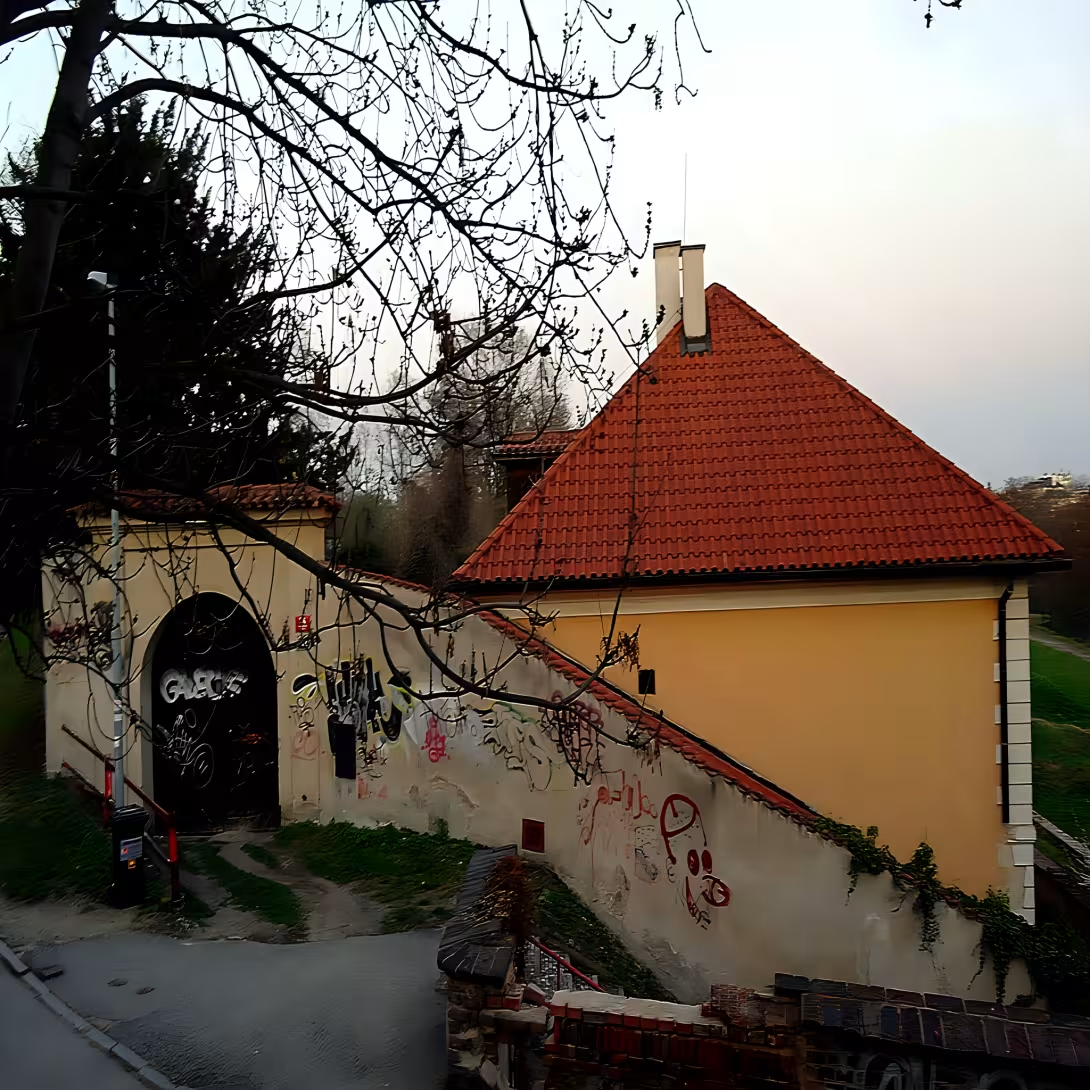
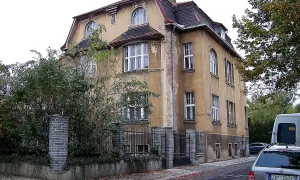
The house on Černín Street is a late-classicist storehouse no. 94 / IV, hidden in the northwest part of Hradčan on the corner of Jelení and Černín streets, just north of the famous New World street. It is not a random place - the grounds belong to the historical background of Prague Castle itself and since 1964 the house has been registered as a real-estate cultural monument surrounded by the purchased Lumbe Gardens.
The roots of the site reached into the Middle Ages when it served as a forefront and background of the centre of power of the Czech kings. In the early modern times, there were utility gardens and various economic structures, which Rudolf II himself had built. Later, the land was owned by the Chernín family. Humprecht Jan Černín realized them in an ornamental sense - he ensured the planting of trees, the setting of greenhouses and turned the territory into a lustrous garden corresponding to his social position. At the beginning of the eighteenth century, the site was partially fortified - the northwest edge of the gardens was lined with a brick wall of baroque military system, the remains of which have been preserved to this day.
The house itself, as we see it today, originated in the first third of the nineteenth century. The upper terraces of Lumbe gardens have been adapted and termed to this end. In 1852 it was bought by Dr. Josef Tadeáš Lumbe, an influential Prague politician and professor of Prague Polytechnic. For him the house served as an additional residence to his main residence in Malá Strana. Lumbe's name is attached to these gardens inseparably - they have become his domain and part of his agricultural experiments.
The entrance to the house leads through a stylish baroque gate in the wall of the northwest - an element that resembles the more stormy past of this place. In 1925, the Czechoslovak state bought the house and adjacent land from Lumbe's heirs. Since then it has served as a residential house and has undergone only minor modifications - most sensitively in the early twenty-first century, when the restorer changed the colour of the facade from original yellow to harmoniously blue-white.
Today, the house remains part of the National Cultural Monument of Prague Castle and represents a typical case of the 19th century Central European township residence, which time and discreet location saved from major interventions. It is rather a hidden pearl for a visitor - a place that reminds us of how Czech scholars and statesmen lived and worked in the 19th century.
Then and now
Drag the slider to compare how the landmark may have looked when it was built with the view today.
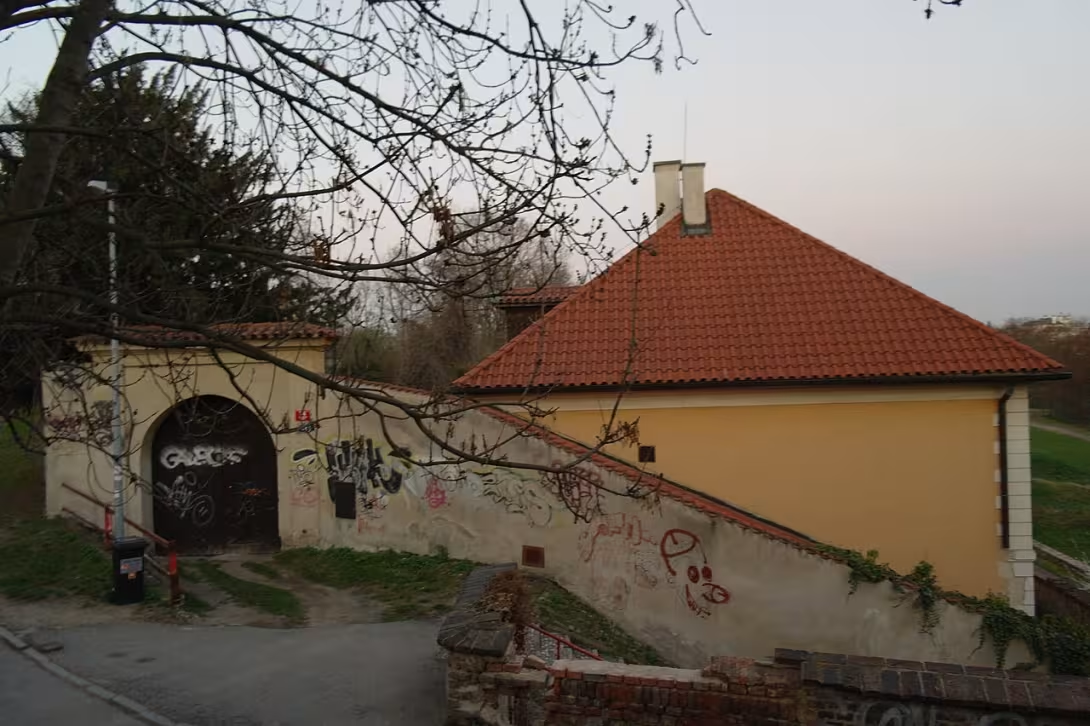
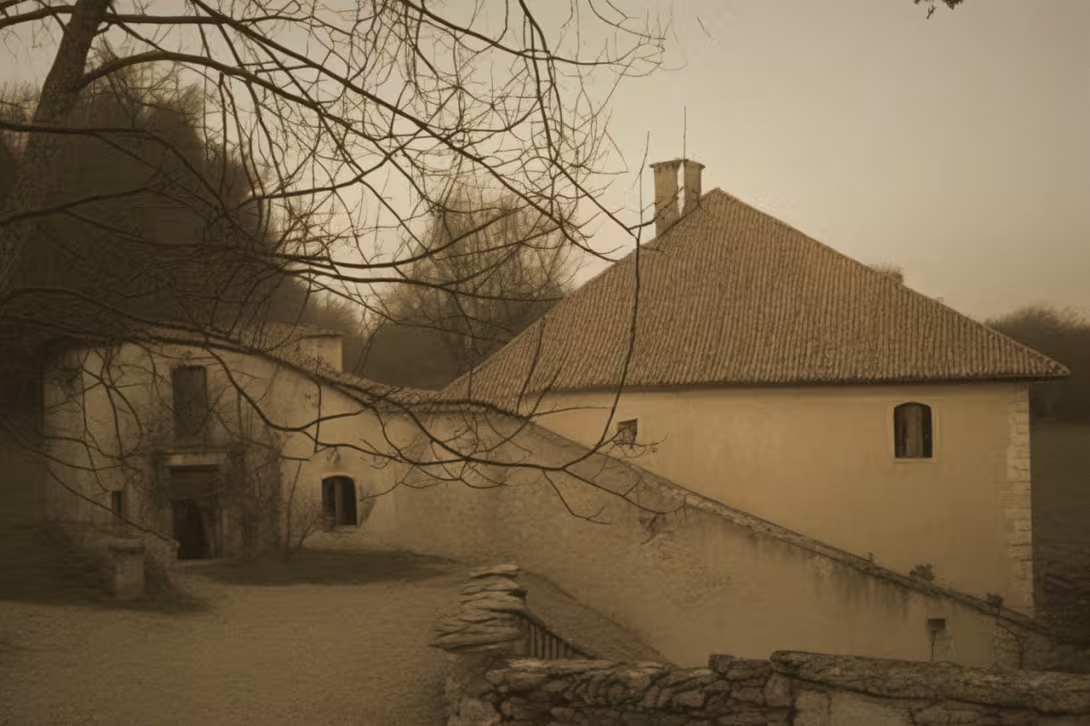
The historical appearance on the left is an AI-generated visualisation and serves as inspiration only.
Historical milestones
- 1. third of the 19th century
- The position of house No. 94 / IV at the Baroque wall wall using the terraces of Lumbe gardens.
- 1852
- The house purchased Josef Tadeáš Lumbe and became its residence.
- 1964
- Registered as a real-estate cultural monument of the JSC 39672 / 1-955.
- 1925
- The Czechoslovak State bought the house from Lumbe's heirs.
Architectural development
The house was built in the 1st period of the 19th century as an addition to the Baroque wall wall. It was created when the upper Lumbe garden was modified. The main entrance is a stylish Baroque gate in the wall. The facade was renovated in the early 21st century when the original yellow color was changed to blue-white. Material design corresponds to classical architecture with brick wall and decorated elements.
Historical events
- X New Age (16th-17th century)
- The gardens were part of the farm yard of Prague Castle and were used as utility gardens, including a garden house for Rudolf II.
- beginning of the 18th century
- Humprecht Jan Černín adapted the gardens to ornamental gardens, planted trees and built greenhouses; The northwest edge of the gardens was surrounded by a baroque wall.
- 1852
- The house was purchased by Josef Tadeáš Lumbe, which used it as an additional residence.
- Beginning of the 21st Century
Owners
1st period of 19th century – unknown builder (reconstruction and addition to the Baroque wall); 1852-1925 – Josef Tadeáš Lumbe (professor, politician, co-owner of Lumbe Gardens); from 1925 – Czechoslovak State.
Points of interest
- The house on Černín Street is a late-classicist townhouse no. 94 / IV, which has been registered since 1964 as a real-estate cultural monument.
- The properties of the house belong to the historical background of Prague Castle and in the past served as a forefront and background of the centre of the power of the Czech kings.
- In the early New Testament, Emperor Rudolf II himself built utility gardens and economic buildings here.
- In the first third of the nineteenth century, the house was added to the rest of the baroque brick wall wall that lined the northwest edge of Lumbe gardens.
- In 1925 the Czechoslovak State bought the house from Lumbe's heirs and since then it has served as a residential house with minimal modifications.
Guide
This guide is narrated by a synthetic voice generated by artificial intelligence.
Show guide text
This text was created by artificial intelligence and has not been editorially reviewed. It may contain inaccuracies.
The house on the corner of Jelení and Černínská streets bears the name of Josef Lumbe. It is an originally late classical, multi-storied burgher house with a perimeter wall and gardens. It is located in the northwestern part of Hradčany, northeast of the upper end of Jelení příkop and north above Nový Svět street. Since nineteen sixty-four it has been registered as a cultural monument and belongs to the National Cultural Monument Prague Castle. To this day it serves as a residence.
The land plots on which the house stands have a long history. From the Middle Ages they served as a forecourt and support area for Prague Castle. In the early modern period there were utility gardens and a garden house built by Rudolf the Second. They belonged to the farm yard which was located east of here beyond the Prague Castle Riding School. Later the land plots were owned by the Černín family. Humprecht Jan Černín had them converted into ornamental gardens, planted with trees and built greenhouses.
At the beginning of the eighteenth century the northwestern edge of the gardens was enclosed with a brick rampart wall of baroque fortifications. Its embankment and ditch have been preserved to this day. It was precisely to this rampart wall that a house with number ninety-four was built on in the first third of the nineteenth century. Because of the construction the terraces of the upper Lumbe garden were adjusted. The main entrance leads from the northwest through a baroque conceived gate in the perimeter wall.
In eighteen fifty-two the house was bought by Prague politician and professor of Prague Polytechnic Josef Tadeáš Lumbe, co-owner of the Lumbe garden. He did not live here permanently. His permanent residence was a house in the Old Town and besides that he also had a country seat. The Hradčany house served him as a supplementary residence. The surrounding gardens were divided between both brothers. The northeastern plots belonged to Karel Lumbe who lived nearby in a house still called Lumbeho vila.
In nineteen twenty-five the Czechoslovak state purchased the house together with the plots from the Lumbe heirs. Since then it has undergone only minor repairs. The last one took place at the beginning of the twenty-first century. During it the restorers first examined the original appearance of the facade and based on the results its color was changed from yellow to blue and white.
Tips for visitors
The best time to visit this house is in the summer months when the weather is pleasant and you can see the surrounding Lumbe gardens in full beauty. It is recommended to visit the house in the morning when there are fewer tourists and you can relax to see its architecture and detailed elements. If you are going for a tour in winter, avoid rainy days when some parts of the area may be slippery and dangerous.
It is recommended to use public transport such as trams or buses that come here regularly.
When visiting, wear comfortable shoes because you will be moving around the historic centre with possible pavement inequalities. It is also important to take a map or mobile application with navigation so that you can easily navigate around. If you are planning to photograph, do not forget enough memory or external disk, because you will find many photo sites here.
The best places for photography are the facade of the house and surrounding Lumbe garden, especially in sunny weather in the morning or afternoon when light creates pleasant shadows and illuminates the details of architecture. Avoid shooting in the shadows where the images can be too dark. If you are interested in the historical moat of Deer, it is also an interesting place for photographs, but remember that this is a protected area.
There are several interesting places around the house that are worth visiting during your trip. You can go to Prague Castle, which is just a few minutes' walk away and offers amazing views of the whole city. Lumbe gardens, which are part of the national cultural monument, are an ideal place to relax and walk between historical trees and architecture. If you are interested in history, visit the Deer Trench, which is one of the oldest moats in Prague.
For families with children, visiting this house is a great opportunity to explore history and architecture. Children can look at the detailed elements of the facade and learn more about life in the past. It is possible to play and have fun in the open area around Lumbe Gardens. Prague Castle also offers interactive exhibitions that children can take. It is recommended to visit a place at a time when there are fewer crowds so that children can look at everything calmly.
Frequently asked questions
Can the monument be visited?
This is a residential or farm building, not a museum with opening hours. Please view it from public space and respect the owners' privacy. We have no information about access to the interior.
Where is the monument?
Location: Černínská 94/12, Hradčany, Praha, Hlavní město Praha. The map on this page shows the exact spot.
Why is the monument protected?
It is listed in the Central List of Cultural Monuments of the Czech Republic as a national cultural monument (register no. 39672/1-955). It is protected as part of a larger listed ensemble.
For kids
Imagine going back to the time when the beautiful Castle of Chernins appeared here in Prague. It was a big family that cared about agriculture and animal husbandry. My parents had two sons and two daughters. Children could play in the garden where fruit trees and herbs grew.
The castle was built in Renaissance style and had a beautiful park with a pond and a fountain. The Black family could stay here all year. They had many servants who helped them with their daily duties.
Businesses nearby
Do you run a restaurant, accommodation, shop, museum, rental, wellness or other visitor service near this monument? Show yourself directly to the people heading to it — this is how they will see you in the app and on the web:
Events nearby


Zdroj akcí: otevřená data měst a obcí ČR (Národní katalog otevřených dat) a kalendář akcí Národního památkového ústavu.
Accommodation nearby
Trips and activities nearby
Guided tours, tickets and activities nearby from GetYourGuide
Affiliate link: if you buy from the partner, we may receive a commission. The price for you does not change.
Search tours and activities →Themed route
Thematic cruise route: Černínská 12 and its surroundings
1.Černínská 12 (house) * Type: * Baroque City Palace * Why visit? * A unique example of Prague Baroque architecture with rich decoration and historical significance for Czech nobility. Interiors reflect the lifestyle of prominent families like the Chernines.
2. Lumbe Gardens * Type: * Baroque gardens * Why visit? * Part of the national cultural monument, they offer a quiet environment with terraces, sculptures and rare plants. Ideal for walking between historical monuments.
3. Deer Trench * Type: * historical moat Why visit? One of the oldest Prague roads connecting Prague Castle to other parts of the city. Originally served as a defensive line, today it is a picturesque street with historic houses.
4. Prague Castle * Type: * Castle * Why visit? * The largest castle area in the Czech Republic with rich history, St. Vitus Cathedral and other monuments. It is located near Cernín 12 and offers panoramic views of the city.
5. Castle Černín Palace * Type: * lock * Why visit? * Another important Baroque building of the family Černín, connected with diplomacy and culture. Interiors with fresco and sculptures are a model of baroque design.
Seasonal recommendations
Spring: In the spring season, Černínská 12 will turn into a garden full of flowering roses and other flowers, which gives this historical monument a vivid colourful touch. The sunny days and mild temperatures create ideal conditions for walking down the quiet streets of Hradčan. In this season it is advisable to visit the memory of the afternoon when the sun illuminates architecture with beautiful rays of light and nature offers the most beautiful views. It is recommended to wear light clothes with the possibility to add a layer because the temperature can be quickly variable.
Summer: The years are the most visited Černínská 12, where many events and events take place in the capital of Praha. The sunny days offer ideal conditions for sightseeing, but it is advisable to come as soon as possible in the morning to avoid large crowds. Warm days can be challenging, so we recommend wearing light and light clothes, protective sunglasses and plenty of drinking water. A pleasant experience also offers coffee or tea in one of the garden cafés that appear around.
Autumn: In autumn, Černínská 12 gains an atmosphere full of peace and relief from summer life. November leaves create a colour palette on the streets of Hradčan, while milder temperatures allow a tour without feeling too tired. This period is ideal for visiting in the late afternoon or in the evening when the local atmosphere becomes especially calm and welcoming. It is recommended to wear layered clothing to prepare for rapidly changing conditions.
Winter: Winter visit Černínská 12 offers unique views, where the monument is illuminated by evening light and the roofs of Prague are reflected in a snowy environment. Cold air and shorter days bring peace, which is ideal for a quiet tour without fear of large crowds. The best time to visit is in the morning or at noon when the light is sufficient to photograph and explore the details of architecture. We recommend wearing warm clothes, leather shoes and bringing with an umbrella because winter can suddenly be dry or snow.
Visualizations and artistic views


The visualisations are generated by artificial intelligence and serve as inspiration.
Photos from the area
Real photos taken near the monument

Zdroj a licence jsou uvedeny u každého snímku.
Tips from visitors
No tips yet. Be the first!
Log in and add your tip.
Sources and literature
Photos: Jklamo / CC BY-SA 3.0, rozlišení zvýšeno umělou inteligencí — Wikimedia Commons. The author and licence also appear when you hover over the image.
Faktickým podkladem tohoto textu byl článek na Wikipedii, jehož autory jsou přispěvatelé Wikipedie. Článek je dostupný pod licencí CC BY-SA 4.0.
Location on the map
More monuments – Hradčany
Show all in the municipality

Příběhy a pověsti
Legendy, pověsti a příběhy spjaté s touto památkou
Fotografie návštěvníků
Zatím žádné fotografie. Buďte první, kdo přidá fotografii z návštěvy!
Log in a přidejte svou fotografii nebo hodnoťte.
Za ověřenou návštěvu v aplikaci získáte víc bodů — poznáme podle GPS, že jste na místě.
Reviews and comments