



Pernerův mlýn Water mill
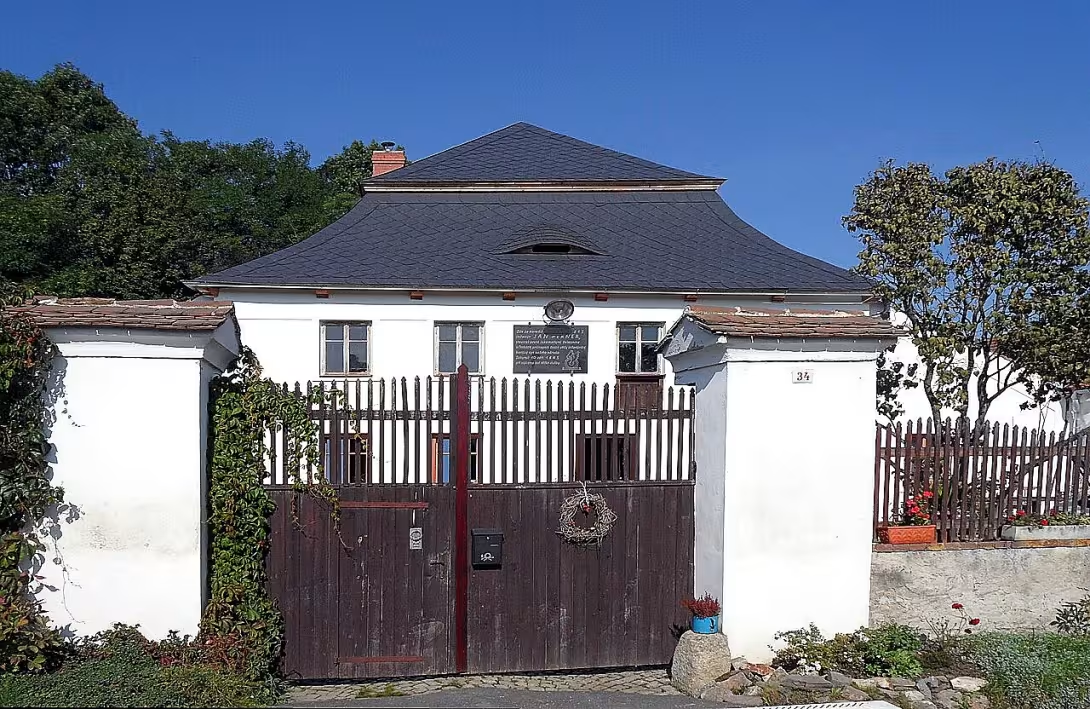
Pernerův mlýn in Bratčice in Kutná Hora district is a water mill that stands on the stream of Brslenka in the southern part of the village under steep design with a bath and church. It is protected as a real-estate cultural monument of the Czech Republic and is the birthplace of the important Czech railway man ing. Jan Perner.
The mill is already mentioned in 1555, when Knights Høman Bohdanecký of Hodkov won the brother's court and made it a feudal grande with a courtyard, forest, church and mill. In the Terezian cadastre of 1751, there are two miller, one master. In 1939, Stanislav and Marie Cais ran the mill.
The mill has a Mansard roof and a bunk. The water flowed towards the water wheel mill by driving across the pond with the vantroks and a pass to the turbine house. She survived from a wooden ventroku concrete oven, led by air on iron concrete pillars. In the mill there was a spiral turbine with capacity 270 l / s and output 14,4 HP. The water wheel was replaced by a turbine in 1940. The new wheel had a diameter of 3.9 metres and output of about 8 HP.
The mill is remarkable by its history and architecture. It is one of the few preserved water mills in Bohemia and its construction is typical of the feudal system which developed in the 16th century in Bohemia. The mill is also the birthplace of the important Czech railway man, ing. Jan Perner.
The owner of the mill was Knights Hřman Bohdanecký of Hodkov in 1555, who made him a feudal estate. In 1751, there are two miller's, one of which is virgins. In 1939, Stanislav and Marie Cais ran the mill.
The mill is also remarkable with its technical equipment. In the mill there was a spiral turbine with capacity 270 l / s and output 14,4 HP. She survived from a wooden ventroku concrete oven, led by air on iron concrete pillars.
Today the mill is open to the public and is worth a visit. It is a unique monument to Czech history and offers an interesting view of the development of technology and architecture in the past.
Historical milestones
- 1555
- the mill is mentioned
- 1751
- Terezian cadastre
- 1939
- managed by Stanislav and Marie Cais
Architectural development
The mill has a Mansard roof and a bunk. The water flowed towards the water wheel mill by driving across the pond with the vantroks and a pass to the turbine house.
Historical events
Year 1555 - mill is mentioned
1751 - Terezian cadastral
1939 - Managed by Stanislav and Marie Cais
Owners
Hřman Bohdanecký of Hodkov
Stanislav and Marie Cais
Points of interest
- Pernerův mlýn is a water mill. - It is protected as a real cultural monument of the Czech Republic. - It is the birthplace of the important Czech railway driver, Jan Perner. - The mill has a Mansard roof and a bunk. He's remarkable in his history and architecture.
Guide
Show guide text
This text was created by artificial intelligence and has not been editorially reviewed. It may contain inaccuracies.
Welcome to Bratčice. You're standing in front of one of the most important construction units in this area, the Perner Mill. Before you take the next step and start looking more closely, stop for a moment and feel the atmosphere of this place. In front of your eyes is a storey building carrying the incredible power of centuries. It is a water mill, which means that its existence has been closely linked from the very beginning to the rhythm of flowing water and the constant movement of life. Feel the calm yet palpable history this object radiates. It's a place where nature meets human work and where every rock and every crack in the walls tells the story of the people who lived here, worked and dreamed.
Let us now move further into the past together so that we can understand how this mill came into being and how it played a role in the life of the whole area. Its roots go deep into the sixteenth century, when power and ownership were determined through a vast estate. The first written mention of this place appears in 15500. At that time the brother's court was won by the knight Høman Bohdanecký of Hodkov. This man was not just a common landowner, but created a real feudal estate from all over the place. Under his hand, there was a complex that included a courtyard, large forests, a church and this very mill. The mill was not just a building at the time, it was a key engine of the entire economic system, necessary for the survival and prosperity of the entire estate.
If you look at history further, you'll see how the fate of the place changed and how land management developed. In the year seven hundred fifty-one, at a time when the property situation within the Terezian cadastral was needed accurately, two miller families were listed here in the records. One of them was directly linked to the master, which clearly shows us the social structure at the time and how important the miller's work was and how much it was subordinate to the power structures at the time. The time passed and the mill continued to serve its owners, each generation bringing its own energy into it. Stanislav and Marie Cais were already run here in the year of a thousand and nine hundred thirty-three. Their names are part of the continuity of this place, a testament to the people who kept the mill running at the time of the world's greatest upheaval and lived their lives in the rhythm of water.
Now pay attention to the architecture itself, which stands right in front of you. Although the world is constantly changing around the world, Pernerův mlýn has retained its distinctive form, which is now visible to you. Look up on the roof. It is a Mansard roof that gives the building its specific, noble and yet robust appearance. This type of roof was not only an aesthetic choice, but also a practical solution for the use of space. The whole building is storey, indicating that the space was used very efficiently and vertically. Feel the mass and stability this building has shown. It is an architecture that has been designed to withstand time, and even after centuries, it still feels like unwavering. Although we do not know the names of the particular architects who designed this shape and structure, their championships are evident in overall harmony and in how the building fits into the landscape and still dominates it.
Speaking of this place, we can't ignore a name that's become an inherent part of his identity. Pernerův mlýn bears the name of a prominent person - engineer Jan Perner. You may have heard of it if you're interested in the history of technical progress in our country. Jan Perner was an important Czech railway driver, a man whose work and vision had a major impact on the development of the transport network. It is fascinating to imagine that here, in this mill, a man was born who later became a symbol of modernization and technical genius. There is an interesting connection between the water energy used by the mill and the steam and mechanical energy that Perner promoted in the railway sector. This mill is not just a grain processing building, but it is a place where the history of Czech industrial thinking was born.
You may wonder why this place is so important to today's generations and why it is kept so carefully. The answer is in its irreplaceable value. Pernerův mlýn is not just an ordinary old house that could die in the glow of the modern world. It is protected as a real cultural monument of the Czech Republic. This means that its importance is recognised at the highest level and its preservation is considered a duty for future generations. There is also some nobility - to be part of the list of monuments that make up the identity of our nation. It is proof that even a place like this water mill can be of enormous importance to the whole country.
Now that you have known the foundations of his history, his face and the important people that are closely related to him, I urge you to explore further. Take a walk around, feel the silence and history that is felt at every step. Pernerův mlýn has many things to tell you if you look at it with the attention you now have. Look at his palate, see the shadows that the roof throws, and imagine how day-to-day work took place here centuries ago. Thank you for the journey through time and I wish you a pleasant and inspiring visit to Bratčice.
Tips for visitors
The best time to visit is from spring to autumn when the surroundings of the mill are populated with flowers and greenery.
It is advisable to bring clean shoes and comfortable clothes for a walk around the mill and stream of Brslenky.
Photography is best done in the morning or evening when the light is soft and the mill is lit from sunrise or sunset.
The church in Bratčice and the woods, where you can walk and observe the local fauna and flora, is worth visiting.
Frequently asked questions
Can the monument be visited?
This is a technical monument. Some are open as exhibitions, others are out of use or on private land. We have not verified whether this one is accessible. According to the heritage register the structure is in poor condition – do not enter it and take care nearby.
What are the opening hours and admission?
We have not verified the opening hours or admission. Current information is published by the operator.
Where is the monument?
Location: Bratčice, Středočeský kraj. The map on this page shows the exact spot.
Why is the monument protected?
It is listed in the Central List of Cultural Monuments of the Czech Republic as a cultural monument (register no. 1000136153).
Businesses nearby
Do you run a restaurant, accommodation, shop, museum, rental, wellness or other visitor service near this monument? Show yourself directly to the people heading to it — this is how they will see you in the app and on the web:
Events nearby
Zdroj akcí: otevřená data měst a obcí ČR (Národní katalog otevřených dat) a kalendář akcí Národního památkového ústavu.
Nearby
municipality Bratčice, potok Brslenka
Accommodation nearby
Trips and activities nearby
Guided tours, tickets and activities nearby from GetYourGuide
Affiliate link: if you buy from the partner, we may receive a commission. The price for you does not change.
Search tours and activities →Themed route
1. Bratčice (municipality) - The journey begins in this quiet village. It's a good place to start a trip. 2. stream Brslenka (water flow) - The route leads along this spring. It offers a pleasant walk near the water. 3. Pernerův mlýn (mill) - The main destination of the trip. This historical monument represents the most important point of the route.
Seasonal recommendations
Spring: In spring, Pernerův mlýn wakes up with fresh green, which gradually covers its crumbling walls. The lighting is fine and scattered during this period, which beautifully highlights the structure of old wood. Due to the melted snow and spring rains we recommend to wear waterproof shoes because the surrounding terrain can be very muddy. The best time to visit is in the morning when the air is the cleanest.
Summer: In the summer months the atmosphere around the monument is full of dense vegetation, which provides a pleasant shade in the heat. Intense sunlight creates sharp shadows and dramatic contrasts on the debris. In the main summer season it is advisable to arrive as early as possible in the morning to avoid the greatest excitement and burning noon heat. Don't forget light clothes and plenty of fluids.
Autumn: Autumn brings the mill a deep melancholy that perfectly matches its emergency condition. Morning fog and golden shades of falling leaves create a mystical and quiet atmosphere. Prepare for colder and wetter weather, therefore it is best to choose layered clothes. For the best visual experience we recommend a visit in the morning before the morning herpes is wiped off.
Winter: Zimą makes the mill feel raw and lonely, especially when its skeleton is covered with snow or covered with ice. The grey sky and the freezing air underscore the tragedy of the decaying state of the building. Due to the short daylight and low temperatures it is necessary to have very warm clothes and tight shoes to move on slippery terrain. Ideal is to visit the place around noon when the lights are most.
Visualizations and artistic views


The visualisations are generated by artificial intelligence and serve as inspiration.
Photos from the area
Real photos taken near the monument


Zdroj a licence jsou uvedeny u každého snímku.
Tips from visitors
No tips yet. Be the first!
Log in and add your tip.
Sources and literature
Photos: Stribrohorak / CC BY-SA 3.0 — Wikimedia Commons. The author and licence also appear when you hover over the image.
Faktickým podkladem tohoto textu byl článek na Wikipedii, jehož autory jsou přispěvatelé Wikipedie. Článek je dostupný pod licencí CC BY-SA 4.0.
Location on the map






Příběhy a pověsti
Legendy, pověsti a příběhy spjaté s touto památkou
Fotografie návštěvníků
Zatím žádné fotografie. Buďte první, kdo přidá fotografii z návštěvy!
Log in a přidejte svou fotografii nebo hodnoťte.
Za ověřenou návštěvu v aplikaci získáte víc bodů — poznáme podle GPS, že jste na místě.
Reviews and comments